Inflation

Search documents
What To Expect From Friday's Report On Inflation
Yahoo Finance· 2026-02-11 19:41
Key Takeaways Forecasters expect inflation to have decelerated in January, with core prices rising 2.5% over the year, the lowest since 2021. Tariffs are still pushing up prices, but some costs, including for housing, aren't rising as quickly as they did a few years ago. Tame inflation could take pressure off the Federal Reserve to keep its key interest rate higher for longer to subdue price increases. Price increases were likely relatively tame in January, with one key inflation measure expected ...
Watch Out for a 10-Year Treasury Auction
Barrons· 2026-02-11 17:46
Watch Out for a 10-Year Treasury AuctionCONCLUDED[Stock Market News From Feb. 11, 2026: Dow Snaps 3-Day Record Streak]Last Updated:---7 hours ago# Watch Out for a 10-Year Treasury AuctionBy[Karishma Vanjani]After a busy morning digesting jobs data, traders now switch to a Treasury market auction this afternoon.Investors are tasked with buying $42 billion worth of 10-year notes. Yields are at 4.16%. Not too attractive given that the market was trading at 4.3% just a month ago. Yields help determine the coupo ...
Job Market Surprisingly Bounced Back In January
Investopedia· 2026-02-11 17:02
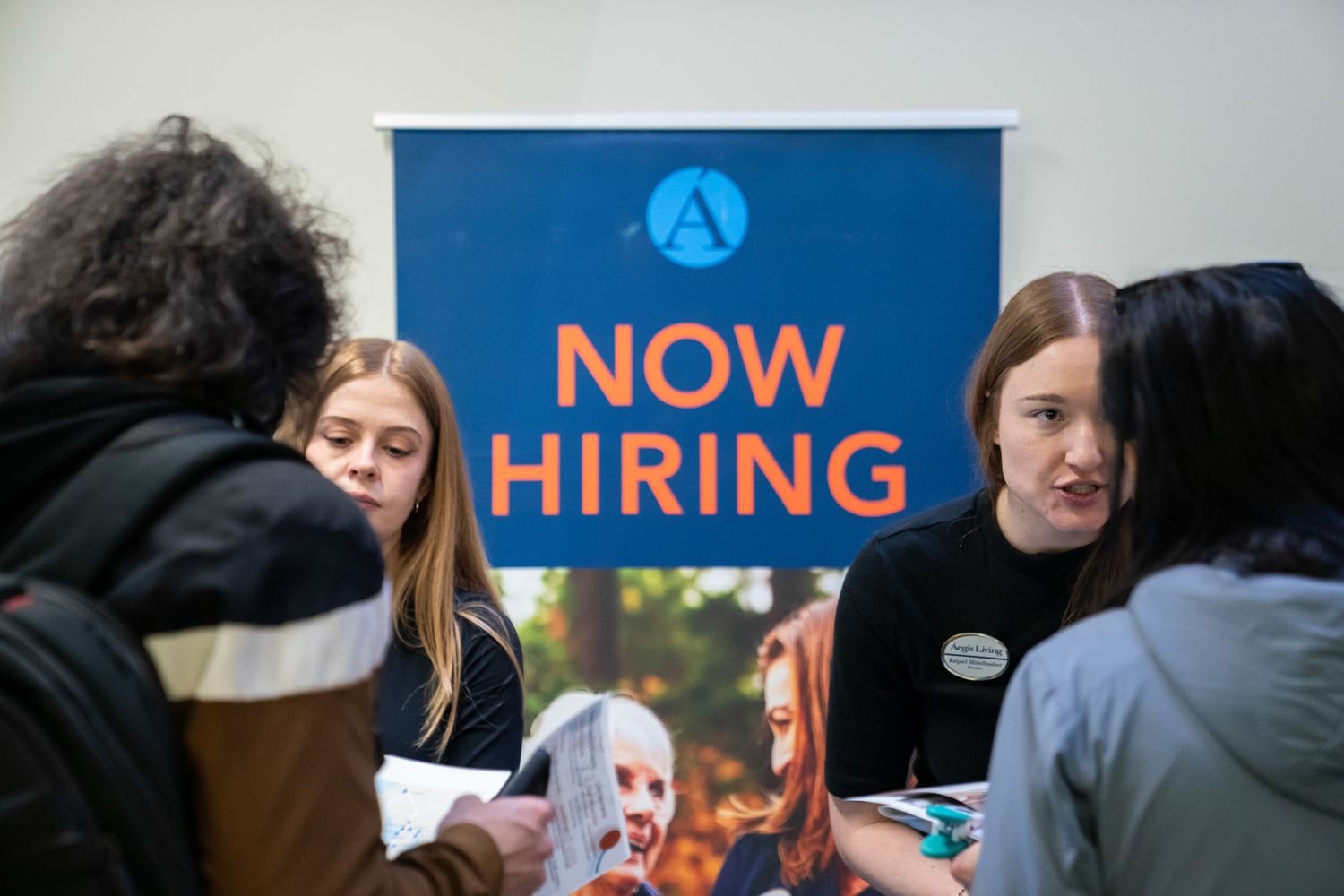
Core Insights - The U.S. job market showed unexpected strength in January 2026, with employers adding 130,000 jobs, significantly surpassing forecasts of 55,000 jobs [1][1][1] - The unemployment rate decreased to 4.3%, the lowest level since August 2025, down from 4.4% [1][1][1] Economic Implications - The job creation in January may alleviate concerns regarding a hiring downturn and could influence the Federal Reserve's focus on inflation, potentially reducing pressure to cut interest rates [1][1][1] - Revisions to previous job creation data revealed that 2025 was worse than initially reported, with only 181,000 jobs added instead of 584,000, marking it as the worst year for job creation outside a recession since 2003 [1][1][1] Sector Performance - The health care sector was the primary driver of job growth, adding 137,000 jobs, which offset losses in government, finance, and transportation sectors [1][1][1] - Manufacturing saw a modest increase, adding 5,000 jobs, marking the first rise in manufacturing employment since November 2024 [1][1][1] Market Sentiment - Despite the positive job growth, public sentiment remains pessimistic due to strained household budgets and a stagnant job market, indicating a disconnect between economic indicators and public perception [1][1][1] - The job market is described as stabilizing but still largely frozen, with ongoing uncertainty leading workers to hold onto their current jobs and limited choices for unemployed individuals [1][1][1]

More bosses want to help staff with their finances, report says, but are they doing enough? How to advocate for yourself
Yahoo Finance· 2026-02-11 17:00
As inflation and a high cost of living continue to impact many Americans, employers are paying more attention to the financial stress of their employees. According to a CNBC report citing a survey by the Employee Benefit Research Institute (EBRI), employers are more concerned about their employees’ financial well-being (1). While in 2019 only 22% of employers said that their concern was at 9 or 10 on a scale of 1 to 10, in 2025, 48% rated their concern at 9 or 10. That’s also up from 2024, when 43% said t ...
Stocks Turn Mixed as Software Stocks Slide
Yahoo Finance· 2026-02-11 16:23
Comments today from Kansas City Fed President Jeff Schmid were bearish for stocks and bonds when he said, "In my view, further rate cuts risk allowing high inflation to persist even longer," so the Fed should hold rates at a "somewhat restrictive" level.The annual benchmark revision to 2025 US payrolls subtracted -862,000 jobs, a larger revision than the -825,000 expected.US Jan nonfarm payrolls rose +130,000, stronger than expectations of +65,000 and the most in 13 months. The Jan unemployment rate unexpec ...
美国经济:聚焦美联储的影响足迹-US Economics Weekly_ Shining a spotlight on the Fed's footprint
2026-02-11 15:40
Summary of Key Points from the Conference Call Company/Industry Focus - The focus is on the Federal Reserve and its impact on financial markets, particularly in light of the nomination of Kevin Warsh as Chair of the Federal Reserve [8][9]. Core Insights and Arguments - **Fed's Footprint**: Warsh argues that the Fed's footprint in financial markets has become excessively large, affecting both monetary and fiscal policy boundaries [8]. - **Balance Sheet Strategy**: While shrinking the Fed's balance sheet is possible, it requires reducing bank demand for reserves. A rapid shift in the Fed's footprint is unlikely [9][10]. - **Quantitative Tightening (QT)**: From 2022 to 2025, the Fed's balance sheet decreased from approximately $9 trillion to $6.6 trillion, primarily through passive QT, which has implications for reserve levels and short-term interest rates [10][11]. - **Reserve Management**: Any significant reduction in the Fed's balance sheet would necessitate a corresponding decrease in bank demand for reserves, which is currently elevated due to post-2008 liquidity regulations [17]. - **Treasury Coordination**: A smaller Treasury General Account (TGA) could allow the Fed to reduce its securities holdings without impacting reserve balances. The TGA has increased to nearly $1 trillion post-financial crisis and COVID [21][22]. - **Future Quantitative Easing (QE)**: The likelihood of future QE is constrained, with the Fed likely to only consider asset purchases under recessionary conditions that push policy rates to the effective lower bound [25]. Additional Important Content - **Communication Strategy**: Warsh critiques the Fed's communication strategy, suggesting that reduced communication could lead to higher market volatility and greater reliance on economic data rather than explicit FOMC signals [27]. - **Tariff Rates**: The effective tariff rate on US imports is currently around 11%, with potential fluctuations based on ongoing trade negotiations and legal challenges regarding tariffs [28][29][30]. - **US GDP Tracking**: The tracking estimate for 4Q GDP growth is at 1.6%, with private final domestic purchases tracking at 2.4% [43][44]. - **Retail Sales Forecast**: A forecast of a 0.5% month-over-month increase in retail sales for December, supported by auto sales and retail control, is noted [55]. This summary encapsulates the critical insights and data points discussed in the conference call, focusing on the Federal Reserve's strategies and their implications for the financial markets and broader economy.

美国经济 2026:劳动力市场展望-五大值得关注的行业-US Economic Weekly 2026 labor market outlook_ five sectors to watch
2026-02-11 15:40
Summary of Key Points from the Conference Call Industry Overview - **Labor Market Outlook for 2026**: The labor market is expected to experience mixed conditions across five key sectors, influenced by tighter immigration policies and economic factors such as trade uncertainty and fiscal stimulus [1][14][53]. Core Insights and Arguments - **Job Growth Projections**: Average job growth is forecasted at 50,000 per month in 2026, with a breakeven job growth rate lowered to approximately 20,000 due to immigration restrictions [15][53]. - **Unemployment Rate**: The unemployment rate is anticipated to stabilize at 4.5% through the first half of 2026, with a slight decrease to 4.3% by year-end [15][53]. - **Sector Performance**: - **Positive Outlook**: - **Education & Health**: This sector is expected to continue driving job growth, adding over 100% of net job gains in 2025, with a projected addition of about 60,000 jobs per month [21][24][26]. - **Construction**: Anticipated recovery due to easing mortgage rates and reduced tariff uncertainty, with a rebound in both residential and non-residential construction [30][31]. - **Trade, Transport & Utilities**: Expected improvement in job growth as import recovery aligns with stronger consumer demand and economic growth [40][41]. - **Negative Outlook**: - **Professional & Business Services**: This sector is facing job losses due to AI adoption, which is automating lower-wage roles while maintaining wage growth for specialized positions [32][34]. - **Neutral Outlook**: - **Leisure & Hospitality**: Job growth is expected to be offset by tighter immigration policies despite potential improvements in consumer demand due to fiscal stimulus [36][38]. Additional Important Insights - **Inflation Trends**: Inflation is projected to remain above the Federal Reserve's target, driven by supply-side pressures from tariffs, with core PCE inflation expected to end 2026 at 2.9% [52]. - **Economic Growth Forecast**: The average GDP growth forecast for 2026 is set at 2.8%, above the consensus of 2.1%, driven by fiscal and monetary policy adjustments [51]. - **Labor Market Risks**: The labor market is facing risks from immigration restrictions and AI-driven job displacement, which could impact job growth and sector stability [53]. Conclusion The labor market outlook for 2026 presents a complex picture with varying sector performances influenced by immigration policies, economic recovery, and technological advancements. The overall sentiment indicates cautious optimism, particularly in sectors like education and health, while challenges persist in professional services due to automation.
全球经济:“金发姑娘” 式表现,但风险犹存-Global Economics_ Global Chart Deck—“Goldilocks” Performance, But Risks Linger
2026-02-11 15:40
Summary of Key Points from the Conference Call Industry Overview - **Global Economic Performance**: The global economy is exhibiting resilience, with real GDP growth forecasted at 3.3% for 2026, maintaining a steady trend despite various challenges [7][8][9]. Core Themes 1. **Resilient Economic Performance**: - Global real GDP growth has shown continued resilience, with developed markets expected to grow at 1.9% in 2026, while emerging markets are projected at 4.1% [9][10]. - The United States is forecasted to grow by 2.5% in 2026, up from 2.3% in 2025, indicating a positive outlook [9]. 2. **Tariffs Impacting Global Trade**: - Tariffs are reshaping global trade dynamics, with the effective tariff rate on goods imports in the US reaching 30% for China, while other countries like Vietnam and India have rates of 20% and 18% respectively [14][15]. - The US is experiencing a shift in import shares due to these tariffs, affecting trade relationships [16]. 3. **Subdued Global Inflation**: - Global inflation remains subdued, with the US being an exception. Core PCE inflation is projected at 2.8% for December 2025, while global core goods inflation is significantly lower [19][25]. - The inflation rate for core goods has increased from -0.1% in February 2025 to 1.4% in December 2025, indicating rising prices in certain categories [21][25]. 4. **Global Monetary Easing**: - Central banks are in the midst of an easing cycle, with significant policy rate changes expected across various countries in 2026 [29][30]. - The easing is aimed at supporting economic growth amidst high public debt levels and geopolitical stresses [12][13]. 5. **Advances in AI and Productivity**: - Investment in AI is projected to significantly boost productivity, with AI investment expected to reach $299 billion by Q3 2025, up from $162 billion in Q4 2024 [33]. - A survey indicates that a growing number of firms are adopting AI technologies, which is anticipated to enhance labor productivity in the coming years [32][34]. Risks and Challenges - **Economic Risks**: - Potential risks include retrenchment in AI investment, geopolitical tensions, a sharp deterioration in the US labor market, and the impact of tariffs on economic growth [12][42]. - High public debt levels in many countries are raising concerns about fiscal sustainability and market stability [42][43]. Additional Insights - **US Labor Market**: The labor market is showing signs of softening, with job creation slowing and unemployment rates remaining a concern [38][63]. - **Consumer Sentiment**: Consumer sentiment is fluctuating, influenced by economic policies and market conditions, which could impact spending behavior [54][69]. - **Housing Market**: The US housing market is experiencing persistent softness, with affordability issues affecting demand [66][67]. This summary encapsulates the key themes and insights from the conference call, highlighting the current state of the global economy, the impact of tariffs, inflation trends, and the potential of AI in driving productivity.
Fed's Schmid Pushes Back on Rate-Cut Prospects
WSJ· 2026-02-11 15:35
Core Viewpoint - Kansas City Fed President Jeffrey Schmid has reiterated his opposition to further interest-rate cuts, emphasizing that additional easing by the Federal Reserve could lead to persistently high inflation [1] Group 1 - Schmid's stance reflects a concern that lowering interest rates further may exacerbate inflationary pressures [1] - The statement indicates a cautious approach towards monetary policy, prioritizing inflation control over potential economic stimulus [1]

Huge employment report: US added 130,000 jobs in January
Youtube· 2026-02-11 15:24
Summary of Key Points Core Viewpoint - The January jobs report revealed that 130,000 jobs were added, significantly exceeding the economist estimate of 65,000, while the unemployment rate decreased to 4.3% from 4.4% [6][10][9]. Group 1: Job Market Overview - The average estimate for non-farm payrolls was 65,000, which reflects an increase from December's 50,000 [2]. - The unemployment rate was predicted to remain steady at 4.4%, but it actually decreased to 4.3% [6][10]. - Average hourly earnings were expected to remain steady with a gain of 0.3% [2]. Group 2: Benchmark Revisions - The Bureau of Labor Statistics (BLS) revised previous job counts, indicating an overcount of 862,000 jobs from April 2024 to March 2025, down from an earlier estimate of 911,000 [4][7]. - This revision highlights the challenges in accurately measuring job growth due to varying survey methodologies [5][41]. Group 3: Sector Performance - The healthcare sector was the largest contributor, adding 82,000 jobs, with significant gains in ambulatory services, hospitals, and residential healthcare [54]. - Social assistance added 42,000 jobs, primarily from individual and family services [55]. - The construction sector saw a gain of 33,000 jobs, with specialty trade jobs contributing 25,000 [56]. Group 4: Job Losses - The federal government experienced a loss of 34,000 jobs, continuing a trend that has seen a total decline of 327,000 jobs since October 2024 [56]. - The financial activities sector lost 22,000 jobs, with a total decline of nearly 50,000 jobs since May 2025 [57]. Group 5: Market Reaction - Following the jobs report, stock futures rose, indicating a positive market reaction, particularly in the Russell 2000 and S&P 500 indices [46][51]. - Treasury yields increased, reflecting market adjustments to the stronger-than-expected job growth [47][48].