
Monetary Policy

Search documents
BondBloxx Releases 2026 Fixed Income Outlook
Globenewswire· 2025-12-11 13:00
Core Insights - BondBloxx Investment Management emphasizes the importance of precision in fixed income investments and identifies opportunities in private credit, BB and CCC rated corporates, and intermediate Treasuries for 2026 [1][2] Market Outlook - The company anticipates continued market volatility in 2026, suggesting that fixed income can provide income and mitigate volatility [2] - Strong fundamentals in both public and private credit are supported by healthy balance sheets, manageable debt maturities, solid U.S. economic growth forecasts, and lower interest rates [2] Investment Opportunities - Specific opportunities highlighted include: - U.S. Corporates: Favorable conditions for U.S. corporate bonds, particularly focusing on BB and CCC rated high yield bonds [7] - Private Credit: Offers compelling yields and low volatility, presenting an attractive alternative to equities and other fixed income assets [7] - Emerging Markets: Focus on short- to intermediate EM sovereign debt due to elevated yields and resilient economic conditions following a strong year in 2025 [7] Federal Reserve Insights - The Federal Reserve is expected to proceed cautiously with interest rate policy, with attention on the leadership transition from Chairman Powell [3]


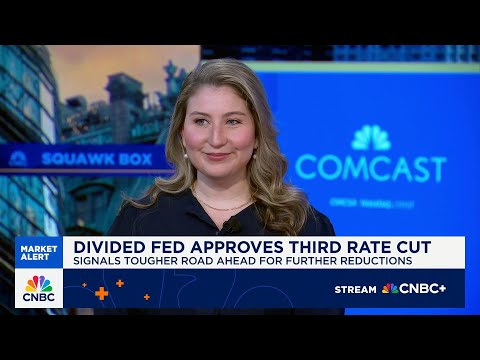
Fed remains sensitive to downside risks to employment, says JPMorgan's Kelsey Berro
CNBC Television· 2025-12-11 12:14
Joining us right now is Kelsey Barrow. She is JP Morgan asset management fixed income portfolio manager. And Kelsey, I don't know my take on the commentary afterwards.Was Yeah, this is it's it's a hawkish statement, but not as hawkish as I had even expected, which I is that why the market was up or do you see some other reason. >> Yeah. So, it's interesting.You know, we hear what the what Chair Powell said, but then we watch the market reaction. And the market reaction is a function of not just what he says ...
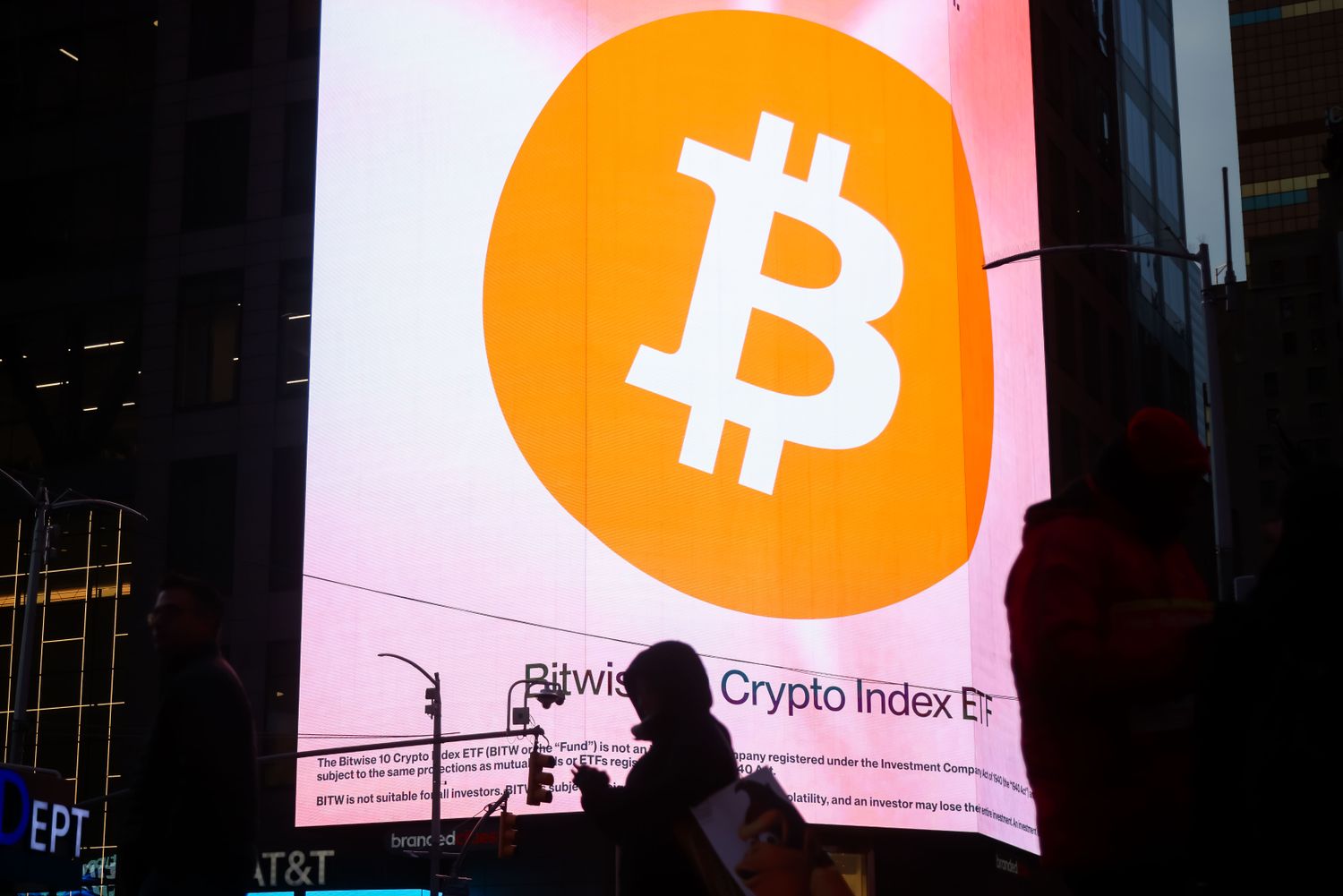
Bitcoin's Price Is Still Off Its Highs. Did The Fed's Latest Interest-Rate Cut Help?
Investopedia· 2025-12-11 01:00
Core Insights - Bitcoin's price rose towards $94,000 following the Federal Open Market Committee's decision to cut the target rate by a quarter percentage point, although it later retraced some gains due to unclear future rate cut signals [1] - The Federal Reserve's monetary policy is currently influencing Bitcoin's market behavior, indicating a potential recovery for the cryptocurrency in 2026 [2] Price Targets and Market Sentiment - Standard Chartered has revised its year-end Bitcoin price target down to $100,000 from $200,000 and its 2026 target to $150,000 from $300,000, citing a recent 36% price drop as "normal" [4] - The firm remains bullish on Bitcoin in the short term despite the adjustments to its price targets [3][4] Market Dynamics and Institutional Activity - The cryptocurrency market is seeking buyers, with crypto exchange-traded funds expected to play a significant role in this process, highlighted by Vanguard's recent move to open its brokerage platform to crypto ETFs [5] - Major digital asset treasury companies continue to accumulate Bitcoin, with Strategy (MSTR) adding over 10,000 Bitcoin to its holdings, alleviating concerns about potential sell-offs [6] - Jack Mallers, founder of the Bitcoin payments app Strike, expressed intentions to acquire as much Bitcoin as possible, indicating ongoing institutional interest [7]

Apollo's Marc Rowan on the Fed, private credit markets, and the data center boom
Youtube· 2025-12-10 23:30
Fed decision day in America. In your view, what does getting policy right look like. >> I don't know if there's a right answer here.Um, you know, internally at Apollo, we do not think there's a need for a cut. There's nothing in the data that tells us, but at the same time, I understand the decision. But longer term, I'm not sure it really matters.I mean, if you think about what's happening, the market is ultimately determining the outcome. We have governments around the world who are borrowing record amoun ...

Powell says central bank needs to 'wait to see' before moving again
CNBC Television· 2025-12-10 22:15
The adjustments since September um bring our policy within a broad range of estimates of neutral and as we noted in our statement today, we are well positioned to determine the extent and timing of additional adjustments based on the incoming data, the evolving outlook and the balance of risks. Uh that new language points out that we'll carefully evaluate that incoming data. Uh and also I would note that having reduced our policy rate by 75 basis points since September and 175 basis points since last Septem ...
Wall Street Lunch: 3rd Straight FOMC Cut, But Dissents Grow
Seeking Alpha· 2025-12-10 21:45
asbe/iStock via Getty Images Listen below or on the go on Apple Podcasts and Spotify This is an abridged transcript of the podcast: As widely expected, the Federal Open Market Committee reduced its benchmark interest rate by 25 basis points on Wednesday, its third straight cut, as the Federal Reserve's monetary policy arm sought to balance its dual mandate of full employment and price stability. It appeared to see the risk to employment as the more pressing issue. The policy easing brought the federa ...

Federal Reserve System (:) Update / Briefing Transcript
2025-12-10 20:32
Summary of Key Points from the Conference Call Industry or Company Involved - The discussion primarily revolves around the Federal Reserve's monetary policy and its implications for the U.S. economy, particularly focusing on employment and inflation. Core Points and Arguments 1. **Monetary Policy Adjustments** The Federal Open Market Committee (FOMC) decided to lower the policy interest rate by 0.25 percentage points to a range of 3.5%-3.75% to support maximum employment and stable prices [1][5][6] 2. **Economic Growth Projections** The median projection for real GDP growth is 1.7% for the current year and 2.3% for the next year, indicating a stronger outlook than previously projected [3][14] 3. **Labor Market Conditions** The unemployment rate has increased to 4.4%, with job gains slowing significantly. Layoffs and hiring remain low, but perceptions of job availability are declining [3][4][31] 4. **Inflation Trends** Total Personal Consumption Expenditures (PCE) prices rose by 2.8% over the past year, with core PCE prices also increasing by 2.8%. Inflation remains elevated compared to the Fed's long-term goal of 2% [4][5] 5. **Risks to Employment and Inflation** The balance of risks has shifted, with downside risks to employment increasing and inflation risks remaining tilted to the upside [5][6][20] 6. **Impact of Tariffs on Inflation** The effects of tariffs are contributing to inflation, particularly in goods, while disinflation is observed in services. The Fed aims to ensure that one-time price increases do not lead to ongoing inflation issues [4][6][32] 7. **Expectations for Future Rate Adjustments** The FOMC is positioned to evaluate future rate adjustments based on incoming data and the evolving economic outlook. The current policy stance is seen as neutral [12][20][40] 8. **Consumer Spending Dynamics** Consumer spending remains solid, driven by higher-income households, while lower-income consumers are facing challenges due to rising prices. This creates a K-shaped recovery scenario [61][63] 9. **Housing Market Challenges** The housing market remains weak, with low supply and high mortgage rates from previous refinancing. The Fed's rate cuts may not significantly improve affordability in the housing market [64][65] 10. **Technological Impact on Employment** The rise of AI and automation is acknowledged as a factor in job market dynamics, with potential implications for productivity and job creation [55][67] Other Important but Overlooked Content 1. **Dissenting Opinions within the FOMC** There were notable dissenting opinions regarding the recent rate cuts, indicating a divided view on the appropriate monetary policy direction [19][21] 2. **Data Collection Challenges** The Fed highlighted potential distortions in labor market data due to collection issues, emphasizing the need for careful analysis of upcoming data releases [22][23] 3. **Long-term Inflation Expectations** Despite current inflation levels, long-term inflation expectations remain anchored around the Fed's 2% target, suggesting confidence in achieving this goal over time [5][46] 4. **Legacy of Current Leadership** The current Fed Chair expressed a desire to leave the economy in good shape, with controlled inflation and a strong labor market, as part of their legacy [70]
Fed signals rate cut pause as central bank prepares for Trump showdown
Sky News· 2025-12-10 20:12
Core Insights - The US Federal Reserve has indicated a pause in interest rate cuts, with only one rate cut expected in 2026, amidst pressures from high inflation and a weak job market [1][3][6] - The Fed's key interest rate has been reduced to approximately 3.6%, a near three-year low, despite dissenting votes advocating for no changes [2][6] - Economic growth in the US is anticipated to improve, with a projected jobless rate decline and inflation expected to decrease to 2.4% by the end of next year [3][4] Federal Reserve's Position - The Fed is cautious about future rate cuts due to the potential impact of trade tariffs on inflation and the overall economy [4][6] - Fed Chair Jay Powell noted that the current policy rate is within a neutral range, allowing the Fed to monitor economic developments before making further changes [6][12] Political Influence and Market Reactions - There is concern regarding the potential political influence on the Fed, especially with President Trump's efforts to appoint supporters of rapid interest rate reductions [7][9] - The upcoming succession of Fed Chair Powell has led to market uncertainty, with fears that a new chair could undermine the Fed's current guidance [9][12] - Market reactions have shown little movement in the dollar and US bond yields following the Fed's decisions, indicating a cautious outlook among investors [10][13]

Fed Chair Powell: We are well positioned to wait and see how the economy evolves
Youtube· 2025-12-10 20:06
Core Viewpoint - The Federal Reserve has decided to lower the target range for the federal funds rate by a quarter percentage point to 3% to 3.75%, reflecting a balanced approach to managing employment and inflation risks [1][3]. Monetary Policy Adjustments - The committee acknowledges that there are no risk-free paths for policy as it navigates the tension between employment and inflation goals, indicating that the effects of tariffs on inflation are expected to be short-lived [2]. - The recent adjustments to the policy stance are aimed at stabilizing the labor market while allowing inflation to trend down towards the 2% target once tariff effects dissipate [4]. - The median projection for the federal funds rate is 3.4% at the end of 2026 and 3.1% at the end of 2027, remaining unchanged from previous estimates [5]. Implementation of Monetary Policy - The committee has initiated purchases of shorter-term Treasury securities, primarily Treasury bills, to maintain an ample supply of reserves over time, with an initial purchase amount of $40 billion in the first month [6][7]. - The implementation framework indicates that an ample supply of reserves allows the federal funds rate to be primarily controlled by administered rates rather than daily market interventions [8]. - The committee has eliminated the aggregate limit on standing repo operations to support monetary policy implementation and ensure the federal funds rate remains within its target range [8][9]. Commitment to Goals - The Federal Reserve remains committed to achieving maximum employment and stable prices, recognizing the impact of its actions on communities, families, and businesses across the country [9][10].
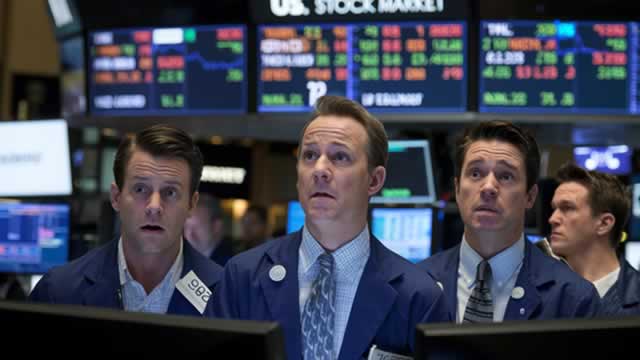
Fed Chair Powell: We are well positioned to wait and see how the economy evolves
CNBC Television· 2025-12-10 20:06
Our monetary policy actions are guided by our dual mandate to promote maximum employment and stable prices for the American people. At today's meeting, the committee decided to lower the target range for the federal funds rate by a quarter percentage point to 3 to 3 and 3/4%. In the near term, risks to inflation are tilted to the upside and risks risks to employment to the downside, a challenging situation.There is no risk-free path for policy as we navigate this tension between our employment and inflation ...
