
基层治理

Search documents
北京中轴线上“大思政课”迎来升级迭代
Zhong Guo Qing Nian Bao· 2025-07-26 22:10
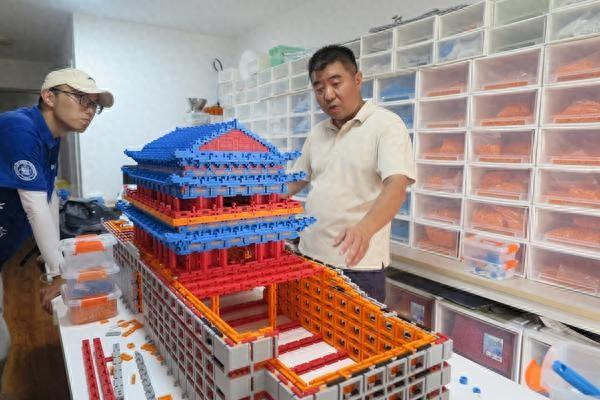
Core Points - The Beijing Central Axis has been officially recognized as a UNESCO World Heritage site, marking a significant cultural achievement for China [2][3] - The integration of the Central Axis into ideological and political education (思政课) has been enhanced, providing a practical framework for teaching and community engagement [3][6][7] Group 1: Educational Initiatives - The "Big Ideological and Political Class" project at Renmin University of China has been launched to incorporate the Central Axis into educational practices, enhancing students' understanding of cultural heritage [2][3] - Various universities, including Beijing Normal University and Renmin University, have developed programs that utilize the Central Axis as a case study for teaching, focusing on cultural resources and community engagement [3][5][6] - A digital map of practical teaching bases has been created to support the integration of the Central Axis into the curriculum, highlighting key locations and resources [6][7] Group 2: Community Engagement - The "Small Courtyard Discussion Hall" in the Chaichang community serves as a model for grassroots governance, allowing residents to express their opinions and solve community issues [11][12] - Volunteer efforts in cultural heritage surveys have led to the discovery of over 800 cultural relics, demonstrating the active involvement of students in community and cultural preservation [13][14] - The research teams have engaged with local communities to understand the relationship between community governance and the preservation of the Central Axis, emphasizing the importance of grassroots participation [15][16]

总编有约·“两高四着力”调研行丨基层治理的“三重辩证法”
He Nan Ri Bao· 2025-07-26 01:48
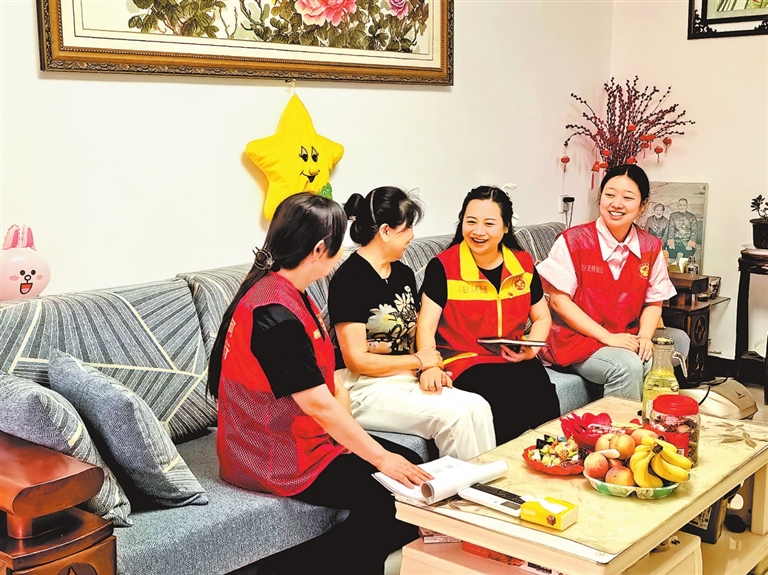
Core Insights - The article emphasizes the importance of grassroots governance and community engagement in enhancing social management and service delivery [1][5][11] Group 1: Governance Structure - The governance model in the Lijiang Road community of Luoyang City features clear roles for community leaders, enhancing accountability and responsiveness [2][4] - A grid-based organizational system has been established, integrating various community resources and ensuring comprehensive coverage [5][7] - The "one long + multiple specialists + N part-time" model has created a workforce of 28,000 grid members, facilitating effective community management [7] Group 2: Community Engagement - The community has implemented a "one-click four-response" service for elderly residents, ensuring rapid assistance through technology [13] - Volunteer initiatives have expanded significantly, with the establishment of the province's first volunteer party committee, growing from 1 to 22 volunteer teams [14][15] - The community center serves as a multifunctional space, promoting social interaction and volunteerism among residents [15] Group 3: Service Delivery - The integration of traditional methods and modern technology is highlighted as essential for addressing community needs effectively [8][11] - Direct engagement with residents through face-to-face interactions fosters trust and responsiveness in service delivery [9][10] - The community's approach to governance is characterized by a balance of grassroots involvement and technological support, enhancing overall service quality [12][13]
十五届市委第十轮巡察和对村提级巡察完成反馈
Nan Jing Ri Bao· 2025-07-24 02:46
Group 1 - The 15th Municipal Party Committee's 10th round of inspections and feedback on village-level inspections have been completed [1] - The feedback process involved both centralized feedback and "one-on-one" feedback from inspection teams to the inspected units [1] - The feedback highlighted issues within the inspected party organizations and emphasized the need for serious implementation of rectification responsibilities [1] Group 2 - Seven municipal inspection teams provided feedback to 26 villages (communities) regarding the results of the elevated inspections [2] - The feedback included a list of issues and emphasized the importance of local party committees taking responsibility for rectification [2] - The rectification work should be integrated with educational initiatives and the concentrated rectification of corruption issues at the grassroots level [2]
溧阳:“协商引擎”激活基层治理新动能
Xin Hua Ri Bao· 2025-07-23 16:22
Core Viewpoint - The Licheng Street Political Consultative Committee has established a service center that integrates consultation, public opinion collection, and learning exchanges, enhancing grassroots governance and community engagement [1][2]. Group 1: Service Center Features - The Licheng Street Political Consultative Committee service center is built to high standards with five functional areas, including committee workspaces and public opinion contact points, equipped with advanced digital devices and online opinion collection systems [2]. - The center has 18 members from various sectors, implementing a "rotating reception + thematic consultation" mechanism to facilitate community access to diverse representatives [2]. - The center aims to achieve three goals: create a closed-loop consultation process, establish member performance records, and set up QR codes for public opinion collection, impacting 47 villages/communities and 270,000 residents [2]. Group 2: Innovative Mechanisms - The center promotes a "Licheng Model" for grassroots consultation, with a focus on party leadership and community engagement through joint activities with local party branches [3]. - A "three cards and one meeting" system is established for standardized management, including performance tracking for committee members and immediate feedback mechanisms for public opinions [3]. - The "Consultation + Collaboration" model integrates various resources, enhancing community governance and conflict resolution through partnerships with community networks and professional groups [3]. Group 3: Achievements and Impact - The center has initiated a "micro-consultation, big livelihood" campaign addressing old community issues, resulting in multiple improvement projects across eight neighborhoods [4]. - A "public opinion sorting and graded handling" mechanism categorizes community feedback for efficient resolution, with simple issues addressed on-site and complex ones escalated to formal consultation meetings [4]. - The center has successfully increased the submission rate of grassroots governance proposals by committee members to 75% by the first quarter of 2025 through a combination of theoretical learning and practical experience [5][6].
纪委书记谈监督丨凝聚监督合力释放治理效能
Zhong Yang Ji Wei Guo Jia Jian Wei Wang Zhan· 2025-07-23 00:16
Group 1 - The core viewpoint emphasizes the need for continuous promotion of strict governance of the Party at the grassroots level, with a focus on enhancing the effectiveness of grassroots governance systems and supervision mechanisms [1] Group 2 - The integration of supervisory forces is highlighted, with the establishment of 4 supervisory collaboration zones and a clear mechanism for collaboration among various levels of disciplinary inspection and supervision [1] - A dynamic replenishment mechanism for township disciplinary inspection and supervision personnel is established to ensure stability and effectiveness in supervision [1] - The role of village-level supervisory members is emphasized, creating a collaborative framework for supervision that integrates county, township, and village levels [1] Group 3 - Innovative supervisory methods are introduced, including a responsibility checklist that clarifies 26 supervisory tasks across 5 areas, forming a practical and actionable supervisory system [2] - The implementation of a "two lists and one process" mechanism at the village level aims to enhance the supervision of responsibilities and power operations [2] - The development of an information-based supervision system is underway to facilitate real-time data entry and analysis, improving the efficiency of supervision [2] Group 4 - The quality of supervision is being enhanced through proactive engagement of disciplinary inspection personnel in grassroots areas, focusing on issues related to rural collective asset management and the distribution of welfare funds [3] - A mechanism for reviewing case quality is established to ensure effective oversight and timely rectification of identified issues [3] - Continuous training for disciplinary inspection personnel is emphasized to improve their legal awareness and supervisory capabilities, particularly in relation to rural revitalization and public welfare policies [3]
朱卫金: 退伍老兵践初心 社区公认“解铃人”
Hang Zhou Ri Bao· 2025-07-22 02:51
"有些小事,不去及时解决就会变成大事。"老朱说占着自己人头熟的优势,在处理一些纠纷时,社 区总会叫上他,因为他是大家公认的"解铃人"。去年,两户居民因停车问题争执不下,一位老人甚至搬 凳拦路。朱卫金赶到后分头劝解:"他骂人是他不对,但你拦路,就是你做得不好了。你们都有做得过 激的地方,都有错。"最终,双方握手言和,以拥抱化解积怨。社区党委副书记徐翔感慨:"老朱这样的 志愿者,是基层治理的'润滑剂'。" 在桐庐县桐君街道舞象社区,78岁的老党员朱卫金是居民口中的"楼下书记"。党龄55年的他,退伍 不褪色,退休不退志,20年如一日扎根社区,调解纠纷、排忧解难,用行动诠释"居民无小事"的初心担 当。 7月9日,一位居民急匆匆冲进"楼下书记"办公室,抱怨邻居在楼里养鸡,夏日异味扰民。朱卫金边 记录边安抚:"居民楼里是不能养鸡的,我和社区干部这几天就去找他聊一聊。"这样的场景几乎每天都 在上演。2023年舞象社区成立后,5名老党员组成"楼下书记"志愿服务队,朱卫金是主力之一。从楼道 长到"书记",他笑称:"每天忙的都是'鸡毛蒜皮',但小事不解决,就会变大事。" 朱卫金是一名退伍军人,曾就职于桐庐县交通运输局。退休后,他 ...
从有形覆盖到有效覆盖 黑龙江以有力监督赋能基层治理
Zhong Yang Ji Wei Guo Jia Jian Wei Wang Zhan· 2025-07-22 00:53
Core Viewpoint - The article emphasizes the importance of strengthening grassroots supervision and enhancing the effectiveness of local governance through comprehensive reforms in the discipline inspection and supervision system in Heilongjiang Province [3][4][5]. Group 1: Strengthening Grassroots Supervision - The Heilongjiang Provincial Discipline Inspection Commission is focused on enhancing grassroots supervision by implementing 75 specific measures to improve oversight and accountability [4][5]. - A package of measures has been established to integrate supervision efforts across various departments, ensuring a collaborative approach to governance [4][5]. - The province has initiated a mechanism for targeted supervision, with leaders assigned to oversee 13 cities, ensuring direct accountability and support for local governance [4][5]. Group 2: Addressing Resource Allocation and Efficiency - The provincial commission is addressing issues of insufficient manpower and resource allocation by restructuring and optimizing the internal organization of county-level discipline inspection bodies [5][6]. - A total of 125 county-level discipline inspection offices have been restructured to enhance their operational efficiency and effectiveness in handling cases [5][6]. - The establishment of 467 collaborative zones at the township level aims to improve the coordination and effectiveness of supervision efforts [6]. Group 3: Enhancing Case Handling and Accountability - The province has prioritized case handling as a key aspect of supervision, implementing a series of measures to improve the quality and efficiency of investigations [9][10]. - A "one case, three reviews" mechanism has been introduced to ensure thorough oversight of cases handled by township discipline inspection offices [10]. - The commission is focusing on enhancing the supervision of key local leaders to prevent corruption and ensure accountability [9][10]. Group 4: Focusing on Public Welfare and Community Needs - The commission is committed to addressing public concerns by integrating grassroots supervision with the resolution of local issues, particularly in areas affecting people's livelihoods [11][12]. - Specific attention is given to the management of rural collective assets, with targeted supervision of village leaders to prevent misappropriation of resources [12]. - The implementation of a "smart seal" system aims to enhance transparency and accountability in local governance, addressing issues related to improper use of authority [11]. Group 5: Continuous Improvement and Reform - The provincial commission is dedicated to ongoing reforms aimed at enhancing the capabilities of grassroots supervision bodies, ensuring that the public feels the impact of anti-corruption efforts [13].
坚定文化自信 建设文化强国 | 好家风支撑起全社会的好风气
Zhong Yang Ji Wei Guo Jia Jian Wei Wang Zhan· 2025-07-17 23:57
Group 1 - The core viewpoint emphasizes the importance of family in Chinese culture, stating that "the foundation of the world lies in the family" and highlighting the role of family values in societal stability and moral education [3][4][5] - The concept of "family" is presented as the basic unit of social structure, essential for cultural transmission and moral cultivation, thus serving as a cornerstone for social stability [4][5] - Good family values are described as a silent yet powerful force that nurtures both individual character and societal harmony, reinforcing the idea that a harmonious family leads to a stable society [6][8] Group 2 - The article discusses the role of family values in grassroots governance, indicating that good family values can enhance community engagement and reduce social friction [8][9] - It highlights that family values serve as a protective barrier against negative influences, fostering a sense of responsibility and community spirit among individuals [7][9] - The text underscores the necessity of integrating family values into the governance framework, suggesting that strong family ethics can lead to improved public order and community cooperation [9][10] Group 3 - The significance of family values in the context of leadership is addressed, noting that leaders' family ethics directly impact their political integrity and public perception [10][11] - The article stresses that family values are not merely personal matters but are crucial for the overall political climate and governance effectiveness [12][13] - It concludes that cultivating good family values among leaders is essential for fostering a clean and transparent political environment, thereby contributing to national governance [11][13]
提高城市治理现代化水平
Jing Ji Ri Bao· 2025-07-17 22:09
Core Viewpoint - Urban governance in China is transitioning from rapid growth to stable development, focusing on improving the quality and efficiency of existing urban assets to address urban challenges and promote sustainable development [1][5]. Group 1: Urbanization and Challenges - China's urbanization has led to a significant increase in the urban population, projected to reach 943.5 million by the end of 2024, with an urbanization rate of 67% [2]. - The rapid urban expansion has resulted in structural contradictions, such as high population density leading to housing demand and high prices, traffic congestion, and environmental degradation [2][5]. - Urban governance must address issues like aging infrastructure, public safety challenges due to population mobility, and increasing waste management pressures [2][4]. Group 2: Urban Governance Framework - Urban governance encompasses comprehensive management of urban planning, infrastructure, public services, and environmental protection, aiming for a modern, livable, and resilient city [3]. - Governance is categorized into four areas: infrastructure maintenance, financial management, addressing diverse public needs, and ecological protection [4]. - The focus is shifting from new construction to the maintenance and upgrading of existing infrastructure, emphasizing urban renewal projects [4][5]. Group 3: Super Large Cities - China has 22 super large cities, which account for 22% of the national population and 35% of GDP, highlighting their critical role in economic growth and innovation [7][8]. - These cities face unique governance challenges due to their size, complexity, and rapid population movement, necessitating innovative governance strategies [8][10]. - Effective governance in these cities is essential for enhancing public service delivery and ensuring social equity [8][10]. Group 4: Innovations in Governance - Recent initiatives have focused on improving public service accessibility and efficiency, such as the "15-minute public service circle" concept [8]. - Digital technologies like big data and AI are being integrated into urban governance to enhance service delivery and operational efficiency [9]. - Cross-regional governance models are being developed to address the challenges of metropolitan areas, promoting collaborative development [9]. Group 5: Grassroots Governance - The emphasis on grassroots governance aims to enhance community engagement and service delivery, with successful models emerging from cities like Beijing and Shanghai [12][13]. - Innovations such as "接诉即办" (immediate response to complaints) and "多格合一" (integrated grid management) are being implemented to improve responsiveness and efficiency in governance [14][15]. - Strengthening community self-management and participation is crucial for addressing local issues and enhancing governance effectiveness [15].
徐州市贾汪区:“两个没有”消怨解惑 基层治理更见实效
Xin Hua Ri Bao· 2025-07-16 02:46
在此基础上,根据收集的问题,按照"民生急难、作风顽疾、政策盲区、历史遗留"分层分类建立台账, 定期对照问题台账开展分析研判,明确整改责任单位、时间节点、整改要求。对复杂疑难问题,开展联 席会议"一事一协商",明确问题清单、责任清单、措施清单,必要时启动现场办公,切实帮助群众解决 急难愁盼问题。走访茱萸山街道龙门村期间,有群众反映,龙门村四组泉眼拓展出的蓄水池能满足枯水 季大部分村民种地需求,但由于蓄水池边的场地和土路狭窄,已发生数起拉水车辆因拥挤滑进蓄水池和 路边大沟的情况。走访组随即到现场实地查看情况,召集村干部、党员和村民代表就地讨论解决方案。 经讨论,该村决定对蓄水池周边区域道路进行拓宽和平整,从根本上解决群众麻烦和安全隐患。今年以 来,区纪委监委机关班子成员、各室组负责人通过到相关单位及属地走访,发现群众急难愁盼39个,帮 助推动解决问题29个。 区纪委监委还通过开展常态化监督,打造"收集—研判—督办—反馈"全链条机制;同时与区融媒体中心 协作,通过贾汪新闻等媒体栏目播发问题反映渠道(如监督电话、邮箱、各类监督小程序等)、民生领域 典型案例等,增加群众知晓度,扩大监督影响力;针对农村集体"三资"管理难 ...