大思政课

Search documents
“大思政课”视域下农村订单定向医学生医德教育实践路径
Xin Lang Cai Jing· 2026-02-03 19:46
Core Viewpoint - The article emphasizes the importance of cultivating medical ethics among rural-oriented medical students through a comprehensive educational approach that integrates professional skills with moral education [1][2][3][4] Group 1: Educational Strategies - The cultivation of rural-oriented medical students requires not only the enhancement of professional skills but also a strong emphasis on medical ethics education [1] - Schools should integrate moral education into medical courses, helping students understand the ethical responsibilities and social missions behind their profession [1][2] - Experts should be organized to explore the ideological elements within medical courses, linking them to the spirit of selfless service and respect for life [1][2] Group 2: Practical Training - The combination of situational simulations and clinical practice is crucial for deepening students' sense of responsibility and mission [2] - Schools should create realistic medical scenarios that reflect rural conditions, allowing students to experience the complexities of clinical work [2] - Early internships in rural hospitals should be arranged to help students understand the challenges of rural healthcare and the actual needs of patients [2] Group 3: Humanistic Care - Establishing good relationships with patients and conveying humanistic care are essential for improving medical quality and ethics education [3][4] - Schools should actively cultivate communication skills and empathy among rural-oriented medical students through dedicated courses [3] - Engaging students in understanding the humanistic values of medicine will help them become compassionate healthcare providers [3][4]
和平区检察院“大思政课”实践教学基地揭牌
Xin Lang Cai Jing· 2026-01-28 22:02
Group 1 - The Peace District Procuratorate's "Procuratorial Love Studio" has been awarded the title of "Great Ideological and Political Course" practical teaching base by the Municipal Education Working Committee and the Municipal Education Commission [1] - A ceremony was held for the unveiling of the teaching base, attended by representatives from the district education bureau, Tianjin Youth Development Promotion Center, and students and teachers from local schools [1] - The procuratorial staff delivered a themed ideological and political lesson titled "Promoting Revolutionary Traditions and Becoming New Era Youth," centered around the exemplary deeds of a procurator [1] Group 2 - The Peace District Procuratorate plans to leverage the platform of the teaching base to enhance the role of legal vice principals and strengthen collaboration with educational departments [1] - The goal is to establish the base as a nurturing ground for youth to solidify their ideals, improve legal literacy, and achieve comprehensive development [1] - This initiative aims to jointly safeguard the healthy growth of minors [1]
深化思政课建设与党的创新理论武装同步推进机制
Xin Lang Cai Jing· 2026-01-27 18:56
Core Viewpoint - The construction of ideological and political courses (思政课) is guided by the Party's innovative theories, emphasizing the need for synchronized advancement of course development and theoretical education to enhance the ideological and political education of youth [1][2]. Group 1: Mechanism of "Synchronized Advancement" - The "synchronized advancement" mechanism aims to bridge the gap between the construction of ideological courses and the Party's innovative theories, creating a cohesive system with aligned goals, shared content, synchronized processes, and mutually reinforcing effects [2]. - This mechanism includes four sub-mechanisms: 1. Theoretical learning and implementation mechanism, which addresses fragmentation and passivity in theoretical education, establishing a systematic and regular learning framework [2]. 2. Collective lesson preparation and implementation mechanism, which transforms theoretical learning into teaching consensus and design through collaborative efforts [2]. 3. Teaching implementation and "three advances" mechanism, focusing on integrating Party theories into textbooks, classrooms, and students' minds [3]. 4. Effectiveness evaluation and feedback mechanism, which ensures quality assurance through scientific assessment and dynamic optimization of educational outcomes [3]. Group 2: Key Paths for Deepening the Mechanism - Strengthening leadership and establishing a theoretical learning center within the Marxism college to enhance the proactive and systematic nature of theoretical education [4][5]. - Optimizing the collective lesson preparation and discussion mechanism within ideological course teaching and research groups to foster a collaborative environment for theoretical and teaching innovation [5]. - Focusing on frontline teaching, clarifying the responsibilities of teachers in implementing the "three advances," and enhancing their teaching capabilities through various support mechanisms [5][6]. Group 3: Innovative Directions for Deepening the Mechanism - Constructing a collaborative educational resource pool under the "big ideological course" framework, integrating internal and external resources for practical teaching [7]. - Enhancing the timeliness and accessibility of academic research and theoretical dissemination, encouraging teachers to engage in research that supports teaching [7]. - Exploring the integration of technology with ideological education, utilizing digital tools to create engaging learning environments and innovative teaching methods [8].
贯通学段、学科融汇、走出校园,北京“大思政课”的N种打开方式
Xin Lang Cai Jing· 2026-01-24 23:43
Core Viewpoint - Beijing is innovating its ideological and political education (思政教育) by integrating it with practical experiences and real-world applications, aiming to cultivate a sense of responsibility and idealism among students through various engaging methods [1][2][3]. Group 1: Integration of Education - The initiative "Love Beijing, Love Innovation" aims to bring educational experiences to the forefront of national technological development, allowing students to engage with cutting-edge innovations [1][2]. - A comprehensive integration of ideological education across different educational levels (primary, secondary, and higher education) is being implemented, with 95 integrated innovation units and 200 practical teaching bases established [2][3]. Group 2: Multi-Disciplinary Collaboration - The collaboration among various disciplines is emphasized to enhance the depth and relevance of ideological education, with a focus on integrating resources from different academic fields [4][5]. - The establishment of a multi-disciplinary innovation center aims to support the development of high-quality ideological education, with initiatives like the "Xi Jinping Thought on the Rule of Law" courses being introduced [5]. Group 3: Engaging Learning Methods - The "Big Ideological Class" concept is being brought to life through diverse formats such as performances, exhibitions, and community engagement activities, making learning more relatable and impactful for students [6][7]. - Over 4,000 activities have been organized in 2023 under the "Colorful Beijing Culture, Youth Bloom" initiative, reaching 400,000 university students and enhancing their educational experience [7][8]. Group 4: Community and Historical Engagement - The integration of historical education into the curriculum is highlighted, with activities that allow students to learn about significant historical events through immersive experiences [8]. - The initiative encourages students to connect with their cultural heritage and understand the importance of historical context in shaping their future aspirations [8].
推动国防教育与思政教育有机互融
Xin Lang Cai Jing· 2026-01-21 21:34
Core Viewpoint - The integration of national defense education and ideological and political education in higher education is essential for cultivating talents aligned with national security and the mission of national rejuvenation [1][2]. Group 1: Integration of Education - National defense education and ideological education share common goals, targeting young students and focusing on value guidance, spiritual shaping, and behavior cultivation [2]. - The current integration of these two educational aspects faces challenges such as fragmented course systems and insufficient resource integration, which hinder their combined effectiveness [2]. - A collaborative educational approach is necessary, breaking down barriers in top-level design and forming a cohesive operational mechanism to fully incorporate national defense education into ideological work [2]. Group 2: Resource Collaboration - The establishment of a multi-entity collaborative mechanism is crucial, involving unified leadership from the party, departmental cooperation, and joint efforts from professional faculty [3]. - Strengthening collaboration between universities and local governments, as well as military-civilian partnerships, can expand practical platforms for students to experience the contemporary value of national defense [3]. - Emphasizing student development and innovating teaching methods can enhance the effectiveness of both national defense and ideological education, transforming passive acceptance into active recognition [3]. Group 3: Long-term Commitment - The deep integration of national defense and ideological education requires sustained efforts to work in the same direction and collaborate effectively [3]. - This integration aims to enhance the sense of mission and effectiveness in higher education, contributing to the cultivation of students with firm beliefs, strong skills, and a sense of responsibility [3].


把道理讲到学生心里
Ren Min Ri Bao· 2026-01-15 00:24
Group 1 - The core viewpoint emphasizes the transformation of ideological and political education (思政课) from a teacher-centered knowledge delivery model to a more interactive and engaging learning environment that fosters student participation and emotional resonance [2][3] - The concept of "Big Ideological and Political Education" has been widely promoted, expanding the forms of ideological education and creating new teaching landscapes, as exemplified by Fudan University's "Path to a Strong Nation" course [2] - Practical experiences, such as field investigations and case studies, are integrated into the curriculum to enhance students' understanding of real-world issues and to connect personal ideals with national development [2] Group 2 - The future direction of ideological education will focus on both the content taught and the needs of students, aiming to make the courses more appealing and impactful [3] - The goal is to ensure that ideological education becomes a course that students are eager to attend, love to learn, and deeply believe in, reflecting a commitment to continuous improvement [3]
二〇二五十大教改热词发布
Ren Min Ri Bao Hai Wai Ban· 2026-01-11 23:07
Core Viewpoint - The article discusses the implementation of a three-year action plan for building a strong education system in China, highlighting various reforms and initiatives aimed at improving educational quality and accessibility across different levels of education [10]. Group 1: Educational Reforms - The "Big Ideological and Political Course" aims to integrate social resources into education, enhancing the teaching of the Communist Party's stories and promoting national rejuvenation [11]. - The initiative "Daily Exercise for 2 Hours" mandates that primary and secondary school students engage in at least two hours of physical activity daily, as part of a broader effort to reform school sports [12]. - The "Adjustment and Optimization of Academic Programs" focuses on aligning higher education disciplines with national strategic needs, resulting in the establishment of new programs in fields like artificial intelligence and integrated circuits [13]. Group 2: Higher Education Initiatives - "University Technology Transfer" is emphasized as a key reform to enhance the integration of education, technology, and talent, facilitating the conversion of academic research into practical applications [14][15]. - The "Excellence Engineer Training" program aims to cultivate high-level engineering talents through a collaborative education model that integrates industry needs with academic training [16]. - "Expansion of Quality Undergraduate Education" seeks to increase enrollment in top-tier universities while ensuring that the quality of education is maintained, particularly in emerging fields [19][20]. Group 3: Support for Rural Education - The "County High School Revitalization" plan aims to improve the quality of education in rural areas by optimizing resource allocation and enhancing teaching conditions [17]. - The "Free Year Before School" initiative will eliminate fees for the final year of preschool education in public institutions, addressing financial barriers for families [18]. Group 4: Vocational Education - The "New Dual High for Vocational Education" focuses on enhancing the quality of vocational training to better serve industry needs, with a significant proportion of programs aligned with major national industries [21]. Group 5: Collaborative Education Models - The "Education Alliance" initiative promotes collaboration among schools, families, and communities to support student development and address educational challenges [22].
走出课堂,让思政课更有力量
Xin Lang Cai Jing· 2026-01-11 19:16
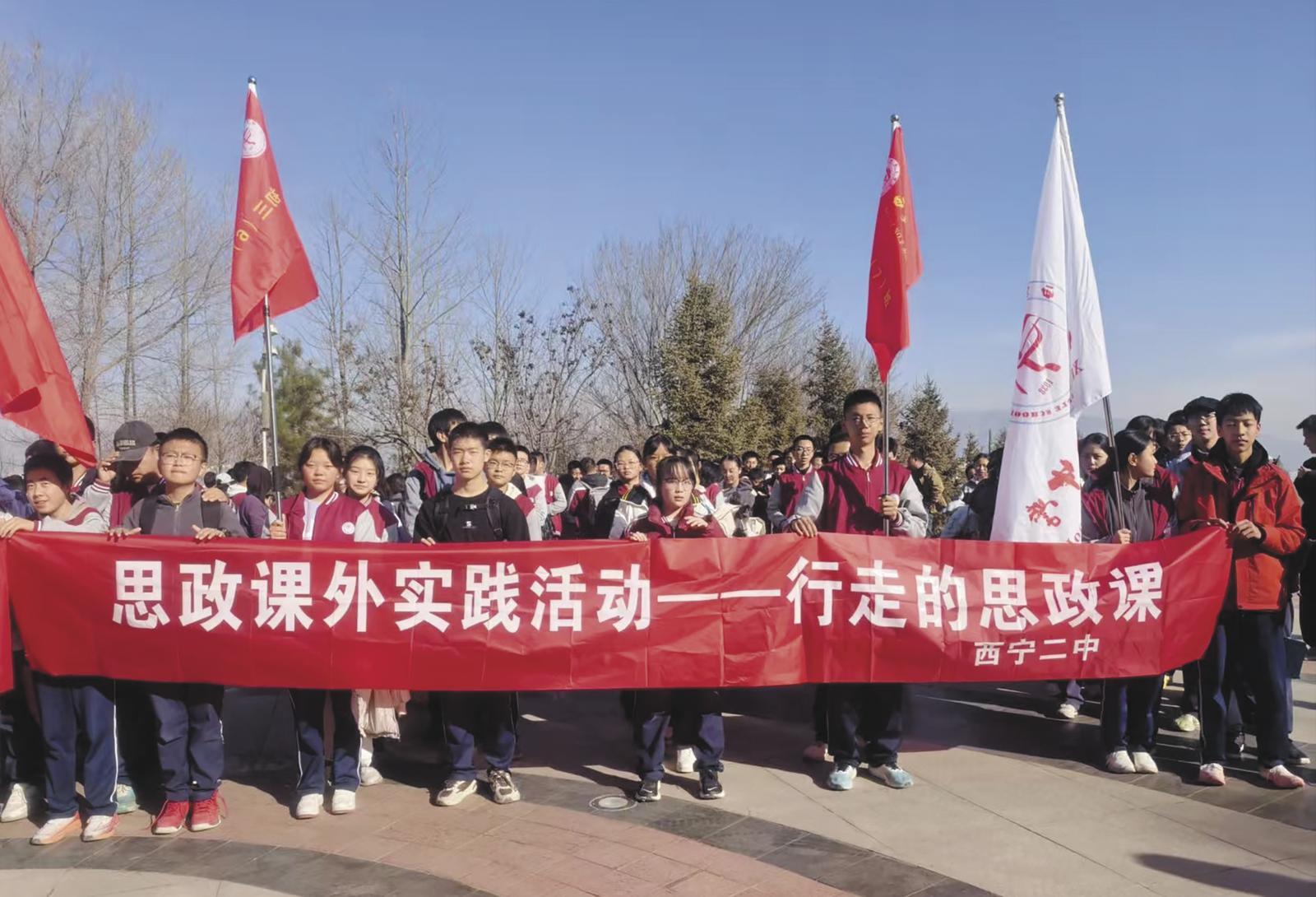
Core Viewpoint - The article highlights the innovative practices in ideological and political education at Xining No. 2 Middle School, emphasizing student-led initiatives and the integration of real-world experiences into the curriculum [2][3][6] Group 1: Student Engagement and Initiative - The desk dance competition organized entirely by students showcases their ability to plan, execute, and collaborate, marking a shift from teacher-led activities to student-driven initiatives [2] - The school encourages students to take ownership of their learning experiences, fostering a culture where they can express ideas and implement projects independently [6] Group 2: Curriculum Innovation - Xining No. 2 Middle School is part of a broader initiative to innovate the ideological and political education curriculum, focusing on a systematic and multi-dimensional approach to character development [2][4] - The school emphasizes the importance of integrating theoretical knowledge with practical experiences, ensuring that ideological education is not confined to the classroom but extends into students' daily lives and social participation [3][4] Group 3: Real-World Applications - Students participate in field trips to significant sites, such as the Chinese Workers' and Peasants' Red Army Memorial Museum, where they engage with historical narratives that enhance their emotional connection to the subject matter [3] - Practical experiences, such as visits to local facilities like the sewage treatment plant, allow students to apply ecological concepts in real-world contexts, making abstract ideas more tangible [3][5] Group 4: Holistic Development - The school adopts a progressive approach to ideological education, tailoring content and activities to different educational stages, thereby fostering a sense of social responsibility and public participation among students [4] - Various extracurricular activities, including cultural events and community service, are integrated into the curriculum, promoting a comprehensive educational ecosystem where values are instilled in a subtle yet impactful manner [5][6]
发挥“大思政课”优势 拓展全面育人新格局
Xin Lang Cai Jing· 2026-01-11 18:13
Core Viewpoint - The construction of ideological and political theory courses (思政课) is essential for cultivating comprehensive socialist builders and successors, requiring innovation and collaboration to enhance its development in the new era [1] Group 1: Teacher Development - The need to build a strong teaching team for ideological and political courses, characterized by political strength, deep sentiment, innovative thinking, broad vision, strict self-discipline, and integrity [1] - Emphasis on the recruitment, training, assessment, and motivation of full-time ideological and political teachers to enhance their role as the main force in education [1] - Encouragement for university leaders to engage with teachers, participate in collective lesson preparation, and invite various professionals to contribute to the teaching process [1] Group 2: Classroom Expansion - The concept of expanding the "big classroom" to include social life, integrating significant achievements of socialism into the curriculum [2] - The importance of addressing students' concerns about modernization and common prosperity through real-life examples and stories [2] - Encouragement for students to engage in social practice outside the classroom to deepen their understanding of national conditions and the party's innovative theories [2] Group 3: Resource Integration - The necessity of integrating high-quality ideological and political teaching resources to support effective teaching [3] - Breaking down barriers between disciplines and educational stages to promote collaborative education across all levels [3] - Utilizing various teaching resources, including traditional and modern technologies, to create engaging and relatable learning experiences for students [3]
为时代立心,为青年铸魂:上海电影艺术职业学院举行大思政课数智化实践育人成果展示会
Xin Lang Cai Jing· 2026-01-05 05:19
Core Viewpoint - Shanghai Film Art Vocational College is leveraging digital intelligence technology to innovate ideological and political education, aligning with the goals set by the 20th National Congress of the Communist Party of China [1][22]. Group 1: Event Overview - The college held a showcase titled "For the Times to Establish Heart, For Youth to Forge Soul," focusing on the integration of AI in education [1]. - Key leaders from various educational and political organizations attended the event, highlighting the importance of ideological education [3]. Group 2: Educational Innovations - The college emphasizes the construction of the Marxism Academy, integrating local case studies with red film analysis to enhance ideological education [3]. - A red image resource library has been established, incorporating VR and AI technologies to transform red culture learning from a lecture-based approach to an experiential one [3][5]. - The college plans to develop new courses such as "Marxist Thought in Film" and "Digital Creation of Red Images," aiming to deepen the integration of art, ideology, and digital technology [5]. Group 3: Course Examples - The "Telling Chinese Stories in English" project utilizes AI to explore new pathways for cross-linguistic value expression, achieving significant results in national competitions [6]. - The "Digital Picture Book Creation" course employs AI to reconstruct red stories and traditional culture, providing immersive learning experiences [8]. - The "Singing for the Country" project creates an immersive classroom environment, helping students understand the historical and cultural significance of national symbols [10]. Group 4: Community Engagement - The college has established a student red culture publicity team and created a "Red Visual Map Diary" to facilitate access to red cultural sites [15]. - A digital interactive game, "Meow Star Adventure," has been developed to integrate red culture with psychological wellness, addressing students' mental health [18]. Group 5: Future Directions - The college aims to continue enhancing the integration of digital technology with ideological education, addressing challenges such as fragmentation in political education [22][23]. - Experts have recognized the potential of AI to reshape ideological education, encouraging further research and innovation in this area [22].