
全面从严治党

Search documents
记忆 | 以生命践行初心追忆首届中央监察委员会成员王荷波、杨匏安、阮啸仙的光辉事迹
Zhong Yang Ji Wei Guo Jia Jian Wei Wang Zhan· 2026-01-16 00:24
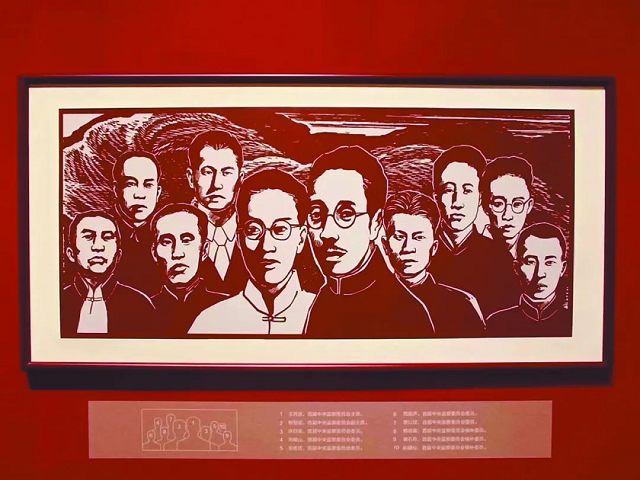
中国共产党首届中央监察委员会成员群像。(资料图片) 党员干部在南京江北新区红色广场参观学习王荷波的先进事迹,传承红色基因,砥砺奋进力量。 南京 江北新区纪检监察工委供图 我们要以党的初心为本心、以党的使命为生命,把全部智慧和力量凝聚到实现党的中心任务上来。 1927年4月至5月,中共五大在武汉召开,大会在党史上第一次选举产生中央监察委员会,由正式委员7 人、候补委员3人组成。 后来在革命洪流中,10位委员历经生死考验,无一叛变革命,无愧于党和人民的信任。其中8人相继牺 牲,牺牲时年纪最大者45岁,最小者21岁。 王荷波、杨匏安、阮啸仙等监察委员以生命为誓,扛起反腐败的历史重任,用热血铸就了不朽的廉洁丰 碑。 王荷波:铁骨铸忠诚的纪律标杆 王荷波(1882年—1927年),中共五大当选为中央监察委员会首任主席。他是中国工人运动的先驱。 出身贫苦的他,早年在津浦铁路当工人,历经资本家与军阀的双重压迫,深刻体会到阶级剥削的残酷。 1922年,他入党后迅速成长为工运领袖。他办事公正、公私分明,从不乱花工人群众一文钱。担任工会 领导期间,王荷波始终将纪律与廉洁刻在心上。他创办工人合作社,制定严格的财务管理制度,亲自记 ...

奋进开局之年 | 认真学习全会精神 坚决抓好贯彻落实
Zhong Yang Ji Wei Guo Jia Jian Wei Wang Zhan· 2026-01-16 00:24
习近平总书记在二十届中央纪委五次全会上强调,要保持高压态势不动摇,有腐必反、有贪必肃、除恶 务尽,让腐败分子没有藏身之地。作为一名纪检监察干部,要深刻把握"两个仍然"的重大判断,始终保 持高压态势不动摇,一步不停歇、半步不退让,丰富惩治方法,及时发现、准确识别、有效治理各类腐 败问题,进一步拓展反腐败斗争深度和广度。要把各方面监督贯通起来,在"室组"联动监督、"室组 地"联合办案等机制上持续发力,在线索移送、案件管辖、监督检查、审查调查、以案促改促治等方面 加强深度协作,形成强大监督合力。(云南省纪委监委干部 陈浩) 习近平总书记在二十届中央纪委五次全会上,对更加清醒坚定地推进反腐败斗争作出战略部署,为持续 深化群众身边不正之风和腐败问题集中整治提供了根本遵循。2026年,我们将围绕"强化执纪执法为 民"这一部署,在激发内生动力上持续加压发力,用好预警机制,进一步健全责任联动体系;在惩治贯 通推进上持续加压发力,既清"蓝藻",又除"淤泥",不断增强治理腐败综合效能;在推动深挖实改上持 续加压发力,有序有力有效推进农村集体"三资"管理、医保基金管理等整治工作,用心用情用力办好民 生实事,不断增强群众获得感、幸福 ...
持续加强纪检监察工作规范化法治化正规化建设锻造忠诚干净担当、敢于善于斗争的纪检监察铁军
Zhong Yang Ji Wei Guo Jia Jian Wei Wang Zhan· 2026-01-16 00:24
Group 1 - The core message emphasizes the significant responsibility and glorious mission of the disciplinary inspection and supervision agencies in promoting the Party's self-revolution and strict governance [1][2] - The focus is on strengthening the standardization, legalization, and normalization of disciplinary inspection work, aiming to improve the quality and effectiveness of supervision and enforcement [1][3] - There is a call for the cultivation of a loyal, clean, and responsible disciplinary inspection team that is capable of fighting and skilled in governance [1][2] Group 2 - The importance of high standards and quality in the construction of standardized, legalized, and normalized disciplinary inspection work is highlighted as both a major political task and an important development opportunity [2][3] - Continuous efforts will be made to enhance the theoretical and professional skills of disciplinary inspection personnel, as well as to improve mechanisms and systems for better effectiveness [2][3] - The need for a systematic approach to the construction of standardized, legalized, and normalized disciplinary inspection work is emphasized, focusing on key areas and addressing existing issues [3][4] Group 3 - The establishment of a comprehensive disciplinary inspection team within state-owned enterprises has been achieved, aiming to enhance the capabilities of inspection personnel [4] - There is a commitment to improve internal power restriction mechanisms and management supervision systems to ensure that all actions are conducted within the legal framework [4] - Strict management and supervision of disciplinary inspection personnel's behavior outside of work hours will be enforced to prevent corruption and abuse of power [4]
抓落实,要“坚决有力”也要“认真探索”
Xin Lang Cai Jing· 2026-01-15 19:28
Group 1 - The core message emphasizes the importance of firmly implementing the major decisions and deployments of the Central Committee, highlighting the need for strong execution and a comprehensive perspective [1][2] - The current political task for the entire party and nation is to deeply understand and implement the spirit of the Fourth Plenary Session of the 20th Central Committee, which outlines significant strategic tasks for advancing Chinese-style modernization [2][4] - Key strategic tasks identified include building a modern industrial system, developing new productive forces tailored to local conditions, establishing a unified national market, and promoting high-level opening-up [2][4] Group 2 - The implementation of policies must be practical and tailored to local conditions, avoiding a one-size-fits-all approach, and ensuring that local realities are considered in the execution of higher-level directives [3][4] - There is a need for a balance between strong adherence to central policies and the creative exploration of effective methods for local implementation, which should not contradict the overarching goals [5][6] - The evaluation of successful implementation is based on whether it aligns with the fundamental ideals of communism and the service-oriented purpose of the party, ensuring that actions do not deviate from national and local realities [6]
壹视界·微视频丨党员干部如何拒腐防变?总书记讲述的三个故事引深思
Xin Lang Cai Jing· 2026-01-15 14:20
03:07 1月12日,习近平总书记在二十届中央纪委五次全会上发表重要讲话。 习近平总书记强调,腐败是党和国家事业发展进程中的拦路虎、绊脚石,反腐败是一场输不起也决不能 输的重大斗争。 新时代以来,推进全面从严治党和反腐败斗争力度之大前所未有,成效有目共睹。但当前反腐败斗争形 势仍然严峻复杂,铲除腐败滋生土壤和条件任务仍然艰巨繁重。 党员干部如何守住拒腐防变防线?保持敬畏心,保持平常心,保持责任心——总书记讲述的三个故事引 人深思,蕴含着对广大党员干部的殷殷嘱托。 来源:人民日报客户端 ...
1月15日晚间央视新闻联播要闻集锦
Yang Shi Xin Wen Ke Hu Duan· 2026-01-15 14:09
Group 1 - Xi Jinping's important speech at the fifth plenary session of the 20th Central Commission for Discipline Inspection emphasizes the need for strict governance of the Party, aiming to provide strong support for the goals of the "14th Five-Year Plan" [6] - The speech has sparked enthusiastic responses among Party members and officials, who express commitment to advancing strict governance as a guiding principle for the "14th Five-Year Plan" [6] Group 2 - The Chinese government plans to introduce multiple financial policies by 2026 to support high-quality development of the real economy [3] - A press conference revealed that by the end of December 2025, the social financing scale is expected to grow by 8.3% year-on-year, and the broad money supply (M2) is projected to increase by 8.5%, significantly outpacing nominal GDP growth [12]
学习手记 | 抓落实,要“坚决有力”也要“认真探索”
Xin Hua She· 2026-01-15 10:57
Core Viewpoint - The article emphasizes the importance of implementing strict governance within the Communist Party, highlighting the need for resolute and effective execution of major decisions made by the Party leadership, particularly during the critical period of the 14th Five-Year Plan [5][7]. Group 1: Implementation of Party Decisions - The central message from the recent meeting of the Central Commission for Discipline Inspection is the call for a more resolute and effective implementation of the Party's major decisions [5][6]. - Xi Jinping stressed that maintaining the authority and centralized leadership of the Party is a fundamental requirement, and all levels must have a broad perspective and execution capability [7]. - The focus is on understanding and adhering to the strategic intentions of the Party, ensuring that local actions align with national directives without deviation [8]. Group 2: Local Adaptation and Practicality - The article discusses the necessity of adapting policies to local conditions, emphasizing that implementation should not be a mere replication of higher-level directives but should consider local realities [9][10]. - Xi Jinping pointed out the dangers of a one-size-fits-all approach, urging regions to creatively develop methods that suit their specific circumstances while adhering to the overarching goals of the Party [12]. - The importance of a correct view of performance is highlighted, ensuring that local actions do not stray from the Party's ideals and serve the people effectively [12].
滨州市人大常委会党组召开扩大会议
Xin Lang Cai Jing· 2026-01-15 10:11
Group 1 - The meeting emphasized the importance of studying and implementing the spirit of the 20th Central Committee, considering it a major political task for the current and future periods [1][2] - The meeting highlighted the need to align thoughts and actions with the decisions and deployments of the Central Committee, focusing on the historical context and high-quality development requirements [1] - The meeting called for identifying key points in the work of the People's Congress to effectively fulfill responsibilities and actively engage in the implementation of the Central Committee's strategies [1][2] Group 2 - The meeting stressed prioritizing political construction and integrating Xi Jinping's thoughts into the entire process of the People's Congress's duties [2] - It was mandated to ensure that party discipline and the work of the People's Congress are coordinated in planning, research, implementation, and inspection [2] - The meeting also discussed the need to adhere to the central regulations and create a political and representative body that earns the trust of the Party and satisfaction of the people [2]
学习手记丨抓落实,要“坚决有力”也要“认真探索”
Xin Hua She· 2026-01-15 08:47
开局之年推进全面从严治党 学习手记 要"坚决有力" 抓落实, 也要"认真探索" 新华社国内部出品 "十五五"开局之年,经济社会发展任务十分繁重,走好未来五年"关键时期",纷繁世事多元应。 开年的中央纪委全会上,习近平总书记部署推进全面从严治党,着重强调了"三个更加", 首要的 就是——"更加坚决有力地贯彻落实党中央重大决策部署"。 "坚决有力",格外鲜明,掷地有声。 《之江新语》里有一篇文章《不兴伪事兴务实》,谈到落实要讲求一个"新"字:"落实工作不能照 抄照搬。要把上级精神与本地实际结合起来,把对上负责与对下负责结合起来,创造性地开展工作,努 力在结合中出思路、出特色、出成效。" 去年底的中央经济工作会议上,总书记也提出明确要求:"定了就要落实,各级各部门都要有大局 观、执行力。" 维护党中央权威和集中统一领导,是具体的而不是抽象的。党中央定了的事、作出的重大决策部 署,就要坚决有力落实,这是一条根本要求。 落实要深入,认识先深化。 得其大者方能兼其小。各地各部门身处一域,首先要有全局视野,对"国之大者"心中有数,"时刻 关注党中央在关心什么、强调什么",深刻理解党中央的战略意图,不打折、不变通、不走样," ...
水利部党组学习贯彻习近平总书记在二十届中央纪委五次全会上的重要讲话精神
Shui Li Bu Wang Zhan· 2026-01-15 07:45
Group 1 - The meeting emphasized the importance of Xi Jinping's speech at the Fifth Plenary Session of the 20th Central Commission for Discipline Inspection, which provides fundamental guidance for advancing strict governance of the Party and anti-corruption efforts [1] - The meeting called for a deeper understanding of the "two establishments" and the enhancement of the "four consciousnesses," "four self-confidences," and "two safeguards" to ensure the implementation of the 14th Five-Year Plan for water resources development [1] Group 2 - The meeting required a stronger commitment to implement major decisions from the Central Committee, enhancing political responsibility and historical mission awareness, and focusing on the new development concept and high-quality development [2] - It stressed the need for effective institutional mechanisms to ensure power is regulated, emphasizing strict adherence to democratic centralism and improving the clarity and traceability of institutional mechanisms [2] - The meeting highlighted the importance of advancing the anti-corruption campaign, establishing mechanisms to address corruption and unhealthy practices, and fostering a clean political environment [2]