
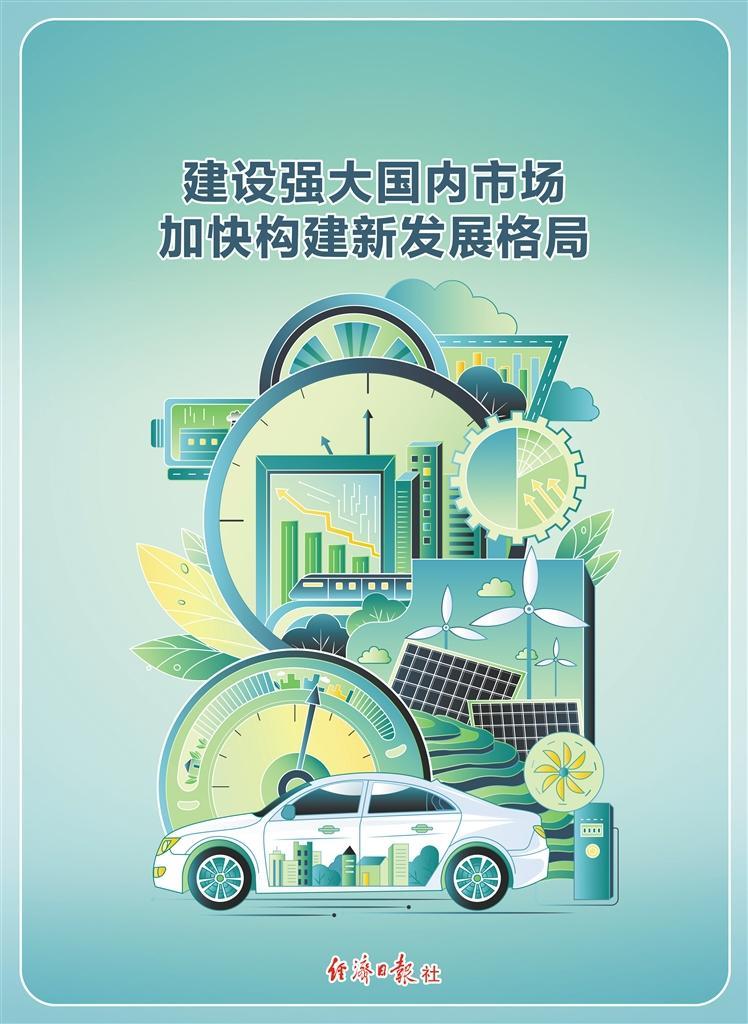
建设强大国内市场

Search documents
未知机构:杨畅2026年2月政治局会议通稿与上年12月的比较分析事件2-20260228
未知机构· 2026-02-28 02:35
Summary of the Conference Call Industry or Company Involved - The document discusses the political landscape and economic policies of China, specifically focusing on the Central Committee's meeting held on February 27, 2026. Core Points and Arguments 1. **Domestic and International Coordination**: The new statement emphasizes the need to coordinate both domestic and international situations, removing the term "struggle" from previous communications, indicating a softer approach to international relations [1] 2. **Fiscal and Monetary Policy**: The commitment to continue implementing a more proactive fiscal policy and moderately loose monetary policy remains unchanged from the previous statement, indicating consistency in economic strategy [1] 3. **Reform Measures**: There is a stronger emphasis on the need for reform measures to be coordinated with macroeconomic policies, highlighting the importance of reform in driving economic growth [1] 4. **Domestic Market Development**: The new statement stresses the importance of building a strong domestic market, with the addition of the term "focus" to underline its significance [1] 5. **Innovation and Technology**: The call to accelerate the cultivation of new growth drivers and promote high-level technological self-reliance has been strengthened, indicating a shift towards prioritizing innovation [1] 6. **Deepening Reforms**: The emphasis on continuously deepening reforms in key areas suggests a long-term commitment to enhancing the quality of economic development [1] 7. **Opening Up**: The statement calls for further expansion of high-level opening up, indicating a proactive approach to international cooperation and trade [1] 8. **Rural Revitalization**: There is a solid commitment to advancing comprehensive rural revitalization and promoting new urbanization and regional coordinated development, with a specific focus on rural areas [1] 9. **Improving Livelihoods**: The new statement emphasizes a greater effort to guarantee and improve people's livelihoods, reflecting a commitment to social welfare [1] 10. **Green Transition**: The call to accelerate the comprehensive green transition indicates a strong commitment to environmental sustainability [1] 11. **Risk Prevention and Safety**: There is an increased focus on strengthening risk prevention and safety capabilities in key areas, highlighting the importance of stability in economic policies [1] 12. **Government Self-Improvement**: The statement emphasizes the need for the government to strengthen its own construction and firmly establish a correct view of performance, indicating a focus on governance quality [1] Other Important but Possibly Overlooked Content - The changes in wording and emphasis reflect a strategic shift in the government's approach to economic management and social issues, which may have implications for investors and businesses operating in China [1]
建设强大国内市场加快构建新发展格局
Xin Lang Cai Jing· 2026-02-18 22:24
Group 1 - The article emphasizes the importance of building a strong domestic market to accelerate the establishment of a new development pattern [1] - It highlights the need for strategic initiatives to enhance domestic consumption and innovation [1] - The focus is on fostering a resilient economy that can adapt to global changes and challenges [1] Group 2 - The article suggests that enhancing the domestic market will lead to sustainable economic growth [1] - It discusses the role of government policies in supporting domestic industries and promoting investment [1] - The need for collaboration between various sectors to achieve a robust domestic market is also mentioned [1]

尹艳林:全面深刻准确领会和把握四中全会精神
Xin Lang Cai Jing· 2026-02-08 11:22
Core Viewpoint - The article emphasizes the importance of combining investment in physical assets and human capital to stimulate consumption and maintain effective investment growth, highlighting that these elements should work in synergy rather than in isolation [1][2][3]. Group 1: Investment and Consumption - The "14th Five-Year Plan" suggests a strategic focus on expanding effective investment while boosting consumption, indicating that investment in physical and human resources should complement each other [1][2]. - The current economic challenges are characterized by insufficient effective demand, which is identified as the primary contradiction in economic operations, necessitating a focus on demand rather than supply [4][5]. Group 2: Policy Implementation - The article discusses the need for proactive government investment and spending, especially during special periods, to inject external factors into the economy, advocating for counter-cyclical and cross-cyclical adjustments [5][6]. - It highlights the importance of aligning local and national planning to ensure that policies are practical and can be effectively implemented, emphasizing a gradual approach to achieving common prosperity [6][7]. Group 3: Economic Structure and Development - The article points out that the development of a strong domestic market is crucial, particularly in light of complex external environments, and stresses the need for a stable domestic economic cycle to counter international uncertainties [3][4]. - It also notes that improving people's livelihoods and addressing market issues must be considered in tandem with industrial development, advocating for a holistic approach to economic growth [3][4].
1月15日晚间央视新闻联播要闻集锦
Yang Shi Xin Wen Ke Hu Duan· 2026-01-15 14:09
Group 1 - Xi Jinping's important speech at the fifth plenary session of the 20th Central Commission for Discipline Inspection emphasizes the need for strict governance of the Party, aiming to provide strong support for the goals of the "14th Five-Year Plan" [6] - The speech has sparked enthusiastic responses among Party members and officials, who express commitment to advancing strict governance as a guiding principle for the "14th Five-Year Plan" [6] Group 2 - The Chinese government plans to introduce multiple financial policies by 2026 to support high-quality development of the real economy [3] - A press conference revealed that by the end of December 2025, the social financing scale is expected to grow by 8.3% year-on-year, and the broad money supply (M2) is projected to increase by 8.5%, significantly outpacing nominal GDP growth [12]
【权威访谈:开局“十五五”】建设强大国内市场 扩大高水平对外开放
Yang Shi Wang· 2026-01-15 12:01
Core Viewpoint - The article discusses China's economic strategies for the 14th Five-Year Plan, focusing on boosting domestic consumption, expanding high-level openness, and enhancing foreign trade resilience [1] Group 1: Domestic Consumption - By the end of November 2025, China's total retail sales of consumer goods are expected to grow by 4.0% year-on-year, with an annual total projected to exceed 50 trillion yuan for the first time [1] - China aims to cultivate new growth points in service consumption, particularly in transportation, housekeeping, performances, and sports events [1] - Measures will be taken to enhance circulation facilities and enrich consumption scenarios to stimulate potential in lower-tier markets [1] Group 2: Foreign Trade - In 2025, China's goods import and export are expected to surpass 45 trillion yuan, maintaining its position as the world's largest trading nation for nine consecutive years [1] - The country will promote a balanced development of goods trade, service trade, and digital trade while consolidating and expanding diversified markets [1] - There will be a focus on expanding autonomous openness and promoting a reasonable and orderly cross-border layout of industrial and supply chains [1]
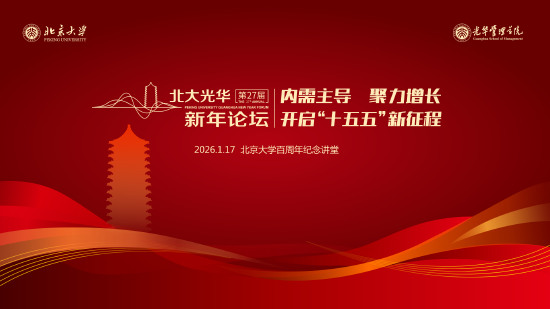
第二十六届北大光华新年论坛将于2026年1月17日举行
Xin Lang Cai Jing· 2026-01-14 09:54
Group 1 - The 27th Peking University Guanghua New Year Forum will be held on January 17, 2026, with the theme "Demand-led Growth: Starting a New Journey for the 14th Five-Year Plan" [1][3] - The global economic landscape is evolving rapidly, and domestic development is entering a new phase, with the central economic work conference prioritizing "demand-led growth and building a strong domestic market" as the main task for 2026 [1][3] - The forum will focus on national strategic deployment, discussing new logic, new dynamics, new paths, and new ecosystems for building a strong domestic market, aiming to empower a steady start for the 14th Five-Year Plan through enhanced domestic demand [1][3]
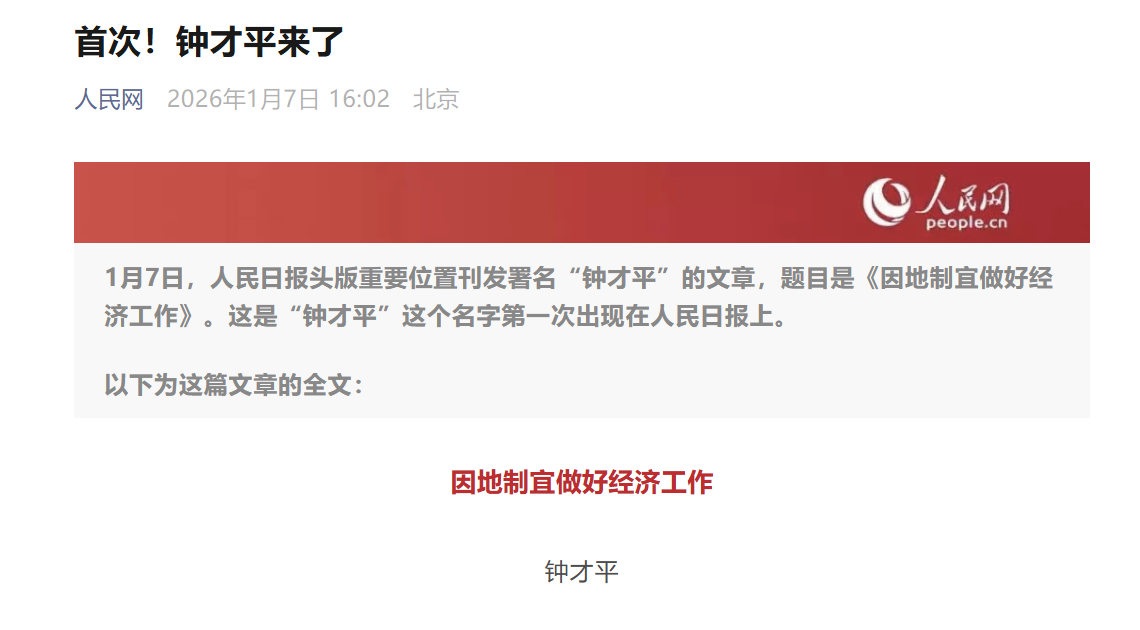
“钟才平”首次亮相人民日报,连发重磅文章有何深意
2 1 Shi Ji Jing Ji Bao Dao· 2026-01-12 14:01
Core Viewpoint - The series of articles by "Zhong Caiping" published in the People's Daily starting January 7 serves as a significant indicator of the government's economic strategy for 2026, emphasizing practical guidance for economic work and addressing key areas of focus [1][4]. Group 1: Articles Overview - The "Zhong Caiping" series consists of six articles covering themes such as tailored economic work, development towards new and superior standards, enhancing macroeconomic governance, promoting consumption and investment, improving livelihoods, and expanding openness [5]. - The articles aim to clarify the central government's strategic framework for the upcoming period, particularly in light of the recent Central Economic Work Conference's focus on 2026's key tasks [5][6]. Group 2: Economic Policy Insights - The article titled "Enhancing Policy Integration Effects" highlights a new emphasis on stabilizing economic growth and reasonable price recovery as key considerations for monetary policy, reflecting a shift in approach [8]. - The 2026 monetary policy is expected to maintain a moderately loose stance, focusing on high-quality economic development and reasonable price recovery, with a combination of total and structural policy tools to support demand and stabilize market expectations [9]. Group 3: Investment and Consumption Dynamics - The article "Coordinating Consumption and Investment" argues that investment and consumption are not mutually exclusive but rather mutually reinforcing, essential for achieving a growth target of around 5% in 2026 [10]. - Recent measures include the early release of a project list and central budget investment plan totaling 295 billion yuan, aimed at stabilizing investment and ensuring continuity in project execution [11]. Group 4: Real Estate Sector Outlook - The article "Promoting High-Quality Development in Real Estate" indicates that there remains significant potential in the real estate sector, with unmet housing demand among urban residents, suggesting a continued role as a pillar industry [12]. - The focus on improving livelihoods through real estate development is expected to stimulate substantial investment, with initiatives like affordable housing and urban infrastructure projects projected to generate nearly 2 trillion yuan in annual investment [12].
迟福林:促进供给和需求良性互动的实践逻辑与实现路径
Bei Jing Ri Bao Ke Hu Duan· 2026-01-11 23:41
Core Viewpoint - The article emphasizes the importance of building a strong domestic market in China, focusing on "demand-led, consumption-driven, and endogenous growth" as a strategic choice to adapt to economic changes and enhance resilience against international challenges [1]. Group 1: Domestic Market Development - Building a strong domestic market is crucial for achieving high-quality development and requires addressing structural contradictions between consumption and investment [1][3]. - The current economic situation shows a significant imbalance characterized by strong supply and weak demand, particularly in consumer spending [3]. - The transformation of "Chinese manufacturing" and "Chinese consumption" is essential for unlocking the potential of the vast domestic market, with manufacturing accounting for nearly 30% of global output by 2024 [2]. Group 2: Consumption Trends - China's retail sales are projected to reach 48.3 trillion yuan in 2024, which is 2.4 times that of 2012, indicating rapid growth in consumer spending [2]. - The contribution of final consumption to economic growth is expected to be 44.5% in 2024, showing a decline compared to 2023, highlighting the need to boost consumer spending [3]. - The service consumption sector is becoming a key driver of economic growth, with its share of total consumption rising from 39.7% in 2013 to 46.1% in 2024 [5]. Group 3: Service Consumption Potential - Enhancing service consumption is vital for achieving a dynamic balance between supply and demand, with a potential increase in consumer spending of approximately 800 billion yuan for every 1% rise in the consumption rate [4]. - By 2030, service consumption is expected to exceed 50% of total consumption, contributing an additional 40 trillion yuan to consumer demand [6]. - The shift towards comprehensive, international, and intelligent service consumption is anticipated to drive innovation and transformation in various industries, including healthcare and tourism [6][7]. Group 4: Structural Reforms - Structural reforms are necessary to resolve the contradictions between investment and consumption, with a focus on "investing in people" to stimulate demand [9]. - Urbanization and equalization of basic public services are critical to addressing the lag in urbanization compared to industrialization, which could significantly boost consumer spending [10]. - The government plays a crucial role in facilitating economic transformation by optimizing the relationship between effective markets and proactive government policies [11].
钟才平:统筹促消费和扩投资,建设强大国内市场
Ren Min Ri Bao· 2026-01-11 05:49
Core Viewpoint - A strong domestic market is the strategic foundation for Chinese-style modernization, emphasizing the need for consumption-led growth and investment expansion to enhance the stability and growth of the domestic market [1] Group 1: Consumption and Investment Relationship - Coordinating consumption and investment is essential for building a robust domestic market, as they are interdependent and create a virtuous cycle [2] - Consumption represents final demand while investment addresses current demand and future supply, necessitating effective investment to meet consumer needs [2] - Investment plays a crucial role in economic growth, especially during rapid industrialization and urbanization phases, while consumption is becoming the dominant force for long-term economic health [2] Group 2: New Demand and Supply Dynamics - Investment should lead to new supply that meets emerging consumer demands, particularly in service-oriented and quality-focused sectors [3] - Increased investment in healthcare and other essential services is necessary to align with demographic changes and improve living standards [3] - Urbanization efforts must ensure that non-resident populations receive basic public services, enhancing housing supply and quality [3] Group 3: Innovation and New Consumption Scenarios - Investment should drive innovation in consumer products, particularly through advancements in artificial intelligence and smart technologies [4] - Expanding investment in new business models and consumer scenarios is vital for upgrading consumption and enhancing the shopping experience [4] - Creating favorable conditions for consumer potential involves removing unreasonable restrictions and promoting leisure time for residents [4] Group 4: Policy Support and Reform - Strengthening policies that enhance residents' income and consumption capabilities is critical, including implementing urban and rural income growth plans [5] - Coordinated policy efforts should optimize investment channels and enhance consumer-oriented policies to stimulate demand [5] - Reforms in regulatory frameworks are necessary to adapt to new consumption models and facilitate private sector participation in major projects [5]
第四篇钟才平,来了
Sou Hu Cai Jing· 2026-01-10 03:38
Core Viewpoint - The article emphasizes the importance of coordinating consumption and investment to build a strong domestic market, which is seen as a strategic foundation for China's modernization [1][2]. Group 1: Consumption and Investment Relationship - Coordinating consumption and investment is essential for constructing a robust domestic market, as both are integral parts of a complete internal demand system and promote each other in a virtuous cycle [2]. - Consumption is the final demand, while investment serves as current demand and future supply; effective investment is necessary to meet consumer needs and enhance their purchasing power [2]. - Historical practices in China show that during rapid industrialization and urbanization, investment has played a crucial role in economic growth, and as income rises, consumption is becoming the dominant force in sustaining long-term economic health [2]. Group 2: New Demand and Supply Dynamics - The article advocates for leading new supply with new demand, urging investments in services and quality improvements to align with consumer trends towards service-oriented and quality-focused consumption [3]. - It highlights the need for increased investment in healthcare and other essential services, as well as in sectors like cultural tourism and green consumption, to foster innovation in consumption formats [3]. - Addressing demographic changes, the article calls for more infrastructure investment in elder care and childcare to meet the needs of aging and young populations [3]. Group 3: Policy Support and Reform - The article stresses the necessity of strong policy support and reforms to enhance both consumption and investment quality and quantity [5]. - It suggests implementing urban and rural income increase plans and improving minimum wage standards to boost consumer spending capacity and expectations [5]. - The need for regulatory reforms to adapt to new consumption models and streamline investment management is emphasized, including removing unreasonable restrictions on service industry access [5].
