两岸关系和平发展

Search documents
两岸关系发展和统一利好
Xin Hua Wang· 2025-10-27 11:24
Core Viewpoint - The development of cross-strait relations and national unification is essential for the rejuvenation of the Chinese nation, supported by historical evidence of deep emotional and cultural ties between the people on both sides of the Taiwan Strait [1][2]. Group 1: Economic Cooperation and Development - Cross-strait economic cooperation has made significant progress over the decades, establishing a mutually beneficial framework that has led to record trade volumes and new market opportunities for Taiwan [3][4]. - Unification is expected to resolve Taiwan's structural economic issues, allowing traditional industries like agriculture and tourism to thrive through access to the mainland's vast consumer market [4][5]. - The establishment of a common market will eliminate tariffs on Taiwanese goods entering the mainland, enhancing the competitiveness of Taiwanese enterprises and fostering deeper integration of industrial chains [4][6]. Group 2: Social and Cultural Integration - Policies have been implemented to ensure equal treatment for Taiwanese individuals in mainland China, promoting their rights and welfare while fostering a sense of belonging and shared identity [2][5]. - Post-unification, Taiwan's existing social systems and lifestyles will be respected, allowing for a high degree of autonomy and the protection of personal rights and properties [2][5]. Group 3: Peace and Stability - The push for unification aims to eliminate the risks of war and external interference, ensuring a peaceful environment for the people of Taiwan to live and work [8][9]. - The prevailing sentiment among the Taiwanese populace is a desire for peace and development, with a growing recognition that "Taiwan independence" leads to conflict and instability [8][9].
赵一德赵刚会见萧旭岑一行
Shan Xi Ri Bao· 2025-10-27 00:36
Core Points - The meeting between Shaanxi provincial leaders and Taiwanese representatives emphasizes the importance of cross-strait economic and cultural cooperation [1] - Shaanxi aims to create a favorable business environment for Taiwanese enterprises, promoting investment and innovation [1] - The Taiwanese representatives express gratitude for the support received and highlight the potential for collaboration in various fields [1] Group 1 - The meeting was attended by key figures from both Shaanxi and Taiwan, indicating a high level of engagement and commitment to strengthening ties [1] - Shaanxi's leadership reiterated the "one family on both sides of the strait" concept, aiming to enhance cooperation across multiple sectors [1] - The Taiwanese representatives acknowledged Shaanxi's rich cultural heritage and robust industrial system, indicating a positive outlook for future collaboration [1] Group 2 - The recent Fourth Plenary Session of the 20th Central Committee of the Communist Party of China has set the stage for peaceful development of cross-strait relations [1] - Shaanxi is actively encouraging more Taiwanese individuals and businesses to visit and invest in the province [1] - The meeting reflects a mutual interest in fostering economic growth and improving the welfare of people on both sides of the strait [1]
两岸学者:两岸交流出现新态势,统一进程不可逆转
Xin Hua She· 2025-10-23 14:38
Core Viewpoint - The current situation in cross-strait relations is characterized by increased integration and closer exchanges, with a growing willingness among people in Taiwan to develop in mainland China [1][2]. Group 1: Academic Forum Insights - The forum held at Tsinghua University focused on themes such as new trends in cross-strait political and economic relations, new dynamics in social exchanges, and the future of youth engagement in the digital age [2]. - Scholars emphasized that the development and progress of mainland China are decisive factors in the direction of cross-strait relations, with an increasingly clear prospect for national reunification [2]. - There is a notable shift among Taiwanese youth who are breaking free from the influence of "Taiwan independence" forces, expressing their identity as Chinese [2]. Group 2: Institutional Support and Initiatives - Tsinghua University is actively promoting academic and youth exchanges between the two sides and aims to contribute to the peaceful development of cross-strait relations and the realization of national reunification [1][3]. - The forum was organized by the Taiwan Research Institute of Tsinghua University, with participation from over 140 experts and scholars from both sides [3].
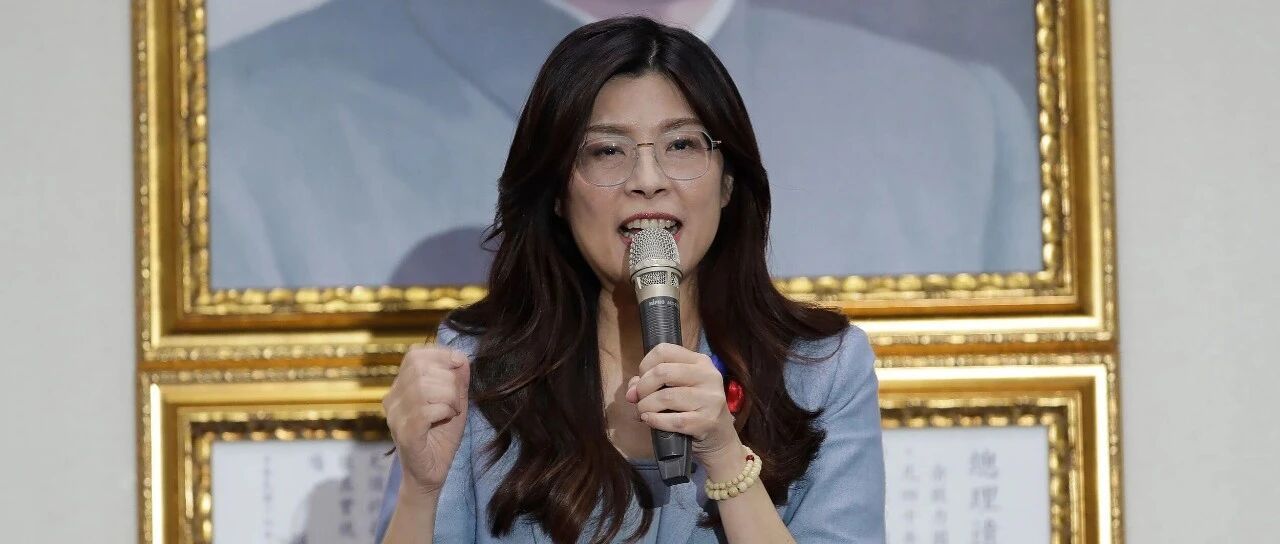
郑丽文表态愿赴大陆访问交流,国台办回应
财联社· 2025-10-22 04:49
Core Viewpoint - The article emphasizes the importance of peace, development, communication, and cooperation between Taiwan and mainland China, highlighting the willingness to engage in dialogue under the framework of the "1992 Consensus" and opposition to "Taiwan independence" [1] Group 1 - The spokesperson, Zhu Fenglian, stated that the mainstream public opinion in Taiwan favors peace, development, communication, and cooperation [1] - There is a willingness to enhance high-level exchanges with the Kuomintang (KMT) to strengthen political mutual trust and maintain positive interactions [1] - The goal is to promote peaceful development of cross-strait relations, ensure peace and stability in the Taiwan Strait, and benefit the people on both sides [1]

纪念台湾光复80周年书画展在京举办
Ren Min Ri Bao Hai Wai Ban· 2025-10-20 11:50
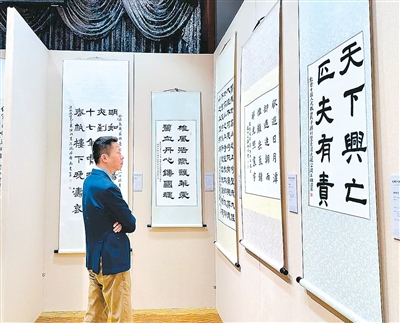
Core Viewpoint - The exhibition "Shining China: National Rejuvenation" commemorating the 80th anniversary of Taiwan's liberation showcases the cultural ties between Taiwan and mainland China, emphasizing the importance of cultural power in promoting peaceful cross-strait relations and national unity [1][2]. Group 1: Exhibition Overview - The exhibition features over 80 artworks, including calligraphy, traditional Chinese painting, and oil painting, reflecting both historical memories and aspirations for a better future [1]. - The displayed works express a deep connection to national heritage and a longing for peaceful reunification, with themes drawn from significant historical events such as the Anti-Japanese War and Taiwan's liberation [1]. Group 2: Cultural Significance - Su Shishu, honorary chairman of the Chinese Calligraphers Association, highlighted the irreplaceable role of culture and art in the historical process of peaceful development between the two sides of the Taiwan Strait [2]. - The exhibition illustrates the inseparable cultural bloodline between Taiwan and the mainland, celebrating the resilient spirit of the Chinese nation [2]. Group 3: Historical Context - The Taiwan Liberation Memorial Association noted that approximately 50,000 Taiwanese participated in the Anti-Japanese War, with over 600,000 casualties in Taiwan's tragic history of resistance [2]. - The liberation of Taiwan is portrayed as a collective achievement of all Chinese people, reinforcing the idea that Taiwan's fate is closely tied to that of the mainland [2]. Group 4: Future Activities - A series of commemorative events will take place in Beijing, including seminars on the history and legality of Taiwan's liberation, a radio drama workshop, and exhibitions on the anti-Japanese history of Taiwanese compatriots [2].
以笔墨丹青抒写家国情怀
Ren Min Ri Bao Hai Wai Ban· 2025-10-19 22:47
Core Viewpoint - The "Shining China: National Rejuvenation" calligraphy and painting exhibition commemorating the 80th anniversary of Taiwan's liberation was held in Beijing, showcasing over 80 artworks that express national sentiment and the vision for national rejuvenation [1][2]. Group 1: Exhibition Overview - The exhibition featured over 80 works, including calligraphy, traditional Chinese painting, and oil painting, reflecting both historical memories and aspirations for a better future [1]. - The artworks encapsulated the guardianship of national roots and the longing for peaceful reunification, with references to significant historical events such as the Anti-Japanese War and Taiwan's liberation [1]. Group 2: Cultural Significance - Su Shishu, Honorary Chairman of the Chinese Calligraphers Association, emphasized the irreplaceable role of culture in promoting peaceful cross-strait relations and the importance of artistic expression in celebrating the shared cultural heritage between Taiwan and the mainland [2]. - Luo Zhishan, Executive Secretary of the Taiwan Liberation Memorial Association, highlighted the sacrifices made by Taiwanese compatriots during the Anti-Japanese War, noting that over 600,000 lives were lost in Taiwan's 50-year struggle against Japanese occupation [2]. Group 3: Future Activities - A series of commemorative activities will take place in Beijing, including seminars on the history and legality of Taiwan's liberation, a radio drama creation seminar, and an exhibition on the anti-Japanese history of Taiwanese compatriots [2].
“光耀中华·民族复兴”纪念台湾光复80周年书画展在京开幕
Xin Hua She· 2025-10-17 09:47
Core Viewpoint - The exhibition themed "Shining China: National Rejuvenation" commemorates the 80th anniversary of Taiwan's liberation, showcasing over 80 artworks that celebrate historical events and the cultural ties between Taiwan and mainland China [1][2]. Group 1: Exhibition Details - The exhibition opened on October 17 at the Taiwan Hall in Beijing, featuring contributions from over 80 cultural figures from both sides of the Taiwan Strait [1]. - The event includes various art forms such as calligraphy, traditional Chinese painting, and oil painting, with over 80 high-quality pieces on display [1]. - The exhibition runs from October 13 to 18, and is co-hosted by the Beijing Cross-Strait Calligraphers and Painters Association, the Taiwan Liberation Memorial Association, and China Wangwang [2]. Group 2: Cultural Significance - Su Shishu, honorary president of the Chinese Calligraphers Association, emphasized the irreplaceable role of culture in promoting peaceful cross-strait relations and national reunification [1]. - The artworks reflect the inseparable cultural ties between Taiwan and the mainland, celebrating the resilience and progress of the Chinese nation [1]. - The exhibition also includes significant historical representations, such as the Anti-Japanese War and Taiwan's liberation, alongside depictions of the homeland [1]. Group 3: Additional Activities - In conjunction with the exhibition, a seminar on "The History and Legal Aspects of Taiwan's Liberation" and an exhibition on the anti-Japanese history of Taiwanese compatriots will also be held in Beijing [2].
大陆将发布进一步便利台胞入境措施
Xin Hua Wang· 2025-10-15 09:42
Group 1 - The Chinese government is expanding the entry permit process for Taiwanese residents to all eligible ports, enhancing convenience and safety for cross-strait travel [1] - The policy aims to promote closer ties and cooperation between the two sides, reflecting the sentiment of "two sides of the same family" [1] - Details regarding the policy implementation and the list of ports will be released by relevant authorities in due course [1] Group 2 - During the recent Mid-Autumn Festival, various celebratory activities were held, receiving positive feedback from both sides of the strait [2] - The "Little Three Links" passenger routes operated smoothly during the holiday, facilitating travel for Taiwanese residents, with a total of 296 trips and over 49,000 passengers transported, marking a 193.2% year-on-year increase [2][3] - The passenger volume for the "Little Three Links" routes from Fuzhou and Xiamen reached historical highs since their inception [2] Group 3 - To meet the travel needs of cross-strait residents, local authorities are optimizing services for the "Little Three Links" routes, including increasing flight frequency and enhancing customs services [3] - A policy allowing Taiwanese "first-time visitors" to apply for entry permits without fees will be in effect from July 1, 2025, to December 31, 2027, which has received widespread approval from Taiwanese residents [3] - The government is committed to introducing more policies that benefit Taiwanese residents and facilitate exchanges between the two sides [3]
国台办:大陆将发布进一步便利台胞入境措施
Xin Hua She· 2025-10-15 04:00
Core Viewpoint - The Chinese government is expanding the entry policy for Taiwanese residents to facilitate their travel to the mainland, aiming to enhance cross-strait exchanges and cooperation [1] Group 1: Policy Changes - The relevant authorities plan to expand the number of ports where Taiwanese residents can apply for entry permits upon arrival in the mainland [1] - Taiwanese residents can apply for a one-time valid entry permit regardless of whether they travel directly from Taiwan or via Hong Kong, Macau, or foreign countries [1] Group 2: Objectives and Implications - The policy aims to create more open, convenient, and safe conditions for Taiwanese residents traveling to the mainland [1] - The initiative is intended to promote peaceful and integrated development of cross-strait relations, safeguarding the common interests and welfare of both sides [1]
国台办:台湾居民来大陆落地办证口岸范围拟扩大至全部符合条件口岸
证券时报· 2025-10-15 03:37
Core Viewpoint - The article discusses the recent announcement by the Taiwan Affairs Office (TAO) to expand the ports available for Taiwanese residents to apply for entry permits to mainland China, aiming to enhance convenience and safety for cross-strait exchanges [1]. Group 1: Policy Announcement - The TAO plans to expand the number of ports where Taiwanese residents can apply for entry permits to all eligible ports, allowing applications upon arrival regardless of whether they travel directly from Taiwan or via Hong Kong, Macau, or other foreign regions [1]. - Detailed information regarding the policy measures and the list of ports will be released by relevant authorities in due course [1]. Group 2: Cross-Strait Relations - The policy is intended to create more open, convenient, and safe conditions for Taiwanese residents traveling to the mainland, promoting personnel exchanges and cooperation between the two sides [1]. - The announcement reflects a commitment to safeguarding the common interests and welfare of people on both sides of the Taiwan Strait [1]. Group 3: Public Sentiment - Recent polls indicate a significant decline in the approval ratings of Taiwanese political figures, particularly Lai Ching-te and Chiu Rong-tai, highlighting public dissatisfaction with the current administration's policies [1]. - The TAO spokesperson criticized the current Taiwanese administration for its perceived failure to align with the public's desire for peace, development, and cooperation, suggesting that such actions would lead to greater public discontent [1].