
医疗人工智能

Search documents
金达莱:拟3000万元增资中科鸿泰获10%股权
Xin Lang Cai Jing· 2025-12-21 09:16
Core Viewpoint - The company intends to invest 30 million yuan in Beijing Zhongke Hongtai Medical Technology Co., Ltd., acquiring a 10% stake, which has been approved internally and does not constitute a major asset restructuring or related party transaction [1] Group 1: Investment Details - The investment amount is 30 million yuan [1] - After the investment, the company will hold a 10% equity stake in Zhongke Hongtai [1] - The investment has received internal approval from the company [1] Group 2: Company Background - Zhongke Hongtai was founded by Professor Hou Zengguang's team and has strong research capabilities in the field of medical artificial intelligence [1] - The company's products have entered the special review process for innovative medical devices by the National Medical Products Administration [1] Group 3: Financial Performance - As of January to September 2025, Zhongke Hongtai reported revenue of 10.26 thousand yuan and a net loss of 550.77 thousand yuan [1] - The company is currently not profitable, indicating uncertainty in future operating performance and investment returns [1]

人工智能+医疗专题:2025年医疗人工智能产业报告
Sou Hu Cai Jing· 2025-12-19 03:12
Core Insights - The report focuses on the valuation and commercialization of AI in healthcare, highlighting its development driven by policies, technology, and demand. The market for AI healthcare solutions in China is projected to reach 16.4 billion yuan in 2024 and grow to 35.3 billion yuan by 2030, with a CAGR of 13.63% [1][9][19]. Group 1: Market Overview - The healthcare AI market is expected to maintain high growth despite economic pressures, with a projected market size of 16.4 billion yuan in 2024 and 35.3 billion yuan by 2030, reflecting a CAGR of 13.63% [9][19]. - The growth factors for the healthcare AI market include the application range of AI, hospitals' willingness to invest, approval costs, data acquisition challenges, and competitive landscape [9][19]. - The report indicates that the integration of AI in various clinical specialties, such as thoracic surgery, cardiology, orthopedics, and endocrinology, is becoming more mature, enhancing diagnostic efficiency and precision [1][9]. Group 2: Challenges and Opportunities - The industry faces challenges such as value discrepancies, high data governance costs, and a lack of diverse payment sources, which hinder the commercialization of healthcare AI [1][9][10]. - A key to overcoming these challenges lies in the assetization of medical data, which can unlock data value through trading and the establishment of trusted data spaces [1][10]. - Companies like Deepwise Medical, Neusoft Group, and JD Health are developing comprehensive solutions that integrate technology research, data governance, and practical applications to create an ecosystem for healthcare AI [1][10]. Group 3: Clinical Applications - AI applications in clinical specialties are showing significant benefits for patients, but without policy support, payment models need to be explored outside hospital settings [1][34]. - The report highlights that AI in imaging, radiation therapy, pathology, and laboratory medicine is addressing labor shortages and efficiency bottlenecks, with AI-assisted diagnostics covering multiple diseases [1][34]. - The integration of AI in primary healthcare is being driven by policy support and scenario adaptation, achieving a commercial closed loop through systems like Clinical Decision Support Systems (CDSS) [1][34]. Group 4: Future Directions - The report emphasizes the need for further innovation in business models and payment sources to convert the benefits of healthcare AI into sustainable value [1][27][28]. - The future of healthcare AI is expected to evolve towards precision, scalability, and ecosystem development, contributing to the high-quality advancement of the healthcare system [1][10].



2025年医疗人工智能产业报告-蛋壳研究院
Sou Hu Cai Jing· 2025-12-18 11:42
Core Insights - The 2025 Medical Artificial Intelligence (AI) industry report indicates that while the sector has not yet achieved large-scale profitability, it is experiencing strong growth, with the market for medical AI solutions in China expected to reach 16.4 billion yuan in 2024 and expand to 35.3 billion yuan by 2030, reflecting a CAGR of 13.63% [1][9][19] - The development of the industry is driven by a triad of capital, policy, and physician engagement, with breakthroughs in large model technology lowering application barriers and leading major hospitals to deploy and participate in specialized model development [1][9][20] - Despite the growth, the industry faces a core dilemma of value divergence, where balancing patient efficacy and departmental benefits remains challenging, leading to insufficient willingness and ability of hospitals to pay, thus hindering commercialization [1][10][30] Market Overview - The medical AI solutions market in China is projected to grow from 16.4 billion yuan in 2024 to 35.3 billion yuan by 2030, with a CAGR of 13.63% [9][19] - Factors influencing market growth include the application range of medical AI, hospitals' willingness to purchase AI solutions, approval costs, data acquisition difficulties, and competitive landscape [9][10] Clinical Applications - Medical AI has penetrated various clinical specialties such as thoracic surgery, cardiology, orthopedics, and support departments like radiology and pathology, enhancing diagnostic efficiency, surgical planning, and process optimization [1][10][25] - The grassroots medical sector has seen relatively successful commercialization due to policy support and demand alignment, with AI effectively addressing talent and capability gaps [1][10] Data Assetization - The sustainable growth of the medical AI industry hinges on data assetization, with intelligent governance of medical data reducing R&D costs and promoting data circulation and reuse [1][10][27] - The establishment of a trustworthy data space and in-market data transactions are crucial for enhancing data flow and utilization [1][10] Case Studies - Companies like Deepwise Medical, Neusoft Group, and JD Health are setting benchmarks through innovations in multimodal large models and intelligent solutions, empowering clinical processes, research transformation, and grassroots medical coverage [1][10][27]

卓正医疗通过港交所聆讯:专注中高端医疗服务市场,会员续费率达67%
IPO早知道· 2025-12-17 14:29
Core Viewpoint - Zhuozheng Medical Holdings Limited is a leading private mid-to-high-end comprehensive medical service provider in China, focusing on affluent customers seeking personalized healthcare services [2]. Group 1: Company Overview - Established in 2012, Zhuozheng Medical targets the mid-to-high-end medical service market, catering to affluent individuals with strong purchasing power [2]. - The company operates a network of 19 medical service institutions across major Chinese cities, including Shenzhen, Guangzhou, Beijing, and others, as well as clinics in Singapore and Malaysia [2]. Group 2: Market Position - According to Frost & Sullivan, Zhuozheng Medical ranks first in the number of cities covered and second in the number of paid patient visits among private mid-to-high-end comprehensive medical service providers in China as of 2024 [2]. Group 3: Customer Satisfaction and Marketing - Zhuozheng Medical's reputation is built on service quality, with a high Net Promoter Score (NPS) of 87.6 in the first eight months of this year, indicating strong patient satisfaction and word-of-mouth referrals [3][4]. - The company has a growing membership base, with 116,542 members as of August 31, 2025, and a renewal rate increasing from 42% in 2022 to 67% in 2024 [4]. Group 4: Financial Performance - Zhuozheng Medical's revenue has shown significant growth, with figures of 473 million, 690 million, and 959 million yuan for the years 2022 to 2024, respectively, and 696 million yuan in the first eight months of this year [4]. - The company achieved profitability in 2024, with an adjusted net profit of approximately 10.45 million yuan in the first eight months of this year [5]. Group 5: Investment and IPO Plans - Prior to the IPO, Tencent held a 19.39% stake in Zhuozheng Medical, making it the largest institutional investor [6]. - The net proceeds from the IPO will be used for developing a medical AI talent pool, strategic collaborations, upgrading existing facilities, establishing new institutions, and potential acquisitions in key cities [6].

卓正医疗:中国领先的私立中高端综合医疗服务机构通过港交所聆讯,或很快香港上市
Xin Lang Cai Jing· 2025-12-17 03:28
Group 1 - The core viewpoint of the article is that Zhuozheng Medical Holdings Limited is preparing for an upcoming IPO in Hong Kong, with the aim of raising funds for various strategic initiatives [1] Group 2 - The funds raised from the IPO will be allocated to building a professional talent pool for medical AI applications, collaborating with leading research institutions, and improving internal IT systems to enhance operational efficiency [1] - The company plans to upgrade existing medical service facilities and establish new ones, including relocating a facility in Shenzhen and opening new locations in Hangzhou and Shanghai [1] - Zhuozheng Medical aims to acquire well-performing medical service institutions in first-tier and new first-tier cities when suitable opportunities arise [1] - The company will also use part of the funds for working capital and other general corporate purposes [1] Group 3 - Zhuozheng Medical, founded in 2012, is a leading private mid-to-high-end comprehensive medical service provider in China, targeting affluent consumers [1] - The company operates a network of 19 medical service institutions in China, including 17 clinics and 2 hospitals, along with 4 general clinics in Singapore and 1 in Malaysia [1] - Zhuozheng Medical employs a family medical model that integrates both physical and online services, offering a range of specialties including pediatrics, dentistry, ophthalmology, dermatology, ENT, surgery, gynecology, and internal medicine [1] - The company emphasizes evidence-based medicine and holistic healthcare principles, aiming to meet the health needs of patients throughout their life cycle through interdisciplinary collaboration [1]
【2025医疗人工智能报告】:价值计量与支付探索,医疗人工智能的两个困局
3 6 Ke· 2025-12-17 00:27
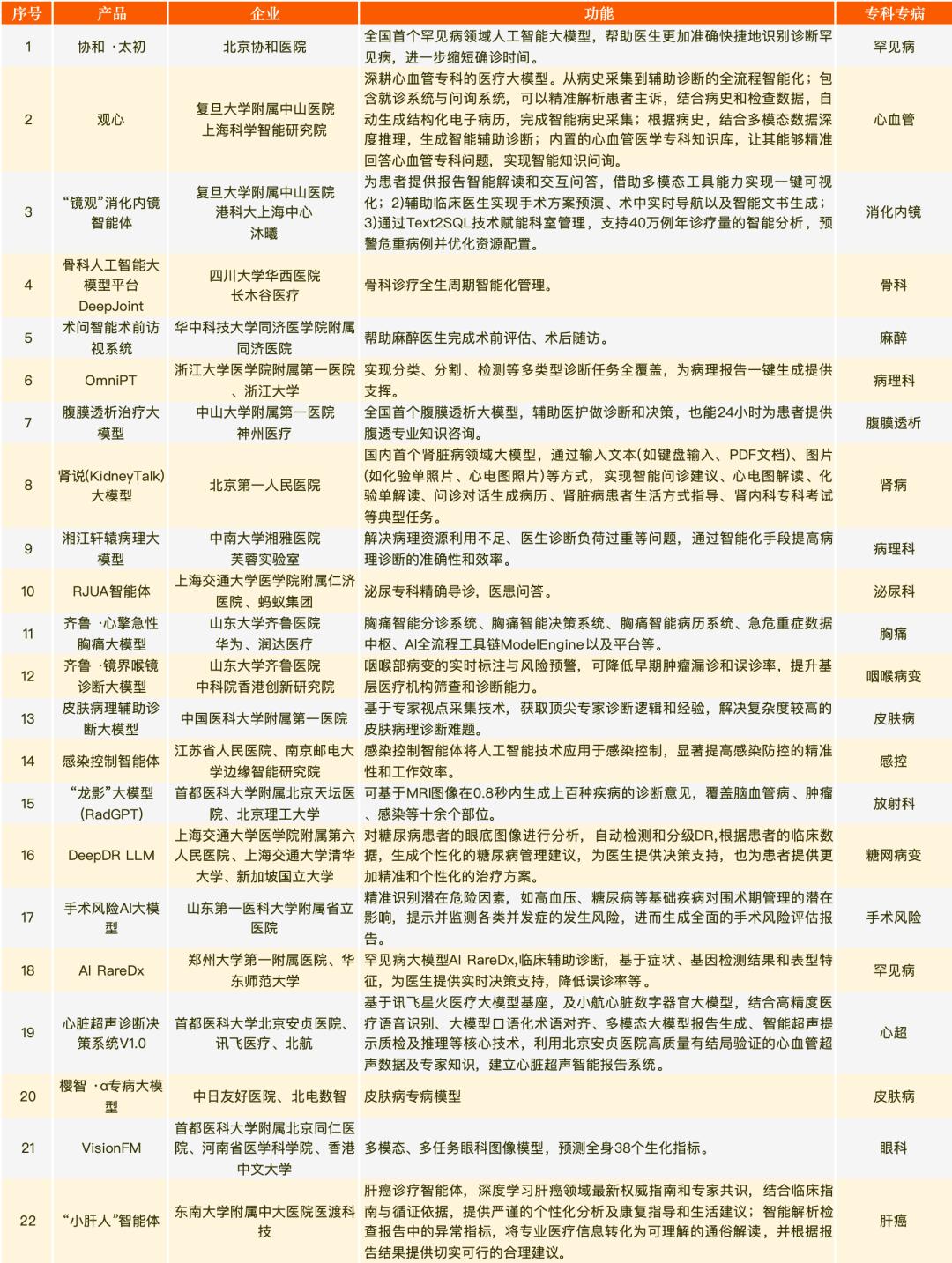
Core Insights - The medical AI industry is experiencing high growth despite not yet achieving scalable profitability, with the Chinese solutions market projected to grow from 16.4 billion yuan in 2024 to 35.3 billion yuan by 2030, reflecting a CAGR of 13.63% [1] - Significant changes in medical AI by 2025 include breakthroughs in large models and increased participation from medical institutions [1] - The deployment of large models in hospitals is accelerating, with all top 100 hospitals in China having completed large model deployments by May 2025, and 38 hospitals developing 55 vertical medical models tailored to their needs [1] Market Growth - The medical AI market in China is expected to expand significantly, with a projected market size of 35.3 billion yuan by 2030 [1] - The integration of various disciplines such as computer science, industrial engineering, and medicine is driving the growth of medical AI [1] Technological Advancements - The introduction of DeepSeek-R1 has lowered the entry barriers for large models, prompting hospital administrators to actively deploy necessary infrastructure [1] - Innovations such as parameter-efficient fine-tuning (PEFT) and mixture of experts (MoE) are enhancing the capabilities of large models [1] Doctor Engagement - Doctors are showing greater enthusiasm for practical applications of large models compared to traditional AI, with some circumventing procurement restrictions to continue research [2] - Over 90% of doctors who have used related AI tools report positive feedback, indicating that AI can enhance surgical precision and reduce complication rates [4] Policy Support - Recent policies are increasingly supportive of AI in healthcare, aiming to establish high-quality data sets and trusted data spaces by 2027 [6] - The implementation of guidelines for AI and medical applications is expected to create a conducive environment for the development of large models [6] Challenges in Commercialization - The value generated by AI in different deployment environments is inconsistent, making it difficult for hospitals to accurately assess benefits and hindering commercialization [7] - Short-term interests of hospitals and doctors often conflict, with AI deployment benefiting doctors but not necessarily translating to immediate hospital gains [8] Long-term Perspectives - In the long term, improved surgical quality through AI could enhance hospital reputation and attract more patients, benefiting both departments and doctors [10] - AI's ability to save time for doctors may lead to increased research opportunities, enhancing both individual and institutional capabilities [11] Specialty Focus: Thoracic Surgery - Thoracic surgery has a high demand for AI to improve operational efficiency and reduce redundant diagnostics [16] - AI applications in thoracic surgery have shown significant efficiency improvements, with diagnostic times reduced by up to 84% in some cases [18] - The introduction of AI in complex surgical planning has been shown to optimize procedures and reduce risks associated with needle placement [19] Data Governance and Assetization - The establishment of data as a production factor is accelerating the exploration of data assetization in healthcare, with a focus on efficient data governance and reuse [27] - The development of trusted data spaces is crucial for facilitating secure data sharing among healthcare stakeholders, promoting deeper integration and utilization of medical data [30]
医疗人工智能在地方加快落地
Zhong Zheng Wang· 2025-12-16 13:19
Group 1 - The core viewpoint of the articles highlights the accelerating implementation of artificial intelligence (AI) in the healthcare sector, particularly at the local government level, with a shift from "pilot exploration" to "systematic introduction" of AI technologies [1] - The collaboration between Beijing Shukun Technology and the local government in Wenzhou focuses on building a smart healthcare system, which includes enhancing regional diagnostic capabilities and digital infrastructure [1] - The increasing urgency of issues such as population aging and uneven distribution of medical resources is driving local governments to adopt AI solutions, supported by ongoing policy initiatives promoting "AI + healthcare" [1] Group 2 - The market potential for medical AI models is viewed positively, but industry experts caution that the growth of medical AI is more aligned with long-term infrastructure development rather than short-term explosive growth [2] - The demand for efficiency improvement and quality control within the healthcare system is expected to be a long-term requirement, while the complexity of medical scenarios imposes higher demands on companies regarding technical accumulation, delivery capabilities, and compliance standards [2] - Future industry differentiation may accelerate, with companies that possess systematic capabilities and regional implementation experience likely to widen the gap with single-point technology firms [2]
医疗AI迎来大考,南洋理工发布首个LLM电子病历处理评测
3 6 Ke· 2025-12-16 03:05
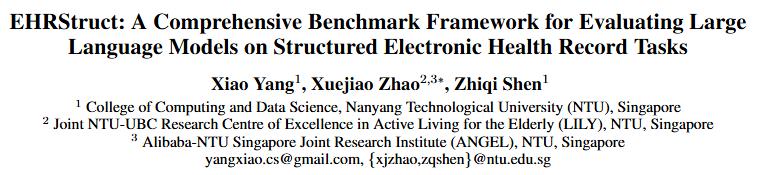
Core Insights - Researchers from Nanyang Technological University have developed the EHRStruct benchmark to evaluate the ability of large language models (LLMs) to process structured electronic health records (EHRs) [1][2] - The benchmark includes 11 core tasks organized by clinical scenarios, cognitive levels, and functional categories, comprising 2,200 samples [1][2] - Findings indicate that general-purpose models outperform medical-specific models, with data-driven tasks showing stronger performance [1][8] Benchmark Overview - EHRStruct is the first comprehensive benchmark for assessing LLMs' capabilities in handling structured EHRs, created collaboratively by computer scientists and medical experts [1][2] - The benchmark is structured into 11 tasks categorized into data-driven and knowledge-driven scenarios, covering understanding and reasoning levels [3][4] Task Categories - The tasks are divided into six typical categories: information retrieval, data aggregation, arithmetic computation, clinical identification, diagnostic assessment, and treatment planning [4][5] - Data-driven tasks include filtering, aggregation, and arithmetic reasoning, while knowledge-driven tasks focus on clinical code identification and predictive assessments [3][4] Evaluation Process - The evaluation process involves a systematic assessment of 20 LLMs, utilizing 200 question-answer samples for each task, with various input formats tested [11][10] - The benchmark supports in-depth experiments on specific models, including few-shot prompting and fine-tuning [11] Key Findings - General-purpose LLMs, particularly the Gemini series, demonstrate superior performance in structured EHR tasks compared to medical-specific models [14][8] - Data-driven tasks yield better results overall, while knowledge-driven tasks, especially diagnostic assessments, remain challenging for existing models [15][17] - The EHRMaster framework, when combined with Gemini, significantly enhances performance in both data-driven and knowledge-driven tasks [20][19] Future Directions - The EHRStruct 2026 challenge has been launched to provide a standardized platform for researchers to evaluate LLMs' capabilities in structured EHR processing [2] - Collaboration with international conferences is anticipated to facilitate the submission of research reports and papers based on the challenge [2]
医疗 + AI = 未来!实训营带你抢占行业先机!
思宇MedTech· 2025-12-14 01:11
PART1 课程背景 医疗人工智能 实训营 第一期 当前,医疗AI在影像诊断、精准治疗和药物研发等场景广泛应用,但医疗机构普遍面临跨学科 人才短缺、技术落地难的挑战,制约了医疗智能化转型进程。 上海交通大学医学院联合上海交通大学生物医学工程学院、学生创新中心、附属医院等优势技 术与临床资源,针对人工智能在医疗领域快速渗透的行业趋势,聚焦医生、工程技术人员及科 研人员以及企业界对AI应用技能的迫切需求,推出医疗人工智能实训营。本课程通过系统化实 战训练,精准衔接临床需求与AI技术,为培养复合型人才提供核心支撑。 PART2 课程特色 01 临床痛点精准匹配 01 临床痛点精准匹配 直击医生在诊断、治疗,科研人员在药物研发中的数据处理与模型部署难题,提 供可直接落地的AI技能训练。 02 实战导向的完整课程体系 从AI基础、医学数据处理到临床案例实操,形成"理论-分析-应用-实操"闭环学习 路径。 03 双领域权威协同 医学专家与AI工程师联合设计并授课,内容严格遵循临床规范与技术前沿,保障 专业性与实用性。 PART3 开课信息 PART4 课程安排 图片 第一天:《人工智能基础》 结合医疗场景讲解核心算法原理 ...
医渡科技(02158)连续3日回购 累计斥资超430万港元
智通财经网· 2025-12-05 11:39
Group 1 - The core viewpoint of the article highlights that Yidu Tech (02158) has been actively repurchasing shares for three consecutive days, signaling positive market sentiment [1] - On December 5, the company repurchased 280,000 shares at a price of HKD 5.18 per share, totaling HKD 1.4 million, bringing the total repurchased shares to approximately 853,000 and the cumulative repurchase amount to over HKD 4.3 million [1] - Yidu Tech reported a healthy revenue growth for the fiscal year 2026, with total revenue reaching RMB 358 million, representing a year-on-year increase of 8.7% [1] Group 2 - The company achieved a significant milestone in profitability, with adjusted EBITDA from existing operations reaching approximately RMB 54 million, doubling compared to the same period last year, and nearing breakeven on the financial statements [1] - This key financial milestone was achieved approximately one year ahead of the management's previous expectations [1] - Yidu Tech has officially launched a digital technology research and development platform in collaboration with Tsinghua Changgung Hospital, marking a new phase in their partnership in the field of medical artificial intelligence [1]