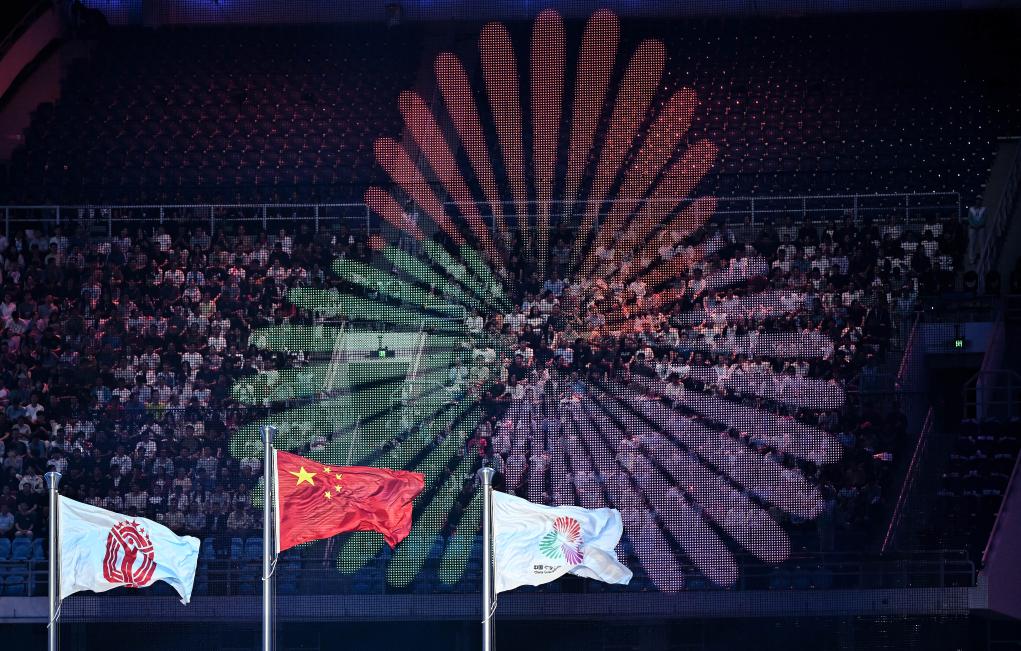
大湾区融合发展

Search documents
见证新的成就 展现万千气象——全运会助力大湾区跑出深度融合“加速度”
Xin Hua She· 2025-11-20 01:24
Core Points - The 15th National Games showcased the integration and collaboration of the Guangdong-Hong Kong-Macao Greater Bay Area, marking a significant milestone in China's sports development and modernization [2][32][33] - The event attracted over 14,000 athletes and 3,000 journalists, with millions of attendees, highlighting the area's economic vitality and connectivity [2][32] - Innovative measures such as "facial recognition" for customs clearance and improved transportation infrastructure facilitated seamless movement across the region, realizing the "one-hour living circle" concept [6][9][27] Group 1: Event Overview - The National Games were held in Guangdong, Hong Kong, and Macao, with unprecedented participation and organization, emphasizing the region's openness and economic strength [2][32] - The event included nearly 10,000 competitions and saw significant local engagement, with many residents participating as volunteers and spectators [19][32] - The opening ceremony featured cultural elements from all three regions, enhancing regional identity and pride [14][32] Group 2: Infrastructure and Connectivity - The introduction of the "Yue Car South" policy and advanced customs procedures improved cross-border travel, further integrating the Greater Bay Area [7][9] - High-speed rail services and the "one-stop" customs check system have made travel between cities more efficient, promoting tourism and local economies [6][9][27] - The collaboration in organizing the event has set a precedent for future cross-border sports events, enhancing regional cooperation [30][33] Group 3: Cultural and Social Impact - The event fostered a sense of community and cultural exchange among participants from different regions, with sports serving as a medium for connection [21][24] - Volunteer participation was at an all-time high, with a record number of volunteers from Hong Kong contributing to the event's success [17][19] - The mascot of the Games, which gained popularity through social media, reflects the cultural identity and culinary heritage of the Greater Bay Area [12][32] Group 4: Future Prospects - The success of the National Games is expected to accelerate the development of the Greater Bay Area, with plans for more international sports events in the future [33] - The experience gained from organizing this large-scale event will serve as a model for cooperation in other sectors, enhancing the region's overall development [30][33] - The event is seen as a catalyst for further integration and collaboration among Guangdong, Hong Kong, and Macao, promoting a shared vision for the future [33]

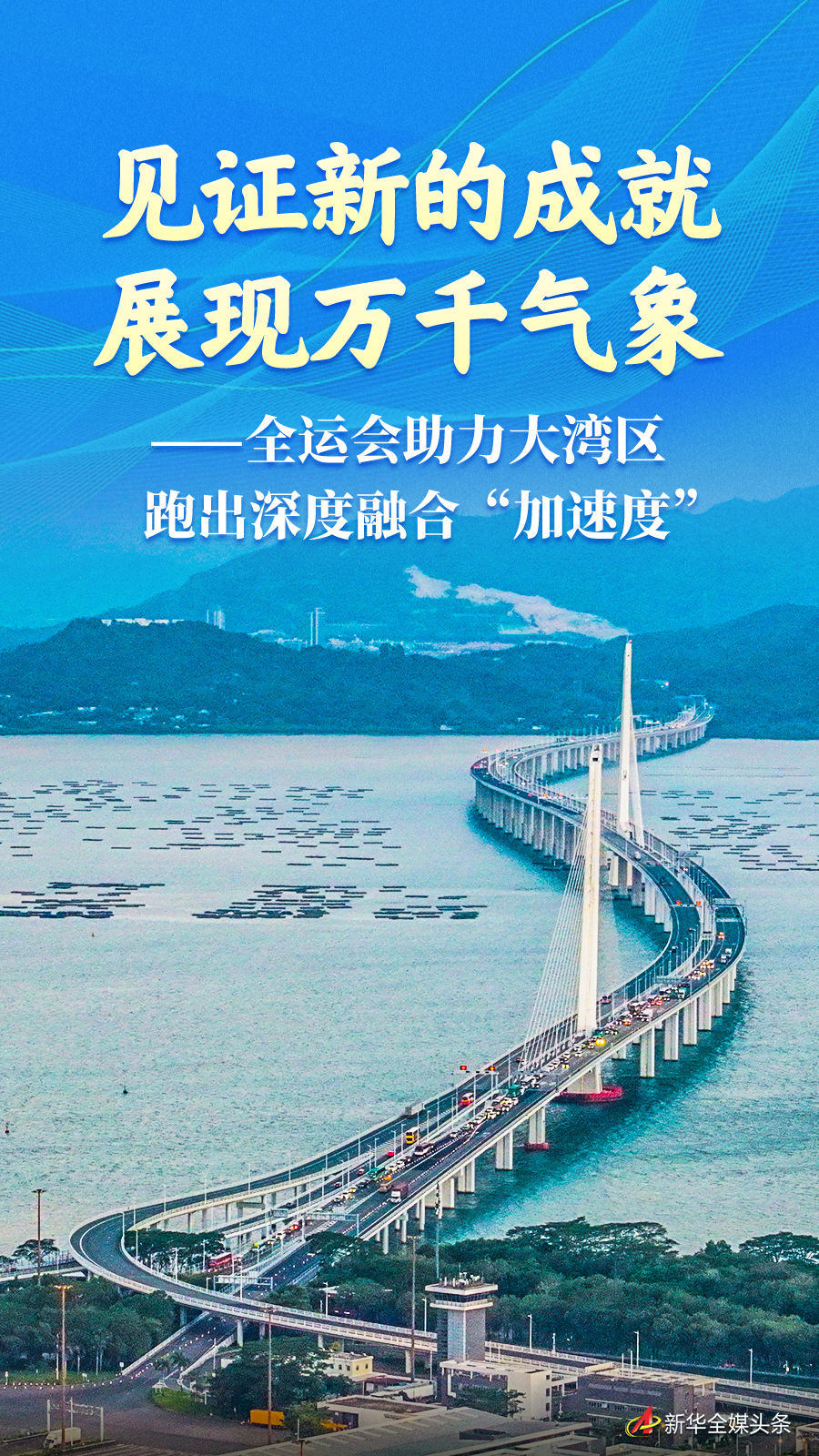
“中华体育精神颂十五运站”香港站系列活动举行
Ren Min Ri Bao Hai Wai Ban· 2025-11-20 00:41
Group 1 - The event "Chinese Sports Spirit Recitation" was held in Hong Kong as part of the 15th National Games, emphasizing the theme "Uplifting Sports Spirit, Innovating for the Future" [1] - The event showcased the collaboration between Guangdong, Hong Kong, and Macau in hosting the National Games for the first time, highlighting the integration and vitality of the Greater Bay Area under the "One Country, Two Systems" principle [1] - Olympic champion Sun Yiman interacted with Hong Kong youth, sharing her experiences and training insights, which exemplified the essence of Chinese sports spirit [1] Group 2 - A spectacular drone show featuring 1,200 drones illuminated Victoria Harbour, depicting scenes related to the National Games and showcasing the collaborative efforts of the Greater Bay Area [2] - The performance concluded with the themes "Chinese Sports Spirit Recitation" and "Sports Power, Chinese Spirit," leaving the audience in awe and pride for the athletes [2] - The event fostered a sense of closeness among the people of Guangdong, Hong Kong, and Macau, contributing to the positive sentiment towards the development of the Greater Bay Area [2]
新华全媒头条丨见证新的成就 展现万千气象——全运会助力大湾区跑出深度融合“加速度”
Xin Hua She· 2025-11-19 17:15
Core Insights - The 15th National Games showcased the integration and collaboration of the Guangdong-Hong Kong-Macao Greater Bay Area, marking a significant milestone in China's sports development and modernization efforts [2][18] - The event attracted over 14,000 athletes and 3,000 journalists, with millions of attendees, highlighting the area's capacity for large-scale events and its economic vitality [2][18] Group 1: Event Overview - The National Games were held across 19 cities in 13 days, with a seamless flow of participants and spectators between Guangdong, Hong Kong, and Macao [2] - The event is noted as the largest and highest-level comprehensive sports event in China, with Hong Kong and Macao serving as co-hosts for the first time [2][18] Group 2: Infrastructure and Connectivity - The "one-hour living circle" concept is becoming a reality, with improved transportation infrastructure facilitating easy access between cities, such as the Shenzhen-Zhongshan connection [3][4] - The implementation of the "Yue Car South" policy enhances cross-border vehicle movement, further integrating the Greater Bay Area [5][6] Group 3: Cultural and Community Engagement - The event fostered a sense of community and cultural exchange among participants from the three regions, with local volunteers playing a significant role in the organization [10][11] - The mascot of the Games, inspired by the Chinese white dolphin, gained popularity, reflecting local culture and identity [7][8] Group 4: Future Implications - The success of the National Games is expected to accelerate the development of the Greater Bay Area, with potential for hosting more international sports events in the future [17][18] - The collaborative experience gained from this event can serve as a model for future cooperation across various sectors in the Greater Bay Area [18]
“中华体育精神颂十五运站”声动香江
人民网-国际频道 原创稿· 2025-11-19 09:00
Core Viewpoint - The event "Chinese Sports Spirit Recitation" held in Hong Kong marks a significant milestone in the collaboration between Guangdong, Hong Kong, and Macau, showcasing the vitality and integration of the Greater Bay Area through sports [1][2]. Group 1: Event Overview - The event took place on November 18, featuring students from Fujian Secondary School and its affiliated schools reciting "Chinese Sports Spirit Recitation" in Cantonese, reflecting youthful energy [1]. - It is part of the 15th National Games, co-hosted by Guangdong, Hong Kong, and Macau, with the theme "Embracing Sports Spirit to Innovate for the Future" [1]. - The event received strong support from organizations such as Bank of China (Hong Kong), China Mobile Hong Kong, and Emperor Group [1]. Group 2: Key Highlights - The Deputy Director of the Hong Kong SAR Government's Culture, Sports and Tourism Bureau emphasized the significance of the joint hosting of the National Games by the three regions, marking a milestone in sports and regional integration [2]. - Traditional performances, including lion dances and martial arts, were showcased, highlighting the rich cultural heritage of Chinese sports [2]. - Olympic champion Sun Yiman interacted with Hong Kong youth, sharing her experiences and training insights, further promoting the spirit of Chinese sports [2]. Group 3: Spectacular Performances - A large-scale drone show featuring 1,200 drones illuminated Victoria Harbour, creating stunning visual displays that echoed the themes of the National Games [3]. - The drone performance depicted various sports scenes and highlighted the collaborative efforts of Guangdong, Hong Kong, and Macau in hosting the National Games [3]. - The event concluded with a powerful display of sports spirit, symbolizing the commitment to building a strong sports nation [3].
汇丰中国陈庆耀:粤港澳大湾区将逐步从内地接轨国际的“试验田”变为“高速路”
Xin Lang Cai Jing· 2025-11-19 06:37
11月19日,"第十九届深圳国际金融博览会暨2025中国金融机构年会"在深圳举行。汇丰中国副行长兼大 湾区总监陈庆耀在分论坛"中国银行业年会"发表主题演讲时表示,要更好地推动科技创新与产业创新深 度融合,在大湾区建设更具国际竞争力的现代化产业体系,非常重要的一点就是要在国际化方面更进一 步,发挥大湾区作为高水平开放重要平台的政策优势和区位优势,加速推动区内企业更深地融入全球产 业链、价值链,不断拓宽科技创新应用场景,实现智能化、绿色化、融合化的发展。陈庆耀称,在国家 高水平开放的带动下,大湾区的融合发展将持续深化,三地的规则衔接、机制对接将迈上新的台阶,大 湾区也将逐步从内地接轨国际的"试验田"变为"高速路",成为以开放链接世界、以创新驱动发展的典 范。 ...
“中华体育精神颂十五运站”声动香江 大型无人机光影表演展现活力湾区
中国基金报· 2025-11-18 14:28
Core Viewpoint - The article highlights the successful hosting of the "Chinese Sports Spirit Recitation for the 15th National Games" event in Hong Kong, emphasizing the importance of sports culture and its integration with the local community [5][10]. Group 1: Event Overview - The event was co-hosted by the National Sports Administration, the Chinese Olympic Committee, and the Zijing Cultural Group, with significant support from various organizations including Bank of China (Hong Kong) and China Mobile Hong Kong [5][10]. - The event featured a large-scale drone light show with 1,200 drones, creating stunning visual displays in the night sky over Victoria Harbour, showcasing sports themes and the spirit of the National Games [23]. Group 2: Key Speakers and Their Messages - Gao Chao, Director of the Publicity Department of the National Sports Administration, emphasized that the Chinese sports spirit is a valuable asset forged by generations of athletes through hard work and perseverance [7]. - Ding Wei, Deputy General Manager of Zijing Cultural Group, noted that Hong Kong's rich sports tradition and community engagement align well with the values of respect, teamwork, and excellence promoted by sports [9]. - Liu Zhen, Deputy Director of the Hong Kong SAR Government's Culture, Sports and Tourism Bureau, highlighted the significance of the event as a milestone for sports collaboration among Guangdong, Hong Kong, and Macau, reflecting the vitality of the "One Country, Two Systems" principle [10]. Group 3: Cultural and Community Engagement - The event included performances that showcased traditional Chinese culture, such as lion dances and martial arts, enhancing the festive atmosphere and community involvement [10]. - Olympic champion Sun Yiman interacted with local youth, sharing her experiences and training insights, which helped to promote the Chinese sports spirit among the younger generation [14][18]. - Students from Fujian Middle School recited "Chinese Sports Spirit," blending local dialect with the essence of sportsmanship, demonstrating the cultural resonance of sports values in Hong Kong [16][18].
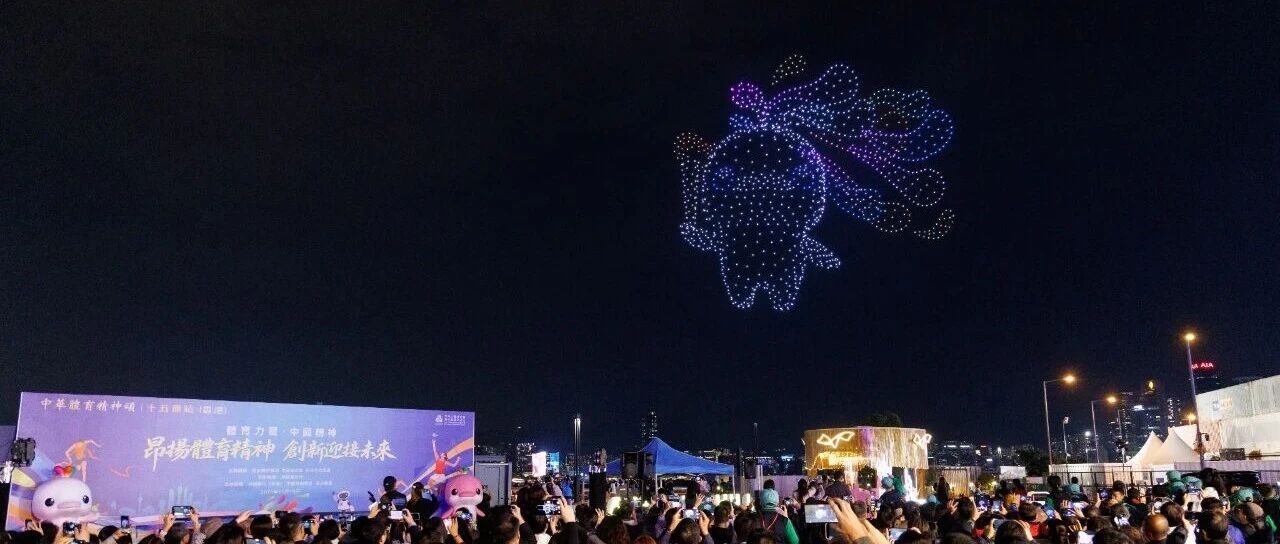
好评中国|动画微视频:全运燃情大湾区,体育强国启新程
Huan Qiu Wang· 2025-11-18 02:59
Group 1 - The 15th National Games marks the first time the event is jointly hosted by Guangdong, Hong Kong, and Macau, showcasing the integration of the Greater Bay Area and the practice of "One Country, Two Systems" [2] - The event serves as a catalyst for the integration and sharing of sports resources in the Greater Bay Area, promoting regional development and demonstrating China's collaborative development vitality to the world [2] - The National Games features 11,000 community athletes, embodying the "National Fitness" concept and reflecting the increasing public engagement in sports [3] Group 2 - The National Games highlights the importance of sports in promoting economic and social development, showcasing China's soft power and the integration of sports into national development [4] - The event stimulates sports consumption and fosters deep integration between the sports industry and sectors like culture, tourism, and technology, injecting new vitality into the Greater Bay Area economy [4] - The National Games serves as a bridge between competitive sports and community sports, igniting public enthusiasm for fitness and emphasizing a people-centered development approach [3][4]
全城跃动 活力迸发(全运大视野)
Ren Min Ri Bao· 2025-11-17 22:40
Core Insights - The 15th National Games, hosted by the Guangdong-Hong Kong-Macao Greater Bay Area, represents an innovative practice in the history of the Games and promotes collaborative development in the region [6][9]. Event Organization and Management - Hong Kong has successfully organized the first cross-border marathon in the history of the National Games, ensuring smooth operations through optimized routes and technology for seamless border crossings [8]. - The Hong Kong Special Administrative Region (HKSAR) government has gained valuable experience in event organization, city coordination, and technological support, enhancing its capability to host large international sports events in the future [9]. Infrastructure and Economic Impact - The Kai Tak Sports Park, which opened in March, has attracted over one million visitors, showcasing the rapid growth of Hong Kong's sports economy [10]. - The HKSAR government plans to increase its budget for sports development to approximately HKD 7.9 billion (about USD 1 billion) for 2024-2025, doubling the investment compared to ten years ago [10]. - The National Games have stimulated demand for professionals in sports coaching, officiating, sports medicine, and event management, further enhancing the professionalization and industrialization of sports in Hong Kong [10]. Cultural and Community Engagement - The National Games have significantly boosted local tourism, culture, and sports industries, creating a positive feedback loop in the economy [11]. - The event has fostered a sense of pride and identity among Hong Kong citizens, enhancing their connection to the Greater Bay Area and promoting community engagement through various sports activities [14].
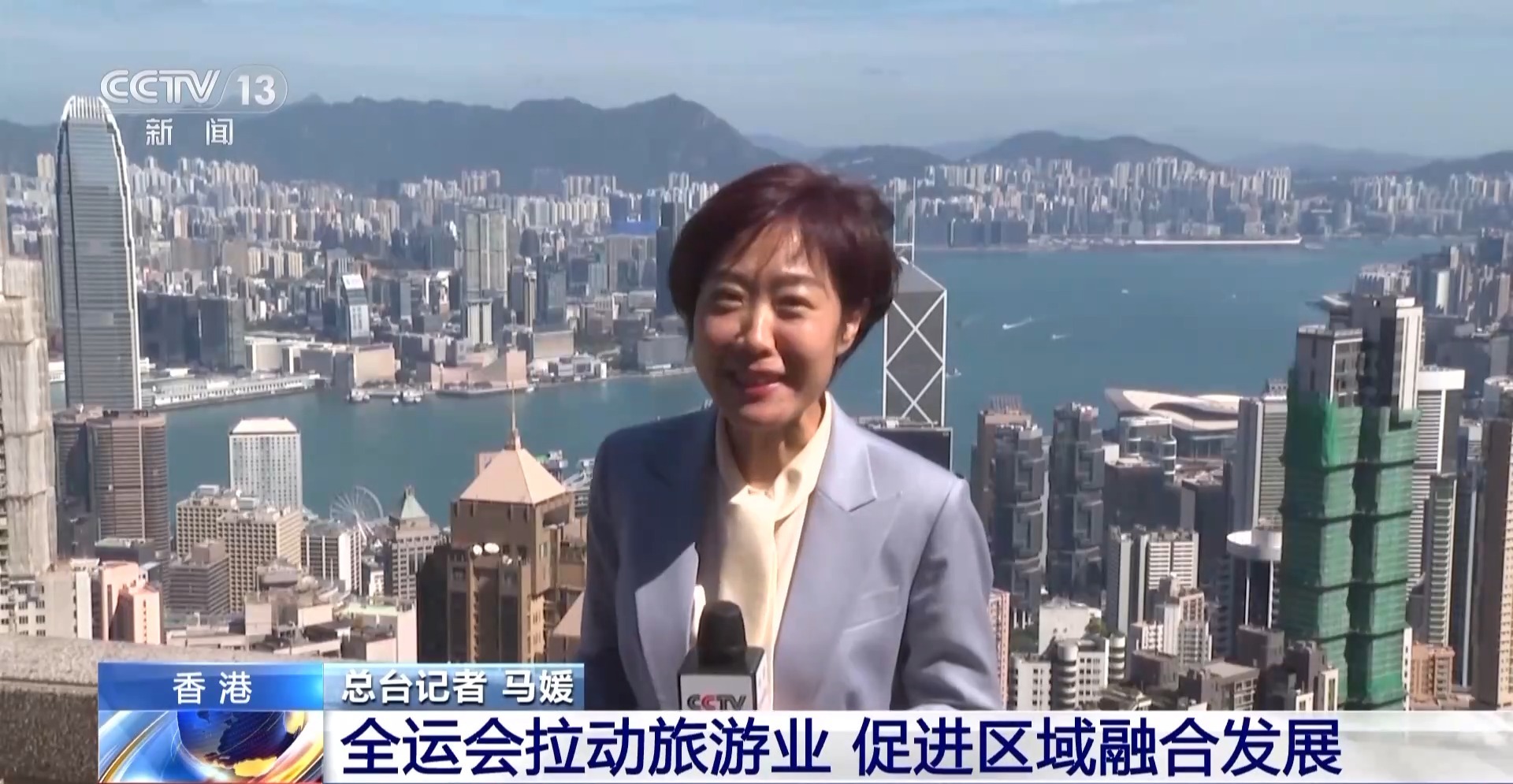
视频丨全运会拉动香港旅游业 促进区域融合发展
Yang Shi Xin Wen Ke Hu Duan· 2025-11-17 11:57
Core Insights - The 15th National Games in Hong Kong serve as a significant opportunity for regional integration and development, enhancing the tourism industry in the region [2][11] Tourism Impact - The influx of mainland tourists during the National Games has increased foot traffic in Hong Kong, showcasing the city's capability to host large-scale events and solidifying its status as an international event hub [11][13] - Tourists are enjoying various attractions, including the Peak and Tsim Sha Tsui's Avenue of Stars, which are popular spots for visitors during the event [7][8] Visitor Experience - Visitors from various regions, such as Qingdao and Liaoning, express positive experiences regarding the hospitality and vibrant atmosphere in Hong Kong during the National Games [4][8] - The combination of sports and tourism has created a synergistic effect, providing a comprehensive experience for tourists, including cultural and culinary activities [7][11]
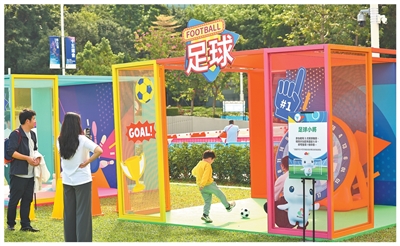
全运会丨活力全运会 魅力大湾区——十五运会为粤港澳融合发展注入新动能
Xin Hua Wang· 2025-11-17 07:09
Core Points - The 15th National Games, jointly hosted by Guangdong, Hong Kong, and Macau, marks a milestone in the integration of the Greater Bay Area, injecting new momentum into its development through sports [1][3][11] Group 1: Cross-Border Events and Collaboration - The event features the first cross-border marathon and cycling competitions, enhancing collaboration among the three regions and showcasing their landmarks [3][5] - Advanced technologies such as facial recognition and seamless customs experiences were implemented, highlighting unprecedented cooperation in logistics and security [5][6] - The successful organization of the Games is seen as a valuable experience for future large-scale events in the Greater Bay Area [5][6] Group 2: Boosting Cultural and Tourism Consumption - The Games include 32 ticketed events, with over 5 million tickets expected to be sold, significantly surpassing previous editions [6][8] - The event has stimulated local economies, with increased searches for hotels, flights, and attractions, leading to sales peaks in retail and dining sectors [8][10] - Initiatives like the "Community Consumption Grand Prize" in Macau aim to deepen the integration of sports and tourism, promoting a model where events serve as tourist attractions [8][10] Group 3: Emotional Resonance and Cultural Identity - The torch relay symbolizes unity and hope, drawing large crowds and enhancing community spirit across the three regions [10][11] - The Games foster a sense of national identity and cultural understanding among the youth, strengthening emotional connections between the regions [11][12] - The event serves as a platform for cultural recognition, contributing to the high-quality development of the Greater Bay Area [11]