折叠屏手机

Search documents
正面PK苹果,消息称三星正研发4:3宽折叠手机
WitsView睿智显示· 2025-12-22 04:51
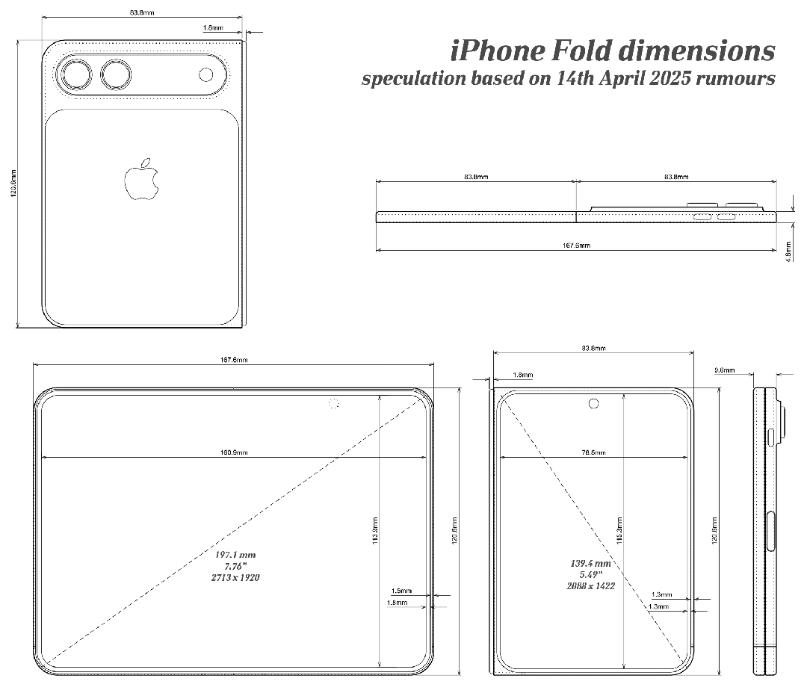
Group 1 - Samsung is expected to launch a "Wide Fold" smartphone in 2024 to compete directly with Apple's first foldable phone, the iPhone Fold [1][3] - The Samsung device will feature a 7.6-inch inner screen and a 5.4-inch outer screen, both made of OLED material, with a 4:3 aspect ratio, similar to the iPhone Fold [1][2] - The 4:3 aspect ratio is believed to provide a more natural grip and better viewing experience for web browsing and photos, despite some users potentially feeling unfamiliar with it due to the prevalence of widescreen formats in modern media [2] Group 2 - Samsung plans to introduce the Wide Fold smartphone in the fall of 2024, likely as part of the Galaxy Z product line, which may include one Flip model and two Fold models [2] - The Wide Fold is expected to support 25W wireless charging, making it one of the fastest charging smartphones in Samsung's lineup, alongside the Galaxy S26 Ultra [3]



三星明年或推“阔折叠”手机,与iPhone Fold正面交锋
Xin Lang Cai Jing· 2025-12-22 01:58
Core Viewpoint - Samsung plans to launch a "wide foldable" phone in the fall of 2026 to compete directly with Apple's first foldable phone, the iPhone Fold [1][8] Group 1: Samsung's "Wide Foldable" Phone - The "wide foldable" phone will feature a 7.6-inch inner screen and a 5.4-inch outer screen, both made of OLED material, with a 4:3 aspect ratio [1][8] - This phone is expected to support 25W wireless charging, making it one of Samsung's fastest wireless charging devices [1][8] - The aspect ratio of the inner screen is closer to that of a tablet display, providing a wider horizontal view and more efficient split-screen operation, suitable for browsing and photo viewing [1][8] Group 2: Apple's iPhone Fold - Apple is expected to release its iPhone Fold in the second half of 2026, with an inner screen size of 7.76 inches and an outer screen of 5.49 inches [1][8] - Due to development delays, the iPhone Fold may face supply shortages before the end of 2026 [1][8] - Apple considers foldable screens as a core evolution direction for the smartphone industry, designating the iPhone Fold as a "must-launch product" for next year [2][8] Group 3: Market Trends and Competitors - Other brands like OPPO, vivo, Xiaomi, and Honor are also planning to launch "wide foldable" phones next year [10] - Omdia reports that global shipments of foldable phones are expected to remain around 6.6 million units in the first half of 2025, with a 32.8% year-on-year growth in the Chinese market driven by Huawei's Mate and Pura X series [10][12] - The foldable phone market is projected to see a 51% year-on-year increase in shipments in 2026, continuing to drive market momentum into 2027 [10][12] Group 4: Market Position and Strategy - Foldable phones currently represent a small niche in the overall smartphone market, with a low single-digit percentage share [12] - For most manufacturers, the primary goal of foldable phones is to showcase technological leadership and R&D capabilities, rather than achieving high direct sales or profit targets [12] - Samsung holds a 19% market share, maintaining the top position for three consecutive quarters, while Apple follows closely with an 18% share [12]

可折叠iPhone来了却可能买不到?分析师预警发布初期将严重缺货
Huan Qiu Wang Zi Xun· 2025-12-21 01:42
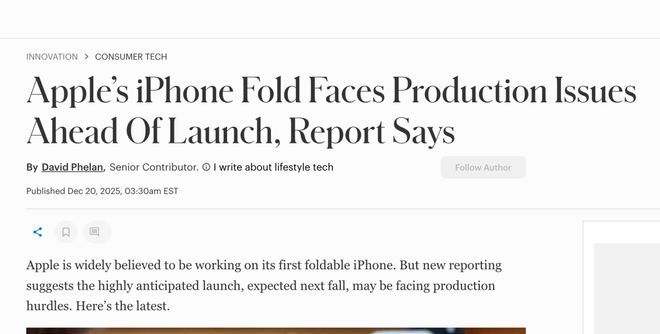
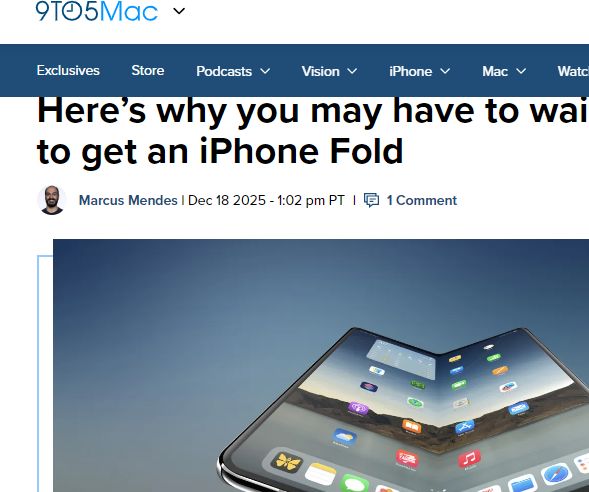
Core Viewpoint - Apple is facing production challenges for its first foldable iPhone, which is expected to be officially released in the second half of 2026, according to a report by analyst Ming-Chi Kuo from Tianfeng Securities [3][4]. Group 1: Production Challenges - The development progress of the foldable iPhone is currently behind schedule, with actual shipments potentially delayed until 2027 due to early production yield and capacity ramp-up challenges [3]. - There is a strong anticipated demand for the foldable iPhone, but supply may be limited, leading to potential shortages before the end of 2026 [3]. Group 2: Market Impact - Apple's entry into the foldable smartphone market could change the current growth trajectory of foldable devices, potentially benefiting competitors as well [4]. - By summer 2026, it is expected that the resolution of production issues and the balance of demand versus supply will become clearer, prompting consumers to consider pre-ordering [4].
苹果折叠屏iPhone将发布,2026年引领市场增长
Xin Lang Cai Jing· 2025-12-19 12:48
Core Viewpoint - Apple is set to launch its highly anticipated foldable smartphone in the fall of 2026, marking a significant breakthrough in the mobile device sector [1][4]. Market Growth - The global shipment of foldable smartphone displays is projected to grow by 46% year-on-year in 2026, driven by the entry of leading tech companies and technological advancements [1][4]. - The introduction of Apple's foldable iPhone is expected to reignite consumer interest in foldable devices, leading to a substantial increase in overall market demand [3][4]. Industry Forecast - The foldable smartphone market is anticipated to experience a rapid growth phase in 2026, with an expected year-on-year shipment increase of 30% due to Apple's new product and other manufacturers' next-generation devices [3][4]. Competitive Landscape - The global foldable smartphone market in 2026 is expected to be dominated by Samsung, Huawei, and Apple, with Apple projected to capture approximately 22% of the market share, placing it among the top three players [5]. Technological Advancements - The upcoming foldable iPhone is likely to feature several key upgrades, including a crease-free inward-folding main screen, a 24-megapixel under-display front camera, and support for a larger battery capacity to enhance user experience [5]. Pricing Strategy - The foldable iPhone is expected to maintain Apple's high-end product pricing strategy, with a predicted starting price of around $2,400, equivalent to approximately 16,901 yuan, potentially making it the most expensive iPhone model in history [5].
苹果救得了小折叠吗?
创业邦· 2025-12-19 03:50
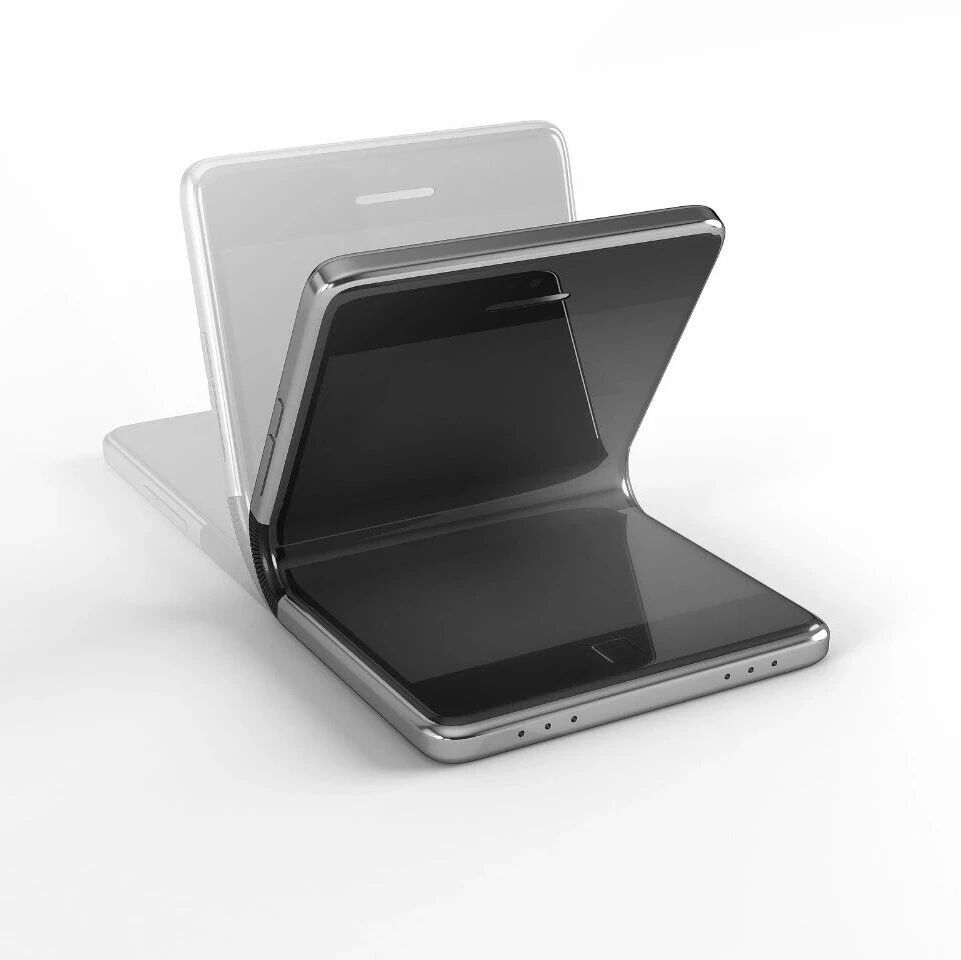
Core Viewpoint - The article discusses the anticipated entry of Apple into the foldable smartphone market, highlighting the challenges and market dynamics surrounding small foldable devices, particularly in comparison to traditional smartphones and larger foldable models [6][8][19]. Group 1: Apple's Foldable Smartphone Development - Apple has been working on foldable smartphone technology since at least 2011, focusing on addressing the issue of screen creases, which has been a significant barrier to market entry [9][11]. - Recent leaks suggest that Apple's first foldable iPhone will adopt a small flip design, similar to Huawei's Pura X, but with a more square aspect ratio [6][8]. - The company has developed various hinge designs to improve the folding mechanism, but achieving the desired results has proven difficult, leading to delays in product launch [13][14]. Group 2: Market Dynamics of Small Foldable Phones - Small foldable phones have struggled to gain traction in the market, with sales significantly lagging behind larger foldable models. In China, small foldable shipments are projected to be less than half of those for large foldables in 2024 [21][22]. - The lack of differentiation in functionality compared to traditional smartphones and the inability to command higher profit margins have hindered the success of small foldable devices [21][26]. - The additional costs associated with the unique components of small foldable phones, such as hinges and flexible screens, have led to lower profitability for manufacturers [29]. Group 3: Competitive Landscape and Manufacturer Strategies - Several manufacturers, including OPPO and vivo, have either paused or discontinued their small foldable phone development due to poor sales performance, while others like Xiaomi and Honor continue to explore this segment [31][32]. - Huawei has shifted its strategy by introducing the Pura X, which aims to enhance functionality through a larger display area, indicating a trend towards improving the utility of small foldable devices [38][40]. - Apple's brand strength may allow it to overcome pricing challenges in the small foldable market, but past experiences with products like the iPhone Air suggest that aesthetic appeal alone may not drive sales [40][41].

等折叠屏iPhone要再熬两年?郭明錤称恐缺货至2027年
Huan Qiu Wang Zi Xun· 2025-12-19 03:08
Core Viewpoint - The development of the foldable iPhone is behind schedule, with a likely release in the second half of 2026, but consumers may not be able to purchase it until 2027, facing potential shortages by the end of 2026 [1][3] Group 1: Development Progress - The foldable iPhone's development pace may mirror that of the iPhone X, with a disconnect between release and mass production [3] - Apple has designated the foldable iPhone as a "must-push product" for next year, despite initial limited production [3] Group 2: Market Expectations - Apple anticipates shipping between 8 million to 10 million units in 2026, but there are concerns about this estimate being overly optimistic [3] - Communication with various clients suggests that some have provided lower production forecasts, and challenges in ramping up capacity may lead Apple to revise its shipment expectations downward [3]
2026 年折叠屏面板出货量将增长 46%;三星显示将成最大赢家
Counterpoint Research· 2025-12-19 01:10
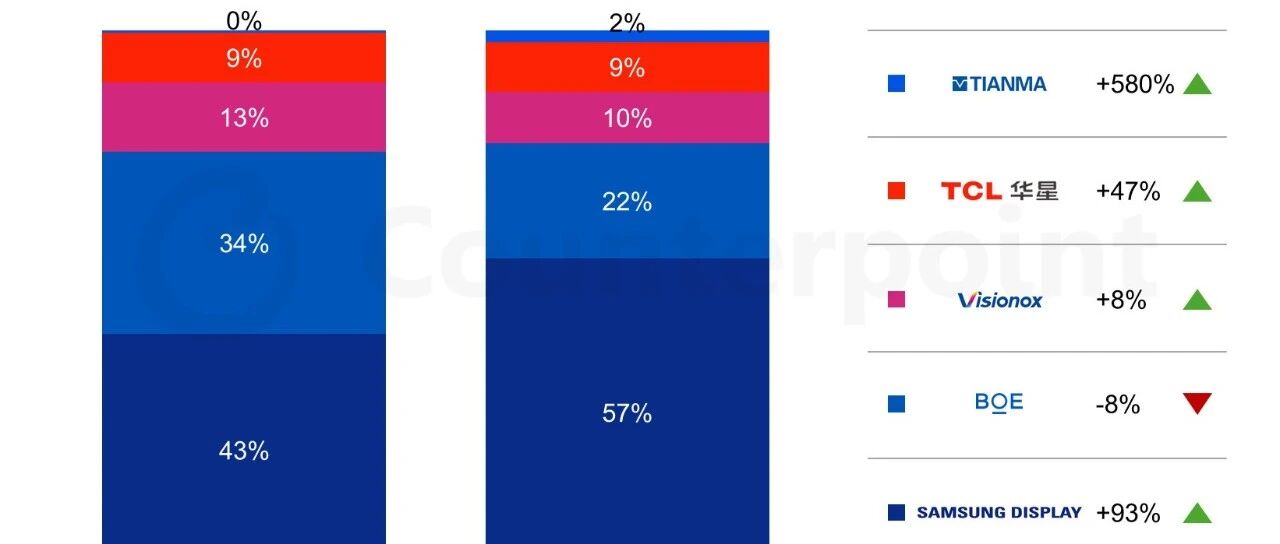
Core Insights - Counterpoint Research predicts a 46% year-on-year growth in foldable smartphone panel shipments by 2026, driven by Apple's entry into the market with its first foldable iPhone [4][5] - The book-style foldable panels are expected to solidify their dominant position, with Samsung Display projected to capture over 50% market share [4][5] - The overall foldable smartphone shipments are forecasted to grow by 14% in 2025 and 38% in 2026, with book-style models leading the market [5][7] Market Trends - The demand for larger screens and enhanced multitasking capabilities is driving consumer preference towards book-style foldable designs, despite their higher price [7] - The global foldable smartphone market is showing signs of recovery, with a 45% year-on-year growth in Q2 2025, setting the stage for explosive growth in 2026 [7] - The introduction of new models, such as the Galaxy Z TriFold, will maintain the market share of multi-fold designs in the low single digits [5][7] Company Overview - Counterpoint Research specializes in technology ecosystem market research, providing services to a wide range of clients from smartphone OEMs to chip manufacturers and large tech companies [8] - The company has a team of experienced analysts covering various sectors, including AI, automotive electronics, consumer electronics, and semiconductors [8]
苹果救得了小折叠吗?
36氪· 2025-12-18 13:51
Core Viewpoint - The article discusses Apple's entry into the foldable smartphone market, highlighting the challenges and potential of the small foldable phone segment, which has struggled to gain traction despite the hype surrounding it [5][19]. Group 1: Apple's Foldable Phone Development - Apple has been working on foldable phone technology since at least 2011, focusing on addressing the issue of screen creases, which has been a significant barrier to market entry [9][11]. - Recent leaks suggest that Apple's first foldable phone will adopt a small flip design, similar to Huawei's Pura X, but with a more square aspect ratio [5][8]. - Apple's extensive patent portfolio has influenced competitors, with many companies referencing Apple's designs in their own foldable technology [12][11]. Group 2: Market Dynamics of Small Foldable Phones - The small foldable phone market has not achieved significant sales, with projections indicating that in 2024, shipments of small foldables in China will be less than half of those of large foldables [21][19]. - Key issues for small foldables include a lack of functional differentiation from traditional smartphones and lower profit margins for manufacturers [22][30]. - The design of small foldables often compromises internal space and battery life, leading to inferior specifications compared to traditional flagship models [23][26]. Group 3: Competitive Landscape and Consumer Perception - Many manufacturers, including OPPO and vivo, have either paused or exited the small foldable market due to poor sales performance, while Samsung remains a dominant player [38][39]. - Consumer preferences still lean heavily towards functionality over aesthetics, making it difficult for small foldables to justify their price points [41][43]. - Apple's brand strength may allow it to navigate pricing challenges better than competitors, but past experiences with products like the iPhone Air suggest that design alone may not drive sales [46][49].
苹果救得了小折叠吗?
3 6 Ke· 2025-12-17 23:28
Core Insights - Apple is entering the foldable smartphone market, which has been growing rapidly, but has faced challenges in terms of consumer adoption and product differentiation [1][3][10] - The design of Apple's foldable iPhone is expected to resemble Huawei's Pura X, focusing on a compact "small foldable" form factor [1][3] - The issue of screen creasing remains a significant hurdle for Apple, despite years of research and development [5][7][10] Group 1: Market Dynamics - The foldable smartphone market has seen significant growth, but small foldable devices have struggled to gain traction, often being overshadowed by larger foldable models [11][16] - In China, small foldable shipments are projected to be less than half of those for large foldables in 2024 [11][16] - The lack of functional differentiation between small foldables and traditional smartphones has hindered their market performance [11][16] Group 2: Technical Challenges - Apple has been working on foldable technology since at least 2011, focusing on addressing the creasing issue through various innovative hinge designs [5][7][9] - Despite numerous patents filed, Apple has yet to achieve a satisfactory solution to the creasing problem, which has delayed the launch of the foldable iPhone [9][10] - The complexity of the design and the need for precision in manufacturing have contributed to the prolonged development timeline [7][9] Group 3: Competitive Landscape - Competitors like Samsung, OPPO, and Huawei have already established their presence in the foldable market, with varying degrees of success [19][21] - Some manufacturers, such as OPPO and vivo, have already scaled back their small foldable offerings due to poor sales performance [20][21] - Huawei's strategy has shifted towards larger foldable devices, indicating a potential market trend away from small foldables [22][26] Group 4: Consumer Perception - Consumer expectations for smartphones remain heavily focused on functionality, with aesthetic appeal being a secondary consideration [23][26] - Apple's previous product, the iPhone Air, faced criticism for prioritizing design over functionality, leading to disappointing sales [29][31] - The market response suggests that simply having a foldable design may not be enough to drive consumer interest if it does not offer significant functional advantages [19][23]
小折叠手机还有救吗?
远川研究所· 2025-12-17 13:12
Core Viewpoint - The article discusses the challenges and market dynamics surrounding the foldable smartphone segment, particularly focusing on Apple's upcoming foldable iPhone and its potential impact on the market [5][6]. Group 1: Apple's Entry into Foldable Market - Apple has been cautious about entering the foldable smartphone market, missing the rapid growth phase but now appears ready to launch its first foldable iPhone, which is expected to resemble Huawei's Pura X in design [6][9]. - The foldable iPhone has been in development for over a decade, with patents dating back to 2011, primarily focusing on addressing the issue of screen creases [10][11]. - Apple's design approach includes innovative hinge mechanisms and materials aimed at minimizing creases, but the product has faced delays due to technical challenges [14][17]. Group 2: Market Dynamics of Small Foldable Phones - Small foldable phones have struggled to gain traction in the market, with sales in China projected to be less than half of larger foldable models in 2024 [20][26]. - Key issues for small foldable phones include a lack of functional differentiation from traditional smartphones and limited profit margins for manufacturers [20][26]. - The additional components required for small foldable phones, such as hinges and flexible screens, increase production costs, making it difficult for manufacturers to maintain profitability [28][30]. Group 3: Competitive Landscape and Consumer Preferences - The competitive landscape shows that many manufacturers, including OPPO and vivo, have either exited or reduced their focus on small foldable phones due to poor sales performance [30][31]. - Consumer preferences lean heavily towards functionality and performance, with aesthetic design alone failing to justify the higher price points of small foldable devices [32][35]. - Apple's brand strength may allow it to navigate pricing challenges better than competitors, but past experiences with products like the iPhone Air suggest that design alone may not drive sales [37][38].