
普惠托育服务体系

Search documents
娃没人带、托班贵?国家七部门打响2025普惠托育“冲刺战”
2 1 Shi Ji Jing Ji Bao Dao· 2025-07-08 12:43
Core Viewpoint - The Chinese government is accelerating the development of an inclusive childcare service system to address the challenges of high costs and accessibility in childcare services, aiming to meet specific targets by 2025 [1][2][9] Group 1: Policy Initiatives - The National Health Commission and six other departments issued an opinion to establish a universal childcare service system, targeting 4.5 childcare spots per 1,000 people by 2025, with an additional 660,000 inclusive childcare spots [1][2] - The "14th Five-Year Plan" includes the number of childcare spots as a key economic and social development indicator, but current data shows a shortfall, with only 3.38 spots per 1,000 people as of the end of 2023 [1][2] Group 2: Service Structure - The proposed "1+N" childcare service system will center around comprehensive childcare service centers, which will provide various support services, including training for childcare personnel and management consulting for childcare institutions [2][3] - Comprehensive childcare service centers are seen as flagship institutions, but their effectiveness is limited by accessibility and local government financial constraints [3][4] Group 3: Local Implementation - Beijing plans to enhance its inclusive childcare service system by increasing spots through kindergartens and community-based childcare points, aiming for at least 30,000 new inclusive spots by 2025 [4][5] - Local governments are encouraged to develop childcare services as part of their social welfare projects, with over half of the provinces already implementing subsidies and vouchers to reduce costs for families [5][6] Group 4: Support for Various Providers - The opinion outlines support measures for different childcare providers, including cost reductions for facilities and operational subsidies for inclusive childcare institutions [6][7] - The government will also facilitate the establishment of childcare facilities by employers and encourage private institutions to offer affordable services [7][8] Group 5: Planning and Demand - The opinion emphasizes the need for scientific planning and precise supply of childcare services, ensuring that new residential areas include childcare facilities [8][9] - By 2025, all provinces are expected to establish standards for recognizing public and social childcare institutions, ensuring transparency and accessibility [9]
新华财经晚报:七部门联合推进普惠托育服务体系建设
Xin Hua Cai Jing· 2025-07-08 09:48
Group 1 - The Chinese government is promoting the construction of an inclusive childcare service system, aiming to establish a "1+N" childcare service network by 2025, with a target of 4.5 childcare spots for every 1,000 people under three years old and an addition of 660,000 inclusive childcare spots [2] - The new measures announced by the Hong Kong Monetary Authority and the People's Bank of China include expanding the range of participating institutions in the Bond Connect program, which will enhance the offshore RMB bond repurchase business [3] - In June, the retail sales of new energy passenger vehicles reached 1.111 million units, marking a year-on-year increase of 29.7% and a month-on-month increase of 8.2%. Cumulatively, 5.468 million units were sold in the first half of the year, reflecting a growth of 33.3% [3] Group 2 - The Australian government has maintained its benchmark interest rate at 3.85%, with market expectations for a 25 basis point cut, indicating a cautious outlook on economic conditions [4] - The number of corporate bankruptcies in Japan reached 4,990 in the first half of the year, a year-on-year increase of 1.19%, marking the highest number for the first half of the year in nearly 11 years [4]

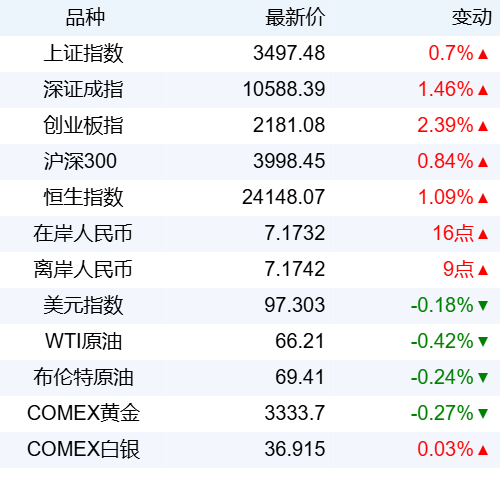
七部门联合发布:事关幼儿托育→
证券时报· 2025-07-08 09:33
Core Viewpoint - The article emphasizes the need to accelerate the construction of an inclusive childcare service system, proposing a "1+N" model that integrates various childcare services to meet diverse community needs [1][2]. Summary by Sections Overall Requirements - The "1+N" childcare service system is defined, where "1" represents the comprehensive childcare service center that leads and promotes regional childcare development, and "N" includes various forms of childcare services such as community-based, kindergarten classes, and family childcare points to meet diverse demands [2]. Main Tasks - There is a focus on increasing the construction of comprehensive childcare service centers, aiming for full coverage at the city level. Community childcare services will be planned uniformly at the city level, and kindergartens are encouraged to provide childcare services while ensuring adequate facilities and qualified staff [2]. - Support for private childcare institutions and collaboration with healthcare institutions for infant health management and services is also highlighted [2]. Organizational Support - The article calls for enhanced support measures, utilizing multiple funding channels to build inclusive childcare facilities and allocate childcare spots as needed. It stresses the importance of strong leadership to address challenges in the construction of the inclusive childcare service system [2]. Kindergarten Childcare Services - The article encourages kindergartens to offer childcare services, emphasizing the need to prioritize the enrollment of 3-6-year-olds while ensuring that the needs of 2-3-year-olds are met with appropriate care and safety measures [3]. - It outlines specific requirements for kindergartens wishing to establish childcare classes, including the need for suitable facilities and staff to cater to younger children's developmental needs [3]. Support for Employers - Employers are encouraged to utilize existing land or facilities to establish childcare services, with provisions for funding these services from employee welfare funds. State-owned enterprises and public institutions are urged to take the lead in providing inclusive childcare services for their employees [4].

七部门:今年实现每千人口拥有3岁以下婴幼儿托位数4.5个
财联社· 2025-07-08 07:55
Core Viewpoint - The article emphasizes the importance of accelerating the construction of an inclusive childcare service system, which is crucial for enhancing fertility support policies and promoting a family-friendly society, ultimately contributing to high-quality population development [6][7]. Overall Requirements - The article outlines the development of a "1+N" childcare service system, centered around comprehensive childcare service centers, to provide accessible, affordable, and quality childcare services [7][8]. - By 2025, the goal is to achieve 4.5 childcare spots per 1,000 people for children under three years old, with an addition of 660,000 inclusive childcare spots [7][3]. Main Tasks - There is a focus on increasing the construction of comprehensive childcare service centers, aiming for full coverage at the city level [8]. - Development of community childcare services is prioritized, utilizing existing public resources to provide various forms of affordable childcare [9][10]. - Encouragement for kindergartens to offer childcare services, ensuring safety and quality standards are met [11]. - Support for employers to establish childcare facilities for employees' children, with financial provisions for related expenses [12]. - Promotion of private childcare institutions to enhance service diversity and meet community needs [13]. - Medical institutions are encouraged to support childcare services through health management and training [14][15]. Organizational Support - The article stresses the need for multi-channel funding to support the construction of inclusive childcare facilities and reduce operational costs for service providers [16]. - It highlights the importance of establishing a leadership structure to address challenges in building the childcare service system [17].

七部门发布《关于加快推进普惠托育服务体系建设的意见》
news flash· 2025-07-08 07:33
七部门日前发布《关于加快推进普惠托育服务体系建设的意见》。其中提出,2025年,实现每千人口拥 有3岁以下婴幼儿托位数4.5个,新增普惠性托位66万个。2030年,普惠托育服务体系基本建立,支持保 障政策基本健全,公建托位数量明显增加,托育服务能力和质量显著提升,家庭托育成本有效降低,基 本满足群众普惠托育服务需求。 《意见》明确发展"1+N"的托育服务体系,即以托育综合服务中心为枢纽,以托育机构、社区嵌入式托 育、幼儿园托班、用人单位办托、家庭托育点等为网络的"1+N"托育服务体系。"1"是指托育综合服务 中心,发挥示范引领、辐射带动作用,促进区域托育服务发展。"N"是指托育机构、社区嵌入式托育、 幼儿园托班、用人单位办托、家庭托育点等多种形式的托育服务机构,满足群众多层次多样化托育服务 需求。加大托育综合服务中心建设力度,优先实现托育综合服务中心地市级全覆盖。发展社区托育服 务,以地市为单位统一规划社区嵌入式托育服务网络。推进有条件的幼儿园提供托育服务,解决好场 地、设施、师资等条件保障。推动用人单位办托,结合实际为本单位职工提供普惠托育服务。支持民办 托育服务机构发展。促进医疗卫生机构支持托育服务,开展 ...
高质量发展看中国丨托起“幼有所育”的民生答卷 织密普惠托育服务网
Yang Guang Wang· 2025-07-03 07:09
Core Insights - Guangzhou is developing a comprehensive childcare service network for children aged 0-3, focusing on affordability, quality, and accessibility for families [1][2][16] - The city has implemented a three-year action plan (2023-2025) to establish a robust childcare system, aiming for full coverage of 177 street-level childcare centers by April 2025 [2][15] - The integration of medical and educational resources is a key feature of the childcare services, enhancing the quality of care and support for children [9][10][11] Group 1: Service Development - Guangzhou has established 1,938 childcare institutions, providing a total of 108,800 childcare spots, with over 60% being affordable spots [2][15] - The Yuexiu District has created over 2,000 integrated childcare spots, including community parent-child points and temporary care spaces [5] - The Haizhu District has a childcare spot ratio of 6.34 per 1,000 residents, with over 70% being affordable spots [6] Group 2: Funding and Support - In the first half of 2025, Guangzhou allocated nearly 50 million yuan in funding for childcare, distributing 24.12 million yuan in subsidies to 792 affordable institutions [15] - The average monthly fee for affordable childcare spots is 1,813 yuan, significantly lower than the market average [15] - The government is simplifying the application and approval processes for childcare institutions to enhance operational efficiency [15] Group 3: Community Integration - Community-based childcare services are being developed, such as the embedded service points in neighborhoods, which offer flexible care options [13][14] - The "public-private partnership" model is being explored to enhance service delivery and resource sharing [15] - The integration of childcare services into existing community facilities is being promoted to maximize resource utilization [5][15] Group 4: Training and Quality Assurance - Over 1,000 childcare professionals are trained annually, with 30 vocational colleges offering childcare-related programs [15] - The first round of star ratings for affordable childcare institutions shows that over 70% achieved three stars or above [15] - The collaboration with medical institutions ensures that childcare centers adhere to health and nutrition standards [10][11]
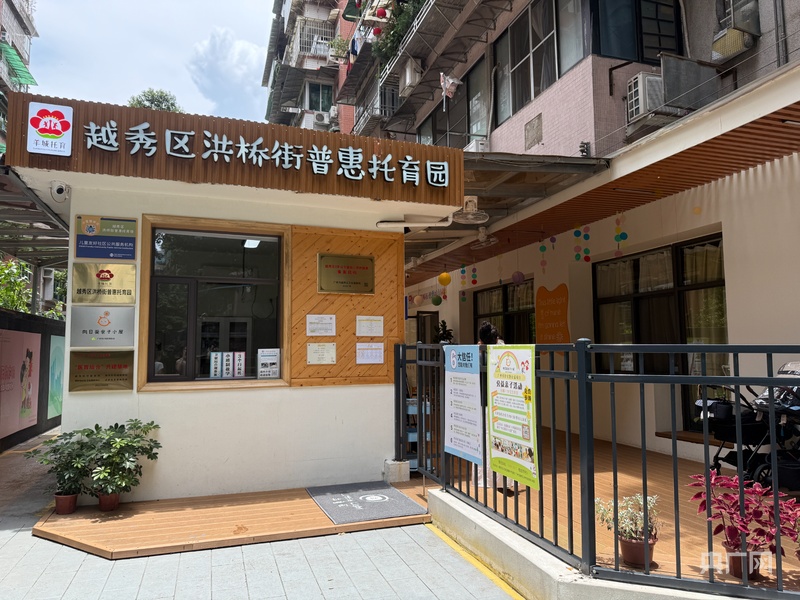
【榆林】全力打造“15分钟托育服务圈”
Shan Xi Ri Bao· 2025-06-25 00:34
Core Viewpoint - Yulin City is enhancing its public welfare childcare services through the establishment of various childcare institutions, aiming to provide affordable and accessible services for families, particularly dual-income households [1][2][5]. Group 1: Development of Childcare Services - Yulin City has established 267 childcare institutions, with over 80% of the spots being public welfare positions, and the average monthly childcare cost is projected to decrease from 1,591 yuan in 2023 to 802 yuan by 2025, benefiting over 15,000 families [2]. - The city is implementing a "15-minute childcare service circle" to ensure convenient access to childcare services for residents [1]. Group 2: Infrastructure and Accessibility - The city is expanding its childcare infrastructure by promoting public childcare institutions, community-based childcare points, and kindergarten classes, resulting in a network of 9 public childcare institutions, 41 community-based points, and 145 extended kindergarten classes [3]. - Parents can easily find childcare service points in residential areas and workplaces, creating a highly efficient and accessible childcare service network [3]. Group 3: Professional Training and Support - Yulin City has established a training base for childcare professionals, having trained over 7,000 individuals in childcare-related fields since 2019 [4]. - The city provides operational subsidies and tax incentives for public welfare childcare institutions, along with a monthly subsidy of 2,000 yuan for university students working in private childcare institutions [5]. Group 4: Health and Safety Measures - Yulin City has achieved 100% signing of contracts between grassroots healthcare institutions and childcare facilities, ensuring regular health monitoring and parenting guidance to enhance the professionalism of childcare services [5]. - The integration of medical resources from maternal and child health hospitals into childcare services is aimed at providing families with peace of mind regarding their children's health [5].
我国将推出一系列政策举措 进一步保障和改善民生
Yang Guang Wang· 2025-06-11 01:04
Group 1 - The core viewpoint of the article is the issuance of the "Opinions on Further Guarantee and Improve People's Livelihood" which aims to address pressing issues faced by the public and enhance their sense of gain [1] - The "Opinions" propose four main areas with ten policy measures focused on improving social security and public services, emphasizing fairness, balance, inclusiveness, and accessibility [1][2] - The National Development and Reform Commission emphasizes the need for a more equitable and inclusive approach to social security and public services, particularly in education and healthcare [1][2] Group 2 - The policy aims to effectively expand social security coverage, particularly for flexible employment workers, migrant workers, new job seekers, and college graduates [2] - The Ministry of Civil Affairs plans to expand monitoring for low-income groups to provide timely assistance to those in need [2] - The National Health Commission is focused on developing a comprehensive childcare service system to improve the quality and availability of childcare services [2]