空间科学

Search documents
我国高水平国际期刊论文数量和国际专利申请量连续5年世界第一
Xin Hua Wang· 2025-09-18 07:09
Core Viewpoint - The Chinese Ministry of Science and Technology has reported significant achievements in various scientific fields, highlighting the country's leadership in high-level international journal publications and international patent applications for five consecutive years [1] Group 1: Achievements in Science and Technology - China has made major original achievements in quantum technology, life sciences, material sciences, and space sciences [1] - The number of high-level international journal papers and international patent applications from China has ranked first in the world for five consecutive years [1]
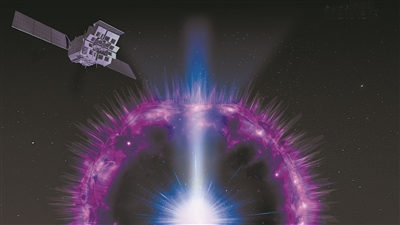
张永合:捕捉宇宙深处的“焰火”
Ke Ji Ri Bao· 2025-07-10 02:01
Core Viewpoint - The "Tian Guan" satellite has successfully captured a fleeting cosmic X-ray signal, providing a new perspective on the process of stellar death, marking a significant advancement in the field of time-domain astronomy [5][6]. Group 1: Satellite Overview - "Tian Guan" satellite is the first large-field X-ray imaging satellite in the world, designed for high-sensitivity real-time dynamic sky monitoring in the soft X-ray band [5][10]. - The satellite aims to discover transient sources and explosive celestial bodies, referred to as "cosmic fireworks," which appear briefly and then vanish [8][9]. - The satellite's name is derived from a historical supernova event recorded in ancient China, symbolizing a reconnection with historical astronomical observations [6][7]. Group 2: Technical Innovations - The satellite features three standout characteristics: large field of view, high sensitivity, and precise positioning, enabling it to detect and locate transient sources effectively [10][11]. - It employs a unique "big eye" and "small eye" design, utilizing 12 soft X-ray telescopes for wide-field observation and 2 follow-up X-ray telescopes for detailed imaging [11][12]. - The "Tian Guan" satellite incorporates "lobster eye" microchannel optical technology, allowing it to focus soft X-rays effectively, which is a significant innovation in X-ray astronomy [12][13]. Group 3: Communication and Collaboration - The satellite is designed to communicate effectively with ground-based equipment and other satellites, establishing a real-time communication network using VHF and BeiDou short message systems [15]. - This communication capability enhances the satellite's observational effectiveness by allowing rapid sharing of data with global astronomical observatories [15]. Group 4: Team and Talent Development - The development team for the "Tian Guan" satellite is relatively young, with a focus on fostering new talent in the field of space science, emphasizing the need for interdisciplinary skills [16][17]. - The team aims to cultivate a new generation of space science professionals who are passionate about long-term engagement in this field, ensuring sustainable development [18][19].

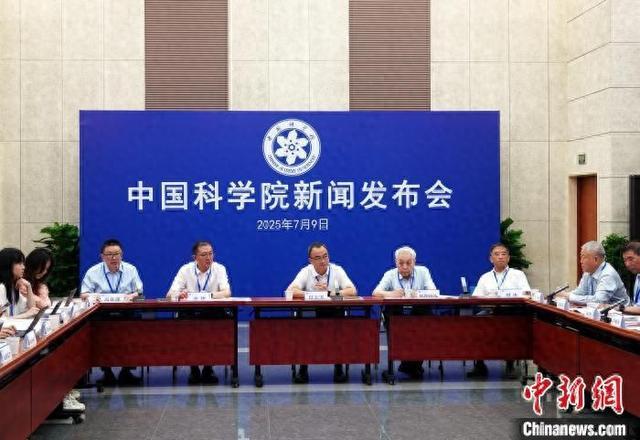
嫦娥六号月球样品最新研究成果发布 为人类首次揭开月背演化史
Huan Qiu Wang Zi Xun· 2025-07-09 16:10
Core Viewpoint - The research progress from China's Chang'e 6 lunar mission has unveiled significant findings about the Moon's far side, marking a milestone in lunar and planetary science [2][4]. Group 1: Research Achievements - Four groundbreaking research results have been published, revealing the history of volcanic activity, ancient magnetic fields, water content in the mantle, and mantle evolution characteristics of the Moon's far side [2][4]. - The studies indicate that the far side of the Moon experienced two distinct phases of basaltic volcanic activity approximately 4.2 billion and 2.8 billion years ago, suggesting sustained volcanic activity [5]. - The research also uncovered ancient magnetic field information, indicating fluctuations in the Moon's magnetic field strength around 2.8 billion years ago, challenging previous assumptions of a monotonous decline [5]. - The water content in the far side's mantle was found to be significantly lower than that of the near side, indicating a dichotomy in the Moon's internal water distribution [5]. - The basalt samples from the far side were identified as originating from a highly depleted source region, suggesting that large impact events may have significantly influenced the Moon's deep-layer evolution [5][7]. Group 2: Collaborative Efforts and Future Directions - The Chinese Academy of Sciences has coordinated efforts among various research institutions to maximize the scientific output from the Chang'e 6 samples, demonstrating a strong commitment to advancing space science [4][9]. - The findings from the Chang'e 6 mission are expected to enhance understanding of lunar evolution theories and promote deeper integration of academia and industry in space science [4][9]. - The research on the South Pole-Aitken basin, one of the Moon's largest impact craters, has provided new insights into the effects of large impacts on lunar evolution, marking a significant contribution to the field [7][9].
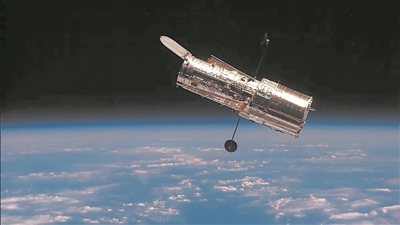
超期服役的哈勃望远镜再续传奇
Ke Ji Ri Bao· 2025-05-19 22:30
Core Viewpoint - NASA celebrates the 35th anniversary of the Hubble Space Telescope, highlighting its significant contributions to space science and its ongoing relevance despite plans for a successor [4][6]. Group 1: Hubble's Achievements - Hubble has transformed human understanding of the universe, providing vivid images and numerous scientific breakthroughs since its launch in 1990 [4]. - The telescope has conducted nearly 1.7 million observations of approximately 55,000 astronomical targets, leading to over 22,000 published papers with more than 1.3 million citations [8]. - Hubble's unique ability to capture ultraviolet light allows it to observe celestial phenomena that ground-based telescopes cannot, achieving ten times the clarity of traditional ground-based observations [7]. Group 2: Current Status and Popularity - Despite being operational for 35 years, Hubble remains one of the most sought-after astronomical instruments, with the number of scientists applying for observation time being six times greater than the available slots [8]. - Hubble's data archive exceeds 400 terabytes, showcasing its extensive contributions to astronomical research [8]. Group 3: Future Considerations - Hubble is currently beyond its intended operational lifespan, with the last maintenance mission conducted 16 years ago, raising concerns about its future viability [9]. - NASA faces budget constraints, with funding expected to decrease significantly, complicating any potential maintenance or operational extension for Hubble [10].