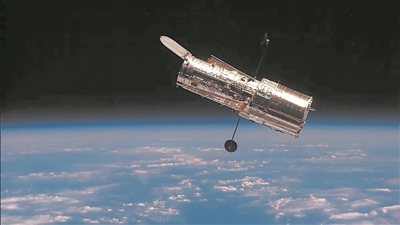
哈勃望远镜

Search documents
宇宙“质量地图”发布 揭示一百亿年间暗物质如何塑造星系
Huan Qiu Wang Zi Xun· 2026-01-27 01:41
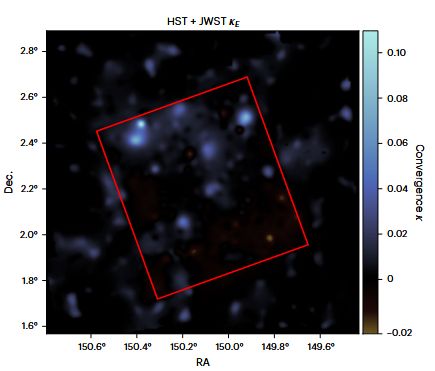
Core Viewpoint - Astronomers have created the most detailed and highest resolution cosmic "mass map" to date, revealing how dark matter has shaped galaxy development over the past 10 billion years [1][5]. Group 1: Dark Matter and Its Significance - Dark matter constitutes approximately 85% of the total mass of the universe and is difficult to detect as it neither emits nor absorbs light, making it invisible to traditional telescopes [3]. - The gravitational influence of dark matter affects the light paths of distant galaxies, allowing scientists to trace the distribution of this unseen mass by measuring the slight distortions in the shapes of numerous distant galaxies [3][5]. Group 2: Methodology and Findings - The research team from the California Institute of Technology utilized imaging data from the James Webb Space Telescope to measure the shapes of about 250,000 galaxies, reconstructing the most detailed mass map of the universe's continuous regions to date [3][4]. - This map not only reveals large mass galaxy clusters but also presents a network of dark matter filaments, which serve as the cosmic skeleton where gas and galaxies are distributed [3][5]. - The structures depicted in the map align with predictions from mainstream cosmological models, suggesting that galaxies formed at high-density nodes within the dark matter filament network [3]. Group 3: Implications for Future Research - The newly created mass map is expected to be a valuable resource for studying galaxy evolution and the development of cosmic structures [4]. - The consistency of the map's structures with current cosmological models provides guidance for understanding the origins of the universe and reinforces the scientific community's efforts in the search for dark matter [5].

“宇宙大片”看到了什么(科技大观)
Ren Min Wang· 2025-09-25 22:53
Core Insights - The COSMOS-Web project has created the largest deep-space cosmic map to date, marking the positions, speeds, and evolutionary histories of nearly 800,000 galaxies over a time span of 13.5 billion years, covering 98% of the universe's evolution history [1][4] Group 1: Project Overview - COSMOS-Web is based on data from the James Webb Space Telescope (JWST) and represents a significant advancement in cosmic mapping, providing unprecedented insights into galaxy formation and evolution [1][3] - The project involved a total observation time of 255 hours, making it the longest single project in JWST's first year, with data exceeding 1.5TB [2] Group 2: Technological Advancements - JWST's revolutionary infrared observation capabilities distinguish it from its predecessor, the Hubble Space Telescope, allowing it to observe wavelengths from 0.6 to 28 micrometers, thus enabling the study of earlier cosmic evolution stages [3] - The larger primary mirror of JWST, approximately six times that of Hubble, enhances its light-gathering ability and sensitivity, allowing it to detect fainter and more distant celestial bodies [3] Group 3: Key Discoveries - The project revealed an unexpectedly high number of galaxies in the early universe, with actual counts being about ten times higher than predictions based on Hubble data, challenging existing cosmological models [4] - The existence of supermassive black holes in the early universe, which were thought to take billions of years to form, was also confirmed, suggesting a need to rethink the relationship between galaxies and black holes [4] - These findings pose significant challenges to current cosmological theories, indicating potential unknown physical processes or the need for fundamental revisions in understanding dark matter and early universe physics [4]
超期服役的哈勃望远镜再续传奇
Ke Ji Ri Bao· 2025-05-19 22:30
Core Viewpoint - NASA celebrates the 35th anniversary of the Hubble Space Telescope, highlighting its significant contributions to space science and its ongoing relevance despite plans for a successor [4][6]. Group 1: Hubble's Achievements - Hubble has transformed human understanding of the universe, providing vivid images and numerous scientific breakthroughs since its launch in 1990 [4]. - The telescope has conducted nearly 1.7 million observations of approximately 55,000 astronomical targets, leading to over 22,000 published papers with more than 1.3 million citations [8]. - Hubble's unique ability to capture ultraviolet light allows it to observe celestial phenomena that ground-based telescopes cannot, achieving ten times the clarity of traditional ground-based observations [7]. Group 2: Current Status and Popularity - Despite being operational for 35 years, Hubble remains one of the most sought-after astronomical instruments, with the number of scientists applying for observation time being six times greater than the available slots [8]. - Hubble's data archive exceeds 400 terabytes, showcasing its extensive contributions to astronomical research [8]. Group 3: Future Considerations - Hubble is currently beyond its intended operational lifespan, with the last maintenance mission conducted 16 years ago, raising concerns about its future viability [9]. - NASA faces budget constraints, with funding expected to decrease significantly, complicating any potential maintenance or operational extension for Hubble [10].