
绿色生物制造

Search documents
袁其朋教授:高效细胞工厂构建生产芳香族化合物 | SynBioCon 2025
合成生物学与绿色生物制造· 2025-07-10 14:45
Core Viewpoint - The article emphasizes the importance of green biosynthesis of aromatic compounds for sustainable development, addressing the limitations of traditional production methods that are resource-intensive and environmentally harmful [1]. Group 1: Green Biosynthesis of Aromatic Compounds - Aromatic compounds are crucial in various industries such as materials, food, pharmaceuticals, and cosmetics, but traditional production methods face sustainability and pollution issues [1]. - The development of efficient cell factories is identified as a key factor in overcoming challenges such as low yield, poor cell tolerance, and low production intensity in the biosynthesis of aromatic chemicals [1]. Group 2: Research and Development Achievements - Professor Yuan Qipeng's team at Beijing University of Chemical Technology has constructed advanced cell factories for synthesizing over twenty important aromatic compounds, surpassing natural theoretical yields [1]. - Strategies to enhance the synthesis capabilities of compounds like arbutin and ferulic acid have been proposed, significantly improving their production efficiency [1]. - The establishment of industrial production lines for compounds such as arbutin and 5-hydroxytryptophan demonstrates the potential of synthetic biology in green biosynthesis [1]. Group 3: Upcoming Conference - The SynBioCon 2025 conference will be held from August 20-22 in Ningbo, focusing on the future of food and agriculture, where Professor Yuan will present on the construction of efficient cell factories for aromatic compound production [2][4]. - The conference aims to explore trends in biomanufacturing, innovative technologies, and products that can sustain the industry's vitality, involving various stakeholders including industry leaders and experts [4].


南京工大陈可泉:利用可再生原料生物合成脂肪族短链二元胺与醇的研究进展
合成生物学与绿色生物制造· 2025-07-03 09:52
Core Viewpoint - The article discusses the advancements in green bio-manufacturing, particularly focusing on the synthesis of aliphatic short-chain diamines and diols from renewable resources, highlighting the importance of reducing reliance on fossil resources and addressing environmental concerns [3][4][5]. Group 1: Importance of Green Bio-Manufacturing - The chemical industry is a significant part of the national economy, with over 100,000 types of fine chemical products globally. Traditional production methods heavily rely on fossil resources, leading to resource depletion and CO2 emissions [4]. - Transitioning to renewable resources for bio-manufacturing is crucial for achieving a clean, low-carbon, and sustainable environment. China has set goals to replace traditional chemical raw materials with bio-based materials [4][5]. Group 2: Advances in Bio-Synthesis - Significant progress has been made in the bio-synthesis of 1,3-propanediamine, 1,4-butanediamine, and their corresponding diols, with commercial applications already realized by companies like DuPont and Genomatica, achieving cost reductions of 37% and energy savings of 30% compared to petrochemical processes [5][6]. - Companies such as Ningxia Yipin Biotechnology and Shanghai Kaisi Bio-Industry have successfully scaled up the production of 1,5-pentanediamine using whole-cell catalysis, claiming a 30% cost reduction compared to traditional methods [5][6]. Group 3: Challenges in Bio-Synthesis - Despite advancements, challenges remain in the bio-synthesis of most diamines and diols, including high production costs and the lack of natural biosynthetic pathways for certain compounds [6][7]. - Research is focused on developing bio-synthesis routes using non-food biomass and one-carbon feedstocks to reduce fossil resource dependence and CO2 emissions [6][7]. Group 4: Metabolic Pathways and Carbon Cycling - The article outlines the carbon cycling and metabolic pathways involved in utilizing renewable resources for bio-manufacturing, emphasizing the role of biomass derived from agriculture, forestry, and waste [8][9]. - Various metabolic pathways for sugars derived from lignocellulosic biomass have been identified, which can be utilized for synthesizing short-chain diamines and diols [11][13]. Group 5: Synthesis Routes for Specific Compounds - Detailed synthesis routes for 1,3-propanediamine and 1,3-propanediol are discussed, highlighting the use of key amino acid precursors and various microbial pathways [20][21]. - The synthesis of 1,4-butanediamine and 1,4-butanediol involves multiple pathways, including those utilizing ornithine and arginine, with significant advancements in microbial engineering to enhance yields [23][24]. - The article also covers the synthesis routes for 1,5-pentanediamine and 1,5-pentanediol, focusing on the use of lysine as a precursor and the challenges in achieving high yields [25][26].
生物制造领域 “潜力股” 团队?生物制造青年论坛,报告征集中!8月20-22日宁波
合成生物学与绿色生物制造· 2025-07-02 14:35
Core Viewpoint - The article highlights the upcoming "Youth Forum on Biomanufacturing" scheduled for August 20 in Ningbo, Zhejiang, as part of the SynBioCon 2025 event, aimed at promoting innovation and collaboration in the field of synthetic biology and biomanufacturing [2][3]. Group 1: Event Details - The "Youth Forum on Biomanufacturing" will focus on addressing scientific issues, solutions, achievements, scalability, and future directions in the research field [3]. - The event will take place on August 20, 2025, with limited seating available (only 30 seats) [6]. - Participants can choose to register for either the Youth Forum or the Technology Achievement Showcase [6]. Group 2: Participation and Contributions - The event encourages universities and research institutions to apply for sharing their innovative achievements [4]. - SynBioCon 2025 will also feature a "Technology Achievement Showcase" to publicly collect 100 innovative achievements and projects in the field of synthetic biology and biomanufacturing for on-site display and networking [6]. Group 3: Organizers and Previous Events - The event is organized by Ningbo Detaizhongyan Information Technology Co., Ltd. (DT New Materials) and co-organized by Ningbo Meisai Biological Engineering Co., Ltd. [11]. - Previous editions of the SynBioCon were successfully held in 2022, 2023, and 2024 in Ningbo, showcasing the growing interest and development in the field [13].

生物制造青年论坛,报告征集中!聚焦科技成果对接,8月20-22日宁波
合成生物学与绿色生物制造· 2025-06-25 12:35
SynBioCon 大会 | 生物制造青年论坛 特色专场 生物制造青年论坛 8月20日,浙江·宁波 02 科技成果展示与对接专场 (同期活动) SynBioCon 2025 将设置 「科技成果展示与对接」专场 (现场展示科技成果推介墙), 公开征集100个从0—1—100的合成生物和生物制造领域创新成果 和项目 ,于现场展示、对接。 生物制造领域有哪些 "潜力股" 团队、技术和产品值 得关注? 为发掘合成生物学和生物制造科研团队创新成果、 促进生物制造领域优秀科研工作者成果交流和产业方对接, 第四届合成生物与绿色生物制造大会 (简称: SynBioCon 2025 ) 同期将举办特色专场——" 生物制造青年论坛 ",于8月20日在浙江宁波举办。 助力行业 15分钟了解一个方向 ,重点阐述研究领域存在的科学问题、解决思路、成果、放大可行性以及未来发展方向。 欢迎高校、科研院所申报分享! 扫码报名,请选择参会形式 报名请选择:青年论坛、科技成果展示 SynBioCon 2 025 8月20-22日,浙江·宁波 01 论坛信息 时 间: 8月20日(周三) 席 位 : 仅 30 席! 报告时间: 第一场:13:30 ...

独家专访 | 二十年磨一剑!他打破PHA成本困局,携万吨级技术回国圆梦!
DT新材料· 2025-06-24 15:32
Core Viewpoint - The article discusses the innovative approach of Yike Biotech in reducing the cost of PHA (polyhydroxyalkanoates) production to compete with petroleum-based materials, emphasizing the use of non-food plant oils as raw materials [3][4][9]. Group 1: Industry Background - The biodegradable materials market, including PLA and PBAT, has faced challenges such as overcapacity and performance limitations, leading to a decline in production rates [6][7]. - PHA is highlighted for its advantages, including marine biodegradability, heat resistance up to 100°C, and excellent barrier properties, with the global market expected to reach $367 million by 2030 [6][8]. Group 2: Company Overview - Yike Biotech was founded in June 2025 by Dr. Wilson Ling, who aims to revolutionize PHA production using non-food oils, specifically Pongamia oil, to significantly lower costs [9][10]. - The company has completed laboratory and pilot-scale validations of its production process and is the first globally to hold a PCT patent for PHA production [37]. Group 3: Cost Reduction Strategy - The raw material cost constitutes over 50% of PHA production costs, making it essential to lower these costs. Traditional sugar-based routes have a conversion rate of only 30%, leading to high costs [27][28]. - By using Pongamia oil, which has a conversion rate of over 80%, Yike Biotech can reduce PHA production costs by 30-50% compared to sugar-based methods [36]. Group 4: Technical and Market Development - Yike Biotech plans to focus on medical products for the Australian market, where demand is high, and the approval process is faster compared to other regions [38]. - The company aims to establish a production line in China that can replace 15,000 to 20,000 tons of petroleum-based plastics annually, with plans for further expansion [39].
浙大于洪巍/叶丽丹组:高产维生素A酿酒酵母菌株构建
合成生物学与绿色生物制造· 2025-06-24 08:25
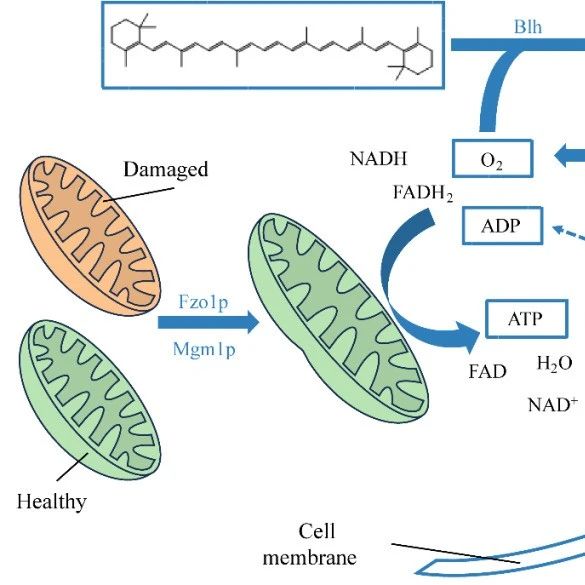
Core Viewpoint - Vitamin A is essential for human health, supporting vision, immune regulation, and serving as a key ingredient in anti-aging cosmetics. Traditional chemical synthesis methods for Vitamin A are complex and costly, leading to a shift towards green biomanufacturing using synthetic biology techniques [1][6]. Group 1: Research Findings - A recent study by Zhejiang University has engineered yeast to enhance Vitamin A production by modifying transporter systems, energy metabolism, and precursor supply networks, achieving unprecedented yields [1][6]. - The hydrophobic nature of Vitamin A leads to accumulation within cells, increasing metabolic burden and affecting synthesis efficiency. Approximately 17-20% of retinol remains unextracted during high-density fermentation, limiting production [2]. - The research team introduced transporter engineering strategies, identifying key transport proteins that facilitate the synthesis and secretion of retinol, retinal, and retinoic acid [2]. Group 2: Engineering Strategies - The team optimized the yeast's energy metabolism by overexpressing FZO1 and MGM1 to enhance mitochondrial fusion and introducing Vgb to improve oxygen uptake, thereby increasing ATP levels and energy supply [3]. - A multi-faceted engineering approach, combining transporter engineering, energy metabolism enhancement, and precursor supply optimization, led to significant breakthroughs in yeast strains for Vitamin A production [3][4]. Group 3: Production Results - Post-engineering, the yeast strain achieved a retinal yield of 638.12 mg/L with an extracellular ratio of 98.7%, and a retinoic acid yield of 106.75 mg/L, both representing the highest reported shake flask yields to date [4]. - The engineered yeast strain produced 727.30 mg/L of retinol with a carbon conversion rate of 7.62% using 20 g/L glucose, surpassing previous best strains [4]. Group 4: Implications for Industry - This research provides new insights for the efficient biomanufacturing of Vitamin A and serves as a reference for the green production of other high-value lipophilic products [6]. - As synthetic biology technologies advance, microbial cell factories are expected to play a crucial role in future biomanufacturing, contributing to human health and sustainable development [6].
独家专访 | 二十年磨一剑!他打破PHA成本困局,携万吨级技术回国圆梦!
合成生物学与绿色生物制造· 2025-06-23 12:35
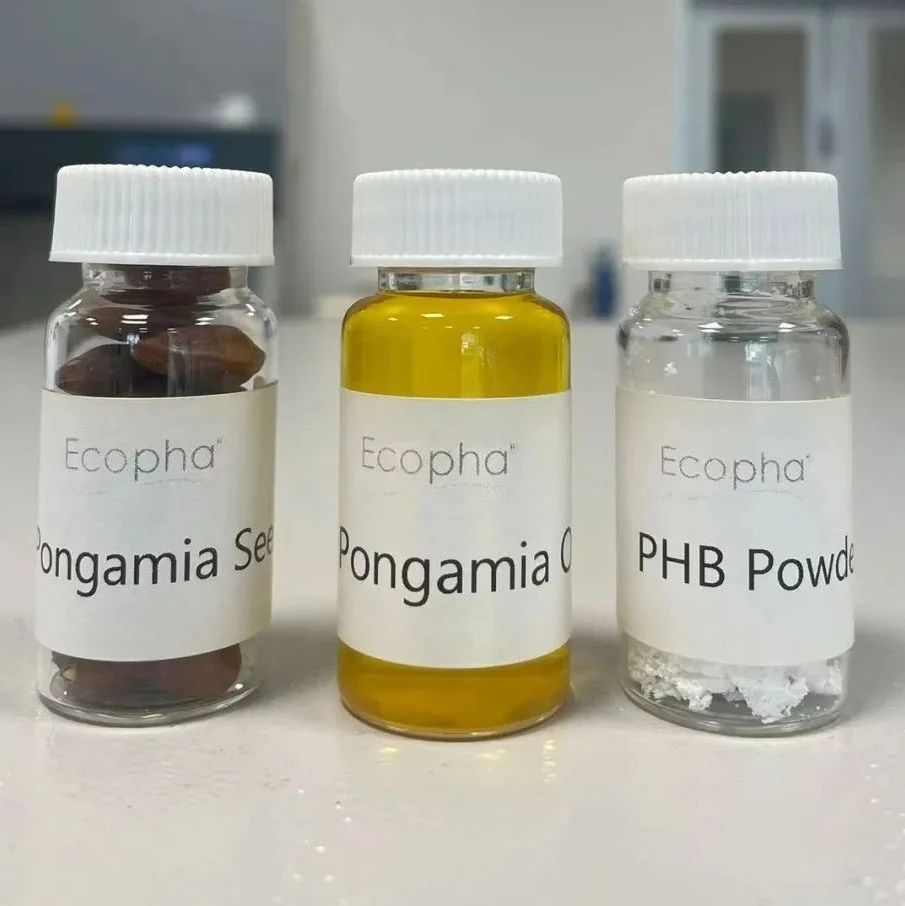
Core Viewpoint - The article discusses the innovative approach of Ecopha Biotech, founded by Dr. Wilson Ling, to significantly reduce the cost of PHA (polyhydroxyalkanoates) production by utilizing non-food plant oils, specifically Pongamia oil, as a raw material, aiming to compete with traditional petroleum-based plastics [2][9][31]. Group 1: Industry Background - The biodegradable materials market, including PLA and PBAT, has faced challenges such as oversupply and performance limitations, leading to a decline in production rates [6][7]. - PHA stands out due to its advantages like "biomanufacturing," "marine biodegradability," and high thermal resistance (up to 100°C), with the global market expected to reach $367 million by 2030 [6][9]. - The current cost of PHA exceeds 40,000 yuan per ton, making it difficult to compete with petroleum-based plastics priced below 10,000 yuan per ton [7][9]. Group 2: Company Background - Ecopha Biotech was established in June 2025, with Dr. Wilson Ling returning to China after years of research and entrepreneurship abroad, driven by the desire to overcome the cost barriers of PHA production [9][19]. - The company aims to leverage a patented strain of bacteria and non-food oils to achieve a significant reduction in production costs [9][22]. Group 3: Raw Material Cost Reduction - The primary focus for cost reduction is on raw materials, which account for over 50% of PHA production costs. Traditional sugar-based routes have a conversion rate capped at 30%, leading to high costs [22][23]. - Dr. Ling's research determined that using plant oils, particularly Pongamia oil, could achieve a conversion rate of over 80%, significantly lowering production costs [22][31]. - Pongamia oil is non-food, cost-effective (half the price of palm oil), and has a high yield, making it suitable for sustainable production [25][30][31]. Group 4: Technological Advancements - Ecopha Biotech has completed laboratory and pilot-scale validations for using Pongamia oil and has designed a process package for a large-scale production line [32]. - The company plans to focus on medical products initially, targeting the Australian market, where there is a high demand for biodegradable medical supplies [33]. - The first production line in China is expected to replace 15,000 to 20,000 tons of petroleum-based plastics annually once operational [33]. Group 5: Future Outlook - Dr. Ling envisions that the real competition for PHA is not other bioplastics but the vast quantities of petroleum-based plastics that contribute to environmental pollution [34]. - The company aims to collaborate with domestic peers to promote the large-scale industrialization of PHA, potentially alleviating plastic pollution issues as production scales up [34].
工信部等两部门:2027年生物制造中试平台达20个以上!
合成生物学与绿色生物制造· 2025-06-11 10:22
Core Viewpoint - The article discusses the establishment of pilot testing platforms for biomanufacturing, focusing on key product areas such as food additives, biopharmaceuticals, cosmetics, chemicals, energy, and enzyme preparations, with a goal to support innovation and commercialization in the industry [1][2]. Group 1: Pilot Testing Platforms - The Ministry of Industry and Information Technology and the National Development and Reform Commission aim to cultivate over 20 pilot testing platforms by 2027, serving more than 200 enterprises and incubating over 400 products [1]. - The initiative emphasizes market-driven and demand-led approaches, encouraging national laboratories and innovation platforms to develop pilot testing capabilities [1][2]. - The platforms will focus on addressing the shortcomings and pain points in the pilot testing phase of biomanufacturing, particularly in the development of new raw materials such as lignocellulosic and one-carbon compounds [2]. Group 2: Guidelines and Events - The article includes attachments such as the "Biomanufacturing Pilot Testing Capability Construction Platform Cultivation Guidelines (2025 Edition)" and an application form for the platform [3]. - The Fourth Synthetic Biology and Green Biomanufacturing Conference (SynBioCon 2025) is scheduled for August 20-22 in Jinan, Shandong, aiming to discuss trends in biomanufacturing and promote technology transfer and commercialization [4].

恒兴新材:通过战略投资布局合成生物领域 提升绿色生物制造领域竞争力
Zheng Quan Shi Bao Wang· 2025-05-13 13:31
Core Viewpoint - 恒兴新材 is navigating a challenging market environment while focusing on growth opportunities in high-quality specialty chemicals and synthetic biology [1][2]. Group 1: Financial Performance - In 2024, 恒兴新材's overall product sales reached 65,000 tons, an increase of 30.15% year-on-year [1]. - The company's revenue surpassed 700 million yuan for the first time, marking a year-on-year growth of 13.37% [1]. - The net cash flow from operating activities was 36.3 million yuan, reflecting a year-on-year increase of 10.56% [1]. - The company's EBITDA reached 103 million yuan [1]. Group 2: Strategic Initiatives - In the first quarter of 2025, 恒兴新材 experienced significant growth in operating performance due to increased sales efforts and market expansion [2]. - The company has made strategic investments in the synthetic biology sector, partnering with 依诺基科 to leverage its technological advantages and enhance product offerings [2]. - The focus on green bio-manufacturing aims to meet market demands for environmentally friendly and health-oriented products [2]. Group 3: Agricultural Sector Focus - 恒兴新材 is committed to optimizing and upgrading its pesticide intermediates to support the performance and environmental standards of downstream agricultural producers [3]. - The company plans to explore new business models and opportunities by establishing strategic partnerships with pesticide formulation companies [3].

恒兴新材: 关于2024年度暨2025年第一季度业绩说明会召开情况的公告
Zheng Quan Zhi Xing· 2025-05-13 08:22
Core Viewpoint - Jiangsu Hengxing New Materials Technology Co., Ltd. held an earnings briefing on May 13, 2025, to discuss its performance for the fiscal year 2024 and the first quarter of 2025, engaging with investors on various operational and financial aspects [1][2]. Earnings Briefing Overview - The earnings briefing was conducted via the Shanghai Stock Exchange's online platform, allowing for interactive communication between the company's management and investors [1][2]. - Key executives present included Chairman Zhang Qian, General Manager Wang Hengxiu, and Financial Director Zhou Hongyun, who addressed investor inquiries within the scope of information disclosure [2]. Key Investor Questions and Responses - **Strategic Layout in Synthetic Biology**: The company has made strategic investments in the synthetic biology sector, collaborating with Yinuo Technology to enhance its competitive edge in green biological manufacturing and expand its product lines [2][3]. - **Agricultural Sector Operations**: The company is focused on optimizing its pesticide intermediates and exploring new business models in the agricultural supply chain to promote green agricultural development [2][3]. - **Dividend Distribution**: The company plans to distribute a cash dividend of 0.125 yuan per share, with a payout ratio of 73.69%, reaffirming its commitment to returning value to shareholders [2][3]. - **First Quarter Performance Growth**: The significant growth in the first quarter of 2025 is attributed to increased sales efforts, market expansion, and stable supply chain management, leading to a rapid increase in product sales [3][4]. - **Future Dividend Plans**: The company aims to maintain a cash dividend ratio of 73.69% of the annual net profit attributable to shareholders, adhering to relevant regulations and its dividend policy [3][4]. - **Technological Advantages and Market Performance**: The company emphasizes innovation and has strengthened its R&D capabilities, focusing on developing new products and processes to enhance production efficiency and sustainability [4][5]. Industry Policy Environment - The company operates in the fine chemicals and new materials sector, benefiting from favorable government policies aimed at promoting high-end, green, and digital transformation within the industry [5][6]. - The industry is moving towards high-end, green, intelligent, differentiated, and safe production, with a focus on enhancing competitiveness and achieving sustainable growth [6].