芯片自主可控

Search documents
新股消息 传天数智芯正考虑赴港IPO 募资或达3-4亿美元
Jin Rong Jie· 2025-08-15 07:14
Group 1 - The core point of the article is that the mainland chip manufacturer Iluvatar CoreX is considering an IPO in Hong Kong, with a fundraising target of approximately $300 to $400 million [1] - Iluvatar CoreX was established in 2015 and focuses on developing autonomous and internationally leading general-purpose GPU products, aiming to accelerate the construction of a self-sufficient industrial ecosystem and provide computing power solutions for the entire industry [1] - The company has undergone several rounds of financing, with investors including major firms such as Da Cheng Capital, Princeville Capital, and Shanghai Electric Hong Kong, among others [1]
新股消息 | 传天数智芯正考虑赴港IPO 募资或达3-4亿美元
智通财经网· 2025-08-15 06:01
Group 1 - The core point of the article is that the mainland chip manufacturer Iluvatar CoreX is considering an IPO in Hong Kong, aiming to raise between 300 million to 400 million USD [1] - Iluvatar CoreX was established in 2015 and focuses on developing autonomous and internationally leading general-purpose GPU products [1] - The company aims to accelerate the construction of an independent industrial ecosystem and provide computing power solutions for the entire industry, positioning itself as a credible, efficient, and green domestic computing power engine [1] Group 2 - Iluvatar CoreX has undergone several rounds of financing, with investors including major firms such as Dazhong Capital, Princeville Capital, and Shanghai Electric Hong Kong [1] - Other notable investors include financial institutions and investment funds like Tongfang Capital, Zhongguancun Science City Technology Growth Fund, and Shanghai Free Trade Zone Equity Fund [1]
英伟达H20芯片解禁是一场“阳谋”
3 6 Ke· 2025-07-23 03:48
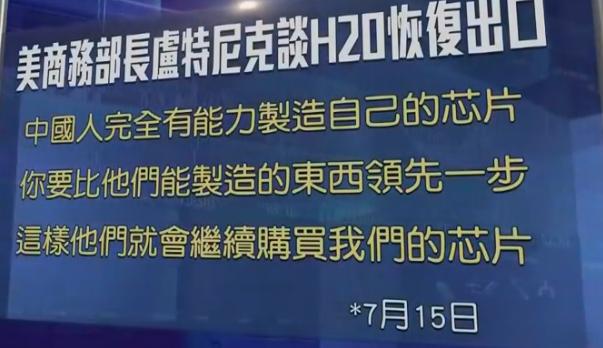
Core Viewpoint - The return of NVIDIA's H20 chip to the Chinese market is seen as a strategic move amidst the ongoing US-China tech rivalry, with implications for both companies and the broader industry landscape [1][2]. Group 1: NVIDIA's H20 Chip - NVIDIA's H20 chip was initially banned from export to China but received approval for re-entry, indicating a potential easing of restrictions, though underlying complexities remain [1]. - The H20 chip is positioned as a strong competitor in the domestic market, particularly in large model training and inference, highlighting its cost-performance advantages [2][5]. - The US Treasury Secretary acknowledged that the lifting of the ban was influenced by China's advancements in developing comparable chips, underscoring the competitive dynamics at play [2]. Group 2: Huawei's Ascend 910B Chip - Huawei's Ascend 910B chip utilizes the self-developed Da Vinci architecture, allowing for adaptability across various application scenarios, and has achieved significant energy efficiency improvements [3][5]. - The chip's manufacturing process leverages 7nm technology from SMIC, enhancing its performance and energy balance despite external restrictions [3]. - Huawei's software optimization strategies, including sparse computing and model quantization, enable the Ascend chip to deliver high performance even under constrained manufacturing conditions [5]. Group 3: Industry Implications - The competition between NVIDIA's H20 and Huawei's Ascend 910B is at a critical juncture, with both chips vying for dominance in the AI computing space [5]. - The re-entry of H20 may provide short-term relief for some domestic companies facing AI computing power shortages, but the long-term outlook for NVIDIA remains uncertain due to increasing pressure from local alternatives [5][6]. - The evolving landscape suggests a clear divergence in chip technology routes, with a growing emphasis on domestic capabilities and self-sufficiency in the semiconductor industry [5].


稀土:中国面临断供风险?95%依赖进口,未来之路在哪里?
Xin Lang Cai Jing· 2025-04-27 11:28
Core Viewpoint - The article discusses the potential challenges China faces due to its heavy reliance on imported chips and the strategies it can adopt to mitigate the impact of a possible supply cut from the United States [1][3]. Group 1: Current Situation - The United States holds a dominant position in the global chip industry, controlling a significant portion of the world's chip reserves and possessing advanced technology [3]. - China currently imports 95% of its chips, making it vulnerable to supply disruptions [3]. Group 2: Potential Consequences - A supply cut from the U.S. could severely impact various high-tech industries in China, leading to shortages in essential products like smartphones, computers, and medical devices [3][6]. Group 3: Proposed Strategies - China should accelerate its independent research and development efforts, increasing investment in technology and talent to master core chip technologies [3][6]. - Strengthening international cooperation is essential for China to learn advanced technologies and expand its market [4]. - Building a complete industrial chain from design to manufacturing and testing is crucial for improving efficiency and competitiveness [4][6]. Group 4: Long-term Goals - While it is challenging to eliminate dependence on imported chips in the short term, a gradual and steady approach is necessary to achieve self-sufficiency in chip production [6][8]. - Enhancing the quality and performance of domestic chips is vital for competing with imported alternatives and ultimately replacing them in the market [6][8].