
AI revolution

Search documents
Dan Ives on Nvidia in China, Clean Energy, Tesla
Youtube· 2025-12-23 12:41
Group 1: Nvidia and the Chinese Market - Nvidia's access to the Chinese market is crucial, with potential annual sales estimated at $20 billion, which could impact competition with Huawei and other Chinese firms [2][4] - The demand for Nvidia's video chips in China is significant, as they are seen as superior compared to alternatives [3][6] - Nvidia is currently viewed as a leader in the chip market, with expectations of continued growth and dominance in the coming years [6][7] Group 2: Data Center and Energy Challenges - The construction of data centers is rapidly increasing, but there are concerns about capacity constraints related to energy and water usage [9][11] - The energy sector is identified as a major constraint for the ongoing technological revolution, with a focus on clean energy solutions [14][15] - The U.S. is facing challenges in technology competition with China, particularly in energy governance and innovation [13][14] Group 3: Tesla and Autonomous Vehicles - Tesla is projected to have 10 million vehicles on the road by next year, indicating strong market presence despite ongoing challenges [18] - The company is focusing on autonomous driving technology, with expectations for mainstream adoption of robotaxis by 2026 [20][21] - Tesla's future success is tied to advancements in robotics and autonomous technology, which are seen as critical battlegrounds for investors [19][21]



Can Intel's New Arizona Chip Fab Bring It Back From The Brink?
Youtube· 2025-12-19 17:01
Core Insights - Intel is initiating high-volume production of its 18A technology node, which is comparable to TSMC's most advanced chips, but lacks a significant external customer base to support it [2][19] - The company has undergone significant restructuring under new CEO Lip-Bu Tan, including a 15% workforce reduction and delays in several projects, as it aims to regain market trust and improve execution [3][39] - Intel's strategy includes focusing on foundry services for external customers, with hopes of attracting major clients like Nvidia and AMD, while also addressing yield issues in its production processes [11][20][28] Group 1: Production and Technology - Intel's Fab 52 in Arizona has over 1,000,000 square feet of cleanroom space dedicated to the production of 18A technology [1] - The 18A node is designed to improve power efficiency and performance, offering over 15% performance per watt improvement compared to Intel 3 [22] - Intel's advanced packaging technology is seen as a competitive advantage, potentially attracting customers in the data center market [24][25] Group 2: Market Position and Competition - Intel has lost significant market share to TSMC, which is currently two generations ahead in chip technology [9][19] - The company is facing challenges in attracting external customers due to its integrated device manufacturer model, which raises concerns about competition with its own foundry clients [27][28] - Recent investments from SoftBank and Nvidia indicate some confidence in Intel's future, but major customer commitments remain uncertain [34][31] Group 3: Strategic Initiatives and Future Outlook - Intel's roadmap includes plans to release five nodes in four years, with a focus on regaining customer trust and improving execution [12][13] - The company is committed to sustainable manufacturing practices, achieving nearly 100% renewable energy usage in Arizona [26] - Future developments include the anticipated production of the 14A node, with a goal for volume production by 2028, contingent on securing customer commitments [41][42]

A 10-Hour Data Center Outage Is Testing the Ambitions of KKR, GIP
Insurance Journal· 2025-12-19 14:15
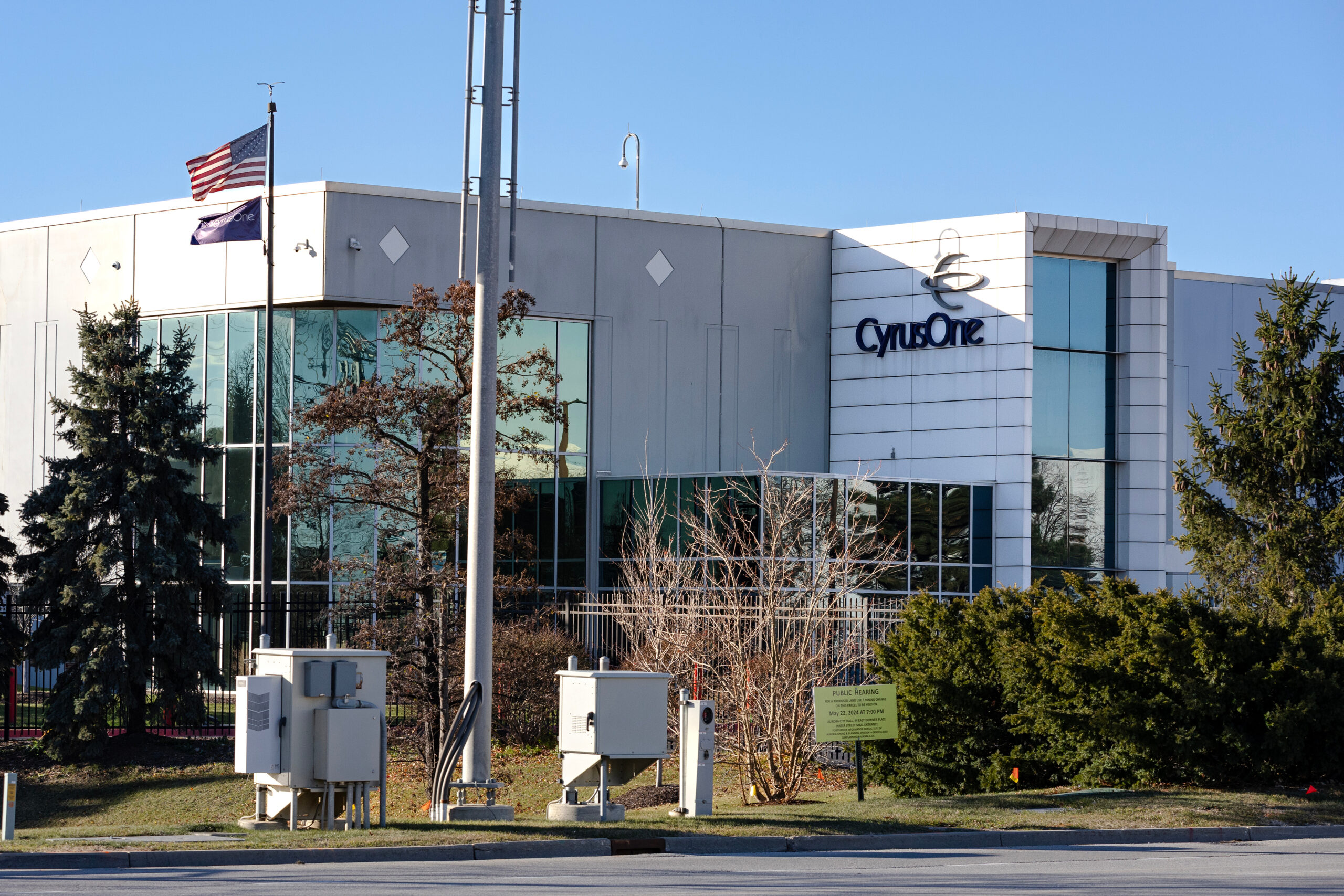
Core Insights - Data center operators aim for "five nines" reliability, meaning 99.999% uptime, making the recent 10-hour outage at CyrusOne's Aurora facility a significant concern for the industry [1][2] Company Overview - CyrusOne, acquired by KKR & Co. and Global Infrastructure Partners for $15 billion in 2021, is a key player in the data center market, which is increasingly competitive with firms like Blackstone and Blue Owl Capital [2][3] - The company operates over 55 data centers, with the Aurora facility being one of its older properties [5] Incident Analysis - The Aurora data center experienced a major outage due to a series of operational missteps, which led to significant trading disruptions for CME Group Inc. [5][20] - The facility's outdated architecture and lack of automation contributed to the failure, highlighting the risks associated with older data center technologies [20][22] Strategic Positioning - KKR and GIP express confidence in CyrusOne's strategy, emphasizing its potential to benefit from increasing demand in the data center sector [6][8] - The company is focusing on scaling operations and enhancing its competitive position amid the AI boom, although it has fallen behind rivals like QTS in market share [18][19] Financial Backing and Investments - KKR has been heavily involved in financing CyrusOne, including a $7.9 billion loan and a recent partnership with Energy Capital Partners to develop new data centers [4][23] - The firm is committed to investing in infrastructure that supports AI and reduces reliance on traditional power grids [23]


The 2025 Energy Resurgence: 3 ETFs to Watch Before the Year Ends
ZACKS· 2025-12-17 14:01
Core Insights - The energy sector in 2025 is characterized by a "return to fundamentals" and a significant increase in structural demand, with a 6.2% growth in Q3 2025 compared to a total return of 5.6% in the previous year [1][10] - The growth is driven by traditional industrial needs and the rapid electrification of the global economy, termed the "Age of Electricity" [1] Factors Influencing the Energy Sector - The AI Power Crunch is a major catalyst, with global data center investment projected to reach $580 billion in 2025, shifting capital towards companies providing reliable power [4] - Global investment in renewable energy development reached a record $386 billion in H1 2025, marking a 10% year-on-year increase, driven by offshore wind and small-scale solar [5] - Despite the green transition, global oil demand growth rebounded to 920 thousand barrels per day in Q3 2025, more than doubling sequentially, benefiting major oil companies [6] - Traditional integrated oil and gas companies and electric utilities have excelled due to robust cash flows and their essential role in the energy sector [7] Outlook for 2026 - The demand for electricity is expected to anchor the energy sector, with data center power demand projected to more than double by 2030 [8] - Companies involved in natural gas production, flexible generation, and grid-connected infrastructure are favored, alongside traditional majors pivoting towards low carbon power assets [9] Energy ETFs Performance - Major Energy ETFs like XLE gained 4.8% year to date, providing low-cost exposure to diversified energy leaders [10] - The Vanguard Energy ETF (VDE) has assets of $7.1 billion and gained 4.1% year to date, with top holdings including Exxon Mobil, Chevron, and Conoco Phillips [12][13] - The Fidelity MSCI Energy Index ETF (FENY) has assets of $1.3 billion and rose 4.2% year to date, with similar top holdings [14] - The State Street Energy Select Sector SPDR ETF (XLE) has assets of $26.12 billion and gained 4.8% year to date, also featuring major oil companies in its top holdings [15]



This Analyst Sees Nvidia at $8.5 Trillion Next Year. Is It Even Possible?
247Wallst· 2025-12-15 17:01
Core Viewpoint - Analysts are increasingly optimistic about Nvidia's stock, with price targets rising significantly, reflecting strong revenue growth and demand for AI computing [1][3]. Price Target Increases - Evercore ISI analyst Mark Lipacis raised the price target for Nvidia from $261 to $352, indicating a potential 101% increase from current levels [1][3]. - Lipacis has a successful track record, with 69% of his ratings being successful and an average return of 28.3% over the past year, ranking him highly among Wall Street analysts [2]. Revenue Growth and Inventory - Nvidia's inventory buildup is seen positively, as it is intended to meet unprecedented AI compute demand rather than indicating excess supply [4]. - The company's backlog for 2025 and 2026 is estimated at $500 billion, suggesting strong future demand [4]. - Revenue growth is projected to accelerate to 79% by mid-2026, which could lead to a higher premium on Nvidia's stock [5]. Competitive Landscape - Nvidia maintains a strong competitive edge in the AI chip market, with competitors struggling to match its offerings [6]. - The difficulty and cost for hyperscalers to switch from Nvidia's CUDA ecosystem further solidify Nvidia's market position [6]. - A case study of Chinese AI startup DeepSeek illustrates the challenges faced by companies attempting to use alternative chips, reinforcing Nvidia's dominance [7]. Market Dynamics and Investment Considerations - While Nvidia is currently performing well, the sustainability of its stock rally is uncertain, dependent on the ongoing AI revolution [8]. - Major companies like Alphabet and Amazon are developing their own AI chips to reduce reliance on Nvidia, which could impact future demand [9]. - There is a cautionary note regarding Nvidia's potential future performance, with comparisons to IBM and Cisco, suggesting that investors should maintain a balanced portfolio allocation to Nvidia [10].
X @The Economist
The Economist· 2025-12-14 23:40
AI Revolution Sentiment - Investors are optimistic about the AI revolution, even without bubble-level valuations [1] - The AI revolution's impact can be observed by looking east [1]
Here’s Which Company Wins the Race to $10 Trillion
Yahoo Finance· 2025-12-14 21:18
Core Insights - The race to $10 trillion in market capitalization is not solely based on quarterly earnings but on sustaining significant growth at a national scale [2] Group 1: Tesla - Tesla's current market cap is $1.53 trillion with a forward PE of 204x, indicating that the market anticipates Tesla evolving beyond just an automaker [3] - The company reported revenue of $96 billion over the trailing twelve months, with a growth rate of 12% and an operating margin of 7%, which does not justify its high valuation [3] - To reach $10 trillion, Tesla would need a 553% increase in market cap, which is unlikely to be achieved through car sales alone; success depends on robotaxis and energy storage, where revenue grew 44% year over year [4] Group 2: Amazon - Amazon has the highest revenue on the list at $691 billion but faces a margin issue with only 11% operating margins, meaning revenue growth translates to lower profits compared to competitors [5] - The company requires a 313% gain to reach a $10 trillion valuation, with AWS generating $33 billion in revenue and growing at 20%, but this growth is insufficient to support the entire company [6] Group 3: Alphabet - Alphabet is positioned as a strong contender with a market cap of $3.75 trillion, reporting revenue of $385 billion and a growth rate of 16% alongside a 31% operating margin [7] - The company needs a 167% increase to reach $10 trillion, with Google Cloud growing 34% to $15 billion, and its AI research capabilities through DeepMind enhancing its potential [8] Group 4: NVIDIA - NVIDIA requires a 135% gain to reach a $10 trillion market cap, boasting a remarkable 62% revenue growth and a 63% operating margin [9] - The company's earnings per share (EPS) surged nearly tenfold from $0.333 in fiscal 2023 to $3.16 in fiscal 2025, driven by a data center revenue of $51 billion, which grew 66% year over year due to AI infrastructure demand [9]


Wall Street Says Microsoft Can Hit $650. Here’s the Path
Yahoo Finance· 2025-12-13 20:00
Core Insights - Microsoft has shown solid returns in 2025, with shares currently trading around $479, below the 52-week high of $553.50 [2] - The company reported revenue of $77.67 billion in the latest quarter, exceeding estimates by nearly $2.3 billion, reflecting an 18.4% year-over-year growth [2][5] - Azure's growth at 40% year-over-year indicates strong enterprise digital transformation [2][5] Analyst Sentiment - Analysts are bullish on Microsoft, with a consensus 12-month price target of $625.41, suggesting a 30.5% upside from current levels [4] - A near-unanimous support exists among analysts, with 56 out of 57 rating the stock a buy or strong buy [4][5] Growth Projections - Revenue growth is expected to continue in the high teens, driven by Azure's expansion and increased AI adoption [5] - Earnings per share estimates are rising, with expectations of continued double-digit earnings growth as Microsoft invests in AI infrastructure [5] Valuation Metrics - At the current price of $479, Microsoft trades at approximately 30x forward earnings, while a target price of $650 would imply a valuation of about 41x forward earnings [6] - This premium valuation is justified by the company's growth rate of 12.7% annually, alongside a 48.9% operating margin and a 35.7% profit margin [6][7] Market Comparison - The S&P 500 trades around 22x forward earnings, indicating that Microsoft commands nearly double the market multiple [7] - Microsoft's scale, profitability, and growth trajectory support this premium valuation, with trailing revenue of $293.81 billion and a return on equity of 32.2% [7]

Brookfield Infrastructure Partners: Buy This Solid Yield While It's Undervalued
Seeking Alpha· 2025-12-12 13:30
Group 1 - The iREIT+HOYA Capital service focuses on income-producing asset classes, aiming for sustainable portfolio income, diversification, and inflation hedging [1][2] - The investment group provides research on various financial instruments including REITs, ETFs, closed-end funds, preferred stocks, and dividend champions, targeting dividend yields up to 10% [2] - The AI sector, particularly companies like Oracle, is viewed as a risky investment due to high expectations and market volatility [2] Group 2 - The investment approach emphasizes defensive stocks with a medium- to long-term horizon, catering to investors seeking high-yield and dividend growth opportunities [2] - The service offers a free two-week trial for potential investors to explore its income-focused portfolios [1]



X @Bloomberg
Bloomberg· 2025-12-12 11:14
There’s a frenzy of development going on to support the AI revolution, and with it an insatiable demand for debt to fund it. https://t.co/QnnkXJtsm0 ...