Fiscal Stimulus

Search documents
X @Raoul Pal
Raoul Pal· 2025-11-13 15:18
Liquidity & Monetary Policy - The US government reopening is expected to lead to increased liquidity due to TGA spending over several months [1] - Quantitative Tightening (QT) is expected to end in December, leading to a gradual increase in the balance sheet [1] - The market anticipates the dollar to weaken [1] - Expect "temporary" measures like Term Funding and SRF operations to avoid a year-end funding squeeze [1] - Changes to the Supplementary Leverage Ratio (SLR) are anticipated in Q1 to allow banks to absorb more issuance and re-lever their balance sheets, acting as a significant liquidity boost [2] - Lower rates are expected as banks buy more bonds due to SLR changes [2] Fiscal Policy & Global Economy - Expect stimulus payments and fiscal stimulus to boost the economy [2] - China is expected to continue balance sheet expansion, and Europe may implement fiscal stimulus or extra spending [2] - The government aims to stimulate the economy leading up to the Mid-Terms [3] Regulatory & Legislative - Finalization of the CLARITY Act for crypto is expected [2]
We're going to have to make transitions in the economy due to AI, Judy Shelton says
Youtube· 2025-11-12 06:00
Economic Divide and Consumer Sentiment - The Michigan consumer sentiment index has dropped to one of its lowest levels ever, indicating a significant divide between the wealthy and the less affluent [1] - Despite an increase in household wealth since the global financial crisis, consumer pessimism remains high, particularly among those not holding significant assets [1] - The sentiment among stockholders has improved by 11%, highlighting a disparity in economic outlook between asset holders and the general population [1] Federal Reserve Policies - The Federal Reserve's restrictive monetary policies are perceived to benefit the wealthy while constraining economic growth for the broader population [1][2] - There is a concern that the Fed's approach to combating inflation by raising interest rates is limiting access to capital for small and medium-sized businesses, which are crucial for economic expansion [1][2] - The ongoing fiscal stimulus, often directed towards non-working individuals, contrasts with the Fed's tightening measures, creating a misalignment in economic policy [1][2] Small Business Challenges - Small businesses are struggling to access loans, with sentiment regarding loan availability remaining negative since 2000 [2][3] - Entrepreneurs express a need for more support to achieve growth and innovation, particularly in the face of advancements in AI that primarily benefit larger corporations [3][4] Gold and Economic Stability - Central banks, particularly in China, have been increasing their gold reserves, which could play a significant role in stabilizing the economy [5][6] - A proposal suggests that the U.S. Treasury could issue long-term securities convertible into gold, potentially linking the dollar to a more stable asset [7][10] - Establishing a connection between the dollar and gold could enhance the trustworthiness of the U.S. currency and promote sound financial practices [8][11]


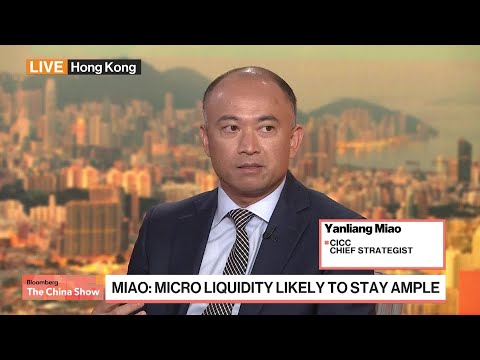
CICC's Miao on China's Bull Market
Bloomberg Television· 2025-11-11 16:20
What's the next step. The title report. The next step for China's bull markets, where they'll look for the next step.Yeah, I think, you know, for next year we still remain bullish. To me, I think the big change is really the global monetary order reconstruction from a, you know, strong dollar to a weak dollar and then from China us constantly in the trade negotiations to a G-2 framework. And then probably more importantly is the deep sea moment, not just in Asia but many other industries where there is a ma ...
中国经济-10 月 PMI 有所回落,但出现部分积极信号-China Economics-Oct PMI Payback, But Some Greenshoots
2025-11-04 01:56
Summary of Key Points from the Conference Call Industry Overview - **Industry**: China Manufacturing and Services Sector - **Date**: October 31, 2025 Core Insights - **Manufacturing PMI Performance**: The manufacturing PMI experienced a notable decline in October, primarily attributed to the timing shift of the Mid-Autumn Festival, which caused front-loaded production in September. The combined manufacturing PMI for September and October stands at 49.4, consistent with August's reading [2][4][7] - **Non-Manufacturing PMIs**: Both construction and service PMIs underperformed, indicating ongoing challenges in housing and consumer activities. However, there was a positive development in infrastructure, with the civil engineering PMI increasing by 5 percentage points month-over-month [3][7] - **Fiscal Stimulus Impact**: A fiscal and quasi-fiscal stimulus of RMB 1 trillion is expected to alleviate local government funding pressures and support investment, contributing to a projected GDP growth of 4.7% year-over-year in Q4 2025 [4][7] Additional Important Details - **Price Indices**: The Producer Price Index (PPI) is anticipated to have decreased by 0.1% month-over-month, while year-over-year it may rise to -2.2% due to a favorable base effect [7] - **Trade Relations**: The US-China trade truce, which includes a 10% reduction in fentanyl tariffs and the suspension of US technology barriers, is expected to reduce near-term trade uncertainties and positively influence capital expenditures [4][7] - **PMI Breakdown**: The manufacturing PMI breakdown shows a decline in new orders and production, with new orders at 48.8 and production at 49.7 in October [6] This summary encapsulates the key points discussed in the conference call, highlighting the current state of the manufacturing and services sector in China, the impact of fiscal policies, and the implications of trade relations on economic growth.
X @Bloomberg
Bloomberg· 2025-10-22 07:50
Bank Indonesia unexpectedly kept its policy rate unchanged after three straight cuts, pausing to assess the impact of previous easing and ongoing fiscal stimulus on Southeast Asia’s largest economy https://t.co/H8JiH62Qom ...
China Q3 GDP growth slows to 4.8% y/y, in line with forecast
Yahoo Finance· 2025-10-20 03:09
Core Insights - China's economic growth in Q3 2023 slowed to 4.8%, matching expectations and down from 5.2% in Q2, indicating ongoing challenges from a property slump and trade tensions [1][5] Economic Performance - Q3 GDP growth was 4.8% year-on-year, aligning with forecasts and down from 5.2% in Q2 [5] - Quarter-on-quarter GDP growth was 1.1%, surpassing the forecast of 0.8% and slightly up from a revised 1.0% in Q2 [5] - Industrial output in September increased by 6.5% year-on-year, exceeding the forecast of 5.0% [5] - Retail sales in September grew by 3.0% year-on-year, matching forecasts but down from 3.4% in August [5] - Fixed asset investment from January to September decreased by 0.5% year-on-year, contrary to the forecast of a 0.1% increase [5] - Property investment from January to September fell by 13.9% year-on-year, worsening from a 12.9% decline in January-August [5] Market Reactions and Expectations - Analysts suggest that while the GDP number is decent, domestic activity and investment remain weak, indicating a need for further demand stimulation [2][4] - There is an expectation that Beijing will meet its 2025 growth target of around 5%, with little need for broad fiscal stimulus at this time [2] - The upcoming Fourth Plenary Session is anticipated to maintain a stable USD/CNY exchange rate as the People's Bank of China aims to minimize volatility [2]
X @Bloomberg
Bloomberg· 2025-10-14 09:24
Investor optimism in Germany’s economy improved in September, reflecting hopes that massive fiscal stimulus will pull the country out of its malaise https://t.co/K1UcVf1XlE ...
X @Bloomberg
Bloomberg· 2025-10-08 12:32
Germany will eke out meager expansion of 0.2% this year before growth strengthens to 1.3% in 2026 supported by tens of billions of euros in fiscal stimulus, according to revised government projections https://t.co/RCEf6jAIbi ...
Economy is on bit of a “sugar high,” Griffin says #shorts #tariffs #economy #kengriffin #citadel
Bloomberg Television· 2025-10-06 22:34
US Economic Outlook - The Trump administration's policies aim to improve the lives of average American families, fueling market enthusiasm in the United States [1] - The US economy is experiencing a "sugar high" due to fiscal and monetary stimulus, typically seen during recessions, but occurring amidst near full employment [2] - The market has largely moved past tariff issues, but concerns related to tariffs, particularly high inflation, remain unresolved [3] - Markets are underestimating the potential for a significant increase in inflation, given pro-inflationary immigration, fiscal, and monetary policies [4]

Yahoo Finance: Market Coverage, Stocks, & Business News
Yahoo Finance· 2025-10-01 16:08
Labor Market & Economic Data - ADP data indicates a weakening labor market, with jobs shrinking [2] - Small and medium-sized businesses are disproportionately affected by the slowdown in jobs data [3] - The market is increasingly relying on ADP data due to concerns about government economic data delays and revisions [1][5][9][10][11] - The Fed is also reportedly using private data to estimate non-farm payroll numbers [13][14] Monetary Policy & Interest Rates - Investors are pricing in a 99% probability of a Fed rate cut in October, driven by the ADP report [2] - The market anticipates multiple rate cuts to prevent a rapid increase in the unemployment rate [8][17] - Yields are declining in response to the ADP report and expectations of Fed rate cuts [2][7][17] Market Outlook & Investment Strategy - Wall Street remains generally bullish on the stock market despite the labor market slowdown [4] - Goldman Sachs views a slowdown in the labor market as the biggest risk to the economy [4] - Uncertainty, such as tariff uncertainty, is putting downward pressure on yields [16]