
Fiscal policy

Search documents
中欧:宏观经济趋势与展望-Central Europe_ Macroeconomic trends and outlook
2025-10-19 15:58
Summary of CEE Economics Conference Call Industry Overview - The report focuses on the macroeconomic trends and outlook for Central and Eastern Europe (CEE), specifically highlighting the economic conditions in Poland, Hungary, and the Czech Republic [1][2][3]. Key Points Poland - **Economic Activity**: There is a low probability of recession in Poland, with nowcasting models indicating an acceleration in GDP growth for Q3 [21][24]. - **Labour Market**: Despite economic recovery, employment is declining, particularly affecting young workers, although the overall jobless rate remains stable [25][28]. - **Monetary Policy**: Inflation has decreased below 3% due to a slowdown in utility prices and moderation in core inflation, with markets anticipating further rate cuts [32][34]. - **Fiscal Policy**: The Ministry of Finance expects a significant increase in public debt, with a slower narrowing of the fiscal deficit than previously anticipated. Heavy issuance of POLGBs is expected in Q4 [36][40]. Hungary - **Economic Activity**: No significant rebound in industrial output is observed, with recession risk indicators remaining high, although some improvement was noted in September [48][50]. - **Labour Market**: Average wages have slowed to 9% YoY, with public sector wages rising faster at 10%. The share of sectors with double-digit growth has decreased [54][56]. - **Inflation Outlook**: Headline inflation remained unchanged at 4.3% in September, with core inflation gaining momentum and nearly 60% of the core inflation basket growing at a double-digit annualized pace [60][64][66]. - **Monetary Policy**: The National Bank of Hungary (NBH) is expected to maintain cautious rates in Q4, with a narrow window for potential cuts in early 2026 [70][73]. Czech Republic - **Economic Activity**: Low and falling recession risks are indicated, with stable production of capital goods despite weak growth in Germany. Retail growth is solid, supported by positive real wage growth [81][85]. - **Inflation and Monetary Policy**: Headline inflation has slowed, but core inflation remains elevated, prompting the Czech National Bank (CNB) to signal a prolonged period of rate stability [87][88]. - **Fiscal Policy**: An expected issuance of around CZK 210 billion in Czech T-Bonds for 2025, with strategies to manage bond maturities in 2026 [90][93]. Additional Insights - The report emphasizes the interconnectedness of macroeconomic indicators across the CEE region, highlighting the importance of monitoring inflation, employment trends, and fiscal policies as they can significantly impact investment opportunities and risks in the region [1][2][36][70].

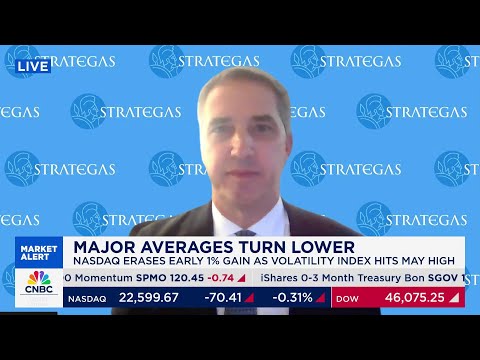
OBBB is sterilizing the negative tariff impact with tax cuts for businesses: Strategas' Dan Clifton
CNBC Television· 2025-10-16 17:57
says that's because investors are paying attention to different things in DC. Fiscal and monetary policy, which I think Dan Clifton, uh, head of policy research at Strategus, uh, research, which is a bar company. Both of those are are going to be positive, I think, at least, um, for GDP, aren't they, Dan.There's there's some serious uh, scratch coming our way in the economy from these things. Absolutely, Joe. Great to see you.I mean, there's a lot of noise here from Washington, and there are some real risks ...

全球经济综述_2025 年 10 月 10 日-Global Economics Wrap-Up_ October 10, 2025
2025-10-15 14:44
Summary of Key Points from the Conference Call Industry Overview - The conference call primarily discusses global economic conditions, focusing on the implications of political events and economic indicators across various regions including the US, Europe, and Asia. Key Economic Insights 1. **US Government Shutdown**: - The US government shutdown has extended into its second week, delaying federal economic data releases, which is expected to reduce Q4 annualized GDP growth by 0.11 percentage points per week of shutdown [3][4][5] - Alternative labor market data indicates a rebound in job growth to 80,000 per month in September from around 0 in May [5] 2. **Global PMIs**: - The global composite PMI fell by 0.5 points in September to 52.9, with declines in both manufacturing and services sectors [3] - US manufacturing suppliers' delivery times increased as the rush to frontload ahead of tariff implementation subsided [3] 3. **Political Uncertainty in Europe**: - Renewed political uncertainty in France following the resignation of Prime Minister Sebastien Lecornu, with expectations of growth running below trend and an increase in the government deficit forecast to 5.3% of GDP for 2026 [5][6] - The upcoming Canada and UK Budgets are anticipated to focus on fiscal consolidation and investment [3] 4. **Inflation Outlook**: - Inflation in the Euro area is expected to normalize, with core inflation projected to remain around 2% in the coming years [6] - Headline inflation is forecasted to reach 2.0% by the end of 2025, with a slight increase in food inflation [6] 5. **Japan's Political Landscape**: - Sanae Takaichi was elected as the leader of Japan's Liberal Democratic Party, but significant fiscal policy changes are not anticipated in the near term [6] - The next Bank of Japan rate hike is expected in January 2026 [6] 6. **Central Bank Actions in Asia**: - The Reserve Bank of New Zealand lowered its policy rate by 50 basis points to 2.5%, with further cuts expected [6] - The Philippines central bank also surprised with a dovish rate cut, while the Bank of Thailand held its rate steady [6] Economic Growth Forecasts - **Real GDP Growth Projections**: - US: 2.8% in 2024, 1.9% in 2025, 1.8% in 2026 [7] - Euro Area: 0.8% in 2024, 1.3% in 2025, 1.2% in 2026 [7] - China: 5.0% in 2024, 4.8% in 2025, 4.2% in 2026 [7] - India: 6.7% in 2024, 7.1% in 2025, 6.4% in 2026 [7] Additional Insights - The military pay date on October 15 could be a critical event for resolving the US government shutdown [5] - Concerns regarding the implementation of Germany's fiscal package, particularly in infrastructure spending, are noted, but optimism remains regarding defense spending's growth impact [5][6] This summary encapsulates the essential points discussed in the conference call, highlighting the economic conditions, forecasts, and political factors influencing the global economy.
X @Bloomberg
Bloomberg· 2025-10-13 23:10
Fiscal Policy - Indonesia's budget-deficit cap, a cornerstone of its fiscal policy for decades, may now impede economic growth [1] Economic Outlook - A key technocrat who played a role in rebuilding Indonesia's economy post-Asian financial crisis expresses concern [1]
Global Markets Navigate Mixed Signals from US-China Talks, Rising JGB Yields, and Forex Volatility; Ukraine Advances Robotic Warfare
Stock Market News· 2025-09-22 05:38
Market Overview - Asian markets showed mixed results following a phone call between US President Donald Trump and Chinese President Xi Jinping, with low expectations for concrete agreements on tariffs and technology supply chains [2][8] - Hong Kong's Hang Seng Index remained largely unchanged, while mainland China's CSI 300 saw a marginal gain, and the Shanghai Composite Index recorded a slight loss [3] - Japanese markets ended lower, influenced by a firmer yen, and the US faces a critical September 30th deadline to pass a funding bill, which could introduce further volatility [3] Japan's Bond Market - Japan's 30-year government bond yield climbed to 3.18%, an increase of 3 basis points, amidst rising yields reaching multi-decade highs [4] - The increase in yields is attributed to investor concerns over Japan's fiscal policy ahead of Senate elections and the nation's high debt-to-GDP ratio [4] - The Bank of Japan's decision to abandon Yield Curve Control in 2024 and reduce JGB purchases has allowed market forces to drive yields higher, posing challenges for carry traders [5] EUR/USD Currency Pair - The EUR/USD currency pair experienced a notable drop, falling below the 1.1750 mark, primarily driven by a strengthening US Dollar following the Federal Reserve's cautious rate cut outlook [6][8] - The European Central Bank maintained its key interest rates, but concerns over political turmoil in France and a recent credit rating downgrade by Fitch have weighed on the Euro [7] Ukraine's Defense Strategy - Ukrainian forces are rapidly integrating robotic units into frontline brigades to enhance operations and protect soldiers, aiming to gain a tactical advantage [9] - Plans include deploying 15,000 unmanned systems by 2025, with a focus on domestic production to develop a modern army [10] - The initiative has already shown results, with reports of successful robot-only assaults conducted in Kharkiv Oblast [10]
X @Bankless
Bankless· 2025-09-15 18:00
Central Bank Role - Central bank independence was a narrative [1] - Central banks primarily finance the state [1] - Fiscal and monetary policy are inseparable [1] Historical Context - The shift occurred after the 1970s, following the abandonment of the gold standard [1]
全球宏观展望与策略:全球利率、大宗商品、货币与新兴市场-Global Macro Outlook and Strategy_ Global Rates, Commodities, Currencies and Emerging Markets
2025-09-26 02:28
Summary of Key Points from the Conference Call Industry Overview - The conference call primarily discusses the **Global Macro Outlook**, focusing on **US Rates**, **International Rates**, **Commodities**, **Currencies**, and **Emerging Markets** [3][4][8]. Core Insights and Arguments US Rates - Risks to the front end of the yield curve are biased lower due to labor market weakness, while concerns about Fed independence are pushing long-end rates higher [3][15]. - The first Fed cut is projected for **September 2025**, with expectations of **four sequential cuts**, bringing the funds rate target range to **3.25-3.5%** by **1Q26** [12][11]. - Anticipated **2-year Treasury yields** are expected to reach **3.50%** and **10-year yields** to **4.20%** by the end of **2025** [12][11]. International Rates - Developed market (DM) curves have steepened, particularly in the US, amid renewed focus on the long end of the curve [4][36]. - The European policy easing is losing momentum, impacting the overall yield curve dynamics [36]. Commodities - The oil market is expected to face a significant surplus, with price forecasts remaining unchanged for now due to uncertainties surrounding China's stock build [8][88]. - The European natural gas market is entering winter with historically low storage levels, leading to a bullish stance for **4Q25** and a price target of **42 EUR/MWh** [8][93]. - Copper prices are anticipated to face bearish pressure, potentially dropping to **$9,000/mt** due to unwinding demand from the US and China [8]. Currencies - The US dollar has not weakened despite recent yield curve steepening, attributed to domestic growth factors [56][58]. - Concerns regarding Fed independence and fiscal excesses are influencing the dollar's performance, with expectations of a bearish outlook [58][63]. - Fiscal policy is expected to be a key differentiator for FX, with the hypothesis that fiscal easing supports currencies in low-debt countries [63][59]. Emerging Markets - The resilience of global growth and downside risks in the US are supporting emerging market (EM) local markets [8]. - A recommendation to stay overweight (OW) in EM FX and local rates, while maintaining a market weight (MW) in EM corporates and underweight (UW) in EM sovereigns [8]. Additional Important Insights - The US Treasury is well-funded through **FY25**, but a significant funding gap is expected to emerge in **FY26**, prompting coupon auction size increases starting in **May 2026** [19][22]. - The passage of the **OBBBA** is projected to lead to a surge in T-bill issuance, with an estimated **$529 billion** of net T-bill issuance expected in the current quarter [25][23]. - Demand from foreign investors remains weak, with expectations of a shift towards more price-insensitive demand in the Treasury market [29][31]. This summary encapsulates the critical insights and projections discussed during the conference call, providing a comprehensive overview of the current macroeconomic landscape and its implications for various markets.
We're in a no hiring, no firing economy, says JPMorgan Asset's Phil Camporeale
CNBC Television· 2025-09-10 15:33
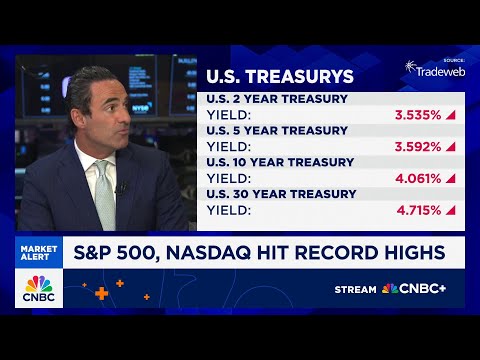
try to put together, Phil, uh what 23rd record high for the S&P this year. What are are you thinking about valuations more or is it more about the the potential that names like Oracle are handing us. Yeah, and I think a lot of it has to do, Carl, with the fact that a lot of the things that people were worried about this year that may have kept valuations lower are kind of fading away a little bit here.So, last December 18th, we were here, Federal Reserve told us that they would cut rates twice in 2025. Nine ...
No One Has A Serious Plan To Cut Debt Warns Kallum Pickering
Yahoo Finance· 2025-09-09 14:06
Core Viewpoint - France's borrowing costs have surpassed Italy's for the first time in euro zone history, indicating a significant shift in investor sentiment regarding fiscal policies in the region [1] Group 1: Market Dynamics - The recent change in borrowing costs is attributed to technical reasons, specifically the maturity of the underlying bond used for benchmark French 10-year yields being slightly later than that of Italy [1] - The convergence trend between French and Italian debt has been developing over several years, highlighting a long-term shift in the bond markets of the euro zone [1] Group 2: Economic Insights - Kallum Pickering, Chief Economist at Peel Hunt, emphasizes that there is a broader issue concerning debt burdens in large economies, with the UK being particularly vulnerable compared to other nations [1]
印度宏观展望摘要-India macro outlook summary
2025-09-08 06:23
Summary of India Macro Outlook Post 50% Tariff, GST 2.0 & Strong GDP Data Industry Overview - **Industry**: Indian Economy - **Report Date**: September 4, 2025 - **Research Provider**: Deutsche Bank Key Points Economic Growth - Real GDP growth for April-June 2025 has exceeded expectations, but risks remain high for the second half of FY26 due to a 50% tariff shock [5][6] - Nominal GDP growth is projected to decline from 14.0% in FY23 to 12.0% in FY24, and further to 9.8% in FY25, with expectations of 9.0% or lower in FY26 [6][11] - The importance of nominal GDP growth is emphasized, as it affects corporate earnings, fiscal ratios, and debt dynamics [6] Inflation Trends - August CPI inflation is forecasted to rise to 2.23% YoY from 1.55% in July, with expectations of remaining subdued in the near term [7] - CPI inflation is projected to average 3.0% in FY26 and 4.5% in FY27, with a potential rise to 5.1% in April-June 2026 [8][9] - Core CPI inflation is expected to increase to an average of 4.4% in FY26, up from 3.5% in FY25 [9] Fiscal Outlook - GST 2.0 is expected to be fiscally sustainable, with higher consumption offsetting revenue shortfalls [10] - A revenue shortfall of INR 400-500 billion is anticipated in FY26, pushing the fiscal deficit to 4.50% of GDP [10][11] - FY26 GST collection is estimated at INR 11.8 trillion, a 10.9% YoY increase, but risks remain for lower tax collections due to moderating nominal GDP growth [11] Monetary Policy - The Reserve Bank of India (RBI) is expected to cut rates by 25bps on October 1, 2025, in response to growth risks [12] - The RBI's previous rate cuts have occurred despite positive GDP growth surprises, indicating a cautious approach to monetary policy [12] Currency and Foreign Exchange - The Indian Rupee is expected to depreciate mildly, with a target of 88.0 against the USD by the end of December 2025 [13] - India's FX reserves stand at USD 690 billion, but net reserves are lower at USD 635 billion, indicating potential vulnerabilities [14] Additional Insights - India's International Investment Position (IIP) is negative, with liabilities exceeding assets, highlighting the need for building FX reserves [14] - The report emphasizes the importance of qualitative assessments of GDP growth figures, particularly in light of deflator impacts [6] Financial Projections - The report includes a detailed financial forecast for various economic indicators, including GDP growth, fiscal deficit, CPI inflation, and trade balance [15] This summary encapsulates the critical insights from the Deutsche Bank report on India's macroeconomic outlook, focusing on growth, inflation, fiscal policy, and currency dynamics.
