
Recession

Search documents
Canadians' Financial Outlook Divided as Inflation and Recession Fears Appear to Shape Behaviours – TransUnion Canada Study
Globenewswire· 2026-01-13 11:00
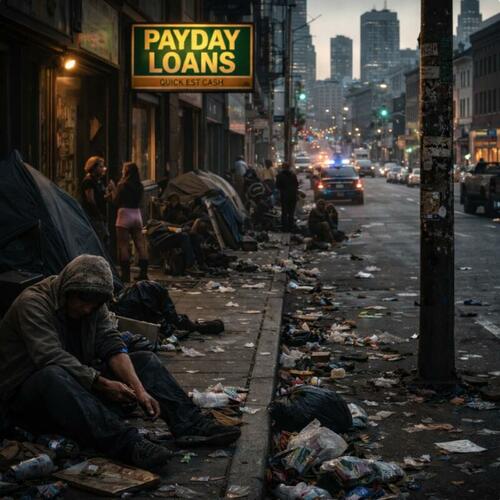
Core Insights - Canadians' financial optimism is declining due to rising living costs, with 53% stating their household income is not keeping pace with inflation [1][5] - A significant portion of Canadians (31%) are pessimistic about their financial situation in the next year, despite 20% reporting an income increase in the last three months [1][5] - Economic uncertainty is prompting Canadians to adjust their spending habits, with 67% seeking sales and discounts more frequently [4][5] Financial Strain - 25% of Canadians are unable to pay at least one current bill or loan in full, with credit card payments (63%) and personal loans (55%) being the most affected [2][3] - Over half (51%) of Canadians have cut back on discretionary spending, while 19% plan to reduce contributions to retirement funds [4][5] Recession Sentiment - 27% of Canadians believe the country is currently in a recession, and 32% expect one within the next year, leading 84% to prepare for potential economic downturns [3][4] Spending Adjustments - Canadians are increasingly prioritizing essential goods, with 85% changing shopping habits in response to economic conditions [5] - Common adjustments include reducing spending (61%), building savings (38%), and shopping at more affordable retailers (44%) [6] Credit Access and Intentions - 82% of Canadians view access to credit as essential for achieving financial goals, but only 56% feel they have sufficient access [7][10] - 21% plan to apply for new credit or refinance existing credit, with younger generations (47% of Gen Z and 31% of Millennials) leading this trend [8][9] Fraud Concerns - Nearly half (46%) of Canadians reported being targeted by fraud in the past three months, with younger Canadians being the most vulnerable [12][13] - Despite the risks, 36% of Canadians took no action to address cybersecurity concerns, highlighting a need for better education on fraud prevention [13]



The market is ignoring a recession hiding in plain sight
Yahoo Finance· 2026-01-12 23:10
Group 1: Credit Card Lending and Banking Sector - There are concerns that capping credit card rates at 10% could restrict lending, particularly affecting those who rely on credit cards [3][9] - Banks may be compelled to improve their optics regarding credit card lending, which could reduce their ability to lend, impacting their core business [9] - The banking sector is currently facing scrutiny for high credit card interest rates, with rates reaching 20-30% [2][3] Group 2: Federal Reserve Independence - The independence of the Federal Reserve is perceived to be under attack, which could have significant implications for monetary policy [4][5] - There is skepticism about the likelihood of congressional approval for any measures that would fix credit card rates, indicating a potential lack of political will to intervene in banking practices [7] Group 3: Economic Outlook and Labor Market - The labor market is showing signs of distress, with rising unemployment expected to reach 5% by mid-year, indicating a potential recession [16][20] - There is a disconnect between GDP performance and job losses, suggesting that the economy may already be in a recession despite not being officially recognized [19][20] - The current economic environment is characterized by layoffs and bankruptcies at 15-year highs, raising concerns about the overall health of the economy [16][17] Group 4: Stock Market Dynamics - The stock market remains resilient, with passive investing driving demand for large-cap stocks, despite underlying economic challenges [22][24] - There is a notable disparity between the stock market performance and the economic reality faced by the majority of consumers, particularly the lower 90% of earners [23][22] - Investors are advised to hedge their portfolios and consider dividend-paying investments as interest rates are expected to continue falling [24][25]
‘Worse than a recession’: Ray Dalio said Trump’s agenda could push America to conditions ‘like the 30s’. Was he right?
Yahoo Finance· 2026-01-12 12:05
Economic Growth and Concerns - The U.S. economy is projected to grow by an estimated 1.9% in 2025, despite ongoing concerns about economic stability [1] - Employment growth in 2025 was weak, with approximately 584,000 jobs added, marking the slowest annual job creation outside of recession periods in over two decades [6] - The unemployment rate slightly decreased to around 4.4%, but sectors like manufacturing and retail experienced job losses, while health care and service industries saw gains [6] Tariffs and Global Economic Impact - The implementation of tariffs has been described as highly disruptive, akin to "throwing rocks into the production system," which could lead to significant economic chaos [1][4] - There is a fear that the U.S. could become isolated as major trading partners form cross-border agreements that exclude the U.S. [4] - The combination of tariffs, high debt levels, and a rising superpower challenging the existing order could lead to profound changes in the global economic landscape [3] Historical Context and Predictions - Current economic conditions are compared to the 1930s, with concerns about a potential breakdown of the current monetary order [2][4] - Experts predict that the labor market may soften further in 2026, with unemployment potentially rising to an average of 4.5% [7] - The founder of Bridgewater Associates, Ray Dalio, has expressed concerns that the current economic agenda could lead to outcomes worse than a recession [5]
Healthcare Dividend Stocks: The Recession-Proof Income Play for 2026
247Wallst· 2026-01-10 14:41
Core Viewpoint - In the event of a recession, it is expected that individuals will continue to take their prescriptions and will not cancel major medical treatments, indicating resilience in the healthcare sector [1] Group 1 - The healthcare industry is likely to remain stable during economic downturns as essential medical needs persist [1]


Americans Are Worried More About This Money Issue Than Inflation — Here’s Why
Yahoo Finance· 2026-01-10 11:55
Group 1: Consumer Sentiment and Economic Outlook - Americans are more concerned about job security than inflation, according to the Survey of Consumer Expectations from the Federal Reserve Bank of New York [1] - Survey respondents expect inflation to decrease to 3% in the next three to five years, and they believe credit availability is improving [2] - Consumers predict an increase in unemployment by 2026 and express concerns about job availability if laid off [3] Group 2: Generational Concerns and Financial Anxiety - Gen Z is particularly affected by financial anxiety, being labeled as "the most anxious generation" [4] - Seeking personalized financial advice and utilizing AI tools may help alleviate financial concerns across generations [4] - The stigma surrounding financial discussions can hinder individuals from addressing their anxieties [5] Group 3: Job Security and Preparedness - Building a robust emergency fund is essential for individuals facing potential job loss [6] - Experts recommend starting job searches proactively rather than waiting until employment is jeopardized [7] - Keeping resumes updated with recent achievements is advised as a preparation strategy for unexpected job searches [7]
‘Buckle up!’: CNBC anchor shocked as US trade deficit plunges to lowest since 2009. How to take advantage in 2026
Yahoo Finance· 2026-01-09 21:59
Economic Growth and Trade Balance - U.S. GDP grew at an annual rate of 4.3% in Q3 2025, the strongest pace since late 2023, exceeding economists' expectations of 3.2% [1] - The U.S. trade deficit has narrowed significantly, with October's deficit at $29.4 billion, a 39% drop from September's $48.1 billion [3][4] - The current trade deficit is the smallest since June 2009, indicating a positive shift in trade dynamics [2][3] Tariffs and Trade Dynamics - Trump's tariffs have led to a decrease in imports and an increase in exports, reshaping trade flows [2] - Economists are becoming more optimistic about the effects of tariffs, as the trade deficit continues to narrow [5] - The narrowing trade deficit is attributed to a combination of reduced imports and increased exports, reflecting the impact of tariffs [2][5] Stock Market Performance - The S&P 500 returned 16% in 2025 and has gained approximately 82% over the past five years, highlighting the strength of the U.S. stock market [8] - Warren Buffett advocates for investing in the S&P 500 index fund as a means for most investors to benefit from long-term market growth [10] Gold as an Investment - Exports of nonmonetary gold surged by $6.8 billion in October, while imports fell by $1.4 billion, indicating strong demand for gold [19] - Gold prices have increased by about 70% over the past year, making it a popular safe-haven asset amid economic uncertainty [19][20] - JPMorgan CEO Jamie Dimon suggests that gold could rise to $10,000 an ounce in the current environment, reflecting bullish sentiment [21] Venture Capital and Innovation - Fundrise has disrupted traditional venture capital by allowing retail investors to invest in private tech companies with a minimum investment of $10 [24] - The venture capital product aims to build a portfolio of valuable private tech companies, making early investment opportunities accessible to a broader audience [24]
Fed split deepens as Miran calls for 1.5-point rate cut
Yahoo Finance· 2026-01-09 02:03
Core Viewpoint - Federal Reserve officials are divided on the extent of interest rate cuts for 2026, with some advocating for steady rates until more data is available on inflation and employment [1] Group 1: Interest Rate Cuts - Fed Governor Stephen Miran is advocating for aggressive interest rate cuts, suggesting a reduction of at least 150 basis points this year to support the labor market [2][3] - Miran describes current monetary policy as restrictive, indicating that underlying inflation is around 2.3%, which allows for further cuts [2] - The Federal Funds Rate currently stands at 3.50% to 3.75%, with a total of 75 basis points cut in 2025 [8] Group 2: Economic Context - There are approximately one million Americans unemployed who could potentially find jobs without triggering unwanted inflation, according to Miran [5] - Fed officials estimate that the long-run neutral rate is between 2.5% and 3%, but can rise to approximately 4.5% to 5% when factoring in inflation [9] - The neutral rate is defined as the interest rate that maintains full employment while keeping inflation stable around the Fed's 2% target [10]
3 Reasons the Stock Market Might Crash Under Trump in 2026
Yahoo Finance· 2026-01-07 17:36
分组1 - The S&P 500 index has increased by 16.3% over the last 12 months, outperforming its average annual return of around 10%, while the Nasdaq Composite has gained 19% due to optimism surrounding generative AI technologies [2] - Consumer spending, which constitutes about 70% of U.S. GDP, is primarily driven by the highest-income consumers, with the top 10% responsible for nearly half of U.S. consumer spending, indicating potential economic weakness [5][6] - The Trump administration's tariffs average around 18% on imports, with businesses absorbing much of the costs, leading to a lower-than-expected inflation rate of 2.7% in November [9] 分组2 - There are concerns that consumer spending may stagnate, particularly among middle and lower-income consumers, which could signal an impending recession [6][8] - The market may face challenges in 2026 and beyond, influenced by factors such as consumer spending, tariffs, and AI investments [3][7]
Perhaps We Should Actually Be Focusing On Fixing America
ZeroHedge· 2026-01-07 04:25
Authored by Michael Snyder via TheMostImportantNews.com,After years of heading in the wrong direction, nobody can deny that the United States is facing overwhelming problems. So why don’t we focus on fixing those problems first? The truth is that we can’t do everything because our resources are very limited. U.S. households are more than 18 trillion dollars in debt, and the federal government is more than 38 trillion dollars in debt.Even though we have literally stolen trillions upon trillions of dollars fr ...
Motley Fool Money: The Most Shocking Stories of 2025
Yahoo Finance· 2026-01-05 17:58
Market Overview - The S&P 500 has increased by approximately 40% since the implementation of sweeping tariffs in April 2025, which were initially expected to severely impact the U.S. economy [2][3] - Despite the stock market's rise, there are underlying signs of economic distress, indicating a disconnect between Wall Street and Main Street [1][3] Tariffs and Economic Impact - The tariffs introduced in April were anticipated to lead to significant price increases, but actual consumer price hikes have not materialized as expected [3] - Job additions in 2025 have been lower than previous years, with estimates suggesting potential job losses of up to 20,000 per month since April [3] - The full economic impact of the tariffs is still uncertain, with many variables influencing the economy, suggesting that the repercussions may not be fully realized until 2026 [3][8] AI and Technology Sector - Google’s AI product, Gemini, has shown significant improvement, with its stock rising 60% in 2025, while OpenAI appears to be losing its competitive edge [9][10] - Concerns remain for Google as its revenue is heavily reliant on advertising, which may be threatened by the rise of alternative AI platforms [10][13] - The scale of large tech companies is increasing, with a belief that the next major players in the market may still be the existing giants like Amazon and Google [12] Gold and Bitcoin Dynamics - Gold has outperformed the S&P 500 by about four times in 2025, indicating a flight to safety amid economic uncertainty, while Bitcoin has seen a decline of approximately 12% [15][19] - The perception of Bitcoin as a store of value is questioned, as it has shown a strong correlation with equities rather than traditional commodities like gold [17] Consumer Brands and Spending - Consumer brands have faced significant challenges, with notable declines in stock prices for companies like Lululemon and Deckers, attributed to reduced discretionary spending and the impact of tariffs [29] - The economic environment has led to a K-shaped recovery, where some sectors thrive while others struggle, particularly affecting consumer brands [29] Boeing and Future Outlook - Boeing is viewed as potentially turning a corner with new management and easing regulatory restrictions, which could lead to improved cash flow in the coming years [53] - The company has a substantial backlog of orders, positioning it favorably in the aerospace market despite past turbulence [53]