Trade deal

Search documents
US and Taiwan reach trade deal, with semiconductor chips and China in focus
Yahoo Finance· 2026-01-15 19:24
Trade Deal Overview - The U.S. and Taiwan have finalized a trade deal that reduces tariffs on Taiwanese semiconductor exports and encourages new investments in the U.S. technology sector, while potentially escalating tensions with China [1][2]. Tariff Reductions - Tariffs on Taiwanese semiconductor imports and related manufacturing equipment will be lowered, with broad tariffs on other Taiwanese exports to the U.S. decreasing from 20% to 15% [2]. - Generic pharmaceuticals, aircraft components, and certain natural resources will face a 0% tariff [3]. Investment Commitments - Taiwanese companies are set to invest $250 billion in U.S. semiconductor, energy, and artificial intelligence production, including $100 billion already pledged by TSMC by 2025 [4]. - Taiwan will also provide an additional $250 billion in credit to support further investments [4]. Supply Chain Impact - The deal aims to relocate 40% of Taiwan's chip supply chain and production to the U.S., with significant tariff implications if production does not occur domestically [5]. - Increased chip production is expected to benefit major suppliers to TSMC, including ASML, Lam Research, and Applied Materials, as well as smaller suppliers like Sumitomo Corp and Qnity Electronics [6]. Market Reactions - Following the announcement, shares of Nvidia rose over 2%, while shares of ASML, Lam, Applied Materials, and Qnity increased by approximately 4% to 6% [7].

Trump says any country doing business with Iran will be hit with a 25% tariff
Business Insider· 2026-01-12 22:17
Group 1 - President Trump announced a 25% tariff on any country doing business with Iran, effective immediately [1] - The White House has not provided details on the implementation of the tariff or which countries will be affected [1] - China and the United Arab Emirates are identified as major trading partners of Iran [2] Group 2 - Trade volume between China and Iran reached $13.37 billion in 2024, with China exporting $8.93 billion and importing $4.44 billion [3] - Recent data indicates that in October 2025, China exported $456 million and imported $208 million from Iran [3] - The Trump administration is attempting to negotiate a trade deal with China following a previous tariff war [3] Group 3 - The announcement of the tariff coincides with mass protests in Iran against the government, which have resulted in significant casualties and arrests [4] - Trump has expressed support for the Iranian protesters and suggested potential U.S. involvement [4] - The legality of the tariffs is under review by the Supreme Court, which could have significant financial implications for the federal government [5]

X @Bloomberg
Bloomberg· 2025-12-10 13:48
Officials from US and India on Wednesday kicked off two-day talks aimed at resolving differences and finalizing a trade deal, as New Delhi awaits relief from high tariffs imposed by Washington https://t.co/b8evNmlPqh ...
Trump's South Korea tariff cuts are major boost for Hyundai and GM
CNBC· 2025-12-03 21:23
Core Insights - Hyundai Motor and General Motors are poised to benefit significantly from the reduction of U.S. tariffs on vehicle imports from South Korea, decreasing from 25% to 15% [3][4]. Group 1: Tariff Impact - Hyundai is the largest U.S. importer of vehicles from South Korea, followed by GM, both of which have incurred substantial tariff costs this year, with Hyundai reporting 1.8 trillion won ($1.2 billion) in Q3, up from 828 billion won ($565 million) in Q2 [2][4]. - GM's tariff costs from South Korea and Mexico are projected to be between $3.5 billion and $4.5 billion in 2025, with expectations of reducing these costs to around $1 billion or less by 2026 [4][5]. Group 2: Sales and Production - Hyundai aims to increase local production in the U.S. to over 80% of its vehicle sales by 2030, up from approximately 40% currently, while still importing nearly 1 million vehicles from South Korea this year [8][10]. - GM is expected to import about 422,000 vehicles from South Korea in 2025, marking a 3.6% increase from over 407,000 units last year, with a focus on entry-level crossovers produced in South Korean plants [10][11]. Group 3: Economic Partnership - The U.S. and South Korea have strengthened their economic partnership, with South Korea committing to invest $350 billion in the U.S. over several years, which is seen as beneficial for domestic jobs and industry [6][7]. - The recent trade agreement follows a period of tension due to an immigration raid at a battery plant in Georgia, jointly owned by Hyundai and LG Energy Solution, where about 475 workers were arrested [13][14].


India booms despite 50% US tariffs
Bloomberg Television· 2025-11-28 18:26
US-India Trade Relations - US 50% tariffs have caused a decline in India's exports to the US for two straight months [1] - A trade deal with the US, India's biggest partner, is still pending, but a resolution may be near [4] - The US and India are close to a deal that benefits both parties [4] Indian Economy - Despite headwinds, the Indian economy is growing at over 8% [1] - India's economy is currently the fastest-growing among major economies [2] - The rupee is at record lows, impacting businesses and investors [1] Government Initiatives - Prime Minister Modi has implemented measures to counter high tariffs [2] - Tax breaks are being used to stimulate domestic spending [2] - New labor laws provide companies with greater flexibility in hiring and firing [2] - Modi has promised further reforms to improve the ease of doing business and attract foreign investment [3] International Relations - India is exploring opportunities globally, including easing tensions with China [3] - India has improved its relationship with Canada, signaling a willingness to do business [3]
Trump admin negotiating Taiwan trade deal that would give US semiconductor boost: report
Fox Business· 2025-11-26 14:36
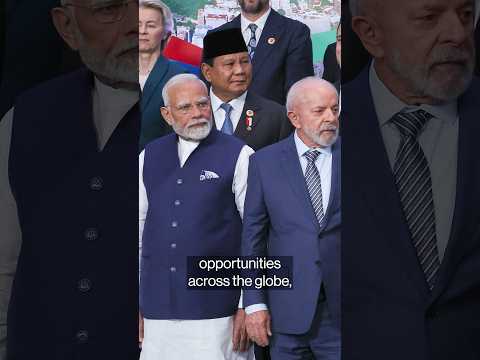
Group 1: Trade Deal with Taiwan - The Trump administration is negotiating a trade deal with Taiwan that may involve the island renewing its investment in semiconductors and advanced technology in the U.S. [1] - Major Taiwanese chipmakers, including TSMC, are expected to expand operations in the U.S. and train more American workers as part of the potential deal [2] - In exchange for the tech investment, the Trump administration may reduce the current 20% tariff on other Taiwanese goods [2] Group 2: Geopolitical Context - The negotiations with Taiwan occur amid heightened tensions following Japanese Prime Minister Sanae Takaichi's strong defense of Taiwan's independence, suggesting military response from Japan in case of a Chinese attack [6] - Chinese officials reacted strongly to Japan's statements, summoning Japan's ambassador and warning against travel to Japan [7] - China's defense ministry asserted that any Japanese intervention would not protect Taiwan, indicating the seriousness of the geopolitical situation [7]
Trump Says He'll Visit China in April
Bloomberg Television· 2025-11-24 22:21
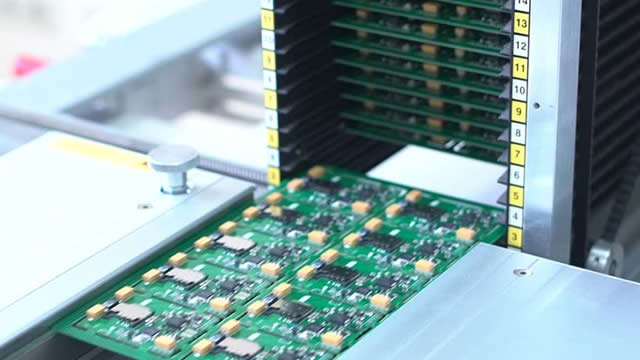
US-China Trade Relations - The US and China are attempting to build on positive momentum from a previous in-person meeting to hammer out a trade deal [2][3] - Trump mentioned he would visit China in April of next year and invited Xi to the White House for a state visit later in the year [2] - Discussions included trade, Russia's war in Ukraine, and purchases of soybeans and other farm products [3] Healthcare Policy & Affordability - The White House is trying to address rising health insurance premiums due to expiring Obamacare subsidies at the end of the year [5] - There is added pressure on the White House to address rising healthcare costs, as affordability was a winning message for Democrats in recent elections [5][6] - The President is involved in talks to unveil a healthcare proposal to fix the system and bring down costs for consumers [7] - The President hopes to secure a solution by January 30th, with a proposal potentially coming as early as this week [8] - A plan to alleviate the deadline with a two-year extension and limitations on eligibility has been postponed [4]
Market Wrap: Sensex ends 388 pts higher, Nifty reclaims 26,000 as RBI relief lifts financial stocks
The Economic Times· 2025-11-17 10:23
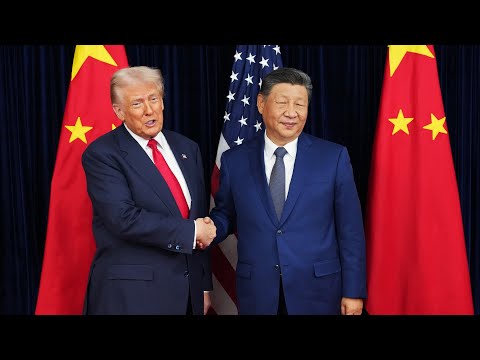
Market Performance - The S&P BSE Sensex closed up 388 points, or 0.46%, at 84,950.95, while the NSE Nifty 50 added 103.40 points, or 0.4%, finishing at 26,013.45, marking a return above the 26,000 level [1][14] - Financial stocks gained 0.6% and were the strongest drivers of the benchmarks, supported by the Reserve Bank of India's measures for export-focused industries facing U.S. tariff pressures [2][14] - In the broader market, small-caps added 0.5%, and mid-caps climbed 0.7% to reach a fresh record high [3][14] Company-Specific Developments - Tata Motors Passenger Vehicles slipped 4.7% after the automaker revised its fiscal 2026 margin outlook for its U.K. arm, Jaguar Land Rover [5][14] - Shares of companies like Eternal, Maruti Suzuki, Kotak Mahindra Bank, Mahindra & Mahindra, and Tech Mahindra led the advance, each rising between 1% and 2% [14] Investor Sentiment and Expectations - The market maintained positive momentum near the key psychological level of 26,000, with investors anticipating a strong catalyst for further upward movement, particularly a potential trade deal [6][14] - The risk-reward ratio is considered favorable, bolstered by stronger-than-expected Q2 earnings from mid-caps, reinforcing confidence in growth revival and potential future earnings upgrades [7][14] Global Market Context - Global stocks and bond yields held firm, with European indices rising slightly and U.S. futures indicating a steady mood [8][14] - Expectations for a U.S. interest rate cut in December have fallen to less than 50%, putting pressure on stocks, especially in the technology sector [9][14] Commodity and Currency Movements - Gold prices edged down to $4,072 an ounce, despite a 55% increase this year from $2,624 an ounce on January 1, driven by safe-haven demand and geopolitical tensions [11][14] - Oil prices slipped, with Brent crude falling 44 cents, or 0.7%, to $63.95 a barrel, and U.S. West Texas Intermediate declining 48 cents, or 0.8%, to $59.61 [12][14] - The Indian rupee inched higher to 88.63 per U.S. dollar, supported by light dollar inflows, despite a widening trade deficit [13][14]


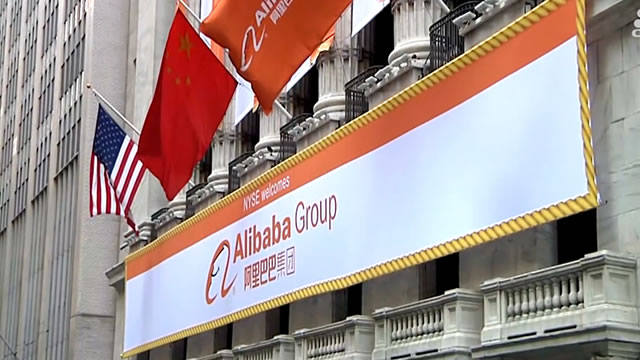
White House memo reportedly claims Alibaba is helping Chinese military target U.S.
Youtube· 2025-11-14 22:55
Core Viewpoint - Alibaba is accused of providing technical support to the Chinese military for operations targeting the United States, as reported by the Financial Times, citing a national security memo circulating within the White House [1] Group 1: Allegations Against Alibaba - The Financial Times claims that Alibaba supplies the People's Liberation Army with access to customer data, including IP addresses, Wi-Fi information, and payment records, along with AI-related services [1] - Employees of Alibaba are alleged to have transferred knowledge about zero-day cyber exploits to the Chinese military [1] Group 2: Response from Alibaba - An Alibaba spokesperson has denied the allegations, stating that the assertions in the article are completely false and questioning the motivation behind the anonymous leak [1] - The spokesperson characterized the report as a malicious PR operation aimed at undermining President Trump's recent trade deal with China [1] Group 3: Legal Context - Chinese law mandates that companies must share information with the government when requested, which has led to skepticism among US officials regarding Chinese-owned firms that have access to American data [2] - This law has been in effect since 2017, contributing to concerns about data security and privacy [2] Group 4: White House Response - There has been no official comment or confirmation from the White House regarding the existence of the memo or its contents [3] - The Financial Times acknowledges that it cannot verify the accuracy of the leaked memo, which contains classified intelligence information [3]

US tariffs on Swiss goods cut to 15% in deal struck with Trump administration
The Guardian· 2025-11-14 17:16
Trade Agreement Overview - The US has agreed to cut tariffs on Switzerland from 39% to 15% as part of a new trade pact, which aims to improve economic ties and support Swiss exporters [1][2] - The agreement includes a "non-binding memorandum of understanding" following bilateral talks and lobbying by Swiss firms [1][2] Tariff and Quota Details - The new deal aligns US tariffs on Switzerland with those on the European Union, providing Swiss exporters with competitive parity [3] - Switzerland will reciprocate by reducing tariffs on a range of US products, including industrial goods, fish, seafood, and non-sensitive agricultural products [3] - Specific quotas for US goods exported to Switzerland will be established, including 500 tonnes of beef, 1,000 tonnes of bison meat, and 1,500 tonnes of poultry [3] Implementation and Economic Impact - The implementation date for the new tariffs and quotas is yet to be finalized, with coordination between the US and Switzerland to ensure simultaneous customs duty reductions [4][5] - The deal is expected to encourage Swiss companies to invest approximately $200 billion in the US by the end of 2028 [6] Corporate Engagement - Leading Swiss executives met with the US President to finalize the deal, indicating strong corporate interest in the new trade relationship [6] - Rolex, a prominent Swiss luxury watchmaker, has engaged with the US administration, highlighting the personal interactions between corporate leaders and government officials [7][8]