Inflation

Search documents
RBI MPC 2026: Central bank to keep repo rate unchanged amid currency volatility and bond yield pressures, as per SBI report
The Economic Times· 2026-02-05 02:50
The report stated that, despite earlier policy-rate easing, the central bank will hold rates this time, as several macroeconomic and global factors continue to pose challenges.It noted that government bond yields have shown persistent hardening in recent periods, even after policy rate easing.According to the report, the effectiveness of This, it said, could limit the transmission of monetary policy actions, so Live EventsYou Might Also Like:Government borrowing will be the decider factor in whether MPC ca ...


Goldman Sachs resets Fed rate cut outlook under Warsh
Yahoo Finance· 2026-02-05 02:03
Group 1 - Jerome Powell's term ends on May 15, and President Trump has nominated Kevin Warsh, who is expected to be confirmed easily by Congress [1] - Warsh is historically viewed as a hawk, having criticized quantitative easing and low rates aimed at stimulating the economy [1] - Goldman Sachs suggests that a Fed led by Warsh may not necessarily keep rates higher, indicating that interest rate cuts and quantitative easing remain possible [2] Group 2 - Wall Street expresses concern that under Warsh, the Fed may not cut rates as aggressively [3] - The Fed's monetary policy is influenced by a dual mandate, which aims to balance unemployment and inflation, often leading to conflicting goals [4] - Goldman Sachs believes that Warsh's views on inflation and artificial intelligence as a deflationary force may lead to rate cuts, with expectations of two reductions in 2026 [6]

Dollar recovers as central bank decisions loom
The Economic Times· 2026-02-05 01:56
Economic Outlook - Analysts from Bank of America expect the European Central Bank (ECB) to hold rates, emphasizing higher uncertainty with only minor communication tweaks [1][4] - The British pound remained flat at $1.3650 ahead of the Bank of England's policy decision, which is also expected to keep rates on hold [1][4] - The U.S. dollar index increased by 0.2% to 96.671, trading near a two-week high, as financial markets assess the U.S. corporate earnings season [4] Market Performance - The Nasdaq Composite fell by 2.9% over two days, marking its largest decline since October, driven by volatility from major companies like Alphabet and a downturn in software stocks [2][4] - Federal Reserve Governor Lisa Cook expressed concerns about inflation rather than the labor market, indicating a reluctance to support further interest rate cuts until inflation pressures ease [2][5] Currency Movements - The U.S. dollar slipped 0.1% to 6.9386 yuan against the Chinese yuan following discussions between U.S. President Trump and Chinese President Xi Jinping regarding trade and security [3][5] - The Australian dollar rose by 0.1% to $0.70045 after trade balance data exceeded market expectations, while the New Zealand dollar also gained 0.1% to $0.60045 [3][5] Cryptocurrency Trends - Cryptocurrencies stabilized after a significant selloff, with Bitcoin rising by 0.2% to $72,745.23 and Ether increasing by 1% to $2,146.63 [5]

Don't Like Trump's Economy? Maybe You Will Next Year
Investopedia· 2026-02-05 01:01
Core Message - Treasury Secretary Scott Bessent emphasized the need for patience regarding the administration's tariffs, asserting that they will eventually lead to the re-industrialization of the U.S. economy [1][6] Economic Impact - The short-term economic outlook depends on whether tariffs minimally impact inflation and effectively promote U.S. manufacturing [2] - Since the implementation of tariffs, the U.S. has lost 72,000 manufacturing jobs, indicating that the tariffs have not yet achieved the desired manufacturing revival [4] - Despite the job losses, the economy has shown resilience, with growth continuing and inflation remaining above 2% without surging, contrary to initial recession predictions [5] Manufacturing Response - Bessent reported that numerous factories have begun construction in response to the tariffs, which aim to favor domestic manufacturing over imports, although these factories will take time to become operational [3][6] - Business leaders have expressed concerns about hiring and expansion due to tariff-related uncertainties, with many manufacturers reporting that import taxes have complicated long-term planning [5]
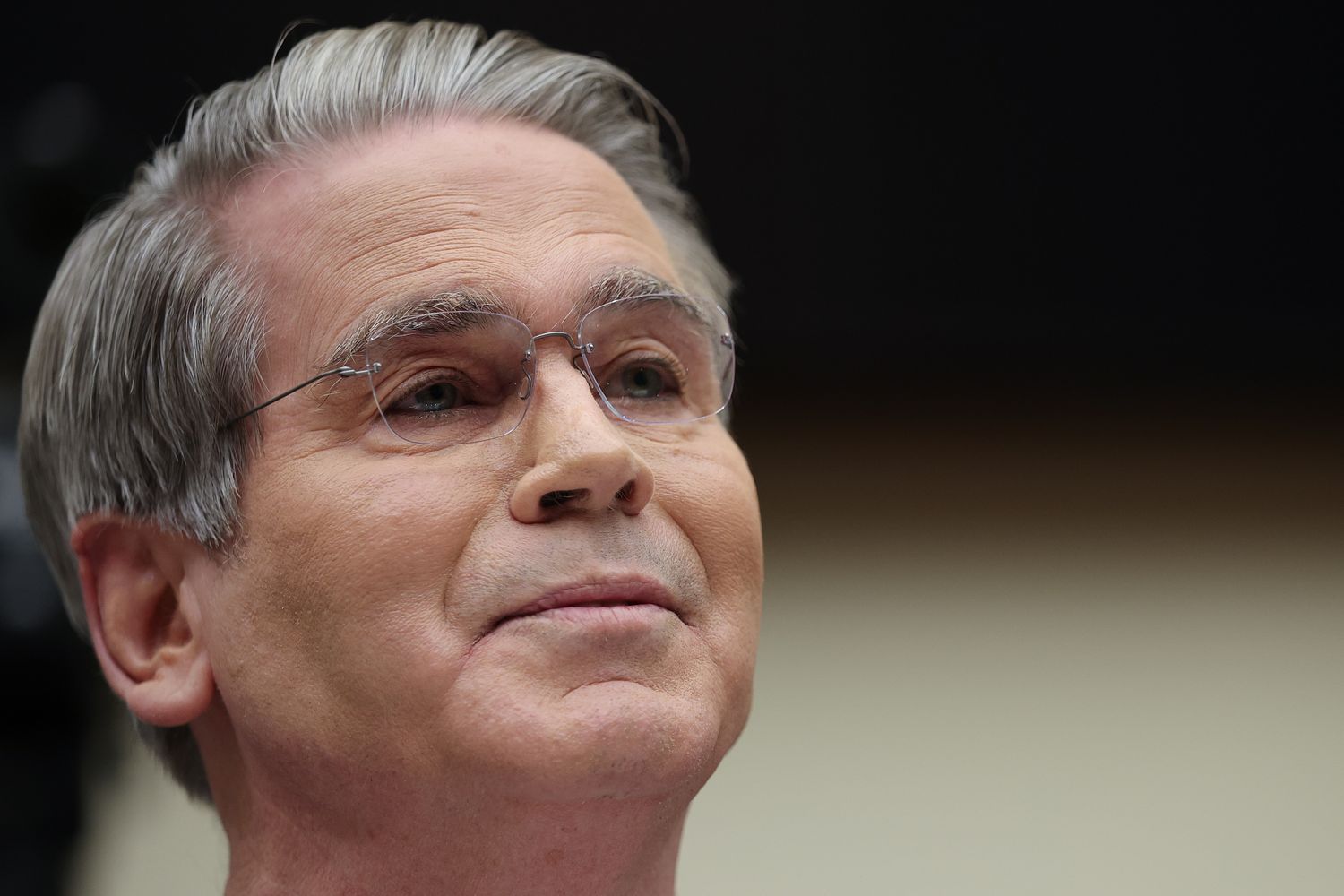
Fed's Cook Focused on Inflation Risks as Greater Threat to Economy
WSJ· 2026-02-04 23:48
Core Viewpoint - Federal Reserve governor Lisa Cook perceives elevated inflation as a greater threat to the economy compared to a weakening labor market, indicating potential skepticism towards rate cuts [1] Summary by Relevant Categories Economic Threats - Elevated inflation is viewed as a significant risk to the economy [1] - The weakening labor market is considered less of a concern in comparison [1] Monetary Policy Implications - Cook's stance suggests she may not support a return to rate cuts in the near future [1]
Kevin Warsh's tenure as Fed governor shaped by inflation concerns, central bank credibility
Yahoo Finance· 2026-02-04 18:26
Core Viewpoint - Kevin Warsh, nominated by President Trump to be the next chair of the Federal Reserve, has a history of raising concerns about inflation while being a data-driven policymaker during his tenure from 2006 to 2011 [2][3]. Group 1: Warsh's Tenure and Philosophy - Warsh served on the Federal Open Market Committee (FOMC) and consistently voted with the committee's consensus, including supporting three rate hikes upon joining in 2006, maintaining rates, and later cutting rates during the financial crisis [3]. - His approach reflects a balance between being an inflation hawk and a practitioner who relies on data to guide policy decisions, as noted by former Atlanta Fed president Dennis Lockhart [2]. Group 2: Concerns About Inflation - During the Fed's April 2008 meeting, Warsh expressed concerns about inflation and the job market, warning that continued rate cuts could lead to a perception of excessive tolerance for inflation, potentially raising inflation expectations [4]. - In September 2009, after the worst of the financial crisis, Warsh cautioned that delaying rate increases until the economy normalized could result in waiting too long, leading to inflation issues [8].
Rep. Waters Clashes With Bessent Over Impact of Tariffs
Youtube· 2026-02-04 17:07
Core Viewpoint - The discussion centers around the impact of tariffs on inflation and housing affordability, with conflicting statements from government officials regarding whether tariffs contribute to inflation and the overall economic burden on American consumers [1][2][4]. Tariffs and Inflation - The San Francisco Federal Reserve asserts that tariffs do not cause inflation, contradicting earlier claims made by government officials [2]. - Despite claims that tariffs are not inflationary, there is evidence suggesting that they have raised prices for consumers across various goods [4][7]. Impact on Housing Market - Tariffs imposed on construction materials such as lumber and steel have exacerbated the housing crisis, resulting in an estimated half a million fewer homes being built [7]. - The Trump administration's tariffs on housing production goods have contributed to increased housing costs, making affordability a significant issue for American consumers [6][8]. Government Response - There are calls for government officials to reconsider the imposition of tariffs that negatively impact American consumers and housing affordability [9]. - The discussion highlights a bipartisan approach to addressing the housing crisis, emphasizing the need for more homes to be built rather than fewer due to tariff-related costs [5][6].
Tariffs do not cause inflation, says Treasury Secretary Scott Bessent
Youtube· 2026-02-04 16:57
Economic Impact of Tariffs - The discussion highlights the contradiction in statements regarding tariffs and their inflationary effects, with the Secretary previously asserting that tariffs do not cause inflation, while also acknowledging the need to reduce tariffs to lower consumer prices [4][6][7]. - The tariffs imposed by the Trump administration on housing production goods, such as lumber and steel, are cited as a significant factor contributing to the housing crisis, resulting in an estimated half a million fewer homes being built [11][10]. Housing Affordability Crisis - The rising costs of housing are attributed to tariffs on essential construction materials, which have exacerbated the affordability crisis in the housing market [8][11]. - The administration's policies, including tariffs, are criticized for punishing American consumers and hindering home construction, further complicating the housing supply issue [12][11].

Breaking down AMD's earnings, what Kevin Warsh's past may reveal about him as a Fed chair
Youtube· 2026-02-04 15:47
Group 1: Market Overview - US stock futures are mixed following a tech-led sell-off, particularly affecting software stocks due to fears of AI disruption [1][5] - Nvidia's CEO Jensen Wong dismissed concerns about AI replacing software, calling such ideas illogical [1][6] - Investors are rotating out of risk assets, with Bitcoin briefly falling below $73,000, marking a 14% decline since the start of the year and a 40% drop from its record high in October [3][4] Group 2: Earnings Highlights - AMD reported fourth-quarter earnings that exceeded estimates, but its first-quarter forecast disappointed investors, leading to a decline in its stock [2][15] - Eli Lilly projected a significant sales increase of up to 27% this year, reaching $83 billion, driven by its diabetes and obesity drugs [8][9] - Uber announced a new CFO amid disappointing earnings forecasts, with adjusted earnings per share expected to be lower than analysts' expectations [10][11] Group 3: Company-Specific Insights - Chipotle's earnings report indicated flat comparable sales for the year, with plans to open 370 new stores to improve performance after a 39% stock decline last year [12][13] - Analysts noted that AMD's strong revenue included $390 million from China, but there are concerns about the sustainability of this revenue [17][19] - The upcoming launch of AMD's Helios system is anticipated to close the performance gap with Nvidia, with significant volumes expected in the fourth quarter [22][25] Group 4: Broader Industry Trends - The AI trade is experiencing reassessment, with concerns about the impact of AI on software businesses leading to significant stock declines [48][49] - Analysts suggest that the selling in the software sector may be overdone, indicating potential for recovery as companies adapt to AI technologies [49][50] - The semiconductor industry is under pressure, with high expectations for companies like Nvidia and Broadcom to meet market demands [27][28]



Snap's Snapback Moment Is Coming
Seeking Alpha· 2026-02-04 15:43
Company Overview - Snap Inc. is a prominent social media platform and technology company that specializes in augmented reality (AR) [1] - The company has a substantial user base, with 477 million daily users and 943 million monthly users, primarily aged between 13 and 34 [1] Investment Insights - The article reflects a beneficial long position in Snap's shares, indicating confidence in the company's future performance [2] - The author emphasizes a disciplined and analytical investment approach, focusing on swing trading undervalued small companies [1] Market Context - Snap's focus on augmented reality positions it well within the growing tech landscape, appealing to a younger demographic that is increasingly engaged with social media [1]