
伊朗核问题

Search documents
美伊新一轮谈判在即,以总理:伊朗必须拆除核设施,而不仅是暂停铀浓缩进程
Xin Lang Cai Jing· 2026-02-15 22:55
Core Viewpoint - Israeli Prime Minister Netanyahu has set clear red lines regarding post-war arrangements in Gaza and the Iranian nuclear issue, emphasizing the need for the complete dismantling of Iran's nuclear infrastructure and the disarmament of Hamas [1][11]. Group 1: Israeli Position on Iran - Netanyahu expressed skepticism about the upcoming US-Iran negotiations, stating that any agreement must include the complete dismantling of Iran's nuclear capabilities, not just a pause in uranium enrichment [3][11]. - He highlighted that Hamas must fully disarm, with an estimated 60,000 rifles and other weapons needing to be surrendered or removed from Gaza [3][11]. - The Israeli military has reportedly destroyed approximately 150 kilometers of Hamas tunnel networks [3][11]. Group 2: US-Iran Negotiations - The next round of US-Iran negotiations is scheduled for the 17th in Geneva, with a US delegation including special envoy Hook and Jared Kushner participating [4][12]. - Iranian Foreign Minister Zarif is also heading to Geneva for these talks, which will include meetings with Swiss and Omani officials [6][12]. Group 3: Potential Military Actions - Reports indicate that if the US-Iran negotiations fail, former President Trump has promised to support Israeli airstrikes on Iranian missile facilities [6][14]. - Discussions within the US military and intelligence community are reportedly focused on how to assist Israel in such an operation, including air refueling for Israeli aircraft [8][16]. - There is uncertainty regarding which countries might allow US aircraft to use their airspace for these operations, with Jordan, Saudi Arabia, and the UAE publicly opposing such actions [9][16]. Group 4: Broader Implications - The White House is primarily concerned with Iran's nuclear program, while Israel is focused on the rapid development of Iran's ballistic missile capabilities, which are seen as an urgent threat [9][16]. - US Secretary of State Rubio has indicated a preference for diplomatic solutions to the US-Iran issues, confirming participation in the upcoming negotiations [17].

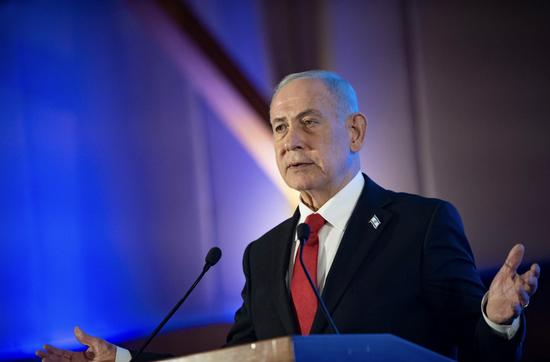
特朗普跟内塔尼亚胡想出馊主意:打击伊朗对中国石油出口
Xin Lang Cai Jing· 2026-02-15 08:32
Core Viewpoint - The article discusses the collaboration between the United States and Israel to exert maximum pressure on Iran, particularly targeting its oil exports to China, in an effort to compel Iran to abandon its nuclear program [1][3]. Group 1: U.S.-Israel Strategy on Iran - U.S. President Trump and Israeli Prime Minister Netanyahu agreed to intensify pressure on Iran, including actions against its oil sales to China, which constitute about 80% of Iran's oil exports [1][3]. - The oil industry is a crucial pillar of Iran's economy, accounting for over half of its foreign exchange income [3]. Group 2: Economic Impact and Negotiations - The World Bank estimates Iran's GDP for 2024 to be approximately $436.9 billion, with a per capita GDP of $4,771 [3]. - The U.S. and Iran are set to continue negotiations in Switzerland, although U.S. officials believe the likelihood of reaching an agreement is "zero" [3][6]. Group 3: Diverging Views on Negotiations - Netanyahu expressed skepticism about Iran's compliance with any potential agreement, while Trump suggested exploring the possibility of a deal [3][6]. - U.S. officials indicated that if Iran agrees to U.S. demands, options would be presented to Trump for consideration [5]. Group 4: Potential U.S.-China Tensions - Trump's recent threats to impose a 25% tax on any country engaging in business with Iran could reignite tensions between the U.S. and China, which is Iran's largest trading partner [7]. - Analysts suggest that Trump may be overestimating his leverage and that any aggressive actions against China could lead to significant repercussions [7].

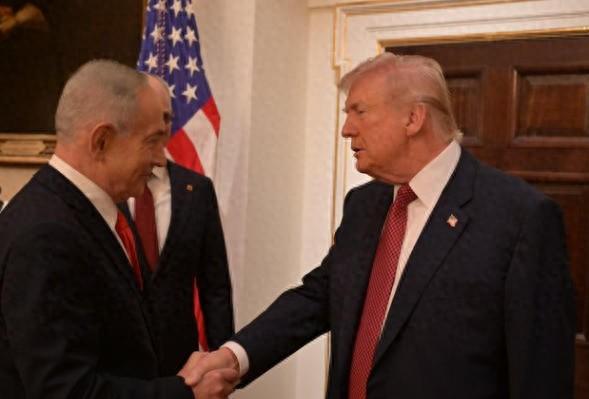
美以闭门会晤有何盘算
Xin Lang Cai Jing· 2026-02-14 02:59
Core Viewpoint - The meeting between U.S. President Trump and Israeli Prime Minister Netanyahu focused on Iran, Gaza, and the Middle East situation, with Netanyahu aiming to influence U.S.-Iran negotiations and increase demands on Iran [1][3]. Group 1: U.S.-Israel Relations - Netanyahu's visit to the U.S. was perceived as an attempt to sway U.S. negotiations with Iran, emphasizing Israel's security needs and the importance of close coordination between the two nations [3][5]. - The Israeli stance is that any agreement between the U.S. and Iran must ensure that Iran does not possess nuclear weapons and must limit its missile capabilities and support for regional proxies [4][5]. Group 2: U.S.-Iran Negotiations - The U.S. and Iran have engaged in indirect negotiations, but key issues remain unresolved, particularly Iran's uranium enrichment and missile program [3][4]. - Iran has expressed willingness to discuss its uranium enrichment levels under the condition that its rights under the Non-Proliferation Treaty are respected, indicating a potential for negotiation but with significant caveats [4]. Group 3: Military Considerations - The U.S. continues to apply military pressure on Iran, with the deployment of the USS Abraham Lincoln carrier strike group in the Middle East, and considerations for sending a second carrier strike group [6]. - Analysts suggest that the U.S. military buildup may serve dual purposes: to pressure Iran into negotiations or to prepare for potential military action if negotiations fail [6].
特朗普闭门会内塔尼亚胡,谈拢了吗?
Xin Lang Cai Jing· 2026-02-12 14:09
Core Viewpoint - The meeting between US President Trump and Israeli Prime Minister Netanyahu focused on Iran, Gaza, and the Middle East situation, with Netanyahu aiming to influence US-Iran negotiations and increase demands on Iran [1][13]. Group 1: Meeting Details - The closed-door meeting lasted approximately three hours, with no media presence or joint statement issued [3][15]. - Trump emphasized the US's preference for continuing negotiations with Iran, while Netanyahu highlighted Israel's security needs and the importance of close coordination between the two nations [5][17]. Group 2: Negotiation Dynamics - Netanyahu's primary goal was to push for a broader agreement that extends beyond Iran's nuclear program, expressing dissatisfaction with the current state of US-Iran negotiations [5][18]. - Israeli media reported that Netanyahu's agenda included ensuring any agreement would prevent Iran from acquiring nuclear weapons and limit its missile capabilities [6][18]. Group 3: Military Considerations - There are speculations that the meeting may have also been about coordinating military actions in case negotiations fail [2][21]. - The US has increased military presence in the Middle East, with the deployment of the USS Abraham Lincoln carrier strike group, indicating a readiness for potential military action against Iran [12][23]. Group 4: Broader Implications - Analysts suggest that while there are subtle differences in the negotiation approach between the US and Israel, there is no fundamental conflict in their positions [21]. - The ongoing military pressure from the US may serve as a backdrop to negotiations, with some experts arguing that the talks could be a facade for justifying military intervention [23].
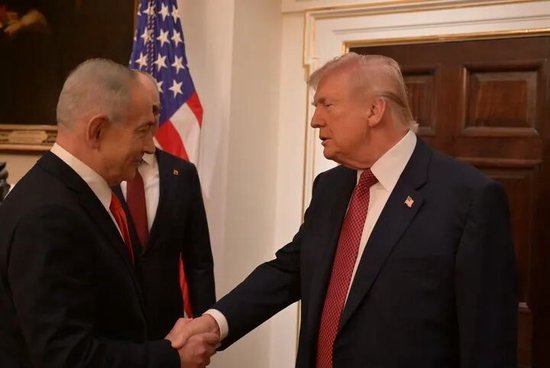
释新闻|内塔尼亚胡紧急提前访美,说动特朗普打击伊朗了吗?
Xin Lang Cai Jing· 2026-02-12 06:08
Group 1 - The core viewpoint of the articles revolves around the ongoing diplomatic efforts and military preparations concerning Iran, with U.S. President Trump expressing a preference for reaching an agreement with Iran rather than resorting to military action [2][4][6] - Trump and Israeli Prime Minister Netanyahu's meeting did not yield substantial results, with both leaders discussing the need for continued coordination on Iran and regional security issues [4][5] - There is skepticism from both U.S. and Israeli officials regarding the likelihood of a successful agreement with Iran, with discussions focusing on a potential "joint action plan" if negotiations fail [5][6] Group 2 - Iranian President Raisi stated that Iran is ready for any verification of its nuclear program but will not yield to excessive demands during negotiations [3] - Netanyahu's urgent visit to the U.S. was driven by concerns that the U.S. might make concessions to Iran that would not meet Israel's security needs [7] - Israeli officials have articulated their demands, including the complete dismantling of Iran's nuclear enrichment facilities and restrictions on its missile program [7][8] Group 3 - The U.S. military is ramping up preparations in the Middle East, with indications that a second aircraft carrier strike group may be deployed in response to potential military actions against Iran [2][10] - Reports indicate that Israel is concerned about Iran's missile capabilities, estimating that Iran could possess 1,800 to 2,000 missiles capable of striking Israel in the near future [8] - The U.S. is considering measures such as seizing oil tankers transporting Iranian oil to further pressure Iran economically, although this could provoke retaliatory actions from Iran [10]
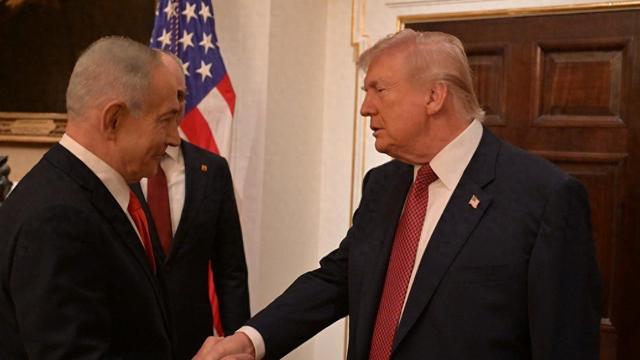
特朗普与内塔尼亚胡在白宫磋商伊朗问题
Xin Lang Cai Jing· 2026-02-12 04:07
Group 1 - The core viewpoint of the article is that President Trump and Israeli Prime Minister Netanyahu held a closed-door meeting to discuss Iran and Middle East issues, with no clear decisions made [1] - Trump emphasized that reaching an agreement with Iran is a priority, and if not achieved, the outcome remains uncertain [1] - The U.S. continues to apply military and sanctions pressure on Iran while signaling a willingness to negotiate [1] Group 2 - The indirect negotiations between the U.S. and Iran regarding nuclear issues took place in Muscat, Oman, with both sides indicating a desire to continue discussions [1] - Trump warned Iran about the consequences of not reaching an agreement, referencing past military actions taken by the U.S. [1] - A military operation involving U.S. forces, including B-2 bombers and missile submarines, is planned against Iranian nuclear facilities in June 2025 [1]
伊朗最高领袖顾问:美国趋向理性,以方欲挑事端
Xin Hua Cai Jing· 2026-02-12 00:02
Group 1 - The core viewpoint of the article is that negotiations between Iran and the United States are ongoing, with Iran expressing a positive attitude towards the talks, despite not having received specific proposals from the U.S. [1] - Iran's Supreme National Security Council Secretary, Larijani, indicated that Israel is attempting to undermine the negotiation process and is seeking excuses to provoke conflict, affecting the stability of the entire Middle East [1] - Regional countries are working to ensure the success of the negotiations between Iran and the U.S., highlighting a collective effort to stabilize the situation [1] Group 2 - Larijani reaffirmed Iran's stance on nuclear issues and warned that if the U.S. attacks Iran, it would retaliate against U.S. military bases in the Middle East [1] - Meetings took place in Qatar between Larijani and the Emir of Qatar, where they discussed regional developments, efforts to ease tensions, and ways to enhance regional security [1] - The Qatari Foreign Ministry stated that the Prime Minister and Foreign Minister of Qatar also met with Larijani to discuss the indirect negotiations on nuclear issues that took place in Muscat, Oman, reiterating Qatar's support for peaceful resolutions [1]
伊朗最高领袖顾问:美国趋向理性 以方欲挑事端
Yang Shi Xin Wen Ke Hu Duan· 2026-02-11 20:26
据卡塔尔埃米尔宫发表的声明,卡塔尔埃米尔(国家元首)塔米姆当天在多哈会见拉里贾尼。声明说, 双方就地区局势演变、缓解紧张局势的努力、加强地区安全的方式以及共同关心的地区和国际问题交换 了意见。 卡塔尔外交部说,卡塔尔首相兼外交大臣穆罕默德也会见了拉里贾尼,谈及美国与伊朗上周在阿曼首都 马斯喀特举行的核问题间接谈判,重申卡塔尔支持一切旨在缓解紧张局势、通过和平方式解决问题的努 力。 (文章来源:央视新闻客户端) 伊朗最高国家安全委员会秘书、最高领袖顾问拉里贾尼11日接受采访时称,伊朗与美国的谈判正在继 续,美国通过参与谈判,正走向一条理性道路。 到访卡塔尔的拉里贾尼同时指认以色列正试图破坏谈判进程,并寻找借口挑起事端。他在采访中说,以 色列针对的并非只有伊朗,而是整个中东地区的稳定。 拉里贾尼说,地区国家正努力确保伊朗与美国的谈判取得成功,伊朗对此持积极态度。只是,伊朗尚未 收到美方"具体的提议"。 他重申伊朗在核问题上的立场,并表示,如果美国对伊朗发动攻击,伊朗将打击美国在中东地区的军事 基地。 ...
特朗普:正考虑派第二艘航母去中东,伊朗不会拥有核武器或导弹
Mei Ri Jing Ji Xin Wen· 2026-02-11 07:40
Group 1 - The U.S. is considering deploying a second aircraft carrier strike group to the Middle East in preparation for potential military action against Iran if negotiations fail [1][4] - The USS Abraham Lincoln carrier strike group is currently deployed in the Central Command area, and could theoretically launch military operations within "one or two days" if ordered by the White House [3] - President Trump emphasized that any agreement with Iran must address not only nuclear issues but also ballistic missile concerns, indicating a desire for a comprehensive deal [4][10] Group 2 - The U.S. government is contemplating the seizure of oil tankers transporting Iranian oil as a means to exert pressure on Iran, although this action could provoke retaliation from Iran [5][7] - Over 20 vessels transporting Iranian oil have already been sanctioned by the U.S. Treasury, making them potential targets for seizure [7] - Israeli Prime Minister Netanyahu is expected to provide new intelligence regarding Iran's military capabilities during his visit to the U.S., particularly concerning Iran's ballistic missile capabilities [8] Group 3 - Iran's Foreign Ministry has warned that any military aggression against Iran will result in a "devastating" response, indicating a high level of tension in the region [9] - Iran's Foreign Minister stated that the country is capable of reaching a new agreement on nuclear issues that surpasses the previous Obama-era deal, emphasizing the potential for a more favorable outcome [10][11] - Iran has expressed skepticism regarding the U.S.'s trustworthiness in negotiations, citing past experiences of attacks during talks as a significant concern [11]

内塔尼亚胡将向特朗普提供有关伊朗军事能力的新情报
Yang Shi Xin Wen· 2026-02-10 18:31
总台记者当地时间10日晚间获悉,以色列消息人士称,以总理内塔尼亚胡在访美期间将向美国总统特朗 普提供有关伊朗军事能力的新情报,特别是关于伊朗恢复弹道导弹能力的情报。 以色列方面称,如果不对伊朗进行干预,伊朗将在几周或几个月内拥有多达2000枚弹道导弹。 当地时间8日,以色列方面有消息称,内塔尼亚胡预计将在会面中要求美国推动将伊朗的浓缩铀转移出 境,并限制其弹道导弹能力。 (文章来源:央视新闻) 伊朗外交部发言人巴加埃10日表示,伊朗和平核计划被塑造成"人为制造的危机"的根源在于以色列。他 表示,以方近40年来反复宣称伊朗寻求核武器,试图向国际社会制造"想象中的恐惧"。他强调,所 谓"伊朗核弹"并不存在。 当地时间2月10日,以色列总理内塔尼亚胡启程前往美国,准备于当地时间2月11日与美国总统特朗普举 行会晤。出发前,内塔尼亚胡表示,他将向美方提出以色列在涉及伊朗问题上的所谓"原则性立场",并 强调这些原则"不仅关乎以色列,也关乎所有希望实现和平与安全的国家"。 ...