
韧性城市建设

Search documents
中央城市工作会议:加快老旧管线改造升级 严格限制超高层建筑
news flash· 2025-07-15 04:12
Core Points - The Central Urban Work Conference was held in Beijing, emphasizing the construction of safe and resilient cities [1] - The meeting proposed advancing the safety engineering of urban infrastructure lifelines and accelerating the renovation and upgrading of old pipelines [1] - There is a strict limitation on the construction of super-tall buildings to enhance housing safety guarantees [1] - The conference highlighted the need to strengthen natural disaster prevention in cities, coordinating flood prevention systems and urban waterlogging management [1] - It also called for enhanced overall social security prevention to effectively maintain urban public safety [1]
北京发布96项地方标准 首次制定69项
Zhong Guo Chan Ye Jing Ji Xin Xi Wang· 2025-07-10 00:22
Group 1 - The Beijing Municipal Government has released 96 local standards, including 69 new and 27 revised standards, aimed at improving various sectors [1] - The "Health Examination Quality Control Specification" is the first health examination standard collaboratively developed by Beijing, Tianjin, and Hebei, focusing on quality control in health examination services [1] - The standard emphasizes comprehensive quality control throughout the health examination process, including pre-examination, during examination, and post-examination phases, enhancing service quality and safety in the region [1] Group 2 - The "Electric Vehicle Charging Infrastructure Planning and Design Standard" mandates that 100% of new residential projects must include charging infrastructure, optimizing the planning and design of charging facilities [2] - This standard aims to improve the efficiency of parking resources and charging facilities by aligning charging characteristics with travel patterns in different public building contexts [2] - The "Food Safety Management Specification for Large Events" clarifies the responsibilities of organizing units, food suppliers, and inspection agencies, providing a scientific and standardized approach to food safety management for large events in Beijing [2] Group 3 - The "Administrative Mediation Service Specification for Consumer Disputes" is the first local standard in China addressing administrative mediation for consumer disputes, detailing service requirements and processes [3] - This standard aims to enhance the efficiency of mediation services and improve the enforcement level of market regulation, contributing to a better consumer environment in Beijing [3] - The "Technical Requirements for Indoor Emergency Shelters in Primary and Secondary Schools" outlines the conversion of schools into emergency shelters without disrupting educational functions, promoting standardized emergency management practices [3]
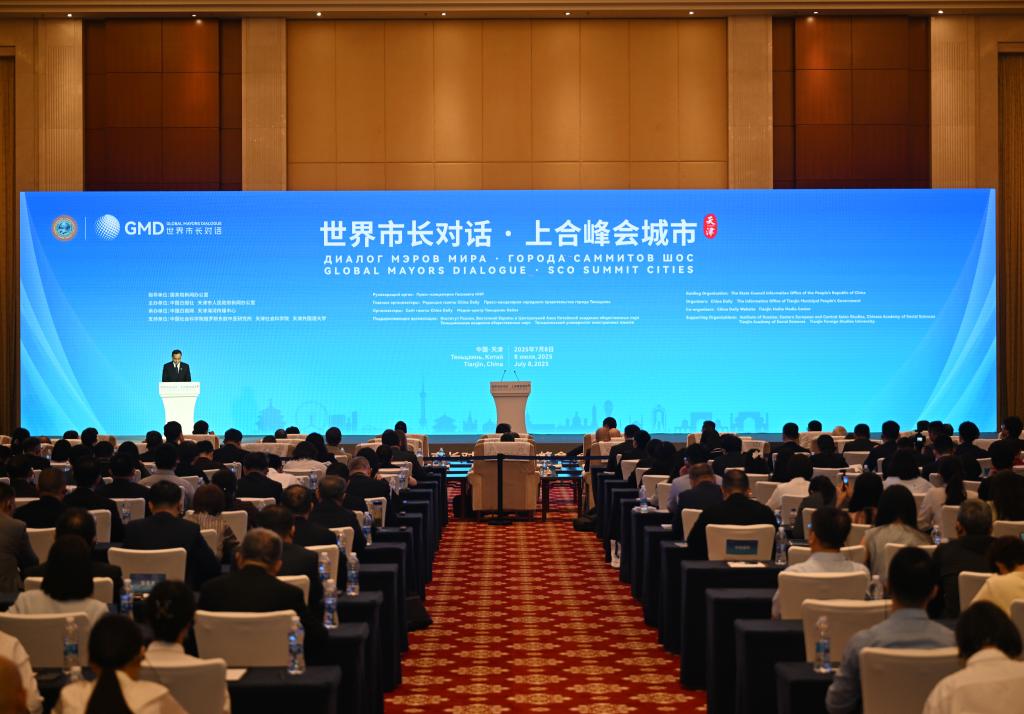
智慧、绿色、韧性:上合组织国家代表“取经”中国城市治理之道
Xin Hua Wang· 2025-07-08 13:58
Core Insights - The article discusses the increasing importance of urban governance in global economic cooperation, particularly through the lens of the Shanghai Cooperation Organization (SCO) [1] - Representatives from SCO member countries are gathering in Tianjin to exchange experiences on building smart, green, and resilient cities, drawing lessons from China's urban governance practices [1][3] Group 1: Urban Governance and Cooperation - Modern urban governance is becoming more refined and intelligent, with public services becoming more convenient and efficient, marking a global trend towards smart city development [3] - Tajikistan's Dushanbe is actively learning from Chinese cities, including Tianjin, in implementing over 20 smart city projects, particularly in digital infrastructure [3] - The SCO prioritizes energy transition and green development as key areas for cooperation among member states [3] Group 2: Technological Innovations and Sustainability - Tianjin Port's "smart zero-carbon" terminal is highlighted as a benchmark for the transformation of Chinese ports, utilizing wind and distributed solar power for its energy needs [4] - The SCO cities are focusing on resilience building, urban planning, infrastructure development, ecological protection, and social governance, sharing successful experiences and exploring systematic construction paths [6] Group 3: Multilateral Collaboration and Future Prospects - The collaboration among SCO cities aims to address common challenges such as climate change and poverty alleviation, emphasizing the importance of collective action over individual efforts [6] - The resource sharing and experience exchange among cities within the SCO framework injects vitality into global governance, showcasing the potential for multilateral cooperation [7]

中国地震局研究员答南都:参与搜救对废墟安全性提供精准分析
Nan Fang Du Shi Bao· 2025-06-12 14:48
Core Insights - The article discusses the integration of scientific research and emergency practices in earthquake management, highlighting the need for better data collection and analysis in post-disaster scenarios [1][2]. Group 1: Research and Development - The China Earthquake Administration is focusing on the structural characteristics of collapsed buildings, which has been a research gap in the field [1]. - Researcher Wang Tao has developed new experimental methods to understand the mechanisms of building collapse and has created effective methods to enhance the seismic performance of buildings [2]. - The research aims to improve the construction of earthquake-resistant buildings, addressing material, component, and structural system aspects to reduce collapse risks [2][3]. Group 2: Emergency Response - Wang Tao has participated in rescue operations during significant earthquakes, including the 2023 Turkey earthquake and the 2025 Myanmar earthquake, assessing the safety of debris and providing data for rescue plans [2]. - His experience allows for quick assessments of remaining load-bearing capacity in damaged structures, which aids in formulating effective rescue strategies [3]. - The article emphasizes the reciprocal relationship between fieldwork and research, where insights gained from rescue operations can inform future scientific studies [3].
全面推进韧性城市建设
Jing Ji Ri Bao· 2025-04-27 00:14
Core Viewpoint - The construction of resilient cities in China is a significant focus for modern urban management, aiming to enhance urban resilience and risk management capabilities by 2030, as emphasized by national policies and leadership [1][4]. Group 1: Definition and Development of Resilient Cities - Resilient cities are defined as urban areas that can quickly recover from disasters without suffering catastrophic failures, emphasizing comprehensive response capabilities [2]. - The development of resilient cities in China has gone through three stages: introduction of the concept before 2015, practical exploration from 2015 to 2020, and comprehensive development post-2020 [3][4]. Group 2: Policy and Implementation - National policies have been established to guide the construction of resilient cities, including the 2024 guidelines from the Ministry of Natural Resources and the 2022 action plan from the State Council [4][5]. - Local governments, such as Beijing and Shanghai, have developed specific policies and plans to promote resilient city construction, creating a governance framework that includes various resilience aspects [5][6]. Group 3: Technological Innovations - The integration of new urban infrastructure and advanced technologies, such as artificial intelligence and digital twin technology, is transforming urban disaster prevention systems, enhancing data collection and predictive capabilities [7][8]. - Zhejiang Province has developed a comprehensive disaster prevention model that utilizes AI to forecast risks and support decision-making across various administrative levels [9]. Group 4: International Collaboration and Learning - China's resilient city planning model is gaining international recognition, with collaborative projects aimed at addressing climate change and promoting sustainable urban development in partnership with countries like Germany and organizations like the World Bank [6]. - Lessons from developed countries highlight the importance of institutional support, legal frameworks, and digital risk monitoring systems in building resilient cities [12][13][14].
新城建让城市更有韧性
Jing Ji Ri Bao· 2025-04-26 21:52
Core Viewpoint - The article emphasizes the importance of urban resilience as a fundamental indicator of urban development effectiveness, highlighting the shift from large-scale construction to quality improvement and structural adjustment in urbanization [1][2]. Group 1: Urban Development and Resilience - By the end of 2024, China's urban resident population is projected to reach 943.5 million, with an urbanization rate of 67.00%, expected to approach 70% in the next five years [1]. - The transition to a new urbanization strategy focuses on enhancing urban safety resilience, addressing the complex risks posed by climate change, technological revolutions, and changes in population and industry [1][2]. - Urban safety is closely linked to the well-being of residents, with increasing societal expectations for healthier, safer, and more livable cities as urbanization shifts from high-speed to high-quality development [1]. Group 2: Infrastructure and Technological Integration - Infrastructure is described as the "bones" of a city and a critical factor in enhancing urban resilience, with new policies aimed at advancing urban infrastructure construction to support resilience [3]. - The integration of new technologies such as big data, cloud computing, and artificial intelligence is essential for building resilient cities, enabling better risk monitoring and management [2][3]. - The new urban infrastructure is characterized by technology support, data-driven approaches, and intelligent efficiency, which collectively enhance urban resilience [3][4]. Group 3: Systematic Planning and Safety - A systematic approach is necessary for urban resilience, which comprises infrastructure resilience, social resilience, management resilience, and technological resilience [4]. - Safety is a fundamental attribute of new urban infrastructure, necessitating a comprehensive risk management strategy throughout the planning, construction, and management processes [5]. - The article advocates for a holistic design in building resilient cities, ensuring that all aspects of urban development are considered in conjunction with infrastructure and governance [4][5].
杭州全面启动“地质体检”
Hang Zhou Ri Bao· 2025-04-21 02:48
Core Insights - Hangzhou has launched a comprehensive "geological health check" to assess urban geological safety risks, aiming to enhance urban resilience and safety over a two-year period [1] Group 1: Project Overview - The geological health check is likened to a CT scan of the urban geological environment, aiming to systematically understand the underground structure and identify anomalies [1] - A visualized 3D model will be established to represent underground resources, space, and safety, thereby improving urban governance and resource utilization [1] Group 2: Historical Context and Achievements - Since 2004, Hangzhou has undergone two rounds of urban geological surveys, creating holographic images of key areas like Qianjiang New Town and the Olympic Sports Center, achieving centimeter-level precision in subsurface structure mapping [2] - The city has developed a dynamic digital platform that updates data on geological safety risks and monitoring points, including 90 underground water monitoring points and 500 subsidence monitoring points [2] Group 3: Future Plans and Goals - The pilot project aims to integrate geological survey results into urban planning, major project site selection, land storage, underground space development, and public transportation [2] - The initiative will enhance the geological safety monitoring network, optimize risk zoning, and establish a comprehensive prevention and control standard system, contributing to the construction of a smart and resilient city [2]