
新城建

Search documents
交易价60.26亿元!600962跨界收购新动向
Shang Hai Zheng Quan Bao· 2025-12-30 16:13
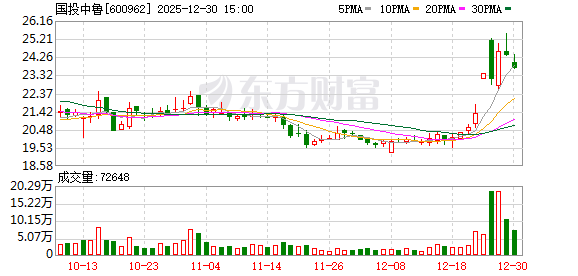
Core Viewpoint - Guotou Zhonglu (600962), a leading company in concentrated fruit and vegetable juice, is acquiring 100% of China Electronic Engineering Design Institute (Electronic Institute) for 6.026 billion yuan, which will enhance its capabilities in the electronic information industry and diversify its business operations [2][3]. Group 1: Acquisition Details - The acquisition involves Guotou Zhonglu purchasing shares from multiple stakeholders, including Guotou Group and the Big Fund Phase II, indicating a comprehensive consolidation of ownership [3]. - The transaction price for the acquisition is set at 6.026 billion yuan, and upon completion, the Electronic Institute will become a wholly-owned subsidiary of Guotou Zhonglu [2][3]. Group 2: Strategic Implications - The Electronic Institute is recognized as a leading enterprise in the electronic information service sector and will provide Guotou Zhonglu with advanced manufacturing services, thereby enhancing its competitive edge in strategic emerging industries [3]. - This acquisition is expected to help Guotou Zhonglu capitalize on opportunities in new infrastructure and urban development, thereby improving its asset scale and profitability [3]. Group 3: Financial Overview - Prior to the acquisition, Guotou Zhonglu reported total assets of 2.814 billion yuan and revenue of 1.987 billion yuan, while the Electronic Institute had total assets of 14.551 billion yuan and revenue of 6.806 billion yuan, indicating that the Electronic Institute's assets are over five times larger than Guotou Zhonglu's [5][6]. - The acquisition is characterized as a "snake swallowing an elephant" transaction, highlighting the significant disparity in size and financial performance between the two entities [5][6]. Group 4: Fundraising Plans - Guotou Zhonglu plans to raise up to 1.726 billion yuan through a private placement to support project construction and supplement working capital [4]. - The funds will be allocated to various projects, including the establishment of key laboratories and the development of digital business platforms [5].


成全国首批试点,济南建起全省首个城市级“数字沙盘”
Qi Lu Wan Bao· 2025-08-01 11:14
Group 1 - The core viewpoint of the article is the progress and initiatives taken by Jinan in advancing new urban infrastructure construction to build a resilient city, as outlined in the implementation opinions released by the Shandong Provincial Government [1][3][4] - Jinan has established the first urban-level CIM platform in Shandong, achieving a full-scale 3D modeling of 1,654 square kilometers, which supports urban management and enhances the city's ability to respond to extreme weather and public health events [1][3] - The "1+3+N" platform system has been formed in Jinan, which includes one data foundation and three new urban construction pilot platforms, enabling intelligent discovery and distribution of 26 urban management issues [3][4] Group 2 - Jinan's new urban construction industry ecosystem is structured as "1+2+15," focusing on three main industrial parks that are expected to achieve a total output value of 7.008 billion yuan by 2024 [3][4] - The city has released a local standard for the development index system of new urban infrastructure construction, establishing the first national development index system for new urban construction [4] - Future plans include the implementation of intelligent municipal infrastructure construction and renovation, with a focus on digital management throughout the entire lifecycle of construction projects [4]
新城建让城市更有韧性
Jing Ji Ri Bao· 2025-04-26 21:52
Core Viewpoint - The article emphasizes the importance of urban resilience as a fundamental indicator of urban development effectiveness, highlighting the shift from large-scale construction to quality improvement and structural adjustment in urbanization [1][2]. Group 1: Urban Development and Resilience - By the end of 2024, China's urban resident population is projected to reach 943.5 million, with an urbanization rate of 67.00%, expected to approach 70% in the next five years [1]. - The transition to a new urbanization strategy focuses on enhancing urban safety resilience, addressing the complex risks posed by climate change, technological revolutions, and changes in population and industry [1][2]. - Urban safety is closely linked to the well-being of residents, with increasing societal expectations for healthier, safer, and more livable cities as urbanization shifts from high-speed to high-quality development [1]. Group 2: Infrastructure and Technological Integration - Infrastructure is described as the "bones" of a city and a critical factor in enhancing urban resilience, with new policies aimed at advancing urban infrastructure construction to support resilience [3]. - The integration of new technologies such as big data, cloud computing, and artificial intelligence is essential for building resilient cities, enabling better risk monitoring and management [2][3]. - The new urban infrastructure is characterized by technology support, data-driven approaches, and intelligent efficiency, which collectively enhance urban resilience [3][4]. Group 3: Systematic Planning and Safety - A systematic approach is necessary for urban resilience, which comprises infrastructure resilience, social resilience, management resilience, and technological resilience [4]. - Safety is a fundamental attribute of new urban infrastructure, necessitating a comprehensive risk management strategy throughout the planning, construction, and management processes [5]. - The article advocates for a holistic design in building resilient cities, ensuring that all aspects of urban development are considered in conjunction with infrastructure and governance [4][5].
“智能化”下半场将至,“聪明的车”如何驶向“智慧的路”和“全球的路”?|直击百人会论坛2025
2 1 Shi Ji Jing Ji Bao Dao· 2025-03-28 10:57
Group 1: Industry Trends and Developments - The automotive industry is evolving into a larger technology integrator and smart terminal, integrating AI, communication technologies, and semiconductor technologies [1] - The 2025 China Electric Vehicle Hundred People Forum focuses on solidifying electrification, advancing intelligence, and achieving high-quality development, with topics including new materials for batteries and new charging models for electric vehicles [1] - The "Vehicle-Road-Cloud Integration" is transitioning from small-scale testing to large-scale demonstration applications, enhancing the operational environment for smart connected vehicles [1] Group 2: Smart City and Infrastructure - The "New Urban Construction" strategy is closely linked to the smart connected vehicle industry, optimizing the operational environment for these vehicles through advanced urban infrastructure [2] - Traditional roads are transforming into smart roads equipped with sensors and intelligent traffic systems, providing real-time traffic data to enhance safety and efficiency for smart connected vehicles [2] - The development of smart transportation relies on vehicle intelligence and vehicle-to-everything (V2X) communication, with a need for a unified national model for autonomous driving training to avoid redundant investments [2][3] Group 3: Globalization and Market Expansion - China's automotive exports are projected to reach 6.41 million units in 2024, a 23% increase year-on-year, with export value rising to $117.4 billion, increasing its share of total exports from 1.7% to 3.3% [5] - The global push for smart connected electric vehicles presents new opportunities and challenges, with a strategic window for China's automotive industry to transition from large to strong [6] - Southeast Asia, particularly Thailand, is becoming a key market for Chinese electric vehicles, with local suppliers seeking to integrate into the supply chain to enhance competitiveness [7] Group 4: Industry Challenges and Innovations - The automotive industry's transition to electrification and intelligence involves systemic changes, including the reconstruction of industry ecosystems and innovation in business models [8] - Establishing collaborative innovation mechanisms across regions, industries, and companies is essential for sustainable development, focusing on optimizing production processes and developing low-carbon materials [8]