
Cloud Infrastructure

Search documents
Do Nebius Mega Deals Increase Customer Concentration Risk?
ZACKS· 2025-12-22 15:56
Core Insights - Nebius Group N.V. (NBIS) has established itself as a significant player in the AI cloud and infrastructure market, driven by high demand for GPU capacity and long-term contracts with major tech companies [1][8] - The company signed two major contracts: one with Microsoft valued between $17.4 billion and $19.4 billion, and another with Meta worth approximately $3 billion over five years [1][8] Demand and Capacity - Demand for Nebius' services continues to exceed supply, with all available capacity sold out each quarter [2] - New capacity is immediately absorbed by customers, indicating strong market demand [2] - Nebius aims to expand to 2.5 gigawatts of contracted power and up to 1 gigawatt of connected capacity by the end of 2026 [2] Revenue Projections - The company expects to achieve an annualized run-rate revenue of $7 billion to $9 billion by the end of 2026, with over half of this target already booked [2] - However, Nebius has revised its full-year revenue outlook to a range of $500 million to $550 million, down from a previous estimate of $450 million to $630 million [3] Capital Expenditure and Financial Outlook - Nebius has increased its capital expenditure guidance for 2025 from approximately $2 billion to around $5 billion [4] - The elevated capital expenditure levels present a risk if revenue growth does not keep pace with capital intensity [4] Customer Concentration Risk - The contracts with Microsoft and Meta increase customer concentration risk, as a significant portion of future revenue growth is expected from these two clients starting in 2026 [5] - The reliance on a small number of large customers could significantly impact Nebius' financial results [5] Competitive Landscape - CoreWeave, Inc. (CRWV) reported a revenue backlog of $55.6 billion, up 271% year over year, driven by long-term agreements with major customers [6] - Alphabet Inc. (GOOGL) is expanding its cloud infrastructure and partnerships, benefiting from collaborations with NVIDIA [7] Stock Performance and Valuation - Nebius shares have increased by 212.3% over the past year, outperforming the Internet – Software and Services industry, which grew by 30.7% [9] - The company's valuation appears overvalued, with a Price/Book ratio of 4.68X compared to the industry average of 3.83X [10]



Down 42% From Its High, Is Oracle the Best AI Growth Stock to Buy in 2026?
The Motley Fool· 2025-12-16 01:00
Core Viewpoint - Oracle's stock has experienced a significant decline, dropping approximately 42% from its 52-week high, but the company's growth potential in artificial intelligence (AI) remains compelling [1]. Financial Performance - Oracle's stock fell as much as 16.5% following its second-quarter fiscal 2026 results, indicating market concerns about its performance [1]. - The company has over $80 billion in non-current notes payable and other borrowings net of cash, reflecting a substantial amount of long-term debt [3]. Competitive Position - Compared to other cloud giants like Amazon, Microsoft, and Alphabet, Oracle has a higher debt load, while these competitors maintain either minimal debt or more cash and marketable securities than debt [4]. - Oracle's strategy involves significant investment in AI infrastructure, which is seen as a high-risk, high-reward approach compared to its competitors who leverage existing cash flows [5]. Growth Strategy - Oracle is in the process of building 72 multicloud data centers that integrate its database services with major cloud platforms, which is expected to enhance performance and reduce costs [8]. - As these data centers are completed, Oracle anticipates an increase in free cash flow (FCF) and a reduction in capital expenditures, allowing for accelerated debt repayment [9]. Valuation and Investment Potential - Oracle's current trading valuation is under 30 times forward earnings, which is considered attractive for a growth stock with potential for accelerated earnings growth [10]. - The company's focus on high-performance computing infrastructure aligns with anticipated future demand, making it a potentially lucrative investment for those with a long-term perspective [10].

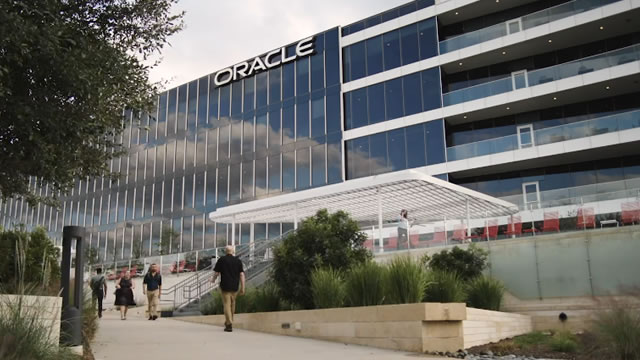
The Biggest Threat to Oracle Stock in 2026 and Beyond
The Motley Fool· 2025-12-15 08:35
Core Insights - Oracle's stock has declined following its earnings report, despite a 54% increase in non-GAAP earnings per share and record remaining performance obligations (RPO) of $523 billion, raising concerns about its aggressive spending strategy on AI infrastructure [1][4][10] Financial Performance - In the latest quarter, Oracle reported $7.98 billion in cloud revenue and $5.88 billion in software revenue, with operating expenses of $3.99 billion, resulting in a high operating margin of 71.2% [4] - Oracle's capital expenditures in the first half of 2025 reached $20.54 billion, leading to negative free cash flow of $10.33 billion, alongside over $1 billion in quarterly interest expenses due to rising debt [6][9] Business Segments - Cloud revenue is Oracle's fastest-growing segment, now accounting for over half of total revenue, while the legacy software business continues to provide reliable earnings [5][9] - Oracle's business model differs from other cloud giants like Amazon and Microsoft, which generate significant free cash flow without relying on debt for funding AI capital expenditures [8][9] Market Position and Future Outlook - Oracle is investing heavily in building 72 multicloud data centers, which raises concerns among investors about its cash burn rate and ability to manage such expenditures [9] - Despite recent stock declines, Oracle's risks are reflected in its valuation, and if it can convert RPO into actual revenue, there is potential for stock recovery [10][11]

Oracle's $300B AI Bet Becomes Bubble Barometer
Youtube· 2025-12-12 21:35
Core Viewpoint - Oracle is facing challenges in fulfilling its large contracts for data center development due to supply chain issues, despite high demand for AI computing resources [1][2][3][4]. Company Insights - Oracle has a significant contract with OpenAI, involving the development of data centers with a capacity of 4.5 gigawatts [1]. - The company is experiencing delays in building data centers, attributed to labor shortages and insufficient electrical infrastructure in Texas [2]. - Despite these challenges, the demand for AI compute resources remains extremely high, with potential clients ready to sign contracts for large data centers [4]. - Oracle is positioning itself as a key player in AI infrastructure, leveraging its strong cash flow from database software to invest heavily in this sector [6][7]. Market Dynamics - The demand for AI infrastructure is insatiable, but there are concerns about the sustainability of this demand in the long term [4]. - Oracle's stock experienced a surge of 7% following a robust earnings report and significant deal announcements, but has since declined by approximately 42% [10][11]. - Investors are questioning Oracle's ability to fulfill its commitments, particularly a $300 billion deal with OpenAI, as other companies also secure similar commitments [11][12].
Wall Street Boosts Astera Labs (ALAB) PT as AI Infrastructure Demand Accelerates
Yahoo Finance· 2025-12-11 12:46
Core Viewpoint - Astera Labs, Inc. (NASDAQ:ALAB) is recognized as a promising AI stock, with an increased price target of $195.00 from H.C. Wainwright analyst Gus Richard, who maintains a "Buy" rating due to the company's growth potential in AI infrastructure [1][3]. Group 1: Growth Potential - The company is expected to experience stronger growth per rack, driven by its Scorpio X revenue and larger switches anticipated in the second half of 2026 [2][3]. - Astera Labs is positioned as the preferred interconnect vendor, with a rapidly expanding revenue opportunity per rack [3]. Group 2: Product Innovations - Future upside for Astera Labs is anticipated from NVLink Fusion and copackaged optics, which are expected to become mainstream in the long term [2][3]. - The NVLink Fusion product is projected to maintain or grow its revenue per AI accelerator chip in 2027 [3]. Group 3: Market Position - Astera Labs specializes in designing, manufacturing, and selling semiconductor-based connectivity solutions tailored for cloud and AI infrastructure [3].

Kevin O'Leary, Jensen Huang Warn US Falling Behind China In Data Center Construction: 'Need To Cut The Red Tape' - NVIDIA (NASDAQ:NVDA)
Benzinga· 2025-12-07 06:12
Core Insights - The U.S. is lagging behind China in data center construction due to lengthy permit approval processes, which can take years, while China is able to build a new data center every month [1][2] - There is a pressing need for the U.S. to reduce bureaucratic hurdles and expedite construction to remain competitive in sectors like AI, energy, and cloud infrastructure [2][3] - The U.S. data centers currently consume a record 5% of total electricity demand, which is straining the power grid [5] Group 1: Industry Challenges - The permitting crisis is a significant barrier to competition in the data center sector, with lengthy approval times hindering development [2][3] - Energy demand is a critical issue, as the rapid growth of data centers is putting additional pressure on the already stretched U.S. power grids [5] Group 2: Comparative Analysis - The U.S. has 4,165 data centers, the highest number globally, compared to only 381 in China, highlighting the scale of U.S. infrastructure [5] - China is enhancing its data center expansion by reducing energy costs by up to 50% through subsidies, which supports domestic chip usage and growth [8]


Texas Pacific Land Corporation (TPL): A Bull Case Theory
Yahoo Finance· 2025-12-05 02:51
Core Thesis - Texas Pacific Land Corporation (TPL) is viewed positively due to its straightforward and highly profitable business model, which involves leasing land for oil and gas operations and selling freshwater [2][3] Company Overview - TPL owns 880,000 acres of land in West Texas, generating approximately $700 million in annual revenue with only about 100 employees [2][3] - The company has impressive operating and net margins of 79% and 64%, respectively, showcasing its extraordinary profitability [3] Stock Performance - TPL's stock price was $853.74 as of December 1st, with trailing and forward P/E ratios of 41.24 and 37.74 [1] - The stock has experienced a nearly 50% decline over the past year after tripling in value in 2024, driven by rising oil prices and its inclusion in the S&P 500 [4] - At its peak, TPL's stock traded at a P/E of 66, but has since corrected to a premium valuation of 46x earnings due to a 20% decline in crude oil prices [4] Future Catalysts - Potential recovery catalysts include a rebound in oil and gas prices, which would increase drilling activity and royalty income [5] - TPL's land and freshwater access, along with proximity to cheap natural gas, position it well to benefit from the anticipated $200 billion investment in data centers by tech giants [5] Previous Analysis - A previous bullish thesis highlighted TPL's strategic acreage acquisitions and strong water royalties, but the stock has depreciated approximately 22.90% since then due to softer oil prices [6] - Despite the stock's decline, TPL's fundamentals remain resilient, with a focus on its exceptional profitability and potential in the data center market [6]

Amphenol Rises 90% in a Year: Should You Still Buy the Stock in 2026?
ZACKS· 2025-12-03 17:06
Core Insights - Amphenol (APH) shares have increased by 90.3% over the past year, significantly outperforming the Zacks Computer & Technology sector's return of 24.1% [1] - The company has experienced strong order growth, which rose by 38% year over year and 11% sequentially, reaching $6.11 billion [1] - Amphenol's diverse portfolio in fiber optic, power, antenna, and sensor technologies is gaining traction in datacom, aerospace, and defense markets [1][7] - The company's acquisition strategy has been a key driver of growth, with over 50 acquisitions in the past decade [8] Performance Comparison - Amphenol has outperformed peers such as TE Connectivity (TEL), Corning (GLW), and Belden (BDC) in the past year, with TE Connectivity and Corning returning 49.9% and 68.9%, respectively, while Belden shares fell by 8.2% [2] Growth Drivers - Rising AI workloads and cloud infrastructure upgrades are increasing demand for high-speed interconnects, benefiting APH's Communications Solutions segment [7] - Electrification in transportation and increased electronic content in medical devices are driving the adoption of Amphenol's cable assemblies and sensor-based systems [7] Acquisition Strategy - Amphenol continues to expand its market reach through targeted acquisitions, including the recent acquisition of Trexon for approximately $1 billion, expected to be accretive to earnings in the first year [8][12] - The pending acquisition of CommScope's Connectivity and Cable Solutions business will enhance Amphenol's interconnect product capabilities in the IT datacom market [10] Financial Strength - Amphenol reported operating cash flow of $1.47 billion in Q3 2025, representing 117% of net income, with free cash flow at $1.215 billion or 97% of net income [11] - Total liquidity at the end of Q3 was $10.9 billion, including $3.9 billion in cash and short-term investments, supporting further acquisitions and shareholder returns [12] - The company returned $354 million through dividends and share buybacks in Q3 2025 and raised its quarterly dividend by 52% to 25 cents per share, effective January 2026 [12] Earnings Estimates - The Zacks Consensus Estimate for Q4 2025 earnings is 92 cents per share, indicating a 67.3% growth year-over-year, with revenues expected to reach $5.84 billion, suggesting a 35.2% increase [13] - For the full year 2025, earnings are estimated at $3.29 per share, reflecting a 74.1% growth from 2024, with revenues projected at $22.74 billion, a 49.4% increase [14] Valuation - Amphenol shares are trading at a premium, with a forward 12-month price-to-earnings (P/E) ratio of 36.10X, higher than the broader sector average of 28.53X and peers like TE Connectivity and Corning [15] - The stock is currently trading above the 50-day and 200-day moving averages, indicating a bullish trend [18] Conclusion - Amphenol's diversified end-market exposure, expanding interconnect portfolio, and effective acquisition strategy support solid growth visibility, justifying its premium valuation [21]


Nebius Group (NasdaqGS:NBIS) 2025 Conference Transcript
2025-12-03 16:57
Summary of Nebius Group Conference Call Company Overview - **Company**: Nebius Group (NasdaqGS:NBIS) - **Market Cap**: $25 billion [2] Industry Context - **Industry**: Emerging cloud infrastructure - **Growth Trajectory**: Nebius is positioned among the fastest-growing players in the tech sector, particularly in cloud infrastructure [2] Key Points and Arguments Company Strengths - **Experienced Team**: Nebius has a team of 1,000 engineers from Yandex, providing a significant advantage in scaling operations and infrastructure [6][7] - **AI Infrastructure**: The company focuses on delivering software and infrastructure tailored for AI engineers, catering to both startups and large enterprises [9] - **Scale and CapEx**: Nebius is one of the few gigawatt-scale organizations in the cloud infrastructure space, emphasizing the importance of scale in meeting market demands [10] - **Custom Solutions**: The company builds its infrastructure from scratch, allowing for tailored solutions that optimize cost and efficiency [11] Full-Stack Vision - **Integrated Platform**: Nebius aims to create a vertically integrated platform that allows AI engineers to manage their entire workflow from training to optimization without needing to switch platforms [13][14] - **Ecosystem Partnerships**: The company plans to partner with ecosystem suppliers to enhance its offerings without needing to own every component [14][15] Customer Base and Market Strategy - **Diverse Customer Segments**: Nebius intends to serve various market segments, with a focus on enterprises, which are expected to account for two-thirds of compute spending in the next three to five years [18][19] - **Anchor Customer**: Microsoft has signed a five-year agreement with Nebius worth up to $19 billion, utilizing Nebius's infrastructure for various business needs, including AI model development [20][21] Demand Environment - **Surge in Demand**: There has been a notable increase in demand for compute resources, with Nebius reporting a 70% quarter-on-quarter increase in pipeline production, generating $4 billion in the last quarter [24][25] - **Market Trends**: Startups and established companies are increasingly focusing on AI, leading to a broader range of use cases and a growing dependence on infrastructure [26] Financial Health and Capital Strategy - **Capital Raising**: Nebius has raised approximately $8.5 billion to date, enabling significant expansion and the establishment of multiple data center locations [40][41] - **Profitability Focus**: The company aims for EBITDA margins of 20%-30% in the medium term, with a focus on operational efficiency and cost management [45][46] Challenges and Bottlenecks - **Infrastructure Delivery**: The complexity of delivering infrastructure in a timely manner is a significant challenge, requiring careful project management and unique configurations [34][36] - **Market Concerns**: There are concerns about whether the current demand for AI infrastructure will sustain, especially in light of recent market corrections [27][39] Future Outlook - **Growth Projections**: Nebius expects to scale its annual recurring revenue (ARR) significantly by 2026, leveraging its experienced team and operational efficiencies [46] - **Long-Term Vision**: The company is committed to expanding its capabilities and customer base while maintaining a disciplined approach to capital management and profitability [44][47] Additional Insights - **AI-First Transition**: Many companies are transitioning to AI-first strategies, indicating a broader market shift that Nebius is well-positioned to capitalize on [26] - **Emerging Use Cases**: The expansion of AI applications beyond traditional models to include voice, video, and imagery is driving demand for Nebius's infrastructure [26]
Microsoft May Be an AI Tech Giant, But It Is Also One of the Safest Stocks to Own Now, According to Wall Street
Yahoo Finance· 2025-12-03 16:43
Industry Overview - Global cloud infrastructure service revenues are projected to exceed 400 billion dollars for the first time in 2025, with third-quarter 2025 spending reaching 107 billion dollars, reflecting a 28% year-over-year increase, driven by the rise in AI workloads [1] Company Analysis: Microsoft - Microsoft is positioned at the center of the AI and cloud infrastructure buildout, leveraging its Azure platform and significant investments in generative AI [2] - The company is recognized as a "quality" stock by Triumvirate, indicating its resilience in a down market, not solely reliant on AI-driven growth [2] Financial Performance - Microsoft reported revenue of 77.7 billion dollars, an 18% increase year-over-year, with operating income rising to 38.0 billion dollars, up 24% [6] - GAAP net income reached 27.7 billion dollars, up 12%, while non-GAAP net income was 30.8 billion dollars, reflecting a 22% increase [6] - GAAP EPS increased to 3.72, up 13%, and non-GAAP EPS rose to 4.13, up 23% [6] Investment Appeal - Microsoft employs a subscription-heavy model, combining cloud services, productivity tools, and AI features, which generates steady, recurring revenue [4] - The stock has appreciated 12% over the past 52 weeks and 14% year-to-date, demonstrating stability amid market volatility [4] - The forward P/E ratio of 31.04x indicates that investors are willing to pay a premium for Microsoft's growth and stability, compared to the sector average of 23.68x [5] - The company offers a 3.40% dividend yield with a payout ratio of 0.70%, having increased dividends for 24 consecutive years, surpassing the tech sector's average yield of 1.37% [5]
