两岸文化交流

Search documents
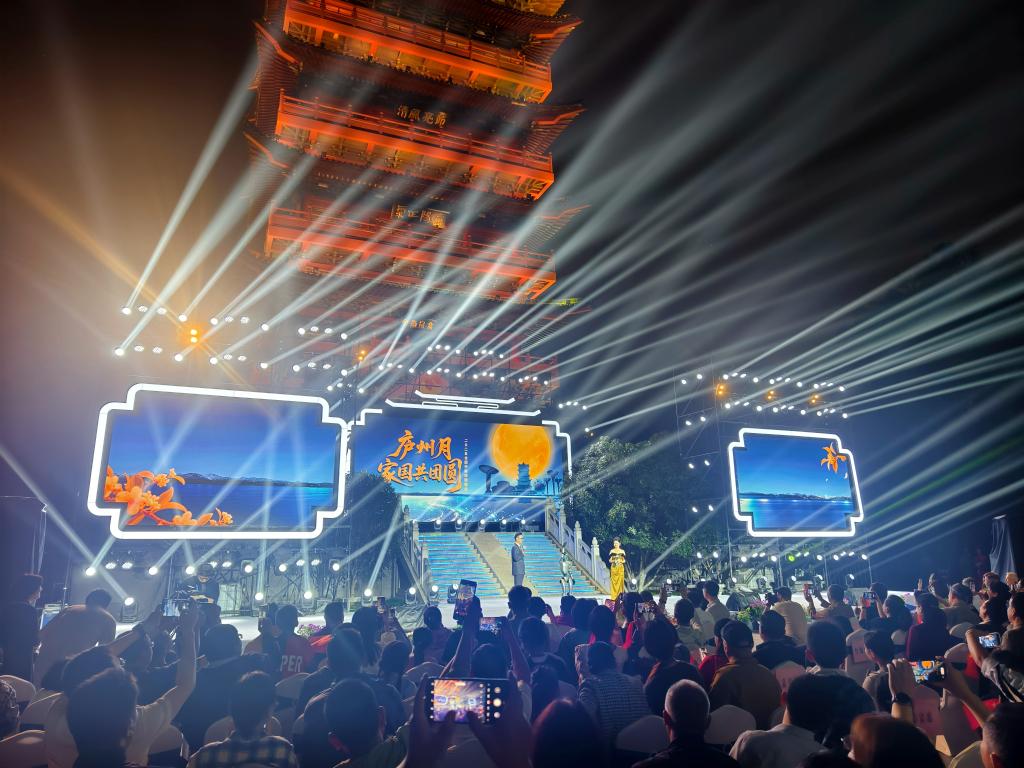
吟诗赏月桂香浓——合肥中秋诗会共话两岸团圆情
Xin Hua Wang· 2025-10-01 03:02
Core Viewpoint - The "Luzhou Moon: Family and Country Together" Mid-Autumn Poetry Gala in Hefei emphasizes the cultural ties between Taiwan and the mainland, showcasing shared history and traditions as a means to foster unity and connection among compatriots from both sides [1]. Group 1: Cultural Exchange - The event featured Taiwanese compatriots reciting classic poetry via video link, expressing deep longing for the mainland, while performers showcased traditional Taiwanese dances, highlighting cultural exchanges [1]. - Hefei has actively promoted cultural exchanges with Taiwan, organizing events such as the Liu Mingchuan and Bao Gong Cultural Festivals, and summer camps for Taiwanese youth, enhancing grassroots interactions [1]. Group 2: Economic Opportunities - Taiwanese entrepreneurs expressed that the rich cultural heritage of the mainland provides a sense of identity and direction, while the rapid technological advancements present new opportunities for collaboration and growth in various industries [1].

走过“八千里路”此情切切
Ren Min Ri Bao Hai Wai Ban· 2025-09-30 21:49
Group 1 - The article highlights the emotional performance of Taiwanese singer Ling Feng at the "Bay Area Rising Moon" 2025 Greater Bay Area Film and Music Gala, where he sang "I Love My Country" [1][4] - Ling Feng, at the age of 80, overcame health challenges, including two strokes, to perform, emphasizing the song's significance as his belief [1][4] - The song "I Love My Country," released in 1983, expresses longing for his homeland and has remained memorable for Ling Feng despite his health issues [1][2] Group 2 - Ling Feng's childhood in Shandong and subsequent move to Taiwan instilled a deep sense of nostalgia and patriotism, which he has passed on to his children [2] - His documentary series "Eight Thousand Miles of Clouds and Moon," aired from 1987 to 2016, documented the changes in mainland China and resonated with many Taiwanese viewers [2][3] - Ling Feng has played a significant role in cultural exchanges between Taiwan and mainland China, establishing a foundation to support artists and promote mutual understanding [3] Group 3 - The article emphasizes the importance of cultural exchange, with Ling Feng describing himself as a "ferryman" for cross-strait cultural interactions [3] - His recent public appearance at the gala marks a significant moment in his career, showcasing his enduring connection to his homeland through music [4][5]
两岸文化交流“摆渡人”凌峰:走过“八千里路”此情切切
Xin Hua Wang· 2025-09-29 19:11
Core Points - The article highlights the emotional performance of Taiwanese singer Ling Feng at the "Bay Area Rising Moon" 2025 film and music gala, where he sang "I Love My Country," expressing deep feelings of patriotism and nostalgia for his homeland [1][6] - Ling Feng, at the age of 80, overcame health challenges to perform, emphasizing the significance of the song as his belief and connection to his roots [1][3] - The article discusses Ling Feng's journey from Shandong to Taiwan and his lifelong dedication to cultural exchange between the two regions, portraying him as a "ferry operator" for cross-strait cultural communication [4][5] Summary by Sections Personal Background - Ling Feng was born in 1945 in Qingdao, Shandong, and moved to Taiwan at the age of 4, growing up in a military dependents' village, which instilled in him a strong sense of nostalgia for his homeland [3] - His father, despite being gravely ill, made a difficult journey back to their hometown, which deeply impacted Ling Feng and motivated him to document and share the stories of their homeland [3] Cultural Contributions - In 1987, Ling Feng began filming the documentary series "Eight Thousand Miles of Clouds and Moon," which aired over 300 episodes, showcasing the culture and landscapes of mainland China and resonating with many Taiwanese viewers [3][4] - He has been actively involved in cultural exchanges, including participating in the CCTV Spring Festival Gala and establishing a foundation to support cultural interactions between Taiwan and mainland China [4][5] Emotional Resonance - Ling Feng's performance of "I Love My Country" at the gala was not just a musical act but a heartfelt expression of his love for his homeland, resonating with the audience and evoking strong emotions [1][6] - The article concludes by emphasizing the impact of his song and presence, which touched the hearts of many Chinese people, reinforcing the importance of cultural ties [7]
台湾青年艺术家盼两岸同好“兰亭集会”
Zhong Guo Xin Wen Wang· 2025-09-18 02:17
Core Viewpoint - The article highlights the importance of cultural exchange between Taiwan and mainland China through art, exemplified by the "Seventh Taiwan-Shandong Masters Exhibition" showcasing works from various regions, emphasizing the shared appreciation for traditional culture and the desire for ongoing artistic dialogue [1][3]. Group 1: Exhibition Overview - The "Seventh Taiwan-Shandong Masters Exhibition" features 150 ink paintings from artists across Shandong, Beijing, and Inner Mongolia, allowing Taiwanese audiences to engage with diverse artistic expressions [1][3]. - The exhibition aims to foster cultural continuity and exchange, with plans for some artworks to be displayed at the Shandong Art Museum in early October [3]. Group 2: Artist Insights - Taiwanese artist Huang Minqin combines traditional landscape painting with floral details, aiming for a deep dialogue between ancient and modern art [3][4]. - Huang's experiences in mainland China, including visits to significant cultural sites, have inspired his artistic development and provided new insights [4]. Group 3: Youth Engagement - The exhibition includes works from young artists, reflecting a commitment to nurturing the next generation of artists and their perspectives on traditional art forms [3][4]. - Young artist Zhan Ronghui emphasizes the continuity of Chinese culture, likening it to the flowing rivers of the Yangtze and Yellow Rivers, symbolizing the enduring nature of cultural heritage [5].
25名台湾艺人被威胁,国台办回应
券商中国· 2025-08-27 05:08
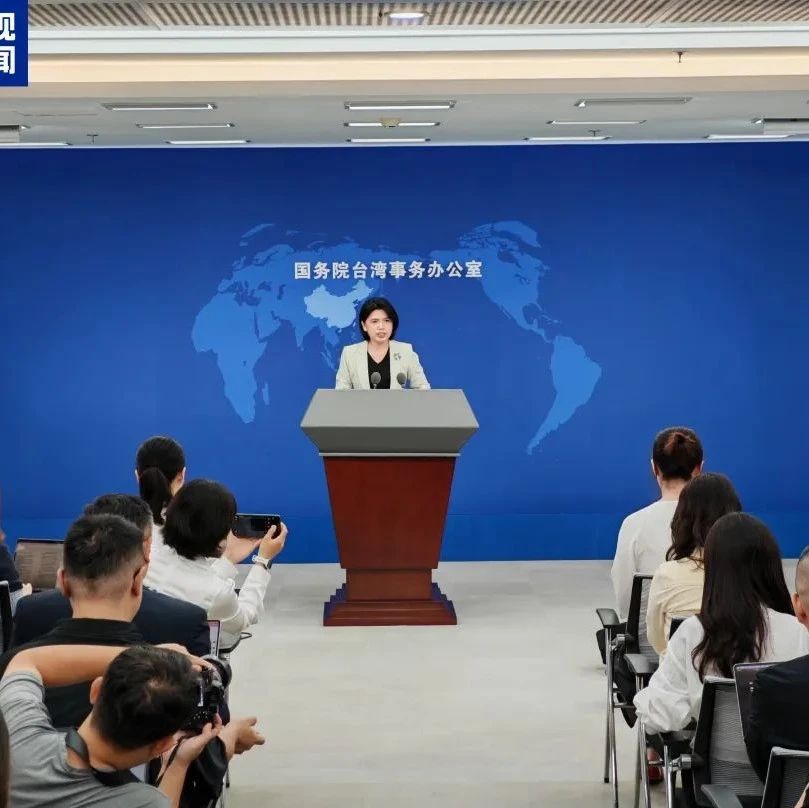
Group 1 - The article discusses the recent actions taken by the Democratic Progressive Party (DPP) authorities in Taiwan against artists who express support for mainland China, indicating a crackdown on cross-strait exchanges [1] - The spokesperson for the Taiwan Affairs Office, Zhu Fenglian, criticizes the DPP for intensifying efforts to obstruct communication between Taiwan and mainland China, which harms the interests of Taiwanese people [1] - Zhu emphasizes that the expression of national identity and opposition to "Taiwan independence" by Taiwanese artists is a legitimate right, and the office will continue to support cultural exchanges and protect their legal rights [1]
25名台湾艺人被威胁,国台办回应
财联社· 2025-08-27 04:50
Core Viewpoint - The article discusses the recent actions taken by the Democratic Progressive Party (DPP) in Taiwan against artists who express support for mainland China, highlighting the negative impact on cross-strait relations and the rights of Taiwanese citizens [3]. Group 1: Government Actions - The DPP has intensified efforts to restrict cross-strait exchanges, particularly targeting Taiwanese artists who engage with mainland China [3]. - The DPP's actions are seen as an attempt to create a narrative of "united front threats" to intimidate those who support cross-strait interactions [3]. Group 2: Public Sentiment - The spokesperson emphasizes that the majority of Taiwanese citizens, including artists, have the right to express their identity as Chinese and oppose "Taiwan independence" [3]. - There is a call for continued support and encouragement of cultural exchanges between Taiwan and mainland China, asserting that the rights of Taiwanese artists should be protected [3].
“穗同心·迎全运”2025广州台湾青年龙舟文化交流活动举办
Guang Zhou Ri Bao· 2025-08-25 01:47
Core Points - The event "Guangzhou-Taiwan Youth Dragon Boat Cultural Exchange" aims to enhance cultural recognition and connection between youth from Guangzhou and Taiwan, promoting the spirit of dragon boat racing as a symbol of cultural heritage and national spirit [1][2] - The event serves as a platform for youth to understand Guangzhou's cultural depth, economic development, and the preparations for the 15th National Games, fostering deeper ties and cooperation between the two regions [2] Group 1 - The event was held on August 24 at the Biaomen River Kayaking Base in Nansha District, featuring participants from Tainan and local Taiwanese youth [1] - Zhang Jiajie emphasized the role of youth in cultural transmission and the importance of dragon boat spirit in showcasing competitive sports and cultural heritage [1] - The event is expected to inject youthful energy into the peaceful development of cross-strait relations [1] Group 2 - Wang Huanqing highlighted the event's role in building a communication platform for youth, encouraging them to embrace the "cross-strait family" concept [2] - The dragon boat race featured six boats competing energetically, creating a vibrant atmosphere of unity and progress among participants and spectators [2]
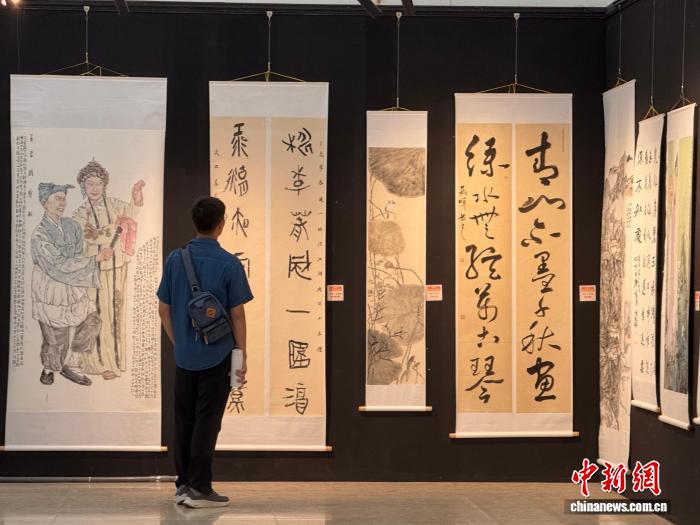
富阳—南投师生书画交流展开幕 墨香浸润文化根脉
Zhong Guo Xin Wen Wang· 2025-08-18 11:44
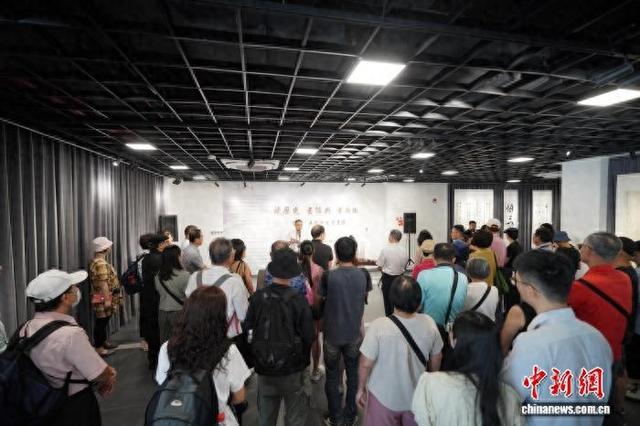
Core Viewpoint - The event "Reading History, Writing Classics, Painting New Maps" serves as a cultural exchange platform between teachers and students from Fuyang and Nantou, emphasizing the importance of understanding Chinese culture and fostering collaboration in education and the arts [1][3]. Group 1: Event Overview - The exhibition features over 100 collaborative works of calligraphy, painting, and photography created by students and teachers from both regions [1]. - The theme of the event aims to explore the roots of Chinese culture, inherit its wisdom, and envision its future development [1]. Group 2: Historical Context - This year marks the 80th anniversary of the victory in the Chinese People's War of Resistance Against Japanese Aggression and the 80th anniversary of Taiwan's liberation, highlighting the historical significance of the event [3]. - The longstanding relationship between Fuyang and Taiwan, initiated in 2011 with the merging of "Dwelling in the Fuchun Mountains," has fostered continuous exchanges in various fields, particularly in youth interactions [3]. Group 3: Future Aspirations - Representatives from Taiwan expressed a desire for more cultural and artistic exchange activities to enhance cooperation and understanding between the two regions [3]. - The hope is that through these exchanges, students from both sides can deepen their understanding and build consensus through cultural resonance [3].
“让更多岛内青年感受戏曲之美”
Ren Min Ri Bao Hai Wai Ban· 2025-08-14 23:40
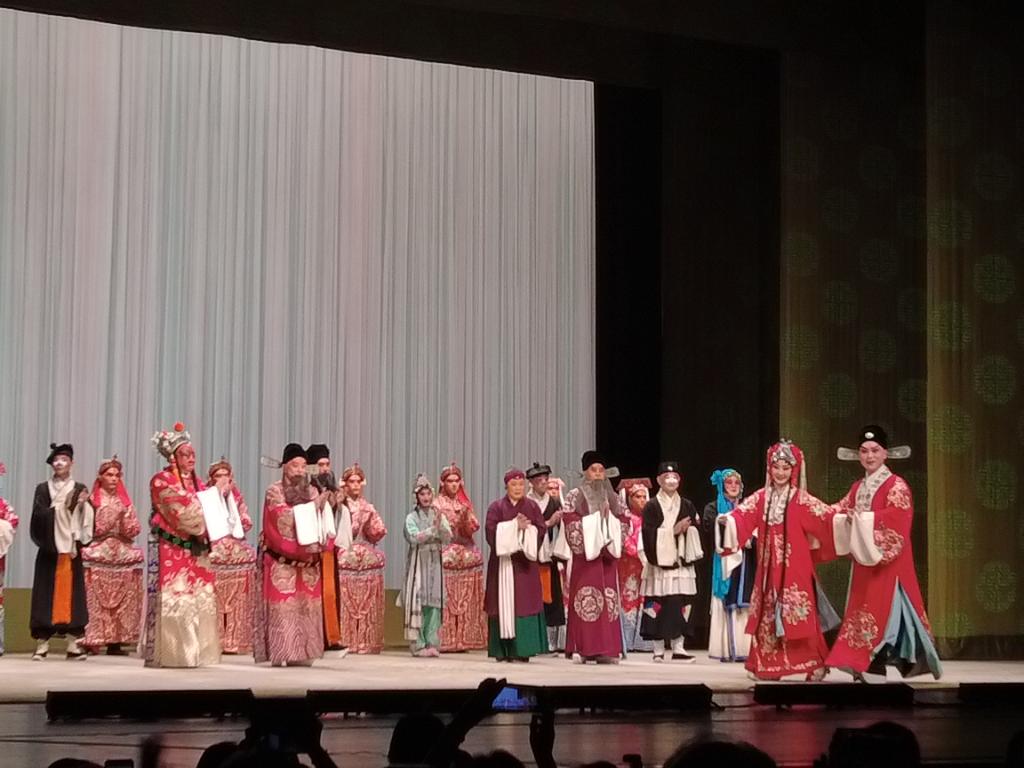
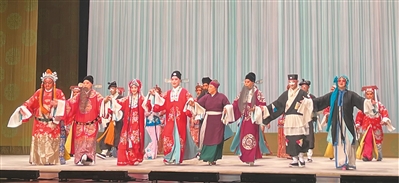
Core Viewpoint - The article highlights the successful performances of traditional Chinese opera in Taipei, showcasing the cultural exchange between mainland China and Taiwan through the art of Peking opera [3][4][8]. Group 1: Performance Highlights - A series of performances featuring renowned Peking opera artists took place in Taipei, attracting enthusiastic audiences who appreciated the classic stories and artistic expressions [3][4]. - The first performance, "Si Lang Tan Mu," sold out ten days in advance, indicating strong demand and interest in traditional Chinese opera [4]. - The second performance, "Feng Huan Chao," showcased the artistic skills of the performers, particularly Li Shengsu, who received applause for her portrayal of the character Cheng Xue'er [4]. Group 2: Cultural Exchange and Education - The event served as a platform for younger performers to learn from established artists, emphasizing the importance of mentorship in preserving Peking opera traditions [6][8]. - The article mentions the ongoing cultural exchange between Taiwan and mainland China, with initiatives to promote Peking opera in schools and community events [8]. - Audience members expressed a desire for more opportunities to engage with traditional arts, highlighting the significance of cultural heritage in both regions [8].
曲终人不散 京韵连两岸——大陆京剧名家赴台演出记
Xin Hua Wang· 2025-08-14 23:09
Core Viewpoint - The article highlights the cultural exchange between mainland China and Taiwan through the performances of renowned Peking opera artists, emphasizing the significance of these events in fostering appreciation for traditional Chinese culture and building connections across the strait [1][6]. Group 1: Performance Details - A group of 80 renowned Peking opera artists, led by Yu Kuiti and Li Shengsu, performed classic plays such as "The Four Sons Visit Their Mother" and "The Red Mane Horse" in Taipei from August 12 to 17, providing a rich cultural experience for local audiences [1][2]. - This event marks a continuation of a 32-year tradition of Peking opera performances in Taiwan, which began in 1993 with the first visit of the National Peking Opera Company [1][2]. Group 2: Cultural Significance - The performances serve as a cultural bridge, allowing Taiwanese audiences to experience the charm of traditional Chinese art, thereby enhancing cultural ties between the two regions [1][6]. - The event is seen as a platform for the transmission of Peking opera, with a focus on nurturing young talent from the China National Academy of Chinese Theatre Arts, showcasing a range of performers from students to seasoned professionals [3][5]. Group 3: Audience Engagement - Taiwanese audiences have shown great enthusiasm for the performances, often waiting after shows for autographs and photos, indicating a strong appreciation for the artists and their craft [8]. - The article notes that both older and younger generations of Taiwanese are increasingly engaging with Peking opera, reflecting a growing interest in traditional culture [8].