
以人民为中心的发展思想

Search documents
从“投资于人”到“丰富人才资源优势”——站在人民立场上想问题、作决策、办事情观察(人民观点)
Ren Min Ri Bao· 2025-12-10 22:54
Core Viewpoint - The essence of modernization is the investment in people, emphasizing the importance of human development alongside economic growth [1][4][9]. Group 1: Investment in People - The concept of "investment in people" is highlighted as a crucial strategy, combining investments in both material and human resources to enhance overall development [1][3]. - The "14 billion people" initiative aims to mobilize the entire society towards modernization, emphasizing the respect and potential of individuals [7][9]. - The integration of human capital development with economic growth is expected to create a virtuous cycle that boosts income and consumption, driving economic expansion [3][4]. Group 2: Economic Development and Infrastructure - Major infrastructure projects, such as the Guizhou Huajiang Gorge Bridge, are designed to improve accessibility and enhance the quality of life for rural populations, thereby stimulating local economies [2][3]. - The development of transportation networks, including bridges and railways, is transforming previously isolated regions into interconnected economic hubs [3][4]. - The focus on urban renewal and the silver economy is expected to generate significant economic opportunities, with estimates suggesting a market size of 7 trillion yuan for the elderly care sector [3][4]. Group 3: Talent and Education - China has a talent pool of 220 million, with over 72 million high-skilled workers, indicating a strong foundation for innovation and economic growth [9][10]. - The enrollment rates in early childhood and higher education have significantly increased, reflecting a commitment to enhancing human capital [9][10]. - The emphasis on STEM education is producing over 5 million graduates annually, positioning China as a leader in innovation [9][10]. Group 4: Social Participation and Community Engagement - The active participation of citizens in community service and urban planning initiatives demonstrates a collective effort towards building a better future [8]. - Programs that cater to cultural and recreational needs in rural areas are enhancing community spirit and social cohesion [8]. - The mobilization of individual efforts is seen as a powerful force in advancing national goals and fostering a sense of belonging among citizens [8][9].
从“投资于人”到“丰富人才资源优势”(人民观点)
Ren Min Ri Bao· 2025-12-10 22:30
Core Viewpoint - The essence of modernization is the investment in people, emphasizing the importance of human development alongside economic growth, which is crucial for achieving common prosperity and enhancing the quality of life for all citizens [1][4][5]. Group 1: Investment in People - The concept of "investment in people" is highlighted as a key strategy, combining investments in both material and human resources to enhance overall development [1][3]. - The focus on human capital development is expected to create a virtuous cycle of increased income, consumption, and economic growth, thereby improving the well-being of the population [3][4]. Group 2: Economic Development and Infrastructure - Major infrastructure projects, such as the Guizhou Huajiang Gorge Bridge, are designed not just for record-breaking achievements but to improve the livelihoods of local residents and stimulate regional economic growth [2][3]. - The development of transportation networks is transforming previously isolated areas into accessible regions, facilitating trade and tourism, which in turn boosts local economies [2][3]. Group 3: Talent Development and Education - China has a significant talent pool, with 220 million individuals in the workforce, including over 72 million high-skilled workers and nearly 20 million scientists and engineers [9][10]. - The enrollment rates in early childhood and higher education have significantly increased, indicating a strong focus on enhancing educational access and quality [9][10]. Group 4: Innovation and Technological Advancement - The country is positioned to lead in global robotics patent applications, accounting for two-thirds of the total, driven by a large number of engineers and researchers [10][11]. - The integration of education, talent, and industry is fostering a new generation of innovative and strategic talents, essential for maintaining competitive advantages in the global market [11].
连云港锻造城管铁军服务城市高质量发展
Xin Hua Ri Bao· 2025-12-10 21:41
Core Viewpoint - The city management team of Lianyungang has achieved remarkable success in the administrative law enforcement competition, winning both team and individual championships, showcasing the effectiveness of their recent reforms and training efforts [1] Group 1: Achievements and Recognition - Lianyungang's city management team won both the team and individual championships at the 2025 Jiangsu Province urban management administrative law enforcement competition, marking their best historical performance [1] - The achievements reflect the city's commitment to building a strong and effective city management team, which has significantly improved law enforcement efficiency and service levels [1] Group 2: Training and Development - The city management department has implemented a comprehensive training system focusing on professionalization, standardization, and modernization, enhancing the capabilities of the law enforcement team [2] - Innovative training methods, such as combining video live streaming with on-site training, have been adopted to ensure uniformity in enforcement standards across various regions [3] Group 3: Community Engagement and Service - The "City Management in Communities" initiative has been successfully implemented in 126 communities, addressing over 500 local issues and receiving positive feedback from residents [4] - The establishment of the "City Heart Volunteer Service Team" has engaged over 260 citizens in urban management, providing more than 300 hours of online service [4] - During the "Su Chao" event, the city management department effectively integrated their responsibilities into the event's management, receiving high praise from the public for their efforts [4]

从五年规划看“中国之治”
Ren Min Ri Bao· 2025-12-09 22:20
Core Viewpoint - The article emphasizes the significance of China's governance model and its successful implementation of five-year plans, showcasing the advantages of the Chinese political system in achieving economic and social development. Group 1: Five-Year Plans and Economic Development - The "15th Five-Year Plan" is a critical period that builds on the achievements of previous plans, reflecting China's progress towards modernization and economic strength [2][14]. - From the "1st Five-Year Plan" to the "14th Five-Year Plan," China has established a comprehensive industrial and economic system, addressing issues like poverty alleviation and improving living standards [2][6]. - The "14th Five-Year Plan" has seen China's GDP reach approximately 140 trillion yuan, contributing around 30% to global economic growth [26]. Group 2: Leadership and Governance - The leadership of the Communist Party of China is highlighted as the primary advantage of the governance system, ensuring effective implementation of five-year plans [3][9]. - The party's strong organizational and execution capabilities have been crucial in mobilizing resources and achieving significant milestones, such as poverty alleviation [8][13]. - The planning process involves extensive public consultation, ensuring that the needs and aspirations of the people are integrated into national policies [19][20]. Group 3: Social Impact and Public Welfare - The focus on improving public welfare is evident in the "15th Five-Year Plan," which emphasizes quality of life and social equity, with over one-third of major indicators related to public welfare [21]. - Initiatives like the establishment of community centers for elderly care reflect the plan's commitment to addressing social issues and enhancing the quality of life for citizens [16][17]. - The approach of integrating public feedback into planning processes demonstrates a commitment to responsive governance that aligns with the people's expectations [22][19]. Group 4: Global Influence and Cooperation - China's five-year plans are positioned as a model for other countries, promoting international cooperation and shared development opportunities [39][41]. - The "Belt and Road Initiative" exemplifies China's strategy to enhance global connectivity and economic collaboration, contributing to mutual benefits for participating countries [38][41]. - The emphasis on sustainable development and shared prosperity in the "15th Five-Year Plan" aims to provide a stable development framework for both China and the global community [41][42].
在发展中保障和改善民生(深学笃行阐释习近平经济思想)
Ren Min Ri Bao· 2025-12-08 22:10
引 言 习近平总书记指出,江山就是人民,人民就是江山。《习近平经济文选》第一卷中的《增进民生福祉, 提高人民生活品质》一文指出"必须坚持在发展中保障和改善民生,鼓励共同奋斗创造美好生活,不断 实现人民对美好生活的向往"。共同富裕是社会主义的本质要求,是中国式现代化的重要特征,在发展 中保障和改善民生是中国式现代化的重大任务。党的十八大以来,以习近平同志为核心的党中央把人民 对美好生活的向往作为奋斗目标,把共同富裕摆在更加重要的位置上,一件事情接着一件事情办,一年 接着一年干,就业、增收、社保、教育、医疗、托育、养老、住房等各项民生事业发展取得显著成效。 一、背景情况 "治国之道,富民为始""为政之道,以顺民心为本,以厚民生为本"。自古以来共同富裕就是我国人民的 一个基本理想,是马克思主义的一个基本目标,也是中国特色社会主义的本质要求,从富民厚生到共同 富裕,中华文明实现了从传统到现代的跨越。实现共同富裕是一个长期的历史过程,等不得也急不得。 改革开放以来,通过允许一部分人、一部分地区先富起来,先富带后富,极大解放和发展了社会生产 力,人民生活水平不断提高。党的十八大以来,以习近平同志为核心的党中央深入贯彻以人 ...
“在中国,我感受到了‘说到做到’的力量” ——访厄瓜多尔可持续世界基金会传播总监梅赛德斯·皮塔
Ren Min Ri Bao· 2025-12-08 22:03
"在我的心中,中国充满了'未来感'——一个以创新、经济腾飞和长远规划闻名的国家。当我真正踏上 这片土地时,它带给我的感受超乎想象。"今年,厄瓜多尔可持续世界基金会传播总监梅赛德斯·皮塔首 次来到中国。谈及这段经历,她感慨道:"这不仅仅是一次出国交流,更是长久愿望的实现。" 初到北京,梅赛德斯立刻被这座现代化都市的活力深深吸引。"干净的街道、文明友好的市民、随处可 见的扫码支付和智慧出行……高水平的社会治理和科技应用令人惊叹。"更令她感到惊喜的,是现代感 十足的北京仍然保留着传统文化的深厚底蕴。 登上长城是梅赛德斯此行最难忘的瞬间之一。"站在那条延绵的'巨龙'之上,触摸斑驳的砖石,敬畏之 情油然而生。长城不仅是中国的象征,更是人类文明的奇迹。"颐和园则给人另一种感受:"湖水清澈, 荷花盛开,亭台楼阁与周围的自然风光浑然一体。园中有不少身着汉服打卡拍照的游客,让我仿佛置身 于历史长河中。现代都市与古老文明和谐共存。" 在梅赛德斯看来,中国式现代化的伟大成就不仅仅体现在林立的高楼大厦上,更体现在中国将经济增长 与普惠包容发展紧密结合。"中国8亿多人实现脱贫,支撑这一巨大成就的是中国教育、就业、社会保障 等系统性举措 ...
厚植为民情怀解决急难愁盼 切实维护社会大局和谐稳定
Zheng Zhou Ri Bao· 2025-12-05 00:41
Group 1 - The core viewpoint emphasizes the importance of addressing public grievances and enhancing the effectiveness of the petition system to ensure social stability and high-quality development [1][2] - The mayor highlighted the need to integrate petition work with urban renewal, improving people's livelihoods, and grassroots governance to align with public sentiment and promote development [2] - There is a focus on developing a legal framework for petition work, ensuring that it operates within the rule of law and adheres to the "Petition Work Regulations" [2] Group 2 - The mayor stressed the significance of understanding and addressing the root causes of public issues, moving from solving individual cases to addressing systemic problems [2] - The approach includes fostering a mindset that seeks solutions and enhancing social governance effectiveness by incorporating public feedback into long-term development strategies [2]
城市设计让首都更加“灵动”
Bei Jing Ri Bao Ke Hu Duan· 2025-12-01 21:46
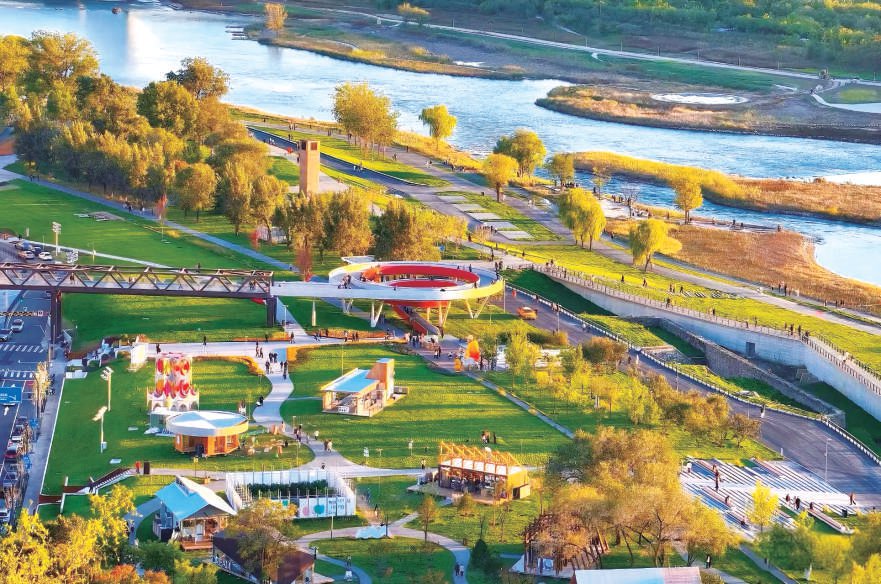
Core Perspective - Beijing has made significant progress in urban development over the past decade, aligning with the 2015 Central Urban Work Conference and the "Beijing Urban Master Plan (2016-2035)" to create a vibrant and innovative cityscape [1][25]. Urban Design and Planning - The urban planning framework established a "one core, one main, one sub, two axes, multiple points, and one area" spatial structure, with urban design playing a crucial role in connecting and implementing this vision [6][25]. - Key areas such as the Olympic Sports Center, Beijing CBD, Lize Financial Business District, and Daxing International Airport Economic Zone have undergone rapid transformation, showcasing unique regional characteristics [6][25]. Historical and Cultural Integration - The core areas focus on the overall protection of the old city, revitalizing traditional hutong spaces while enhancing the historical and cultural landscape [6][25]. - Districts like Xicheng and Dongcheng have emphasized the integration of traditional culture with modern elements, enhancing the cultural and historical significance of areas like the Bell and Drum Tower [6][25]. Functional Optimization - Various districts, including Chaoyang, Haidian, and Fengtai, are optimizing functions through urban stitching, shaping a modern urban image [6][25]. - Daxing District has positioned itself as a "new national gate," enhancing its international hub functions and integrating high-tech industries while promoting ecological restoration [11][25]. Innovative Urban Projects - The Beijing Sub-Center has established a comprehensive urban design that clarifies functional layouts and spatial structures, facilitating multiple key projects in transportation, culture, and industry [17][25]. - The "Two Parks and One River" initiative has become a vital engine for transforming the western Beijing area, integrating water and green spaces into a cohesive urban design [19][25]. Sustainable Development - The Green Heart Forest Park has emerged as a model for urban sustainability, achieving over 85% green coverage and becoming Beijing's first "zero-carbon park" [18][25]. - The city design emphasizes a human-centered approach, enhancing public spaces and improving the quality of life for residents [22][25]. Future Directions - The Beijing Planning and Natural Resources Committee aims to refine the institutional framework for urban design, focusing on micro-level implementation and enhancing the human experience in urban spaces [25].

人民时评:“牵挂”的力量——中国减贫脱贫启示录①
Ren Min Ri Bao· 2025-11-28 09:40
Group 1 - The core message emphasizes the deep concern of leadership for the well-being of the people, particularly in the context of poverty alleviation efforts [1][2][3] - The article highlights the commitment of the Chinese Communist Party to a people-centered development philosophy, showcasing examples of local leaders who have dedicated their efforts to poverty alleviation [3][4] - It discusses the systematic approach to poverty alleviation in China, including the establishment of a comprehensive management system that involves multiple levels of government and societal participation [5] Group 2 - The article presents significant achievements in poverty alleviation, noting that 98.99 million rural poor have been lifted out of poverty, accounting for over 70% of the global reduction in poverty during the same period [6] - It underscores the importance of maintaining the gains achieved in poverty alleviation while ensuring effective integration with rural revitalization efforts [6] - The "14th Five-Year Plan" emphasizes the principle of "people first" as a guiding tenet for economic and social development [6]
“牵挂”的力量(人民时评)
Ren Min Ri Bao· 2025-11-27 22:30
Core Viewpoint - China's poverty alleviation achievements have garnered significant international attention, showcasing a unique path and theoretical framework for poverty reduction that can serve as a model for other countries [1][2][8] Group 1: Achievements in Poverty Alleviation - Since the 18th National Congress, China has made epoch-making progress in poverty alleviation, achieving the goal of lifting 98.99 million rural poor out of poverty, which accounts for over 70% of the global poverty reduction population during the same period [8] - The country has achieved the United Nations' 2030 Sustainable Development Goals for poverty reduction a decade ahead of schedule [8] Group 2: Theoretical Framework and Global Significance - China's unique anti-poverty theory has become a valuable asset for global poverty alleviation efforts, providing insights and experiences for other nations [2][8] - The development practices of China highlight wisdom and offer a guiding light for other countries striving for poverty alleviation [8] Group 3: Governance and Implementation - The poverty alleviation strategy is characterized by a centralized management system that ensures coordinated efforts from the central government to local levels, creating a comprehensive poverty alleviation framework [6] - Significant financial resources have been mobilized, with nearly 1.6 trillion yuan allocated for poverty alleviation, alongside the deployment of over 255,000 village work teams and millions of local officials [6] Group 4: Commitment to Continuous Improvement - The commitment to prevent large-scale poverty recurrence and to effectively connect poverty alleviation outcomes with rural revitalization is emphasized, ensuring ongoing efforts to improve the lives of the people [8] - The "14th Five-Year Plan" prioritizes the principle of "people first" in economic and social development, reflecting a sustained focus on the well-being of the populace [8]