价值投资理念

Search documents
央行金融市场司曹媛媛:投资主体对科技创新债券要树立长期的价值投资理念
news flash· 2025-05-09 09:18
Core Viewpoint - The People's Bank of China emphasizes the importance of supporting technology innovation bonds to align with national technology strategies and enhance financing for impactful technology industries and enterprises [1] Group 1: Recommendations for Market Participants - Issuers should effectively utilize raised funds, focusing on financing support for significant technology industries and enterprises [1] - Investors are encouraged to adopt a long-term value investment approach towards technology innovation bonds, actively participating in market investments and trading to enhance trading activity and share in technology dividends [1] - Intermediary institutions are urged to design bond products that better match the unique financing needs of technology innovation enterprises, improving financial services throughout the entire lifecycle of these companies [1] - Self-regulatory organizations should strengthen information disclosure and risk monitoring to ensure that market-oriented and legal principles are upheld in the technology innovation bond market [1]
杨德龙:《推动公募基金高质量发展行动方案》高屋建瓴 对公募基金行业发展具有重要指导意义
Xin Lang Ji Jin· 2025-05-08 23:34
Core Viewpoint - The China Securities Regulatory Commission (CSRC) has issued an "Action Plan for Promoting the High-Quality Development of Public Funds," emphasizing a shift from scale-oriented growth to investor return-focused strategies, addressing current industry issues [1][2]. Group 1: Key Mechanisms and Changes - The plan introduces significant changes in fund manager compensation, company revenue, and performance evaluation, prioritizing performance over scale [1][2]. - Fund companies are encouraged to focus on long-term investor returns to enhance investor retention [1][2]. - The action plan aims to create a turning point for high-quality industry development within approximately three years, addressing operational philosophy deviations and improving investor satisfaction [1][2]. Group 2: Specific Measures for Implementation - New products will incorporate floating management fee mechanisms, and performance evaluations will emphasize long-term results rather than short-term metrics [2]. - Fund companies must shift their operational philosophy from scale-driven to performance-driven, requiring significant changes in management practices [2]. - The plan calls for establishing reasonable performance benchmarks to prevent distortion and ensure alignment with investor interests [2]. Group 3: Performance Evaluation and Incentives - Fund performance evaluations should focus on investment returns, reducing the weight of scale rankings, and restructuring assessment systems to favor long-term performance [3]. - The current compensation mechanisms, including mandatory co-investment and deferred payments, should be aligned with performance metrics [3]. - Long-term performance rankings (e.g., three to five years) should be prioritized to enhance comparability among different fund types [3]. Group 4: Equity Investment and Product Innovation - The plan aims to significantly increase the weight of equity fund indicators and support the rapid registration of floating fee products [4]. - Fund companies should have clear strategies for equity investment, focusing on product types that meet market demands [4]. - Governance improvements are necessary to prevent undue influence from major shareholders and ensure independent oversight [4]. Group 5: Managerial Constraints and Industry Dynamics - The plan suggests limiting the number of products managed by individual fund managers to enhance focus and effectiveness [5]. - For high-performing funds, size should be controlled to avoid operational difficulties, particularly for funds exceeding 100 billion [5]. - Smaller institutions are encouraged to develop unique products to compete effectively in a market increasingly dominated by larger firms [6].
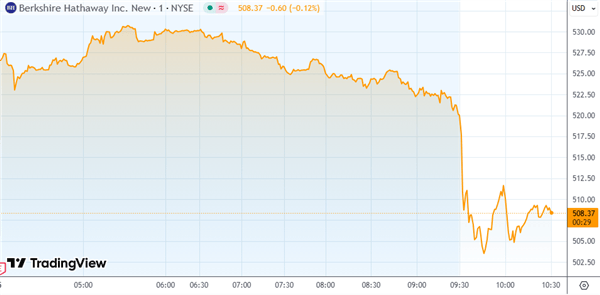
巴菲特将卸任CEO,阿贝尔接棒
Sou Hu Cai Jing· 2025-05-06 02:13
Core Points - Berkshire Hathaway's A and B shares experienced a significant decline of nearly 7%, reaching their lowest levels in two weeks after hitting record highs the previous day [3] - The company's board appointed Greg Abel as the new President and CEO, effective January 1, 2026, marking the end of Warren Buffett's long leadership tenure [3] - Buffett, aged 94, will remain as Chairman of the Board, ensuring continued guidance for the company [3] Group 1 - The announcement of Buffett's succession surprised shareholders, who recognized the historical significance of the moment [3] - Buffett's leadership transformed Berkshire from a struggling textile company into a $1.2 trillion business empire, establishing it as a benchmark for global investors [3] - Analysts noted that the transparent transition process and Buffett's continued involvement provide stability for the company [4] Group 2 - Shareholders expressed confidence in the company's future management and strategic direction, expecting minimal changes due to the established business framework [4] - Berkshire Hathaway owns several cash-flow stable quality enterprises, which supports its operational resilience [4] - Buffett's experience will remain a valuable asset for the management team, particularly in major capital allocation decisions [4]

巴菲特淡化美股波动 警告"贸易不应成为武器"
Huan Qiu Wang· 2025-05-04 00:37
Core Viewpoint - Warren Buffett reiterated his classic investment philosophy at the Berkshire Hathaway annual shareholder meeting, emphasizing that market volatility is a necessary test for long-term investors [1] Group 1: Market Volatility - Buffett stated that recent market fluctuations over the past 30 to 45 days are insignificant, recalling that Berkshire's stock price has experienced three 50% declines in its 60-year history [3] - He expressed that a potential 50% drop in Berkshire's stock would be seen as an excellent investment opportunity, indicating that current market performance does not meet the standard of "significant change" [3] Group 2: Trade Policies - Buffett commented on the U.S. tariff policies, stating that "trade should not be used as a weapon" and emphasized the importance of seeking trade partnerships with other countries [4] - He reiterated that investors need to adopt a different investment mindset if they are concerned about a 15% drop in stock prices, highlighting the necessity to manage emotions in investing [4] Group 3: Investment Strategy and Future Plans - Buffett revealed that Berkshire has a significant cash reserve and may encounter major investment opportunities in the next five years, mentioning a recent consideration of a $10 billion acquisition [4] - He expressed confidence in the Japanese market, planning to hold stocks in major Japanese trading companies for fifty years, and stated that he would not sell even if the Bank of Japan raises interest rates [4] Group 4: Succession Planning - The succession issue was addressed as Buffett announced plans to propose Greg Abel as the new CEO by the end of the year, while he will continue as chairman of the board [4] - Buffett committed to not selling any Berkshire shares, opting instead for gradual donations [4]

50余家A股上市公司触发退市风险警示,市场优胜劣汰加速
Sou Hu Cai Jing· 2025-04-30 08:00
Group 1 - Over 50 A-share listed companies have triggered delisting risk warnings, leading to the imposition of "*ST" labels, which has garnered significant market attention [2] - The primary cause for these delisting risk warnings is the failure to meet financial indicators, particularly companies with negative audited net profits for two consecutive fiscal years and revenues below 300 million yuan [3] - Many companies are facing severe declines in profitability due to continuous business shrinkage, intensified market competition, or reckless diversification leading to cash flow issues [3] Group 2 - The market has reacted strongly, with many companies experiencing sharp declines in stock prices immediately following the delisting risk announcements, indicating investors are fleeing risk [4] - There has been a noticeable shift in market capital flow, with funds moving away from underperforming companies towards stable, high-quality enterprises [4] - Regulatory authorities have adopted a zero-tolerance approach, reinforcing delisting regulations as part of ongoing efforts to enhance market quality and ensure a healthy market ecosystem [5][6] Group 3 - The recent surge in delisting risk warnings reflects the effectiveness of the capital market's purification mechanism, aimed at eliminating "zombie companies" and improving overall company quality [6] - Investors are advised to enhance their risk awareness and professional judgment, focusing on the fundamentals of listed companies before making investment decisions [7] - The evolving regulatory landscape and market dynamics suggest that investors should shift from short-term speculation to long-term value investing, targeting companies with sustainable growth potential [7]