
光互连

Search documents
AI算力集群迈进“万卡”时代,超节点为什么火了?
Di Yi Cai Jing· 2025-07-30 07:59
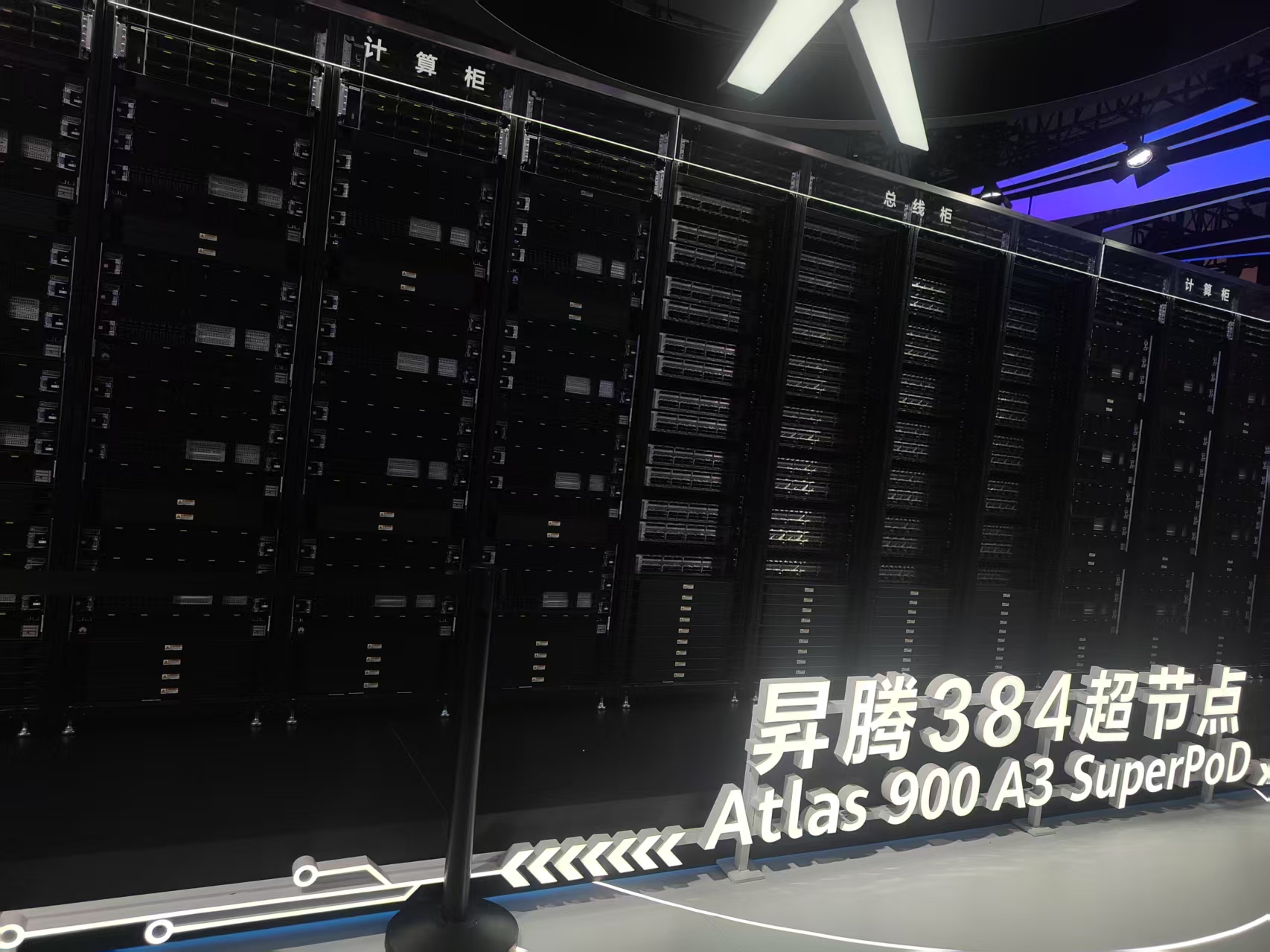
Core Insights - The recent WAIC highlighted the growing interest in supernodes, with companies like Huawei, ZTE, and H3C showcasing their advancements in this technology [3][4][5] - Supernodes are essential for managing large-scale AI models, enabling efficient resource utilization and high-performance computing [3][4][5] - The shift from traditional AI servers to supernode architectures is driven by the increasing complexity and size of AI models, which now reach trillions of parameters [4][5][9] Group 1: Supernode Technology - Supernodes integrate computing resources to create low-latency, high-bandwidth computing entities, enhancing the efficiency of AI model training and inference [3][4] - The technology allows for performance improvements even when individual chip manufacturing processes are limited, making it a crucial development in the industry [4][9] - Companies are exploring both horizontal (scale out) and vertical (scale up) expansion strategies to optimize supernode performance [5][9] Group 2: Market Dynamics - Domestic AI chip manufacturers are increasing their market share in AI servers, with the proportion of externally sourced chips expected to drop from 63% to 49% this year [10] - Companies like墨芯人工智能 are adopting strategies that focus on specific AI applications, such as inference optimization, to compete with established players like NVIDIA [10][11] - The competitive landscape is shifting, with firms like云天励飞 and后摩智能 targeting niche markets in edge computing and AI inference, avoiding direct competition with larger chip manufacturers [11][12][13] Group 3: Technological Innovations - The introduction of optical interconnects in supernode technology is a significant advancement, providing high bandwidth and low latency for AI workloads [6][9] - Companies are developing solutions that leverage optical communication to enhance the performance of AI chip clusters, addressing the limitations of traditional electrical interconnects [6][9] - The focus on sparse computing techniques allows for lower manufacturing process requirements, enabling more efficient AI model computations [11][12]

初创公司,创新光互连
半导体行业观察· 2025-04-27 01:26
来源:内容 编译自 IEEE ,谢谢。 如果将过多的铜线捆扎在一起,最终会耗尽空间——前提是它们不会先熔合在一起。人工智能数据 中心在GPU和内存之间传输数据的电子互连方面也面临着类似的限制。为了满足人工智能的海量 数据需求,业界正在转向更大尺寸、更多处理器的芯片,这意味着在机架内实现更密集、更长距离 的连接。初创公司正在展示 GPU 如何摆脱铜互连,用光纤链路取而代之。 光纤链路对数据中心来说并不陌生。它们使用可插拔收发器在机架之间传输数据,将电信号转换为 光信号。为了提高能源效率,"将光学元件集成到芯片封装中一直是一个梦想,"加州大学圣巴巴拉 分校电气工程教授克林特·肖( Clint Schow)表示。这就是共封装光学器件(CPO),科技巨头们正 在全力支持它。英伟达 (Nvidia) 最近宣布量产一款网络交换机,该交换机使用嵌入在与交换机同 一基板上的光子调制器。"这震惊了整个行业,"加州桑尼维尔初创公司Avicena的首席执行官巴迪 亚·佩泽什基 (Bardia Pezeshki) 表示。 哥伦比亚大学电气工程教授、Xscape Photonics联合创始人Keren Bergman解释说, Nvid ...
