Workflow
贸易关税
icon
Search documents
杨德龙:受美股暴跌影响,下周科技股调整可能会继续 | 立方大家谈
Sou Hu Cai Jing· 2025-10-11 13:09
对于投资者来说,一方面,如果是做短期避险的操作,可以适当进行减仓。另一方面,如果是布局中长 期的机会,不愿意做短期波动方面的操作,也可以做中长期的持有。短期市场的冲击难以避免,而中长 期的表现更取决于这些科技股能否兑现业绩、能否实现投资者的预期。短期市场受到外部因素影响出现 调整,通过减仓避险能够防止市场出现较大幅度回落,而市场大的趋势并没有改变。这轮慢牛长牛行情 背后有深刻的逻辑,在居民储蓄大转移的背景之下,这轮牛市仍然有望延续较长时间。即使从去年924 行情启动算起,这轮行情也可能只是在上半场。 建议对于前期涨幅较大的科技股,可以适当获利了结,降低仓位,同时对中长期的走势保持信心和耐 心。十五五规划政策支持的这些科技领域,未来有望继续出现表现,真正能够实现技术突破的好公司仍 然有望走出向上的走势。目前美股处于历史高位,而A股和港股虽然涨了一波,但估值上仍然处于历史 平均估值之下,市场整体泡沫程度相对可控。特别是传统的白马股,这一轮上涨过程中并没有表现,只 是出现一些局部的泡沫,而部分股票短期涨幅较大。建议投资者保持信心和耐心,同时密切关注贸易和 关税方面的进展。 杨德龙 | 立方大家谈专栏作者 在利空消息 ...
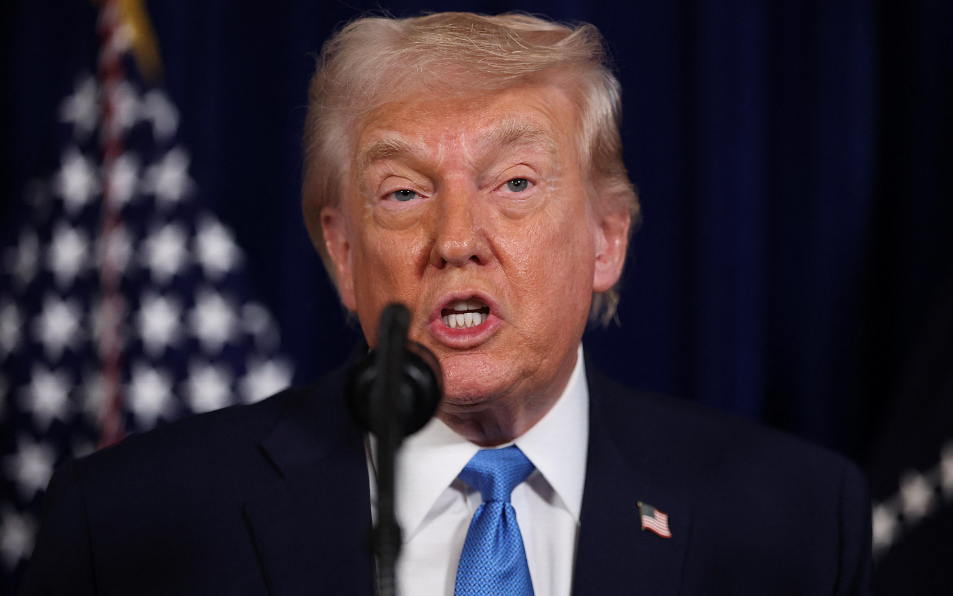
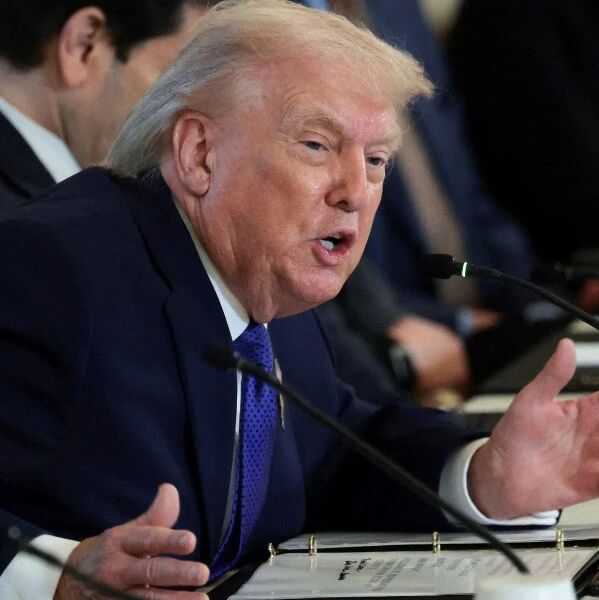
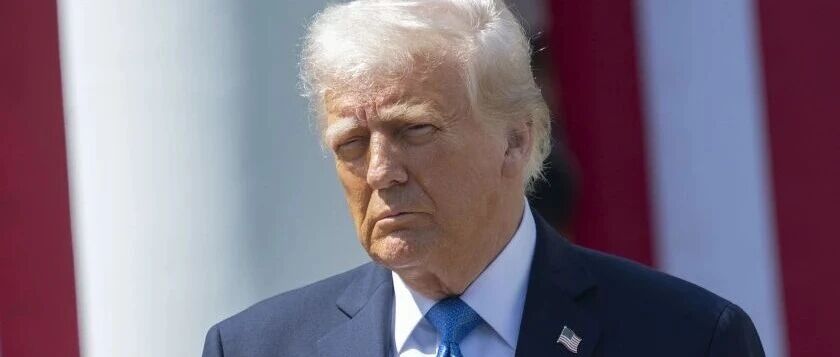
特朗普称或将大幅提高对华关税,美股全线大跌
Nan Fang Du Shi Bao· 2025-10-11 04:59
Market Impact - On October 10, U.S. stock indices closed down across the board, with the Dow Jones Industrial Average falling by 1.9%, the S&P 500 down by 2.71%, and the Nasdaq Composite dropping by 3.56% [2] - The decline was triggered by strong anti-China rhetoric from former President Trump, who suggested significant tariff increases on products entering the U.S. [2] Sector Performance - Major tech stocks experienced significant declines, with Tesla down 5.06%, Amazon down 4.99%, Nvidia down 4.89%, and other tech giants like META, Apple, Microsoft, and Google also seeing losses [2] - Chinese concept stocks were heavily impacted, with the Nasdaq Golden Dragon China Index falling by 6.10%, and individual stocks like NIO and Bilibili dropping over 10% [3] Global Market Reaction - European markets also faced declines, with Germany's DAX down 1.5%, France's CAC40 down 1.53%, and the UK's FTSE 100 down 0.86% [3] - Following the U.S. market close, Trump announced a 100% additional tariff on Chinese goods starting November 1, along with export controls on "all critical software" [3] Economic Outlook - Concerns over deteriorating trade relations and a prolonged U.S. government shutdown have heightened fears of an economic recession [3] - Analysts predict that the U.S. stock market's decline will negatively affect A-shares and Hong Kong stocks, particularly impacting the market opening on the following Monday [4] Investment Strategy - Investors are advised to consider reducing positions to mitigate short-term market shocks, although the overall market trend remains unchanged [4] - Despite the recent downturn, the A-share and Hong Kong markets are viewed as not being in a bubble, with valuations still below historical averages [4]
深夜,中概股突现调整,金价又飙涨
Zheng Quan Shi Bao· 2025-10-07 14:55
Market Overview - US stock indices opened slightly higher, with the Dow Jones down 0.02%, Nasdaq up 0.14%, and S&P 500 up 0.06% [1] - The Dow Jones index is at 46,686.69, Nasdaq at 22,974.37, and S&P 500 at 6,744.56 [2] Semiconductor Sector - Semiconductor stocks continued to rise, with the Philadelphia Semiconductor Index increasing by over 1% [2] - AMD saw a significant increase, rising nearly 24% the previous day and gaining over 5% in the current session, reaching a price of $213.98 [3] Corporate Developments - OpenAI and AMD announced a major agreement for the deployment of up to 6GW of AMD Instinct GPUs over the coming years [3] - Dell's stock rose over 5% as the company projected an annual sales growth rate of 7% to 9% for fiscal year 2030, up from a previous estimate of 3% to 4% [3] - IBM's stock increased by over 3% following a partnership with Anthropic for enterprise-level AI software [4] Memory Chip Market - Memory chip companies, including Micron and SanDisk, saw stock prices rise by over 1% due to price increases in storage chips [4] Chinese Stocks - The Nasdaq Golden Dragon China Index fell by over 0.7%, with companies like Niu Technologies and Miniso dropping more than 4% and 2%, respectively [4][5] Gold Market - Spot gold prices briefly surpassed $3,980 per ounce, currently reported at $3,979 per ounce, while COMEX gold futures exceeded $4,000 per ounce, reaching a high of $4,009 [5] - Goldman Sachs raised its gold price forecast for the end of 2026 to $4,900 per ounce, up from a previous estimate of $4,300, reflecting a significant increase of $600 [7]
巴西对着美国说话挺直接,就问那 40% 的关税能不能撤了。
Sou Hu Cai Jing· 2025-10-07 01:23
Group 1 - The article discusses Brazilian President Lula's direct appeal to the U.S. regarding the 40% tariff imposed on Brazilian exports, emphasizing the need for a resolution to this issue [2][3] - The 40% tariff increase from 10% to 50% has severely impacted Brazilian exporters, particularly in the coffee and orange juice sectors, with coffee farmers reporting losses and orange juice producers unable to sell their products [2][3] - Brazilian aircraft manufacturer Embraer faces significant financial losses due to the tariffs, estimating a loss of 2 billion reais, and highlighting the negative impact on U.S. suppliers as well [3] Group 2 - Lula argues that the U.S. has benefited from a trade surplus with Brazil over the past 15 years, with a cumulative surplus of 410 billion USD, and that the rationale for the tariff is unfounded [3][4] - The tariffs are seen as a political maneuver rather than an economic necessity, with Lula asserting that the U.S. should not interfere in Brazil's judicial matters [4] - Brazil has initiated a complaint to the WTO against the U.S. for violating trade agreements and is exploring new markets to mitigate the impact of the tariffs [4][5] Group 3 - The Brazilian industry is experiencing significant declines in exports, with a reported 52 billion reais loss and a 22.3% drop in aircraft manufacturing exports [5] - The furniture industry is also suffering, with a substantial decrease in orders from the U.S., which accounts for 30% of its market [5] - Lula emphasizes the importance of mutual respect in trade relations, indicating a willingness to negotiate while maintaining Brazil's sovereignty [5]
卢拉与特朗普通电话 要求美国撤销对巴西征收40%关税
Yang Shi Xin Wen· 2025-10-06 15:24
巴西政府还表示,卢拉和特朗普同意尽快举行面对面会晤,地点可能是马来西亚。双方交换了电话号 码,以保持直接沟通。 (文章来源:央视新闻) 巴西政府当地时间10月6日发布公告称,巴西总统卢拉与美国总统特朗普当日举行了电话会议。会谈 中,卢拉要求美国取消对巴西产品征收的40%关税,特朗普任命国务卿鲁比奥继续与巴西副总统阿尔克 明进行谈判。 ...
卢拉与特朗普通电话,要求美国撤销对巴西征收40%关税
Hua Er Jie Jian Wen· 2025-10-06 15:21
市场有风险,投资需谨慎。本文不构成个人投资建议,也未考虑到个别用户特殊的投资目标、财务状况或需要。用户应考虑本文中的任何 意见、观点或结论是否符合其特定状况。据此投资,责任自负。 巴西政府当地时间10月6日发布公告称,巴西总统卢拉与美国总统特朗普当日举行了电话会议。会谈 中,卢拉要求美国取消对巴西产品征收的40%关税,特朗普任命国务卿鲁比奥继续与巴西副总统阿尔克 明进行谈判。巴西政府还表示,卢拉和特朗普同意尽快举行面对面会晤,地点可能是马来西亚。双方交 换了电话号码,以保持直接沟通。(央视) 风险提示及免责条款 ...
Building a Portfolio with Affordable Dividend Stocks: Why Manulife Financial Corporation (MFC) Should Be Considered
Insider Monkey· 2025-10-06 03:09
Core Insights - Artificial intelligence (AI) is identified as the greatest investment opportunity of the current era, with a strong emphasis on the urgent need for energy to support its growth [1][2][3] Industry Overview - Wall Street is investing hundreds of billions into AI technologies, but there is a critical question regarding the energy supply needed to sustain this growth [2] - AI technologies, particularly data centers for large language models, consume vast amounts of electricity, comparable to the energy needs of small cities [2] - The energy demands of AI are expected to increase, leading to potential strain on power grids and rising electricity prices [2] Company Insights - A specific company is highlighted as a key player in the AI energy sector, owning critical energy infrastructure assets that are essential for meeting the anticipated energy spike from AI [3][7] - This company is not a chipmaker or cloud platform but is positioned to benefit significantly from the increasing demand for electricity in the digital age [3] - The company is involved in U.S. LNG exportation and is well-positioned to capitalize on the onshoring trend driven by tariffs [5][7] Financial Position - The company is noted for being debt-free and holding a substantial cash reserve, which is nearly one-third of its market capitalization [8] - It is trading at a low valuation of less than 7 times earnings, making it an attractive investment opportunity compared to other energy and utility firms [10] Market Trends - The company is poised to benefit from the AI infrastructure supercycle, the onshoring boom, and a surge in U.S. LNG exports, all of which are interconnected with the future of clean and reliable power [14] - The influx of talent into the AI sector is expected to drive continuous innovation and advancements, further solidifying the importance of energy infrastructure [12]
BioMarin Pharmaceutical Inc. (BMRN) Hits Its 52-Week Low
Insider Monkey· 2025-10-02 00:08
Core Insights - Artificial intelligence (AI) is identified as the greatest investment opportunity of the current era, with a strong emphasis on the urgent need for energy to support its growth [1][2][3] - A specific company is highlighted as a key player in the AI energy sector, owning critical energy infrastructure assets that are essential for meeting the increasing energy demands of AI technologies [3][7][8] Investment Opportunity - Wall Street is investing heavily in AI, but there is a looming energy crisis as AI technologies require vast amounts of electricity, comparable to the consumption of small cities [2][3] - The company in focus is positioned to benefit from the surge in demand for electricity driven by AI data centers, making it a potentially lucrative investment [3][8] Company Profile - The company owns significant nuclear energy infrastructure assets and is capable of executing large-scale engineering, procurement, and construction projects across various energy sectors [7][8] - It is noted for being debt-free and having a substantial cash reserve, which is nearly one-third of its market capitalization, providing financial stability and growth potential [8][10] Market Position - The company is described as a "toll booth" operator in the AI energy boom, collecting fees from energy exports and benefiting from the onshoring trend driven by tariffs [5][6] - It has an equity stake in another AI-related company, offering investors indirect exposure to multiple growth engines in the AI sector [9][10] Future Outlook - The article emphasizes the importance of investing in AI and energy infrastructure as the future of technology and economic growth, with a call to action for investors to seize the opportunity before significant price increases occur [11][12][13]
贵金属2025年四季度展望:再创新高,强势延续
Nan Hua Qi Huo· 2025-09-30 11:37
Report Industry Investment Rating No relevant information provided. Core Viewpoints of the Report - The upward cycle of gold is not over, and any adjustment in gold prices should be seen as a buying opportunity on dips. The long - term trend of gold is anchored to its monetary attribute, and with the decline of the US dollar currency system, global central banks will increase their gold allocation and reduce their US dollar allocation. [2][120] - In the fourth quarter, central bank gold purchases will act as a support, and investment demand will be the driving force. Investment demand will shift from uncertain hedging transactions to interest - rate cut transactions on the monetary policy side. The target price of London gold in Q4 2025 will move up to the $4000/ounce area, with support at $3600/ounce, and the domestic price will be in the range of 820 - 900 yuan/gram. [2][121] - Silver trends generally follow gold, but there are differences in fundamentals and volatility. The expected operating range of London silver in the fourth quarter is $42 - 50/ounce, and the domestic price is 10000 - 12000 yuan/kilogram. A strategy of buying on dips is recommended. [3][121] Summary According to the Table of Contents 1. Precious Metals Market Review - In 2025, the domestic and foreign precious metals markets continued the bull market in 2024, with strong upward momentum and the relative strength of gold and silver switching. The foreign market outperformed the domestic market, mainly due to the appreciation of the RMB. [9] - In the third quarter, the precious metals market had both synchronization and differentiation. Gold started to break through upwards in late August, silver followed gold's upward movement in late August after a period of adjustment, and platinum's price moved up following gold and silver after a large - scale fluctuation in July. [9] - As of September 19, 2025, all precious metals showed significant price increases compared to the end of 2024, with COMEX silver having the highest increase of 48.05%, and the gold - to - silver ratio decreased by 3.75%. [19] 2. Cross - Market Price Difference Fluctuations Caused by Concerns over US Tariff Policies - From late last year to the first quarter of this year, concerns about the US imposing gold import tariffs led to large - scale arbitrage trading, pushing up the price difference between COMEX gold and London gold. Similar arbitrage transactions have occurred multiple times since November 2024. [23] - In the third quarter of this year, a similar story of cross - market price differences in precious metals repeated. In July, the premium of COMEX futures over London spot in the gold, silver, platinum, and palladium markets widened rapidly due to concerns that the US might extend copper import tariff measures to precious metals. [26] 3. Broad Monetary Expectations Boost Precious Metals Valuation and Investment Demand 3.1 Q3 Real Interest Rate Decline Boosts Gold Valuation - In August, the enhanced expectation of the Fed's interest - rate cut pushed down the 10 - year US Treasury real interest rate, thereby boosting the valuation of gold. Although the non - farm payroll report in early August was far below expectations, the lack of a clear signal from the Fed and the time interval between FOMC meetings limited the increase in precious metals prices. [33] - During the period of increasing interest - rate cut expectations, the US dollar index remained resilient, with a limited depreciation range. Except for the Swedish krona, the other five major currencies depreciated against the US dollar in Q3 2025, with the Japanese yen having the largest depreciation. [35] 3.2 The Fed's Monetary Easing Expectation is the Main Cause of the Decline in Real Interest Rates - The mid - to long - term decline in the real interest rate of US Treasury bonds is mainly driven by the Fed's interest - rate cut and easing expectations. At the September FOMC meeting, the Fed cut interest rates by 25 basis points as expected. Market expectations indicate that the Fed will cut interest rates 1.728 times by the end of this year and 4.317 times by the end of 2026. [41] - The dot - plot of the September FOMC meeting shows that most Fed officials expect the Fed to cut interest rates twice this year and once each in 2026 and 2027. Compared with June, the expected number of interest - rate cuts has increased due to the Fed's shift towards the employment side in balancing inflation and employment. [45] - The Fed's September economic forecast shows an upward revision of the GDP growth rate forecast for 2025 - 2027, a downward revision of the unemployment rate forecast for 2026 and 2027, and an upward revision of the PCE forecast, reflecting the Fed officials' increased concern about inflation and reduced concern about the economy. [49] 3.3 The Fed's Broad Monetary Policy Still Has Room for Strengthening - In the fourth quarter, the US dollar index and the 10 - year US Treasury real interest rate are expected to decline further, which will continue to boost the valuation of precious metals. The Fed's interest - rate cut and possible suspension of balance - sheet reduction are likely to be further strengthened due to increased economic downward pressure in the US and the expected increase in the number of Fed officials favorable to Trump. [51] - The US economy may face greater downward pressure in the fourth quarter and 2026, as evidenced by the cooling of the employment market and the negative impact of trade tariffs on the economy. The Fed's independence is being challenged through institutional and personnel interventions, and there is also the issue of fiscal coercion. [53][63] - Since 2025, global gold investment demand has increased significantly, but there was a net outflow in May. The uncertainty brought about by Trump's policies has increased the demand for gold investment and allocation, but the "90 - day suspension period" of the "reciprocal tariff" policy and the cooling of uncertainty have led to a partial withdrawal of investment demand. [73][75] 4. Central Bank Gold Purchases as a Support - Central bank gold purchases have shown a slowdown this year. From the perspective of the fourth quarter and 2026, central bank gold purchases will act as a support rather than the core driving force for price increases. Central banks are expected to continue to support the gold market, with a concave - shaped demand curve that is more sensitive to price declines. [81] - Long - term, the relationship between central bank gold purchases and gold prices is asymmetric. Central banks are more likely to increase purchases when prices fall, and the inhibitory effect on price increases is weaker than the boosting effect on price increases when prices fall. [82] - As of July, the Polish central bank was the largest gold purchaser in 2025, but its gold purchases slowed down in the second half of the year. Many central banks, including those of Azerbaijan, Kazakhstan, China, and Turkey, maintained a good demand for gold. [89] - According to a survey by the World Gold Council, most central banks expect to increase their gold reserves and reduce their US dollar reserves in the next five years. In the next 12 months, 95% of central banks expect the global central bank's gold reserves to continue to increase. [90][91][98] 5. Precious Metals Market Outlook 5.1 Q4 2025 Outlook: Reaching New Highs and Maintaining Strength - In terms of influencing factors, the decline in the US dollar index and the US Treasury real interest rate has boosted the valuation of precious metals. The rise in the precious metals market in the first half of the year was mainly due to hedging demand and interest - rate cut expectations. Central bank gold purchases provided support, and market supply - demand imbalances in the first quarter also contributed to the rise. Gold entered a consolidation phase from late April to mid - August and broke through after late August. [119] - The demand for silver is weaker than that for gold. Industrial silver demand has stagnated, and the underdeveloped investment channels in the domestic market have limited investment demand. However, the deviation of the gold - to - silver ratio and the small market size of silver have created trading opportunities. [120] - The long - term upward cycle of gold is not over, and any price adjustment should be seen as a buying opportunity. In the fourth quarter, investment demand will shift, and the price of London gold is expected to reach the $4000/ounce area, with support at $3600/ounce. The expected operating range of London silver in the fourth quarter is $42 - 50/ounce. [2][3][121]
贵金属日评-20250930
Jian Xin Qi Huo· 2025-09-30 02:09
Report Information - Report Title: Precious Metals Daily Review - Date: September 30, 2025 - Research Team: Macro Finance Team - Researchers: He Zhuoqiao (Macro Precious Metals), Huang Wenxin (Treasury Bonds and Shipping), Nie Jiayi (Stock Index) [2] 1. Industry Investment Rating - No industry investment rating information provided in the report 2. Core View - Gold prices have started a new upward trend, which may last until the spring and summer of 2026. Investors are advised to maintain a long - position mindset in precious metals trading, and short - hedgers can appropriately reduce their hedging ratios. Due to the Fed's potential interest rate cuts and geopolitical risks, both gold and silver are expected to rise, with silver potentially outperforming gold due to its high volatility. With the approaching of the National Day and Mid - Autumn Festival holidays and numerous key data events, the volatility of precious metals may increase, and investors are advised to reduce their positions [4][5] 3. Summary by Directory 3.1 Precious Metals Market Trends and Outlook 3.1.1 Intraday Market - The risk of the US government shutdown caused the US dollar index to decline for two consecutive days, falling below the 98 mark. News of potential US drone strikes in Venezuela increased risk - aversion demand. London gold broke through the $3,800 per ounce mark, and London silver reached $47.2 per ounce. Gold prices had a sideways consolidation from late April to August to digest high - valuation pressure. The Fed's interest - rate cut expectations have boosted gold prices since early September, starting a new upward trend. This week, attention should be paid to global September PMI, US September non - farm payrolls, and the progress of the US congressional game. With the approaching holidays, investors should reduce positions to avoid risks [4] 3.1.2 Medium - term Market - From late April to early August, London gold fluctuated widely between $3,100 - $3,500 per ounce to digest over - valuation. Since August, the US employment and inflation situation has supported the Fed's restart of the interest - rate cut process. Geopolitical risks also provided safe - haven demand for gold. From late August to early September, various factors drove the gold price to break through $3,500 per ounce. The new upward trend is expected to last until the spring and summer of 2026. Silver, with strong industrial attributes, will also rise with gold and may outperform gold in terms of gains [5] 3.2 Main Macroeconomic Events/Data - Trump announced new import tariffs on October 1, including a 100% tariff on patented drugs and a 25% tariff on heavy trucks, breaking the relatively calm trade situation and causing new uncertainties [17] - US consumer spending in August increased slightly more than expected, with a 0.6% increase. Personal income rose 0.4%, and the savings rate dropped to 4.6%. The PCE price index rose 0.3% month - on - month and 2.7% year - on - year, and the core PCE price index rose 0.2% month - on - month and 2.9% year - on - year [17] - Fed's regulatory vice - chair Bowman reiterated the need for decisive interest - rate cuts and supported balance - sheet reduction and adjustment of the standing repurchase mechanism. Richmond Fed President Barkin believes the risks of a significant increase in unemployment or inflation are limited [18] - OPEC+ may approve an increase in oil production of at least 137,000 barrels per day at its October 5 meeting, but the final decision is yet to be made [18]