Humanoid Robots

Search documents
Does Tesla's Surprise Delivery Surge Mean Its Sales Slump Is Over?
The Motley Fool· 2025-10-08 00:20
Core Insights - Tesla's Q3 deliveries reached a record high of 497,099 vehicles, marking a 7.4% increase year-over-year, defying expectations of declining sales [2][9] - The surge in U.S. sales was likely driven by the elimination of the $7,500 electric vehicle tax credit, prompting consumers to purchase vehicles earlier [3][9] - Despite strong U.S. performance, Tesla's sales in major markets like China and Europe showed declines, indicating potential challenges ahead [5][9] U.S. Market Performance - The U.S. accounted for approximately 40% of Tesla's sales in 2024, with significant incentives leading to increased purchases in Q3 [3] - Other automakers, such as Ford and GM, also reported substantial increases in EV sales, with Ford's EV sales up 19.8% and GM's up 107% [3][4] European Market Challenges - Tesla's sales in Europe appear weak, with significant declines in key markets despite some year-over-year increases in smaller countries [5][6] - In Sweden, Tesla's sales dropped 65% year-over-year, despite a month-over-month increase of 721% due to new sales incentives [7][9] Future Outlook - The outlook for Tesla's sales in Q4 is concerning, with the absence of tax credits and declining European sales likely to impact performance [9] - Despite these challenges, Tesla's stock price has remained relatively stable, indicating that market valuation may be more influenced by future innovations rather than current sales figures [10]


Tesla Will Crush Q3 Delivery Expectations: Here's Why
ZACKS· 2025-09-29 01:56
Core Viewpoint - Tesla shares are experiencing a significant rebound despite previous challenges, with a notable increase of over 30% in September, marking its best performance for the month in history [3][4]. Group 1: Political Involvement and Market Reaction - Elon Musk's political involvement led to backlash, including protests and boycotts against Tesla, which negatively impacted the company's image and sales [2]. - Musk's decision to step back from politics has been positively received by investors, alleviating concerns about his focus on Tesla [4][12]. Group 2: Delivery and Production Expectations - Tesla is expected to report Q3 delivery numbers of approximately 448,000 units, a decrease from 462,890 units delivered in Q3 2024 [9]. - Production expectations for Q3 2025 are set at 470,000 vehicles, with a full-year delivery outlook of around 1.85 million vehicles [10]. Group 3: Factors Supporting Optimism - Anticipation of a 'pull forward' effect in Q3 deliveries due to the expiration of the $7,500 EV tax credit, prompting consumers to purchase before the incentive ends [11]. - The Model Y has been revamped and is expected to drive sales, alongside the growing momentum of Cybertruck production [14]. - China's economic recovery, with a GDP growth of 5%, is likely to boost Tesla's sales in the region, which accounts for about 22% of total revenue [15]. - Recent interest rate cuts are expected to lower monthly costs for potential buyers, further incentivizing purchases [16]. - Tariffs on foreign EVs are making Tesla's US-manufactured vehicles more attractive, enhancing its competitive position [17]. Group 4: Market Sentiment and Valuation - Betting markets predict Q3 Tesla deliveries to be around 505,000, exceeding Wall Street's consensus estimates [18]. - Tesla's stock has shown a historical pattern of significant price increases following periods of stagnation, suggesting potential for future growth [21]. - Despite a high price-to-earnings ratio of 207x, investors remain optimistic due to Tesla's innovative potential in various sectors, including humanoid robots and energy solutions [24].
Humanoid Robots Could Be The BIGGEST INVESTMENT OPPORTUNITY Of Our Lifetime
From The Desk Of Anthony Pompliano· 2025-09-26 21:01
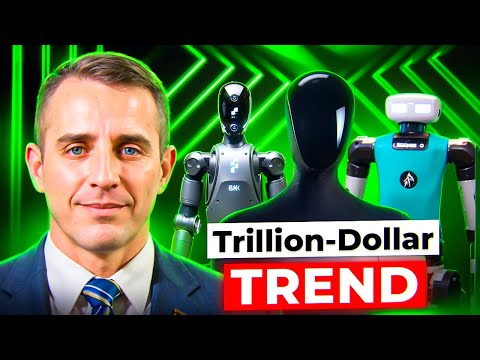
Humanoid Robotics Industry Overview - Humanoid robots are seen as the future of labor, potentially automating roughly 50% of global GDP currently attributed to physical labor [3] - Humanoid robots are considered the "gold standard" for data collection, essential for building and maintaining digital twin models [4] - Big tech companies are actively strategizing and investing in humanoid robots to secure a piece of the data pie that will be generated over the next 20 years [5][6] - The bottleneck for humanoid robot adoption is not manufacturing, but deployment, including strategy, integration, workforce preparation, and inventory digitization [15][16][17] - A 10 to 15-year supply-demand imbalance is expected for humanoid robots in the lowest-hanging fruit use cases, with companies willing to pay $100,000 per bot annually over a four to five-year lifespan [18] Investment Strategies & Market Analysis - The speaker believes that Tesla is the only publicly traded company worth considering in the humanoid robotics space, despite acknowledging issues with the Optimus program [20][21][22] - The US is likely to ban Chinese robots due to data security concerns, creating separate markets for China and the rest of the world [23][24] - The speaker emphasizes the importance of distribution in the humanoid robotics market, believing that companies with commercially viable relationships and the ability to deploy robots at scale will control and own the data [39][40][41] Social Investing Methodology - The speaker advocates for "social investing," which involves detecting changes in the world and connecting them to companies that will be affected before the information becomes widely disseminated [47][48] - The speaker uses various data sources, including TikTok comments, web traffic data, and institutional credit card data, to identify trends and assess consumer demand [55][56][59] - The speaker exits a trade when the information that motivated the investment becomes widely known among other investors [52][53] - The speaker is a concentrated, levered investor, typically holding 5 to 15 names at a time and allocating 5% to 30% of their portfolio to high-conviction trades [68][69]
Shuanglin Co., Ltd.(H0021) - Application Proof (1st submission)
2025-09-23 16:00
The Stock Exchange of Hong Kong Limited and the Securities and Futures Commission take no responsibility for the contents of this Application Proof, make no representation as to its accuracy or completeness and expressly disclaim any liability whatsoever for any loss howsoever arising from or in reliance upon the whole or any part of the contents of this Application Proof. Application Proof of Shuanglin Co., Ltd.* 雙林股份有限公司 (the "Company") (A joint stock company incorporated in the People's Republic of China ...

特斯拉:分析区域交付趋势、全球消费者调查数据以及长期每股收益情景
2025-09-18 01:46
Summary of Tesla Inc. (TSLA) Conference Call Company Overview - **Company**: Tesla Inc. (TSLA) - **Market Cap**: $1.5 trillion - **Industry**: Automotive and Energy Key Points and Arguments Vehicle Delivery Estimates - **3Q25 Delivery Estimate**: Increased to 455K from 430K, above Visible Alpha consensus of 439K [2] - **4Q25 Delivery Estimate**: Increased to 450K from 443K, above Visible Alpha consensus of 441K [2] - **2026 Delivery Estimate**: Remains at 1.865 million, aligned with Visible Alpha consensus [2] Factors Influencing Delivery Estimates - Recent launch of Model Y L contributing to better delivery momentum [2] - Improved consumer survey data indicating higher purchase intent [2] - Anticipation of IRA EV purchase credits expiring on 9/30/25 [2] Stock Performance - Tesla shares up 27% month-to-date compared to S&P 500's 2% increase [3] - Year-to-date performance: Tesla up 5% vs. S&P 500 up 12% [3] Financial Projections - **Revenue Estimates**: - 2024: $97.69 billion - 2025: $93.11 billion - 2026: $109.24 billion - 2027: $129.79 billion [4] - **EPS Estimates**: - 2025: $1.15 (up from $1.08) - 2026: $1.95 (up from $1.85) - 2027: $3.00 (up from $2.90) [4][58] CEO Incentive Plan - Proposed plan could grant CEO Elon Musk an incremental 12% stake in Tesla, valued at approximately $1 trillion, contingent on meeting market cap and operational milestones [17][44] Long-term EPS Scenarios - 2030 EPS could range from approximately $2-$3 to $20, with a middle scenario of $7-$9 [54][55] - Key drivers include automotive deliveries, software revenue, and robotics revenue [55] Energy Business Outlook - Plans to open a third Megapack facility in Texas and a new Megablock product expected to enhance Energy profits [53] - Increased assumptions for Energy segment revenue in 2026/2027 [53] Risks and Considerations - Potential risks include larger vehicle price reductions, increased competition, and operational risks associated with vertical integration [63] - Upside risks involve faster EV adoption and earlier product launches [63] Consumer Sentiment and Brand Performance - Recent improvements in Tesla's net purchase intent and brand trust scores in North America and Europe, though still below historical levels [21][23] - Strong consumer survey scores in China [21] App Download Trends - Increased app downloads in the US correlated with potential growth in deliveries, particularly as consumers rush to purchase before the end of IRA credits [25][31] Conclusion - Tesla's performance and outlook are influenced by various factors including delivery estimates, financial projections, and strategic initiatives in both automotive and energy sectors. The company is positioned for potential growth, but faces significant risks and competition in the evolving market.
X @Herbert Ong
Herbert Ong· 2025-09-16 13:08
Funding & Valuation - Figure 完成超过 10 亿美元融资,投后估值达到 390 亿美元 [1] - 本轮融资由 Parkway Venture Capital 领投,Brookfield Asset Management、NVIDIA、Macquarie Capital、Intel Capital、Align Ventures、Tamarack Global、LG Technology Ventures、Salesforce、T-Mobile Ventures 和 Qualcomm Ventures 等参投 [1] Core Business Focus - Figure 将扩大其人形机器人在家庭和商业运营中的应用 [1] - Figure 致力于构建下一代 GPU 基础设施,以加速训练和模拟 [1] - Figure 将启动 Helix 的高级数据收集工作 [1]
X @Anthony Pompliano 🌪
Anthony Pompliano 🌪· 2025-08-31 15:57
Investment Theme - Humanoid robots are highlighted as a significant investment theme for the next decade [1] - An upcoming discussion on September 12th will delve into investing in humanoid robots [1] - The discussion will cover companies to watch and portfolio strategies related to this theme [1] Event Details - The discussion will be held in NYC as part of the Independent Investor Summit [1] - Chris Camillo will be a featured speaker at the event [1] - Tickets are available at a provided URL [2]
“人产城”共荣:珠海经济特区的进化基因
2 1 Shi Ji Jing Ji Bao Dao· 2025-08-28 04:08
Core Viewpoint - Zhuhai's development history is characterized by a talent-driven approach that has significantly contributed to the city's high-quality growth and industrial advancement [1][11]. Talent Policies and Initiatives - Zhuhai pioneered the "Technology Reward" initiative in 1992, which attracted numerous technology professionals and led to the emergence of a "golden generation" of tech entrepreneurs [3][4]. - The city has implemented a series of policies to support technology talent, including financial rewards and regulations to promote innovation and entrepreneurship [3][4]. Industrial Growth and Transformation - The software industry has been a key focus for Zhuhai, with revenues reaching 55.41 billion yuan in 2024, accounting for approximately 54.84% of the city's electronic information industry [5]. - Zhuhai's strategic emerging industries, including high-end equipment manufacturing and integrated circuits, have shown significant growth, with high-end equipment manufacturing increasing by 35.2% in 2024 [9]. Talent Attraction and Ecosystem - Zhuhai has become a talent-friendly city, with a net inflow of talent ranking among the top three in Guangdong province, attracting around 70,000 new talents in 2024 [12]. - The city hosts 10 universities, including several top-tier institutions, contributing to a robust talent pool and a high level of R&D investment, which reached 4.06% of GDP in 2024 [11][12]. Future Prospects - Zhuhai is positioning itself for a new phase of economic development, focusing on future industries such as artificial intelligence and humanoid robotics, while continuing to enhance its innovation ecosystem [1][9].
X @The Wall Street Journal
The Wall Street Journal· 2025-08-25 21:10
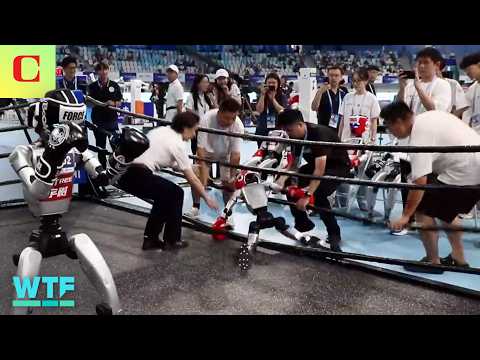
At the World Humanoid Robot Games in Beijing earlier this month, more than 500 humanoid robots competed in both sporting events and real-world tasks such as moving boxes, delivering luggage and cleaning rooms.Read more: https://t.co/I2CnlNs0ID https://t.co/fFDBztQp78 ...
Robot WINS & FAILS from China's World Humanoid Robot Games
CNET· 2025-08-24 12:01
Competition Overview - The first World Humanoid Robot Games featured 500 humanoid robots from 280 teams representing 16 countries, competing in 26 events [1] - The competition included sporting events and scenario-based challenges, such as cleaning and manufacturing tasks [4][8] - Robot combat in the form of kickboxing and soccer matches (3v3 and 5v5) were also part of the lineup [4][6] Key Performers - China's Uni Tree won the most medals with 11, including four golds in running events [2] - Uni Tree's H1 robot excelled in the 400-meter, 1500-meter, 100-meter hurdles, and 4x100 relay [3] - Another Chinese company, Exhumoid, secured the second-highest number of medals with 10, including two golds [3] Industry Implications - The games demonstrate China's commitment to advancing humanoid robot development for various applications [8] - The event allows the public to assess the progress and potential of humanoid robot technology [9] - The competition highlights the importance of real-world testing and transparency in robot development [8][9]