
Artificial Intelligence (AI)

Search documents
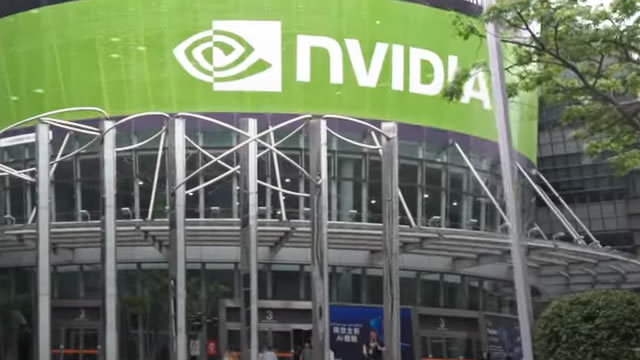
Nvidia Stock Rallied 39% in 2025. This Year, It Could Go Much Higher
The Motley Fool· 2026-01-13 08:02
Core Insights - Nvidia has shown resilience despite facing significant challenges in 2025, rewarding patient shareholders with a notable stock recovery [2][12] - The company experienced a stock decline of 37% initially, followed by a remarkable recovery of 38.9% by year-end, outperforming the S&P 500 [2][12] Group 1: Challenges Faced - Nvidia faced high expectations after two years of triple-digit growth driven by AI demand, leading to investor nervousness about potential growth deceleration [4] - Concerns about competition from DeepSeek's R1 reasoning model and the impact of tariffs on GPU demand were ultimately unfounded [5] - The ban on AI chip sales to China posed a significant hurdle, particularly after the Trump Administration's restrictions on Nvidia's H20 AI chips [6] Group 2: Growth Catalysts - Contrary to expectations, Nvidia's revenue and profits continued to grow, with Q3 fiscal 2026 revenue reaching $57 billion, a 62% year-over-year increase, and EPS rising 67% to $1.30 [7] - The company anticipates Q4 revenue of $65 billion, projecting an 84% growth rate, indicating strong future performance [7][8] - Nvidia's CEO announced that the next-generation AI chips, Vera Rubin, are in full production ahead of schedule, promising a 90% reduction in AI inference costs compared to the current Blackwell chip [9] - CFO confirmed that the previous revenue estimate of $500 billion by the end of 2026 was conservative, suggesting even higher future revenues [10] Group 3: Market Opportunities - Reports indicate that China may soon approve imports of Nvidia's H200 chips for select customers, potentially generating $50 billion in annual sales despite restrictions on sensitive uses [11] - Nvidia's stock is currently attractively priced at less than 25 times next year's expected earnings, suggesting a favorable investment opportunity [12]


What to Watch With AEO Stock in 2026
The Motley Fool· 2026-01-13 07:12
Core Insights - The Sydney Sweeney marketing campaign significantly improved American Eagle's brand perception and sales trajectory, leading to over 50% stock price increase in the past year [1][4][6] - American Eagle's revenue grew by 6% year over year in fiscal Q3, marking a recovery after previous declines, with comparable sales up by 4% [6][8] - The campaign successfully attracted conservative shoppers, contrasting with other brands that faced backlash for not aligning with conservative values [5][4] Financial Performance - American Eagle's stock has increased by 21% over the past five years, primarily due to a surge in the second half of 2025 [2] - In fiscal Q2, the company experienced a 1% year-over-year sales decline, but this reversed in Q3 with positive growth attributed to the Sweeney campaign [7][6] - The company reported a record-breaking Thanksgiving weekend, indicating sustained momentum into fiscal Q4 [8] Segment Performance - The Aerie segment, focusing on body positivity, has shown strong growth, with comparable sales increasing by 11% year over year in fiscal Q3 [10][11] - Aerie's performance was a bright spot during a challenging fiscal Q2, where overall company revenue declined [10] - The American Eagle brand's comparable sales only increased by 1% in Q3, highlighting the need for continued innovation beyond political marketing [9][11] Future Outlook - If American Eagle can maintain its current momentum, it has the potential for solid share price gains in 2026 [12] - The company must continue to innovate and release high-quality clothing lines to ensure positive returns for shareholders [9]


Adaptive Biotechnologies (NasdaqGS:ADPT) FY Conference Transcript
2026-01-13 01:32
Summary of Adaptive Biotechnologies FY Conference Call Company Overview - **Company**: Adaptive Biotechnologies (NasdaqGS:ADPT) - **Founded**: 16 years ago at Fred Hutchinson Cancer Research Institute - **Employees**: Approximately 620 - **Revenue**: Over $275 million - **Cash Position**: Approximately $227 million [2][2] Core Business Segments Minimal Residual Disease (MRD) Business - **Market Size**: Global addressable market of approximately $5.5 billion, with a U.S. clinical testing market of roughly $1.8 billion [4][4] - **Growth Opportunity**: Potential to increase testing frequency from 2.5 to 3.5 tests per patient per year, expanding the U.S. market by approximately $700 million [4][4] - **Technology**: clonoSEQ test measures MRD with high sensitivity and specificity, detecting one cancer cell in every million healthy cells [6][6] - **Regulatory Approval**: clonoSEQ is the only FDA-cleared MRD assay in lymphoid malignancies [6][6] - **Financial Performance**: Achieved positive adjusted EBITDA in 2025, with revenue surpassing $200 million and a 34% cumulative average growth rate from 2021 to 2025 [8][9] Immune Medicine (IM) Business - **Focus**: Understanding T-cell receptor interactions with antigens to drive insights across various diseases [26][26] - **Data Generation**: Mapped over 5 million T-cell receptors to antigens, generating biological insights for autoimmune diseases [27][27] - **Partnerships**: Recent agreements with Pfizer for data licensing and target discovery in rheumatoid arthritis [28][28] Key Financial Metrics - **Revenue Growth**: Clinical revenue grew at a 53% CAGR, with gross margins improving significantly due to lab efficiencies [9][9] - **Testing Volume**: Clinical volumes grew at a 44% CAGR since 2021, with over 100,000 patients tested using clonoSEQ [10][10] - **Average Selling Price (ASP)**: Reached approximately $1,310 in 2025, with a target of $1,700-$1,800 by 2029 [19][20] Growth Drivers Clinical Testing - **Volume Growth Factors**: Blood-based testing, community presence, clinical guideline inclusion, ongoing data generation, and EMR integration [11][11] - **Community Testing**: Expected to grow from 30% to over 35% of clonoSEQ testing [12][12] - **Guideline Updates**: Significant updates in 2025, elevating MRD to a clinical decision-making tool [13][14] Biopharma Partnerships - **MRD Pharma Portfolio**: Anchored in multiple myeloma, with 70% of sequencing revenue from this indication [22][22] - **Diversification**: Tripled bookings in CLL in 2025, with ongoing pipeline development [22][22] Future Outlook - **2026 Expectations**: - Clinical testing volume expected to grow by more than 30% year-over-year [25][25] - ASP projected at approximately $1,400 [25][25] - Continued improvement in sequencing gross margins, targeting over 70% [25][25] - **Cash Burn**: Expected to decrease to between $15 million and $20 million while investing in data generation [30][30] Competitive Landscape - **Market Position**: Adaptive maintains a strong competitive moat in MRD testing, particularly in DLBCL, where it has seen significant growth [41][41][42] - **Emerging Competition**: Natera's acquisition of Foresight Diagnostics highlights the nascent market for NGS MRD testing, but Adaptive's established reimbursement and technology position it favorably [41][41] Conclusion - **Key Takeaways**: - Strengthening leadership in MRD testing for blood cancers - Advancing immune receptor data platform - Expectation of positive adjusted EBITDA and free cash flow for the entire company in 2026 [31][31]

TCS, HCLTech deliver Q3 revenue surprise amid labour cost headwinds
MINT· 2026-01-13 00:01
Core Insights - India's top IT services firms, including Tata Consultancy Services (TCS) and HCL Technologies, reported stronger-than-expected earnings for the October-December quarter despite rising costs due to new wage norms impacting profitability [1][6]. Financial Performance - TCS reported revenue of $7.51 billion, a decrease of 0.4% year-on-year but an increase of 0.6% from the previous quarter, surpassing analyst expectations of $7.43 billion [1] - HCLTech achieved revenue of $3.79 billion, exceeding Bloomberg's estimate of $3.7 billion, with a year-on-year growth of 7.4% and a quarter-on-quarter increase of 4.1% [2] - TCS's net profit was $1.5 billion, up 3.1% year-on-year and 2.7% sequentially, while HCLTech's profit was $537 million, down 1.3% year-on-year but up 10.5% from the previous quarter [5] Revenue Sources - More than half of TCS's incremental revenue came from European clients, who represent nearly 20% of its business, while over 60% of HCLTech's growth was driven by software products and licenses, which account for 11% of its business [5] Cost Pressures - Both companies incurred nearly $350 million in additional costs in the December quarter due to new labor codes, with TCS facing $238 million and HCLTech $109 million, which has pressured their margins [7][20] Demand and Market Outlook - Demand for IT services remains strong, with TCS's CEO noting an improvement in the overall demand environment [8] - HCLTech's CEO expressed caution regarding slow spending growth due to global market uncertainties, although he acknowledged the fundamental demand for technology remains intact [10] Guidance and Future Projections - HCLTech lowered its full-year revenue growth guidance to 4-4.5% from the previous 3-5% [11] - TCS did not provide specific revenue guidance but indicated aspirations for higher international revenue, although the tone has softened compared to previous statements [12] AI and Automation - HCLTech reported $146 million in revenue from AI, totaling $246 million, while TCS reported $1.8 billion in annualized AI revenue, reflecting a 17.3% quarterly increase [17][18] - Both companies emphasized the importance of automation and AI in their future strategies, despite cautious adoption rates [19] Employment Trends - TCS reduced its workforce by 11,151 employees, marking the fourth consecutive year of headcount cuts in the third quarter [21] - HCLTech also reduced its headcount by 261, ending the year with 226,379 employees [21]

US Foods(USFD) - 2025 FY - Earnings Call Transcript
2026-01-12 22:32
Financial Data and Key Metrics Changes - The company has maintained a stable consumer backdrop despite pressures over the past few years, with a focus on market share growth and productivity improvements [3][4] - The company is optimistic about potential tailwinds for 2026, including higher tax refunds and stimulus, which could strengthen consumer sentiment [5] - The company has sustained strong profit growth with a 10% EBITDA and 20% EPS compound annual growth rates (CAGRs) despite industry-related top-line pressures [10][12] Business Line Data and Key Metrics Changes - The company has seen a long-term trend of independent restaurants outperforming chain restaurants, with expectations that this will continue into 2026 [9] - The company has achieved 18 consecutive quarters of market share gains, focusing on new account generation and minimizing lost business [35] Market Data and Key Metrics Changes - The company has noted that the restaurant space remains resilient, with foot traffic holding up better than other consumer sentiment industries [7] - The healthcare segment has shown continuous growth, with the company taking market share and improving margins in this complex category [43][44] Company Strategy and Development Direction - The company is focused on three core customer types: independent restaurants, healthcare, and hospitality, which are the fastest-growing and most profitable segments [16] - The company is investing heavily in its Pronto initiative, aiming for significant revenue growth and expanding its market reach [39][40] - The company is transitioning to a 100% commission compensation model to align incentives and improve sales effectiveness [24][30] Management's Comments on Operating Environment and Future Outlook - Management is optimistic about the future, citing strong momentum and a clear business model focused on profitable segments [51][52] - The company is confident in its ability to continue improving EBITDA margins and overall earnings through process improvements and technology enablements [48] Other Important Information - The company explored a merger with Performance Food Group but decided against it due to concerns over regulatory environment and shareholder returns [19][20] - The company remains focused on tuck-in M&A opportunities to enhance local market scale and delivery efficiency [21][23] Q&A Session Summary Question: How is the company viewing the health of the consumer today? - Management noted that the consumer has been under pressure for the past few years but remains stable, with hopes for improvement in 2026 due to potential economic tailwinds [3][5] Question: What is the company's strategy regarding independent restaurants versus chain restaurants? - Management believes independent restaurants will continue to outperform chains due to their loyal customer base and unique dining experiences [9] Question: How does the company plan to sustain profit growth despite industry pressures? - Management emphasized effective execution and control over factors within their influence, such as market share and productivity [11][12] Question: What are the key initiatives driving margin improvements? - Management highlighted Strategic Vendor Management and technology enhancements as significant contributors to sustainable improvement [47][48] Question: What is the rationale behind the shift to a 100% commission model? - Management explained that the timing is right for this change, as the company has built momentum and is focused on aligning incentives for sales effectiveness [24][30]

US Foods(USFD) - 2025 FY - Earnings Call Transcript
2026-01-12 22:30
Financial Data and Key Metrics Changes - The company has maintained a stable consumer backdrop despite pressures over the past few years, with a focus on market share growth and productivity improvements [3][4] - The company is optimistic about potential tailwinds in 2026, including higher tax refunds and stimulus, which could strengthen consumer sentiment [5] - The company has sustained strong profit growth with a 10% EBITDA and 20% EPS CAGR, attributed to effective execution and control of controllables [10][11] Business Line Data and Key Metrics Changes - The company has seen a long-term trend of independent restaurants outperforming chain restaurants, with expectations for this trend to continue [9] - The company has achieved 18 consecutive quarters of market share gains, focusing on new account generation and minimizing lost business [35] Market Data and Key Metrics Changes - The company is focused on three core customer types: independent restaurants, healthcare, and hospitality, which are the fastest-growing and most profitable segments [15][16] - The company has been investing heavily in its Pronto initiative, projecting revenue growth from $1 billion to $1.5 billion over the midterm [38] Company Strategy and Development Direction - The company is committed to a 100% commission compensation model to align incentives and enhance sales effectiveness [24][30] - The company is focused on tuck-in M&A opportunities to scale in local markets and improve delivery efficiency [22][23] Management's Comments on Operating Environment and Future Outlook - Management expressed confidence in the sustainability of profit growth and the ability to improve EBITDA margins over the long term through process improvements and technology [46][47] - The company is excited about its future, emphasizing its unique position as a pure play food service distributor with a simple business model [50][51] Other Important Information - The company has not seen increased turnover since implementing pilot programs for the new compensation model, indicating positive reception among sales staff [28][34] - The company is actively exploring opportunities in the specialty business, leveraging its distribution capabilities to serve a broader array of customers [41] Q&A Session Summary Question: How does the company view the health of the consumer today? - Management noted that the consumer has been under pressure for the past few years but remains stable, with hopes for improvement in 2026 due to potential economic tailwinds [3][5] Question: What is the company's strategy regarding M&A? - The company is focused on tuck-in acquisitions to enhance local market scale, while remaining open to larger opportunities if they align with strategic goals [22][23] Question: How does the company plan to balance new account growth and penetration growth? - Management emphasized the importance of both new account generation and minimizing lost business, with recent success in net new account growth [36]
Better Nuclear Energy Stock: Cameco vs. Centrus Energy
The Motley Fool· 2026-01-12 20:01
Industry Overview - The nuclear energy market is experiencing a resurgence due to new decarbonization initiatives and increased demand from sectors like cloud computing and AI, leading to the development of smaller, scalable reactors [2] - Geopolitical conflicts in uranium-rich regions have limited global uranium supply, contributing to rising uranium prices [2] Uranium Price Trends - Uranium's spot price has rebounded to $81.55 per pound by the end of 2025, with projections of reaching $100 in 2026 and $140 in 2027 [3] - The International Atomic Energy Agency (IAEA) forecasts a potential increase in global nuclear capacity by up to 2.5 times between 2024 and 2050 [3] Company Profiles: Cameco - Cameco is the second-largest uranium miner globally, responsible for 17% of the world's uranium production in 2024, and has diversified its operations by acquiring a 49% stake in Global Laser Enrichment [4][5] - In 2023, Cameco partnered with Brookfield Asset Management to acquire a 49% stake in Westinghouse Electric, enhancing its position in the nuclear energy sector [6] - Analysts project Cameco's revenue and earnings per share (EPS) to grow at a CAGR of 9% and 89% respectively from 2024 to 2027, despite its stock trading at 67 times this year's earnings [13] Company Profiles: Centrus Energy - Centrus is one of the few U.S. companies licensed to sell low-enriched uranium (LEU) and is the only publicly listed company producing high-assay low-enriched uranium (HALEU) [8] - After restructuring post-bankruptcy, Centrus has focused on importing LEU and enriching HALEU, with significant growth potential as advanced nuclear reactors are developed [10] - Analysts expect Centrus' revenue and EPS to grow at a CAGR of 7% and 2% respectively from 2024 to 2027, with its stock priced at 77 times this year's earnings [14] Comparative Analysis - Cameco is positioned as a more balanced investment in the nuclear market due to its leading market position, diversification, and lower forward price-to-earnings ratio compared to Centrus [15] - While Centrus has potential for growth, it is heavily reliant on government contracts and the development of next-generation reactors, making Cameco a more favorable long-term investment [16]



Will AAPL Stock Rally Again in 2026 to Help Apple Regain the Throne as the Biggest Company?
Yahoo Finance· 2026-01-12 17:07
Group 1 - Apple has a year-to-date (YTD) loss of nearly 5%, underperforming the average S&P 500 Index, similar to last year's gain of only 8% [1] - Alphabet has surpassed Apple to become the world's second-biggest company after Nvidia, indicating a shift in market valuation [2] - Apple was the world's most valuable company until 2024, when it was surpassed by Nvidia and Microsoft, reflecting changes in market dynamics [3] Group 2 - The change in market leadership is attributed to the valuation of artificial intelligence (AI) plays, with Nvidia being the most valuable due to its foundational role in AI infrastructure [4] - Alphabet has improved its AI capabilities with the introduction of Gemini and increased demand for its Tensor Processing Units (TPUs) from third parties, including a significant deal with Anthropic [5]



Wells Fargo Maintains Outperform on Microsoft (MSFT) Despite Lowered Target
Yahoo Finance· 2026-01-12 16:40
Core Viewpoint - Microsoft Corporation (NASDAQ:MSFT) is recognized as a leading software infrastructure stock by hedge funds, with recent price target adjustments reflecting ongoing confidence in its growth potential driven by AI integration [1][3]. Group 1: Analyst Ratings and Price Targets - Wells Fargo has reduced its price target for Microsoft from $700 to $665 while maintaining an Outperform rating, indicating a positive outlook despite the adjustment [1]. - Jefferies analyst Brent Thill reiterated a Buy rating with a price target of $675, emphasizing Microsoft's AI integration as a significant growth driver [3]. Group 2: AI Landscape and Market Trends - Wells Fargo's software-sector update for 2026 highlights AI as a critical focus area, suggesting that investors can find opportunities in infrastructure providers, established companies, and innovation-driven platforms [2]. - The firm anticipates variability in AI adoption trends but believes that fundamental drivers will support performance through 2026 [2]. Group 3: Company Overview - Microsoft develops and sells a diverse range of software, cloud services, devices, and business solutions, catering to both individual users and enterprise customers globally [4].
Lumexa Imaging (NasdaqGS:LMRI) FY Conference Transcript
2026-01-12 16:32
Lumexa Imaging FY Conference Summary Company Overview - **Company**: Lumexa Imaging (NasdaqGS:LMRI) - **Industry**: Healthcare, specifically outpatient imaging - **Market Size**: - Total Addressable Market (TAM): $140 billion, growing at a 4% CAGR - Outpatient sector TAM: $33 billion, growing at a 7% CAGR driven by aging population and advancements in treatment paradigms [7][24] Core Business Insights - **Operational Scale**: - Second largest platform with 188 imaging sites across 13 states [7][8] - Strong joint venture partnerships with notable health systems like Baylor, Scott, and White, Advocate, Intermountain, and UPMC [13][14] - **Revenue Composition**: - Outpatient imaging centers account for over 80% of revenue in EBITDA [11] - Advanced imaging (MRI, CT, PET scans) constitutes 63% of revenue and 36% of volume, indicating a premium revenue model [14][29] Growth Strategy - **De Novo and Acquisition Strategy**: - 44 de novos since inception, with a record of 9 in the past year [9][52] - Targeting 8 to 10 de novos annually moving forward [52] - Fragmented industry presents M&A opportunities, with over 75% of centers not affiliated with top players [46] - **Joint Venture Model**: - Focus on cultural alignment and transparency with health system partners [54] - Joint ventures allow for shared capital expenditures and operational efficiencies [19][54] Financial Performance - **Revenue Growth**: - High single-digit growth in EBITDA and 6%-7% growth in revenue [22][23] - System-wide metrics provide a comprehensive view of financial health, including revenues from unconsolidated joint ventures [21] - **Cost Efficiency**: - Operating costs are significantly lower than hospital outpatient departments (HOPDs), with a 60% cost advantage [19] Technology and Innovation - **AI and Technology Integration**: - Emphasis on partnerships with best-in-breed technology providers to enhance operational efficiency and patient care [34][35] - AI is expected to improve imaging interpretation speed and accuracy, driving operational efficiencies [36] Patient and Physician Satisfaction - **Satisfaction Metrics**: - 97% patient satisfaction rate and 91 Net Promoter Score (NPS), outperforming major brands like Apple and Netflix [12] - 88% referring physician satisfaction rate, highlighting the ease of referrals and quick turnaround times [13][16] Market Position and Future Outlook - **Market Fragmentation**: - Less than 10% market share in a highly fragmented industry, indicating significant growth potential [27] - **Strategic Priorities for 2026**: - Focus on same-store growth, geographic expansion, and maximizing strategic service lines [50][51] - Continued emphasis on leveraging advanced technology to enhance service delivery and operational efficiency [50] Conclusion - Lumexa Imaging is positioned for robust growth in the outpatient imaging sector, leveraging its operational scale, strategic partnerships, and innovative technology to capture market share and enhance patient care. The company aims to maintain a strong focus on execution while exploring new growth avenues through de novos and potential acquisitions.