
全体人民共同富裕

Search documents
习近平总书记这样谈全体人民共同富裕的现代化
Xin Hua Wang· 2025-10-13 02:24
Core Ideas - The essence of common prosperity is deeply rooted in traditional Chinese culture, reflecting the desire for equitable distribution of social wealth and a stable life, which has historically influenced China's development and provides wisdom for promoting common prosperity today [1][4][5] - The Communist Party of China (CPC) has innovatively developed the concept of common prosperity based on national, global, and public sentiments, emphasizing that it is a significant achievement for the CPC and a manifestation of a people-centered development philosophy [1][8] - Under the guidance of Xi Jinping's thought, China has successfully addressed absolute poverty and built a moderately prosperous society, creating favorable conditions for advancing common prosperity [1][11] Group 1: Theoretical Foundations - The idea of common prosperity is a continuation of the traditional Chinese ideal of "Tianxia Datong" (Great Harmony), which reflects the aspiration for a harmonious society and equitable wealth distribution [4][7] - The CPC emphasizes that common prosperity is a fundamental requirement of socialism and a key characteristic of Chinese-style modernization, aiming to enhance the well-being of all people [7][8] Group 2: Practical Implementation - The CPC has committed to ensuring that the benefits of development are shared by all, focusing on high-quality development and the establishment of a coordinated system for initial distribution, redistribution, and third distribution [10][12] - Zhejiang Province is highlighted as a model for common prosperity, with initiatives aimed at reducing disparities and enhancing public services, showcasing successful practices that can be replicated nationwide [13][14] Group 3: Economic and Social Development - The transition from a low-income to a moderately high-income country has laid a solid foundation for common prosperity, with significant improvements in living standards and social welfare [12][14] - The relationship between material and spiritual wealth is emphasized, with both dimensions being crucial for enhancing people's sense of gain and happiness [9][10]


时代专论丨落实以人民为中心的发展思想 不断提高人民生活品质
Zhong Yang Ji Wei Guo Jia Jian Wei Wang Zhan· 2025-10-10 02:56
Core Points - The central theme emphasizes the importance of adhering to the people-centered development philosophy as a fundamental principle for building a modern socialist country [3][4][5] Group 1: People's Centered Development Philosophy - The philosophy of putting people at the center is a major principle that must be grasped in the comprehensive construction of a modern socialist country [3][4] - This principle is rooted in the Party's fundamental purpose and the essential goals of China's economic and social development [4][5] - The fifth volume of "Xi Jinping: The Governance of China" includes significant articles that elaborate on this philosophy, such as "Chinese-style Modernization, with People's Livelihood as a Priority" [4] Group 2: Historical Experience and Achievements - The Party has consistently placed the interests of the people above all else since its establishment, demonstrating a commitment to serving the people [5][6] - Significant achievements include winning the battle against absolute poverty and building a moderately prosperous society, which reflects the Party's dedication to the people's interests [5][6] - The Party's historical experiences affirm its identity as a people-centered party, striving for the fundamental interests of the people [5][6] Group 3: Future Goals and Commitments - The Party's eternal pursuit is to benefit the people, with a focus on improving their quality of life and meeting their growing needs [6][7] - The goal is to ensure that the fruits of development are shared by all, emphasizing the importance of common prosperity [10][11] - The Party aims to address the most pressing issues concerning people's livelihoods, ensuring that modernization benefits all citizens [12][13] Group 4: Education and Employment - The development of a high-quality education system and the promotion of educational equity are essential for social fairness [13][14] - Employment is prioritized as a fundamental aspect of people's livelihoods, with strategies aimed at achieving high-quality and sufficient employment [14] - A multi-layered social security system is being established to provide a safety net for the people, ensuring stability and security [15] Group 5: Health and Population Development - The health of the people is prioritized as a key indicator of national prosperity, with ongoing efforts to improve health policies [16] - The concept of "high-quality population development" is introduced to support modernization, focusing on enhancing the overall quality of the population [16] - Strategies are being implemented to address aging populations and ensure sustainable development [16]

“要紧紧抓住高质量发展这个首要任务,全面推进中国式现代化”
Ren Min Ri Bao· 2025-09-19 01:47
Group 1 - The core viewpoint emphasizes that high-quality development is the primary task for building a modern socialist country, focusing on meeting the people's growing needs for a better life [1][2] - High-quality development is defined as development that embodies innovation, coordination, green practices, openness, and sharing, aiming to improve the quality of life for citizens [1][2] - China's innovation index has risen to the 10th position globally, and it is recognized as the fastest country in improving air quality, with a per capita GDP of 95,749 yuan [2] Group 2 - The goal of high-quality development is to ensure that the people's aspirations for a better life are met, with a focus on improving living standards and addressing basic needs [3][7] - Xi Jinping has highlighted the importance of addressing issues that hinder high-quality development, such as social equity, public welfare, and community needs [4][6] - The concept of common prosperity is identified as an essential characteristic of Chinese-style modernization, with regional coordinated development being a necessary requirement to achieve this goal [5] Group 3 - The current challenges in promoting high-quality development include unbalanced and insufficient development, particularly between urban and rural areas [6] - Guangdong province has initiated the "Hundred Thousand Project" to address regional disparities and promote economic development in less developed areas [6] - The focus on improving education, elderly care, and opportunities for youth reflects the people's fundamental desires for a better life [7]
总书记的人民情怀 | “要紧紧抓住高质量发展这个首要任务,全面推进中国式现代化”
Ren Min Ri Bao· 2025-09-19 00:07
Core Points - High-quality development is the primary task for building a modern socialist country, emphasizing the need to fully promote Chinese-style modernization [1] - High-quality development aims to meet the growing needs of the people, embodying new development concepts, with innovation as the primary driving force [2] - The path to high-quality development includes addressing public needs, improving living standards, and ensuring sustainable ecological environments [3] - The essence of Chinese-style modernization is common prosperity for all people, with regional coordinated development as a necessary requirement [6] Group 1 - High-quality development is defined as development that meets the people's needs and reflects new development concepts, with innovation, coordination, green practices, openness, and sharing as key elements [2] - The government is focused on improving people's lives through technological innovation and addressing ecological concerns, with GDP per capita reaching 95,749 yuan [3] - The emphasis on common prosperity and regional coordination highlights the need for balanced development across urban and rural areas [6] Group 2 - Current challenges in promoting high-quality development include unbalanced and insufficient development, particularly between urban and rural areas [7] - Guangdong province has initiated the "Hundred-Thousand-Ten Thousand Project" to address these disparities and enhance rural economic development [8] - The government aims to fulfill the people's aspirations for better education, elder care, and development opportunities, reflecting a commitment to improving living standards [8]
“要紧紧抓住高质量发展这个首要任务,全面推进中国式现代化”(总书记的人民情怀)
Ren Min Ri Bao· 2025-09-18 22:12
Core Viewpoint - High-quality development is the primary task for building a modern socialist country, emphasizing the need to meet the growing demands of the people and embodying new development concepts [1][2]. Group 1: Definition and Importance of High-Quality Development - High-quality development is defined as development that meets the people's needs, driven by innovation, characterized by coordination, green practices, openness, and sharing [1]. - The focus on high-quality development aims to improve people's livelihoods, with significant achievements in poverty alleviation and economic growth, as evidenced by a per capita GDP of 95,749 yuan [2]. Group 2: Pathways to Achieve High-Quality Development - A series of practical requirements have been outlined, including addressing public needs, enhancing ecological sustainability, and ensuring that technological innovation benefits the populace [2][4]. - The government is urged to tackle issues that hinder high-quality development, such as social equity, public service improvement, and urban-rural integration [4][6]. Group 3: Common Prosperity and Regional Coordination - Common prosperity is identified as the essence of Chinese-style modernization, with regional coordinated development being essential for achieving this goal [5]. - The government has recognized the imbalance in development, particularly between urban and rural areas, and is implementing strategies to promote balanced growth across regions [6]. Group 4: Commitment to People's Well-Being - The overarching goal of high-quality development is to enhance the quality of life for citizens, ensuring access to education, healthcare, and opportunities for all [7].
踏遍山海,解码中国发展新图景
Zhong Guo Qing Nian Bao· 2025-09-06 23:18
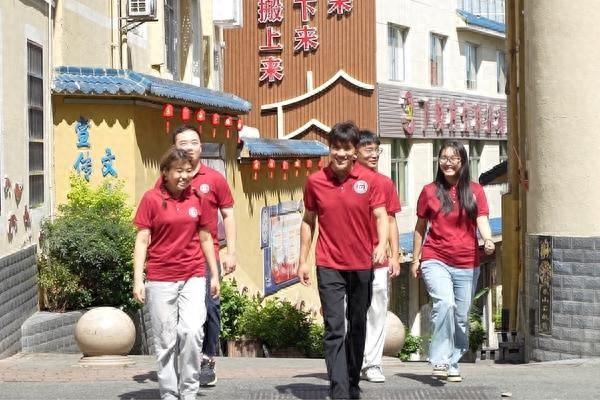
Group 1 - The article highlights the role of youth in understanding and contributing to China's modernization through practical activities and community engagement [2][3][5] - The construction of the Pinglu Canal Youth Hub incorporates innovative ecological solutions, such as fish passages and animal migration bridges, reflecting a balance between material and spiritual civilization [5][6] - Various universities are organizing summer practice teams to explore themes of rural revitalization, technological advancement, and cultural heritage, showcasing the practical implications of China's modernization [6][7][10] Group 2 - Students from different regions are gaining insights into the diverse expressions of modernization in China, particularly through interactions with local communities and industries [7][10] - The article emphasizes the importance of understanding regional disparities in development and the collaborative efforts needed for achieving common prosperity across different areas [10][11] - Practical experiences are leading students to adjust their career aspirations, with many choosing to engage in grassroots governance, scientific research, or cultural preservation [11][12]
大有大的担当,经济大省如何挑大梁
Ren Min Ri Bao· 2025-08-26 02:35
Group 1 - The core viewpoint emphasizes the importance of major economic provinces as "ballast stones" for stabilizing the national economy and driving growth, as highlighted by Xi Jinping's remarks on their responsibilities in achieving the "14th Five-Year Plan" goals [2][3] - Major economic provinces account for over 60% of the national economic total, making their performance critical to the overall development landscape [2][3] - The urgency of the mission is underscored by the need for these provinces to act decisively and seize opportunities to enhance their contributions to national economic stability [3][4] Group 2 - Key focus areas for major economic provinces include promoting technological and industrial innovation, advancing deep reforms and high-level openness, implementing national strategies, and demonstrating efforts towards common prosperity [4][5] - Economic provinces are encouraged to balance overall strategic goals with local conditions, ensuring that their development aligns with national needs while leveraging their unique strengths [7][8] - The integration of regional strengths with national objectives is essential for fostering growth and stability across the broader economy [8][9] Group 3 - Major economic provinces are expected to exert significant influence on regional and national development, acting as leaders and drivers of growth [9][10] - Collaborative efforts among provinces are highlighted, showcasing how they can support each other and share resources to enhance overall economic performance [11][12] - The commitment to improving living standards and promoting common prosperity is a critical aspect of the responsibilities of major economic provinces [12]
中国式现代化是全体人民共同富裕的现代化
Ren Min Ri Bao· 2025-08-06 00:19
Group 1 - The core message emphasizes the importance of achieving common prosperity for all people as a fundamental goal of the Communist Party of China, which is essential for modernization and the well-being of over 1.4 billion Chinese citizens [1][2][3] - The strategy to achieve common prosperity includes narrowing urban-rural gaps, regional disparities, and income differences as primary objectives [1][2] - The focus on rural modernization is highlighted as a critical and challenging task, with a strategic push for rural revitalization and balanced regional development [2][3] Group 2 - The implementation of policies for income equality and improved living standards is crucial for achieving comprehensive development and common prosperity [3][4] - Recent meetings emphasize the importance of social welfare measures, employment support for key groups, and preventing large-scale poverty [4] - The government is committed to practical actions that enhance the public's sense of gain, happiness, and security, ensuring that common prosperity is not only an economic issue but also a significant political concern [4]
总书记的人民情怀|“中国式现代化是全体人民共同富裕的现代化”
Ren Min Ri Bao· 2025-08-05 13:32
Core Viewpoint - The article emphasizes that "Chinese-style modernization is modernization for the common prosperity of all people," highlighting the importance of achieving common prosperity as a fundamental goal of the Communist Party of China [3][4][5]. Group 1: Common Prosperity - The concept of common prosperity has been a consistent focus for Xi Jinping, with repeated mentions in various political reports and speeches, indicating its significance in the party's agenda [3][4]. - Achieving common prosperity is seen as an essential requirement of socialism with Chinese characteristics and a necessary choice for over 1.4 billion Chinese people moving towards modernization [3][4]. Group 2: Rural Development - The most challenging tasks for promoting common prosperity lie in rural areas, necessitating comprehensive rural revitalization and addressing urban-rural and regional development imbalances [4][5]. - The strategy includes promoting agricultural modernization and ensuring integrated development between urban and rural areas, as outlined in the decisions from the 20th Central Committee [4]. Group 3: Regional Coordination - Reducing regional disparities and achieving coordinated regional development are viewed as essential pathways to common prosperity, with various strategies implemented since the 18th National Congress to enhance economic integration across regions [4][5]. - Xi Jinping has emphasized the importance of ensuring that marginalized areas, particularly border and ethnic regions, are not left behind in the development process [5]. Group 4: Social Welfare and Employment - The government is focused on improving social welfare and employment opportunities for key groups, including college graduates, veterans, and migrant workers, to ensure that the benefits of development are widely shared [5][6]. - Specific measures include enhancing social security systems and preventing large-scale poverty, which are critical to achieving common prosperity [5][6]. Group 5: Practical Implementation - The article highlights tangible initiatives that have improved the lives of citizens, such as cross-province medical insurance settlements benefiting 238 million people and the construction of 1.8 million affordable housing units [6]. - Xi Jinping stresses that achieving common prosperity is not only an economic issue but also a significant political matter related to the party's governance foundation, requiring a gradual and systematic approach to address disparities [6].
总书记的人民情怀 | “中国式现代化是全体人民共同富裕的现代化”
Ren Min Ri Bao· 2025-08-04 00:17
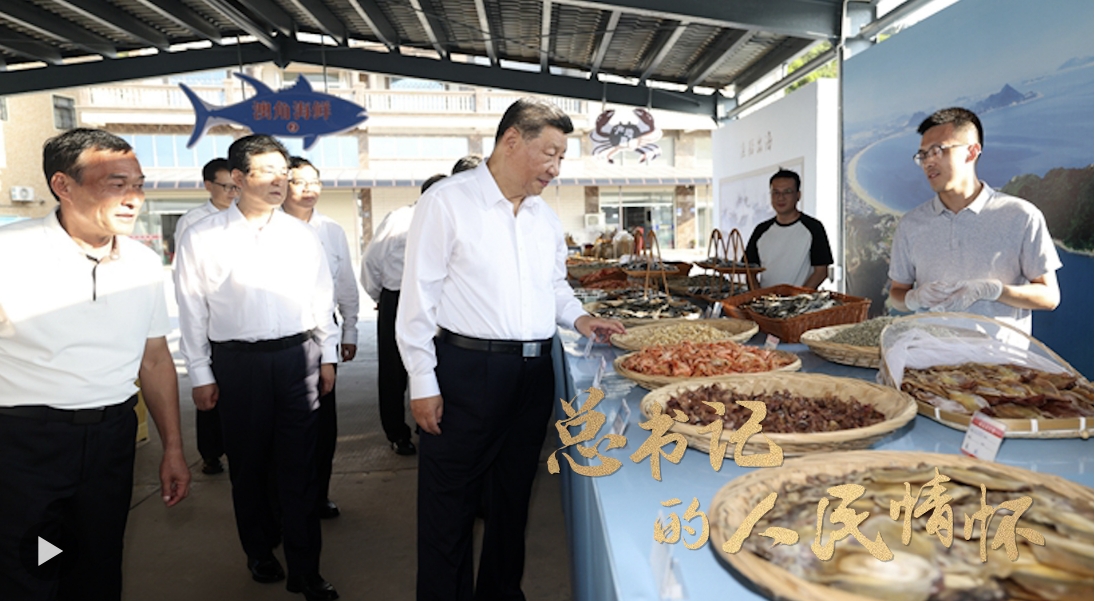
Core Points - The article emphasizes the importance of "common prosperity" as a fundamental goal of the Chinese Communist Party, highlighting its significance in the context of modernization and the well-being of all citizens [2][3][4] - It outlines the strategic focus on reducing urban-rural disparities, regional differences, and income gaps as essential steps towards achieving common prosperity [3][4][5] Group 1: Common Prosperity - "Common prosperity" is described as a core value and essential requirement of socialism with Chinese characteristics, representing the inevitable choice for over 1.4 billion Chinese people towards modernization [3] - The article cites various instances where President Xi Jinping has reiterated the commitment to common prosperity, emphasizing that it is a test of the nature of the party and its governance [2][3] Group 2: Urban-Rural Disparities - The article stresses that the most challenging tasks in promoting common prosperity lie in rural areas, with a strategic focus on rural revitalization and addressing urban-rural development imbalances [3][4] - It mentions the necessity of integrated development between urban and rural areas as a requirement for Chinese-style modernization, as highlighted in the decisions made during the 20th Central Committee's third plenary session [3][4] Group 3: Regional Coordination - The article discusses the implementation of various regional coordination strategies since the 18th National Congress, aimed at achieving economic integration across different regions [4] - It highlights the importance of ensuring that marginalized areas, particularly border and ethnic regions, share in the benefits of reform and development as a bottom-line task for common prosperity [4] Group 4: Income and Welfare - The article outlines the need to narrow income gaps and enhance the welfare of citizens as critical components of achieving comprehensive development and common prosperity [4][5] - It emphasizes the government's commitment to improving employment opportunities and social safety nets for key groups, including college graduates, veterans, and migrant workers [5]