LLM

Search documents
Meta AI 人才动荡,上亿美元为何留不住人?丨晚点聊
晚点LatePost· 2025-09-24 15:18
Core Viewpoint - The article discusses the recent talent shifts within Meta and the implications for its organizational structure and strategy in the AI sector, highlighting the challenges and opportunities faced by the company in the competitive landscape of AI development [4][6][21]. Group 1: Meta's Talent Acquisition and Loss - In June 2025, Meta acquired a 49% stake in Scale AI for $14.3 billion and recruited Alexander Wang, the 28-year-old founder of Scale AI, to lead the newly formed Meta Superintelligence Labs [4]. - Following the acquisition, Meta experienced a wave of talent departures, including long-term employees and new recruits returning to OpenAI, indicating dissatisfaction with the company's environment [4][8]. - The rapid turnover of talent is attributed to an increasingly bureaucratic structure and internal political struggles, which have made the work environment less appealing for top-tier AI talent [8][9]. Group 2: Organizational Structure and Culture - Meta's organizational structure has become more cumbersome, with an increase in VP levels leading to slower decision-making processes, which contrasts with the company's previously agile culture [8][9]. - The lack of clear ownership in model training and the presence of overlapping responsibilities among teams have created inefficiencies and internal competition, hindering productivity [10][11]. - The article suggests that a smaller, more focused team of 150 to 250 individuals would be more effective for achieving breakthroughs in AI models compared to a larger team of 5,000 [9][10]. Group 3: Comparison with Other AI Companies - Other AI companies like OpenAI and Anthropic have a more mission-driven approach, which helps align their teams towards common goals, reducing internal conflicts and enhancing productivity [12][21]. - Google employs a top-down approach with clear authority figures guiding research, which contrasts with Meta's bottom-up culture that can lead to disorganization [10][12]. - The article highlights that while Meta has a strong social network, its organizational inefficiencies may hinder its ability to compete effectively with companies like OpenAI and Anthropic, which are currently attracting top talent [23][24]. Group 4: Future of AI Organizations - The article discusses the potential for new organizational structures in AI startups, emphasizing the importance of decentralization and trust within teams to enhance efficiency [26][27]. - It suggests that AI can significantly improve organizational productivity, allowing for a shift away from traditional hierarchical structures towards more agile, networked teams [26][27]. - The future of talent competition in Silicon Valley is expected to cool down as market expectations are reassessed, impacting the recruitment of top AI talent [34][35].



X @Avi Chawla
Avi Chawla· 2025-09-24 06:33
LLM Evaluation Tools - DeepEval transforms LLM evaluations into a two-line test suite [1] - DeepEval helps identify the best models, prompts, and architecture for AI workflows, including MCPs (Multi-Choice Preference) [1] - DeepEval is 100% open-source with 11 thousand stars [1] Framework Compatibility - DeepEval works with all frameworks like LlamaIndex, CrewAI, etc [1] Community Engagement - The author encourages readers to reshare the information [1] - The author shares tutorials and insights on DS (Data Science), ML (Machine Learning), LLMs (Large Language Models), and RAGs (Retrieval-Augmented Generation) daily [1]
X @Easy
Easy· 2025-09-23 21:25
Brand & IP Strategy - Doodles 正在利用 AI 技术,旨在成为下一个大型全球 IP [1] - Doodles 正在训练一个 LLM,该模型基于过去 3 年与 GoldenWolf 合作的作品,以惊人的速度扩展品牌 [1] - Doodles 拥有标志性的、可识别的角色 [1] - Doodles 在文化领域拥有强大的立足点,与麦当劳和 Kellogg's 等大型品牌合作 [1] AI Utilization - AI 将成为所有内容的主要组成部分 [1] - Doodles 在 LLM 训练方面有 3 年的经验,为未来的按需内容提供支持 [1]
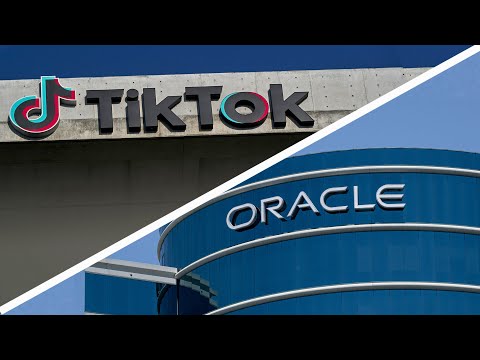
Trump Brings in Oracle to Manage the TikTok Algorithm in US
Bloomberg Television· 2025-09-22 17:03
Deal Structure & Regulatory Landscape - Oracle is positioned as the lead company to own TikTok, alongside other private investors, with the algorithm potentially being rewritten or licensed [1] - The involvement of multiple private investors raises questions about who will determine TikTok's strategy in the age of AI and LLMs [2] - The deal mandates TikTok's sale to US owners but forbids ByteDance from any operational role, while Chinese law restricts the export of sensitive technology like algorithms [10][11] - Regulators and Congress need assurance that Oracle has control over TikTok's data and algorithm to approve the deal [12] Leadership & Strategy - Oracle's CEO succession involves two co-CEOs, with one leading Oracle Cloud Infrastructure (OCI), which is crucial for the TikTok deal and other AI initiatives [3][5] - The focus might be too much on the algorithm, while the bigger opportunity lies in video-based Large Language Models (LLMs) [14] - Long-term strategy should prioritize product development and monetization, rather than solely focusing on profitability and return on investment [10] Competitive Dynamics & Future Trends - Uncertainty around TikTok has led creators to move to alternative platforms like YouTube, Instagram, and Snapchat [6] - The focus is shifting from recommendation algorithms to AI based on data, giving companies with strong data infrastructure an advantage in developing LLMs [7][8] - Smaller players like Snapchat may struggle due to a lack of infrastructure to train their own LLMs based on their data [8]

X @The Economist
The Economist· 2025-09-21 20:20
K2 Think, the LLM newly launched by the UAE, is an efficient AI system reasoning model. It works its way through problems step by step, and is particularly effective at mathematical and coding tasks https://t.co/S3Fae5DB8T ...
X @The Economist
The Economist· 2025-09-20 08:50
“The LLM is a kind of an overachieving intern who never sleeps, eats lots of data, and is always super excited.”What happens when students become dependent on AI? Listen to “The Weekend Intelligence” https://t.co/74PFlrR5hW ...
X @The Economist
The Economist· 2025-09-18 19:40
The UAE’s choice to build its latest LLM on top of a Chinese model, rather than an American open-source alternative, is part of a careful calibration of the country’s positioning amid the geopolitical push and pull of AI https://t.co/juPGoJSpXW ...
LLM开源2.0大洗牌:60个出局,39个上桌,AI Coding疯魔,TensorFlow已死
机器之心· 2025-09-17 04:00
Core Insights - The article discusses the significant changes in the open-source AI model ecosystem, highlighting a shift towards a more competitive and rapidly evolving landscape, particularly in the AI Agent and Model Serving sectors [4][9][61]. Group 1: Ecosystem Changes - The latest version of the open-source landscape includes 114 projects, a decrease of 21 from the previous version, with 39 new projects and 60 projects that have disappeared, indicating a significant reshuffling in the ecosystem [7][10]. - The average lifespan of projects in the AI model ecosystem is only 30 months, with 62% of projects emerging after the "GPT moment" in October 2022, showcasing a high turnover rate [10][11]. - TensorFlow has been overtaken by PyTorch, which now dominates the landscape, marking a dramatic shift in the competitive dynamics [8]. Group 2: Key Trends - The article identifies three main areas of focus: AI Coding, Model Serving, and LLMOps, which are emerging as the primary tracks in the evolving landscape [29][61]. - AI Coding has transitioned from merely assisting in code writing to becoming a comprehensive lifecycle engine, indicating a significant increase in its capabilities and market potential [43][44]. - The AI Data sector remains relatively stable but is expected to evolve as new challenges arise in the native large model era, suggesting a potential for future growth [82][88]. Group 3: Global Contributions - The United States and China contribute over 55% of the total developer population in the open-source AI space, with the U.S. leading at 37.41% [17][20]. - In specific areas, the U.S. has a dominant position in AI Infrastructure and AI Data, with contributions significantly higher than those from China [19][23]. Group 4: Licensing Trends - There is a noticeable trend towards more restrictive open-source licenses, with many new projects adopting custom agreements that allow for greater control by the license holders [90][92]. - This shift raises questions about the definition of "open source" in the current competitive environment, as some projects that are popular on platforms like GitHub are not fully open-source [94].

X @Sam Altman
Sam Altman· 2025-09-03 22:21
Social Media Analysis - The industry is observing a potential increase in LLM-run Twitter accounts [1] - The prevalence of these accounts may be impacting the authenticity of online interactions [1] - The "dead internet theory" is gaining traction due to the perceived rise of AI-generated content [1]
Apple-Perplexity deal still a no-brainer, says Big Technology's Alex Kantrowitz
CNBC Television· 2025-08-26 19:56
We've discussed the topic so many times before with our own Apple reporter Steve Kovac and Big Technologies Alex Canowitz. We're bringing them back for more because there's more headlines. Guys, it's good to see you.Um AK, I'll begin with you because you're the one who sat right next to me here and said no-brainer. Apple should do it. Yet another report now says they were talking about it.What do you think. >> I think it's still a no-brainer. If you think about what Perplexity does, it takes the leading AI ...