
Reshoring

Search documents
These underperforming groups may deliver AI-electric appeal. Here's why.
CNBC· 2025-11-15 16:00
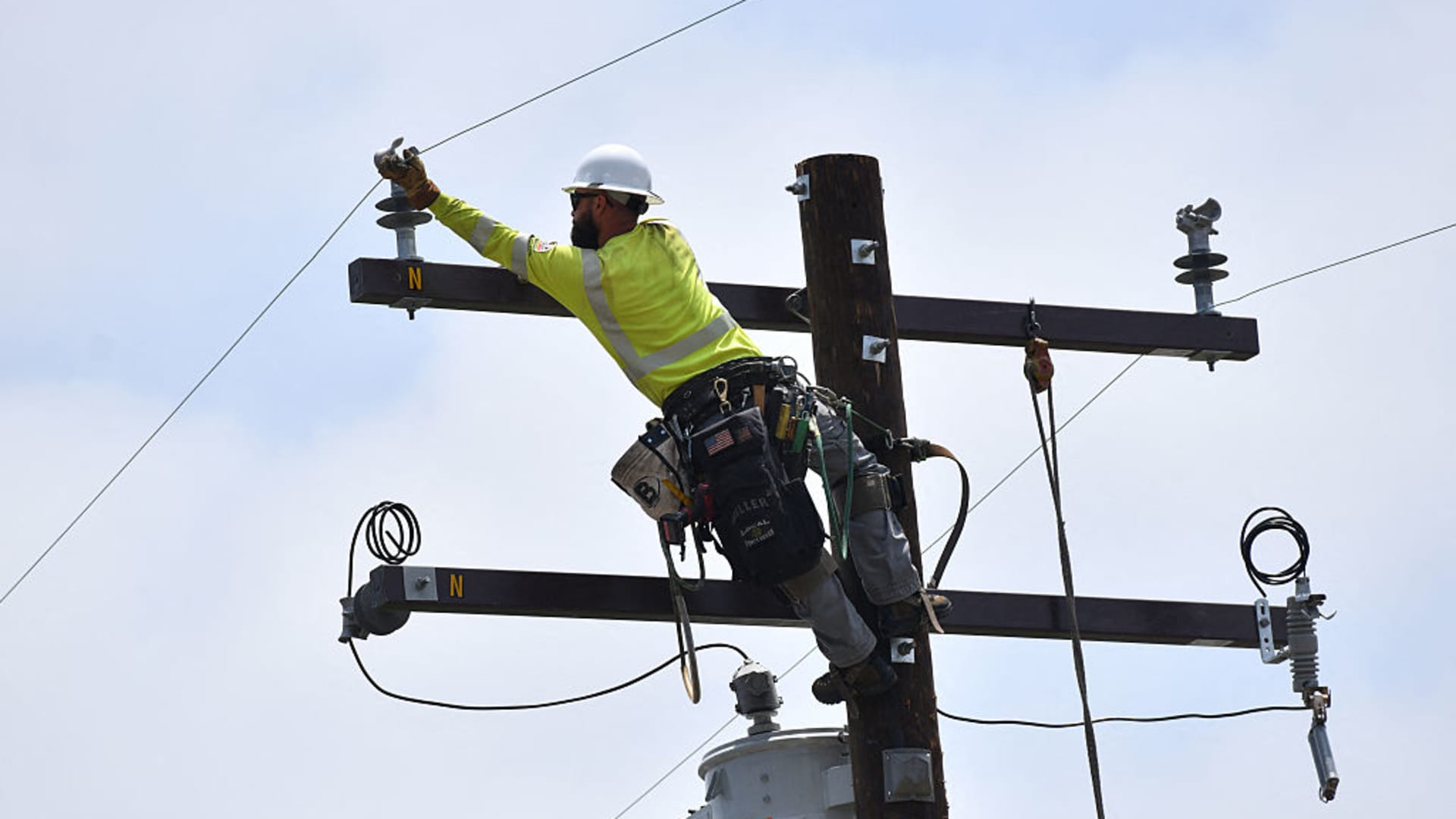
Core Insights - Industrial and infrastructure stocks are expected to gain attention alongside the artificial intelligence sector due to favorable policy and consumer trends [1] - There is a shift from globalization to reshoring, which is anticipated to benefit traditional infrastructure and industrial products [2] - The Global X U.S. Infrastructure Development ETF (PAVE) is performing well, reflecting optimism in the infrastructure sector [3] Infrastructure and Industrial Sector - The infrastructure sector is experiencing renewed interest, with a focus on reshoring efforts that could drive growth [2][3] - Global X's infrastructure ETF has increased by 16% this year, while the VanEck Semiconductor ETF has risen by 42% [3] - The top holdings of Global X's infrastructure ETF include Howmet Aerospace, Quanta Services, and Parker Hannifin [4] Electrification and AI Support - Electrification is viewed as a crucial factor supporting the AI boom, with the U.S. Electrification ETF (ZAP) providing exposure to this trend [5] - The U.S. Electrification ETF has risen nearly 24% this year, outperforming the VanEck Semiconductor ETF for the month [5]

3 Industrial Automation Stocks To Consider Buying For 2026
Benzinga· 2025-11-14 18:00
Core Industry Insights - The U.S. industrial automation industry is experiencing growth in late 2025, driven by significant technology investments and domestic manufacturing [1][2] - Economic factors such as labor shortages, grid modernization, and U.S. onshoring are prompting industrial firms to invest heavily in automation technologies [2][5] - The Federal Reserve's easing and fiscal stimulus are supporting a broader range of sectors, with a focus on companies with lower fixed costs [4] Investment Opportunities - ABB Ltd. is trading at $668, up 12.2% year-to-date, and is well-positioned in global manufacturing themes like robotics and grid efficiency [7][8] - Eaton Corp. is trading at $354, up 6.8% year-to-date, and is becoming a critical supplier for AI and data center needs, benefiting from strong financials and a robust backlog [10][12] - Rockwell Automation is trading at $388, up 32.2% year-to-date, and is recognized as a leader in industrial automation and AI, with strong customer relationships [13][14] Market Trends - The industrial automation sector is shifting from cyclical to structural growth, influenced by reshoring, labor tightness, and federal incentives [15][16] - Companies are prioritizing operational strength through investments in automation and infrastructure, which are seen as essential for sustainable growth [5][16] - A new profit cycle is emerging, with profits flowing toward companies that enhance production efficiency and security through automation and technology [16][17]



Is UAMY Becoming America's Most Strategic Mineral Supplier?
ZACKS· 2025-11-13 14:56
Core Insights - United States Antimony Corporation (UAMY) is becoming a crucial player in the U.S. mineral security strategy as the only vertically integrated antimony supplier in North America, differentiating itself from competitors in China and Russia [1][5] - Antimony is essential for national security, used in defense applications such as ammunition and advanced electronics, with the U.S. heavily reliant on imports, particularly from China [2][3] - UAMY is executing a $245 million contract with the Defense Logistics Agency (DLA) and has revived the first U.S. antimony mine in decades, establishing a fully integrated supply chain [3][9] Industry Context - The demand for antimony is expanding beyond defense to include applications in solar glass, electronics, batteries, and flame retardants, making UAMY a strategic asset for U.S. industries [4][5] - Geopolitical tensions and China's export controls are increasing the importance of UAMY as a strategic safeguard for U.S. supply chains [5] Financial Performance - UAMY's stock has surged 330.5% year-to-date, significantly outperforming the industry average increase of 28.5% [11] - The company trades at a forward price-to-sales ratio of 9.59, above the industry average and its five-year median of 4.75, indicating a premium valuation [12] - The Zacks Consensus Estimate predicts a 300% rise in UAMY's earnings for 2025 compared to the previous year [13]


X @The Economist
The Economist· 2025-11-12 23:20
Many in the furniture industry question whether America will be able to find the workers needed to bring production back home https://t.co/Ty5IuheL8O ...
Rapid Micro Biosystems (NasdaqCM:RPID) 2025 Conference Transcript
2025-11-11 17:20
Summary of Rapid Micro Biosystems Conference Call Company Overview - **Company**: Rapid Micro Biosystems (NasdaqCM: RPID) - **Industry**: Life Sciences and Diagnostics, specifically focusing on pharmaceutical quality control Key Points and Arguments GrowthDirect Platform - The GrowthDirect platform modernizes microbial quality control in pharmaceuticals, a process that has remained unchanged for over a century [5][6] - It automates traditional methods, providing faster and more reliable data, which helps customers save time and costs [5][6] - The platform is used by three-quarters of the global top 20 pharmaceutical companies and many top Contract Development and Manufacturing Organizations (CDMOs) [6] Market Conditions and Spending - Conversations with biopharma customers indicate a slight easing in spending, with capital equipment projects still moving forward [8][10] - Reshoring trends are emerging, although no significant business impact has been observed yet [9] Sales and Customer Engagement - A majority of sales come from existing customers, leading to repeat and multi-system orders [12][13] - A recent large order from a major pharma partner is expected to enhance revenue recognition in Q4 and service revenue in the first half of the next year [18][19] Revenue and Growth Projections - The company anticipates significant recurring revenue from consumables and service contracts starting in 2027 [19] - The biologics segment is the largest revenue generator, with cell therapy showing the highest revenue potential per interaction [33][35] Collaboration with Merck-MilliporeSigma - A distribution agreement with MilliporeSigma is expected to accelerate GrowthDirect sales and improve gross margins through lower input costs [37][38] - MilliporeSigma will actively sell GrowthDirect systems globally, expanding market reach [40][45] Gross Margins and Profitability - The company has achieved positive gross margins for five consecutive quarters, with expectations for continued improvement [54][56] - Key drivers for margin improvement include increased service volume, productivity enhancements, and cost reductions in product manufacturing [55][56] Product Development and Innovation - The recently launched Rapid Sterility Cassette is designed to significantly reduce testing time for sterility, although customer adoption is methodical [79][80] - The company is focused on incremental investments in R&D and commercial efforts to support growth [72][73] Competitive Landscape - The market is evolving with new entrants, but Rapid Micro Biosystems maintains a first-mover advantage and robust regulatory compliance [83][84] Future Outlook - The company is targeting a trajectory of 20% revenue growth, supported by a strong sales funnel and the impact of the MilliporeSigma partnership [85][86] - There is confidence in maintaining this growth trajectory into 2026 and beyond [88][89] Additional Important Insights - Validation timelines for systems have decreased, with existing customers experiencing faster installations [28][26] - The company is implementing best practices from larger competitors to enhance operational efficiency [63][64]

The Long-Term Benefits of Expanded Infrastructure Investing
Etftrends· 2025-11-11 15:12
Core Insights - The global infrastructure sector is positioned favorably due to various macroeconomic factors, making it an attractive area for investment [1][3] - Infrastructure investing historically provides income and downside protection, which are key considerations for investors [3] - The BNY Mellon Global Infrastructure Income ETF (BKGI) offers a broader approach to infrastructure investing, looking beyond traditional sectors [4] Infrastructure Investment Rationale - Current favorable tailwinds for infrastructure include artificial intelligence, globalization, reshoring, and demographic changes [3] - Infrastructure is expected to play a significant role in addressing the upcoming demographic shifts [3] BKGI Fund Strategy - BKGI differentiates itself by defining infrastructure more broadly than traditional funds, which typically focus on utilities, industrials, and energy [4] - The fund targets companies with fixed assets that generate cash flow and have regulatory predictability, allowing it to capitalize on various secular themes [4] Portfolio Integration - BKGI is designed to deliver income and downside protection, making it suitable for investors seeking stability [5] - Infrastructure companies generally exhibit less sensitivity to economic fluctuations, potentially outperforming other sectors during economic downturns [6] - These companies can pass costs onto consumers more effectively, maintaining essential services regardless of economic conditions [6]

Reshoring and infrastructure products could be the next ETF play after AI, say ETF experts
Youtube· 2025-11-11 12:05
Thematic Investing Insights - The next big frontier in thematic investing may extend beyond AI, with potential areas of focus including tokenization and reshoring products [1][2][3] - There is a notable shift from globalization to reshoring, driven by policy and consumer factors, which could influence investment themes in the coming years [4][6] - Infrastructure investments are highlighted as a key area, particularly through ETFs like PAVE, which focus on industrial products and reshoring efforts [6][4] - Electrification is identified as another significant theme, essential for supporting the ongoing AI boom and the broader US economy [7]

mec(MEC) - 2025 Q3 - Earnings Call Presentation
2025-11-05 15:00
Financial Performance - Net sales increased by 6.6% year-over-year, while organic net sales decreased by 9.1% to $123.1 million[6] - Adjusted EBITDA decreased year-over-year to $14.1 million, resulting in an adjusted EBITDA margin of 9.8%[6] - Free Cash Flow decreased year-over-year to ($1.1) million[6] - Adjusted Diluted EPS was $0.10[6] Strategic Initiatives and Outlook - The company maintained its 2025 financial guidance[8] - Accu-Fab integration is proceeding as planned, with expected completion by year-end 2025[8] - Increased 2026 Accu-Fab revenue synergies are projected to be $20 to $30 million, as the Data Center & Critical Power pipeline exceeds $100 million[8] End-Market Outlook - Commercial Vehicle market sales are expected to decline by 16%-26% in 2025[13] - Data Center & Critical Power is expected to grow by 12%-14% in 2025[18] - Accu-Fab acquisition is expected to add $32 - $36 million in net sales to the Data Center & Critical Power end market in 2H25[22] Capital Allocation - Net leverage ratio was 3.5x as of September 30, 2025, with a target of 3.0x or lower by the end of 2026[6, 32] - The company is prioritizing $7 – $10 million of investment in equipment and automation to meet high-growth Data Center & Critical Power demand over the next 18 months[28]

How MEP contractor Comfort Systems USA leveraged Lego-like model to drive 15x growth
Yahoo Finance· 2025-11-04 09:51
Core Insights - Comfort Systems USA reported a 33% year-over-year revenue growth in its third-quarter earnings, highlighting its strong performance amidst larger industry players like Honeywell and Carrier [1][2] - The company has experienced significant valuation growth since 2021, driven by increased investment in data centers and reshoring operations, with its stock price rising from approximately $50 to $500 per share over the past two decades [3][4] Company Performance - President and CEO Brian Lane emphasized the exceptional financial results achieved by the company's teams during the earnings call [2] - Comfort Systems, along with competitor Emcor, has historically grown at a steady pace by designing and installing HVAC and other systems for commercial buildings [3] Market Dynamics - The valuation of Comfort Systems and Emcor has surged due to the influx of investment in data centers, which require complex mechanical and electrical systems, making these companies key contractors in the sector [4][5] - Data centers have a significantly higher proportion of mechanical, electrical, and plumbing (MEP) content in construction costs, accounting for 60-70% compared to 20% in typical commercial buildings [6] Competitive Landscape - Comfort Systems focuses on Tier 2 cities, such as Richmond and Nashville, while Emcor targets Tier 1 cities like Los Angeles and Chicago, leading to different market dynamics for both companies [6] - The construction of data centers near Tier 2 cities provides Comfort Systems with additional advantages, as the skilled labor in these areas is less likely to be unionized, resulting in lower costs [7]
X @The Economist
The Economist· 2025-11-03 12:40
It begins with chipmaking and extends to robotics. But full-scale reshoring of production to America remains a quixotic endeavour and is based on flawed economics https://t.co/ctywSNuJ92 ...