七力模型

Search documents
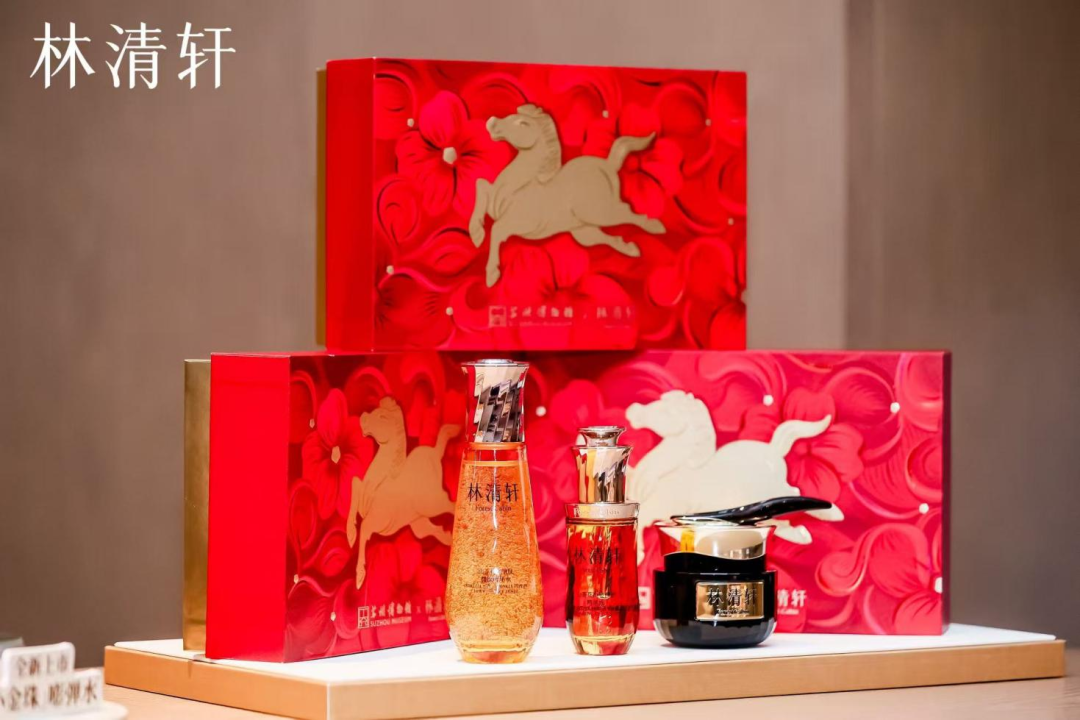
半年狂揽 3 亿,破解林清轩的“爆品逻辑”
Xin Lang Cai Jing· 2026-02-14 15:04
Core Insights - Lin Qingxuan has successfully transitioned from a gradual market entry strategy to an immediate volume strategy with its product "Little Golden Pearl" hydrating water, achieving sales of 5.35 million bottles and revenue of 300 million yuan since its launch in July 2025 [2][27] - The success of "Little Golden Pearl" is attributed to the evolution of organizational capabilities rather than mere market trends, supported by 23 years of experience in natural plant skincare and a systematic integrated organizational framework developed over the past five years [4][29] Product Performance - "Little Golden Pearl" has consistently outperformed international brands like Lancôme and Helena Rubinstein, ranking first in the Tmall toner category and the Douyin essence water bestseller list [2][27] - The product's growth is characterized by a unique all-channel operational strategy that combines offline grassroots marketing with the founder's personal brand influence, breaking the industry's reliance on online traffic [5][30] Organizational Evolution - The development of "Little Golden Pearl" marks a significant shift from founder-driven decision-making to a collective decision-making process within the organization, facilitated by the establishment of the "IPMS Integrated Product Marketing Committee" [39][41] - This new organizational model empowers specialized teams to operate like "mini CEOs," allowing for greater autonomy in product development and marketing strategies [42][43] Strategic Framework - The success of Lin Qingxuan is underpinned by a "Seven Forces Model," which includes strategic, organizational, product, marketing, retail, operational, and budgeting capabilities, all centered around customer value creation [44][45] - The company has invested heavily in research and development, particularly focusing on the high mountain red camellia, establishing a comprehensive research system with over 600 formulas and 86 patents [46][47] Market Positioning - Lin Qingxuan has successfully captured over 11% market share in the high-end toner category, positioning itself as a strong competitor against international brands [12][37] - The brand aims to expand its target demographic by appealing to younger consumers aged 25-35, thereby filling a gap in its customer base and establishing a second growth pillar alongside its core product, the camellia essence oil [36][37] Future Plans - Lin Qingxuan plans to enhance its offline grassroots marketing and digital membership operations while preparing to enter the Southeast Asian market in 2026 with flagship stores [47][48] - The company is also exploring a multi-brand strategy to diversify its offerings into home beauty, men's skincare, and fragrance markets, aiming to build a comprehensive brand ecosystem [47][48]

即使没有人工智能的优势,Meta 仍然是一个实力雄厚、价格合理的企业
美股研究社· 2025-08-18 12:09
Core Viewpoint - Meta possesses a strong business moat and is one of the companies least affected by negative impacts from AI, with potential for significant benefits if its AI strategy is successfully implemented [1][11]. Business Model and User Engagement - Meta's core business model revolves around selling advertising space on its "app family," similar to traditional newspaper businesses, where the core product is user attention rather than content [1][2]. - The business goal is straightforward: to expand the user base and capture user time, creating a flywheel effect where increased user attention attracts more advertisers, enriching Meta's ad inventory [2][6]. Competitive Landscape - Unlike Google, which is tied to functional search needs, Meta's advertising is based on emotional needs, making it less susceptible to being replaced by AI-driven search alternatives [2][5]. - AI can disrupt functional search needs by providing faster, more concise answers, but it is unlikely to replace interpersonal connections and entertainment, which are core to Meta's apps [5][11]. Moat Analysis - Meta's business moat is supported by three critical forces: network effects, switching costs, and process power [5][10]. - Network effects enhance the platform's value as the user base grows, with approximately 3.43 billion daily active users projected by Q1 2025, indicating a 60% penetration rate among global internet users [6][9]. - High switching costs exist as users prefer to stay on the same platform to connect with friends and family, making mass user migration rare [9][10]. Revenue Drivers - Meta's revenue is driven by three factors: user growth, increased average time spent on the platform, and rising revenue per ad impression [12][17]. - User growth is expected to continue due to the increasing global internet population and improved penetration rates, although growth may slow due to the already large user base [13][15]. - Average time spent on Meta's platforms is stable, with advertising impressions growing by 5%-11% year-over-year, indicating a healthy advertising environment [17][18]. AI Integration and Future Potential - Meta is investing heavily in AI, with the potential to enhance advertising effectiveness and user engagement through tools like Meta Advantage+ [18][19]. - The company aims to develop a personal AI assistant, which could significantly alter user interaction and search behavior, potentially capturing a share of the lucrative search market currently dominated by Google [19][20]. Valuation and Market Position - Meta's enterprise value is estimated at approximately $1.8 trillion, with a potential increase of about $200 billion if it successfully enters the search market [24][25]. - The company is also engaged in stock buybacks, which may be adjusted in light of its AI investments, but overall, its existing business valuation appears reasonable [25][26].