三维视觉

Search documents
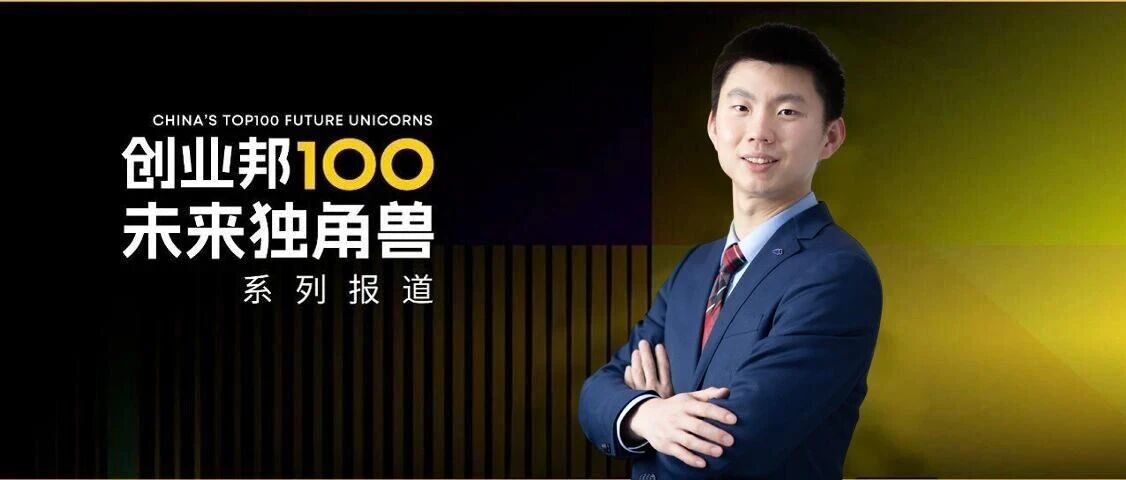
斯坦福博士,把激光雷达芯片价格打到两成,今年将出货百万颗
创业邦· 2026-03-15 10:48
Core Viewpoint - The article highlights the significant advancements and market potential of SPAD chips in the LiDAR industry, particularly through the innovations of Lingming Photon, which has successfully reduced production costs and improved performance, positioning itself as a key player in the market [2][25]. Group 1: SPAD Chip Technology - SPAD chips are critical components in LiDAR systems, functioning as "photon catchers" that detect weak light signals even in dark environments [2]. - The production of SPAD chips has traditionally been costly and inefficient due to reliance on customized processes, but advancements by Lingming Photon have reduced the price from 5000 RMB to 800 RMB [2][14]. - Lingming Photon has developed a new "light capture" architecture that enhances the efficiency of SPAD chips, allowing for mass production using standard CMOS technology [15]. Group 2: Company Background and Development - Lingming Photon was founded in 2018 by Zang Kai, who aimed to apply his research in semiconductor technology to the production of LiDAR chips [10][24]. - The company has received significant funding from various investors, including Xiaomi and OPPO, and has achieved a valuation of approximately 20 billion to 30 billion RMB [7]. - Lingming Photon has been recognized as a future unicorn by 2025 Chuangye Bang, highlighting its potential for growth and innovation in the industry [3]. Group 3: Market Trends and Future Outlook - The demand for LiDAR technology is expected to surge as the automotive industry increasingly adopts advanced driver-assistance systems, with many manufacturers now integrating LiDAR as standard equipment in high-end models [25]. - Lingming Photon is preparing for the future of AR/VR technologies, anticipating a significant market shift towards 3D spatial computing devices that will require advanced LiDAR capabilities [25]. - The company is currently developing higher-resolution SPAD chips, aiming for 2 million to 48 million pixels, to enhance the imaging capabilities of LiDAR systems [18][20].

沈劭劼团队25年成果一览:9篇顶刊顶会,从算法到系统的工程闭环
自动驾驶之心· 2025-10-24 00:04
Core Viewpoint - The article emphasizes the advancements and contributions of the Aerial Robotics Group (ARCLab) at Hong Kong University of Science and Technology (HKUST) in the fields of autonomous navigation, drone technology, sensor fusion, and 3D vision, highlighting their dual focus on academic influence and engineering implementation [2][3][23]. Summary by Sections Team and Leadership - The ARCLab is led by Professor Shen Shaojie, who has been instrumental in the development of intelligent driving technologies and has received numerous accolades for his research contributions [2][3]. Achievements and Recognition - The team has received multiple prestigious awards, including IEEE T-RO Best Paper Awards and IROS Best Student Paper Awards, showcasing their high academic impact and engineering capabilities [3][4]. Research Focus and Innovations - ARCLab's research focuses on five main areas: more stable state estimation and multi-source fusion, lightweight mapping and map alignment, reliable navigation in complex/extreme environments, comprehensive scene understanding and topology reasoning, and precise trajectory prediction and decision-making [23][24]. Productization and Engineering Execution - The lab emphasizes a product-oriented approach with strong engineering execution, addressing real-world challenges and prioritizing solutions that are reproducible, deployable, and scalable [3][4]. Talent Development - ARCLab has successfully nurtured a number of young scholars and technical leaders who are active in both academia and industry, contributing to the lab's sustained high output and influence [4]. Key Research Papers and Contributions - The article outlines several key research papers from 2025, focusing on advancements in state estimation, mapping, navigation, scene understanding, and trajectory prediction, all of which are aimed at enhancing the robustness and efficiency of autonomous systems [4][23]. Keywords for 2025 - The keywords for the year 2025 are stability, lightweight, practicality, universality, and interpretability, reflecting the lab's ongoing commitment to addressing real-world challenges in autonomous systems [24].