光电芯片

Search documents
斯坦福博士,把激光雷达芯片价格打到两成,今年将出货百万颗
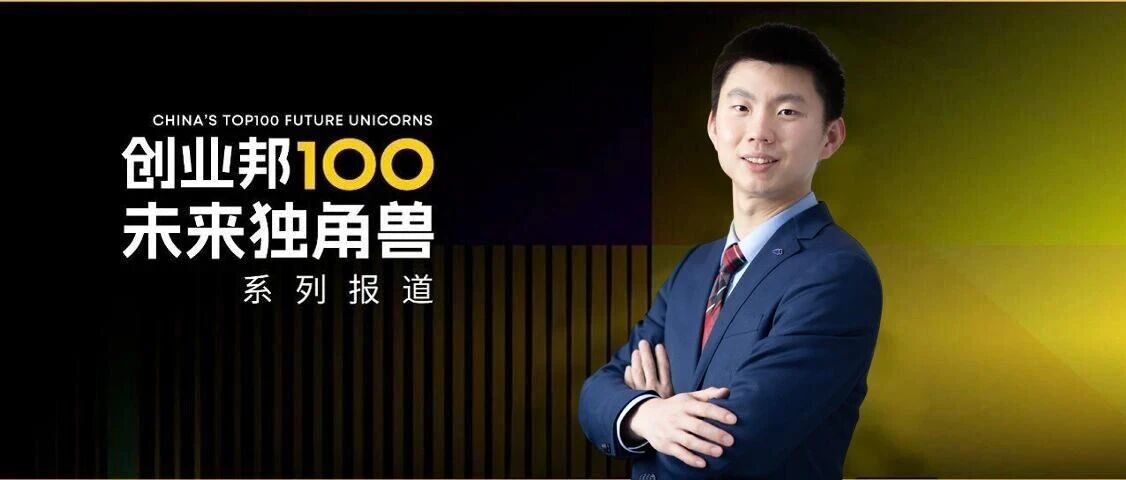
创业邦· 2026-03-15 10:48
Core Viewpoint - The article highlights the significant advancements and market potential of SPAD chips in the LiDAR industry, particularly through the innovations of Lingming Photon, which has successfully reduced production costs and improved performance, positioning itself as a key player in the market [2][25]. Group 1: SPAD Chip Technology - SPAD chips are critical components in LiDAR systems, functioning as "photon catchers" that detect weak light signals even in dark environments [2]. - The production of SPAD chips has traditionally been costly and inefficient due to reliance on customized processes, but advancements by Lingming Photon have reduced the price from 5000 RMB to 800 RMB [2][14]. - Lingming Photon has developed a new "light capture" architecture that enhances the efficiency of SPAD chips, allowing for mass production using standard CMOS technology [15]. Group 2: Company Background and Development - Lingming Photon was founded in 2018 by Zang Kai, who aimed to apply his research in semiconductor technology to the production of LiDAR chips [10][24]. - The company has received significant funding from various investors, including Xiaomi and OPPO, and has achieved a valuation of approximately 20 billion to 30 billion RMB [7]. - Lingming Photon has been recognized as a future unicorn by 2025 Chuangye Bang, highlighting its potential for growth and innovation in the industry [3]. Group 3: Market Trends and Future Outlook - The demand for LiDAR technology is expected to surge as the automotive industry increasingly adopts advanced driver-assistance systems, with many manufacturers now integrating LiDAR as standard equipment in high-end models [25]. - Lingming Photon is preparing for the future of AR/VR technologies, anticipating a significant market shift towards 3D spatial computing devices that will require advanced LiDAR capabilities [25]. - The company is currently developing higher-resolution SPAD chips, aiming for 2 million to 48 million pixels, to enhance the imaging capabilities of LiDAR systems [18][20].

A股公告精选 | 招商蛇口(001979.SZ)1月销售额近80亿,销售面积超27万平方米
智通财经网· 2026-02-09 12:04
Group 1: Zhejiang Longsheng - Zhejiang Longsheng announced a price increase for certain types of disperse dyes, with the price of disperse black rising by 5,000 yuan per ton recently [1] - The price adjustment is driven by the increase in the cost of reducing agents, which are important intermediates in dye production [1] - The company has a total dye production capacity of approximately 300,000 tons per year and a high degree of integration in its supply chain, which contributes to its competitive advantage [1] Group 2: Sanwei Biotech - Sanwei Biotech reported the final ruling of the U.S. Department of Commerce regarding anti-dumping and countervailing duties on erythritol from China, with a countervailing duty rate of 8.63% for the company [2] - The company did not qualify for a separate anti-dumping rate and faces a unified rate of 184.26%, which is a reduction from the initial ruling [2] - The overall effective tax rate for the company when exporting through specific channels is 93.58%, which may weaken its cost competitiveness in the U.S. market [2] Group 3: Zhiguang Electric - Zhiguang Electric's subsidiary signed a sales contract for energy storage systems worth 1.004 billion yuan, which is expected to positively impact the company's financial status and operational performance [3] Group 4: Yuanjie Technology - Yuanjie Technology plans to invest approximately 1.251 billion yuan to build a second phase of its optoelectronic communication semiconductor chip and device R&D and production base [4] - The project aims to enhance the company's market share and competitiveness in the global optical chip sector by expanding capacity and optimizing processes [4] Group 5: Jinhui Shares - Jinhui Shares announced a cash acquisition of 100% equity in Fusheng Mining for 210 million yuan, which includes mining rights for the Laoshengou gold mine with an annual production capacity of 50,000 tons [5] - The mine is located in a region with favorable geological conditions and high-grade gold resources [5] Group 6: Hainan Mining - Hainan Mining is planning to acquire 69.9% of Fengrui Fluorine Industry through a combination of issuing shares and cash payments, which will expand its fluorite mining business [6] - The company will issue shares to no more than 35 specific investors to raise matching funds for the acquisition [6] Group 7: Dingxin Communications - Dingxin Communications announced that its director and vice president was fined 120,000 yuan for engaging in short-term trading of the company's stock [7] Group 8: Mengguli - Mengguli plans to invest 929 million yuan to build a project for producing 30,000 tons of lithium-ion battery cathode materials annually, with a construction period of 36 months [8] - The project will be executed in two phases, with the first phase focusing on high-voltage lithium cobalt oxide and NCA materials [8] Group 9: Aifute - Aifute intends to acquire 100% of Shengpu Shares through a combination of share issuance and cash payment, with the stock set to resume trading [9] - Shengpu specializes in precision fluid control equipment, which is crucial for manufacturing processes in various industries [9] Group 10: Hengdian Film - Hengdian Film's stock experienced abnormal trading fluctuations, with a cumulative price increase of 83.98% over the past 10 trading days, indicating potential market overreaction [10] - The company warns of risks associated with a rapid decline in stock price due to significant deviations from its fundamental value [10] Group 11: Perfect World - Perfect World reported that its actual controller reduced holdings by 1.247 million shares during a period of abnormal stock price fluctuations [11] - The company confirmed that there were no significant changes in its operational environment or undisclosed information affecting stock prices [11] Group 12: Runtou Shares - Runtou Shares noted a recent price increase of approximately 5,000 yuan per ton for disperse black dyes, driven by rising prices of reducing agents [12] - The company operates in a highly competitive dye industry, with China being the largest producer and consumer of dyes globally [12]


2025年中国光电芯片经营主体分析 企业注册数量较少【组图】
Qian Zhan Wang· 2025-09-04 04:28
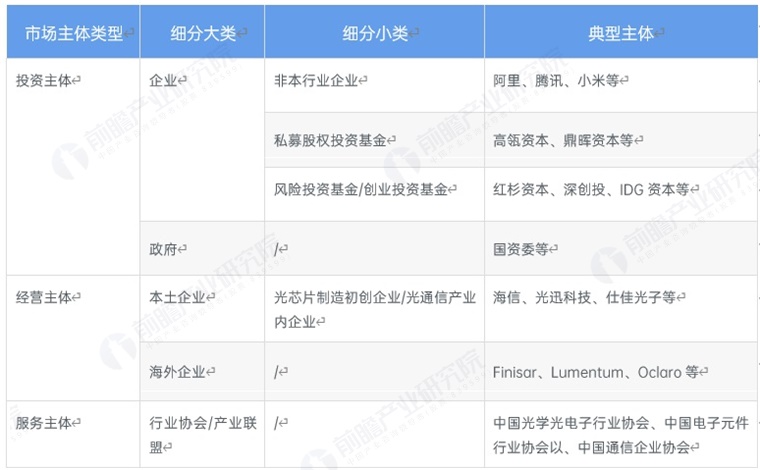
Market Structure - The Chinese optical chip industry consists of three main types of market entities: investment entities, operating entities, and service entities [1] - Investment entities include non-industry companies like Alibaba, Tencent, and Xiaomi, private equity funds such as Hillhouse Capital and IDG Capital, and government bodies like the State-owned Assets Supervision and Administration Commission [1] - Operating entities are categorized into domestic companies (e.g., Hisense, Lightwave Technology) and foreign companies (e.g., Finisar, Lumentum) [1] - Service entities include industry associations and organizations like the China Optical Optoelectronic Industry Association [1] Entry Methods - Companies in the Chinese optical chip industry adopt various entry methods, including independent R&D, collaboration with research institutions, acquisitions, and participation in industry standards [2][4] - Vertical integration (IDM model) allows companies to cover the entire supply chain from chip design to packaging, exemplified by Source Technology focusing on InP optical chips [4] - The "Fab-lite" model combines self-built facilities with outsourcing to balance flexibility and cost, as seen with Zonghui Chip Light [4] - Mergers and acquisitions are used to quickly gain core patents and resources, demonstrated by Shijia Photon acquiring Dongguan Fuke Xima [4] Industry Statistics - As of August 2025, there are approximately 56 registered optical chip companies in China, with a low annual increase of 1-2 companies from 2016 to 2024 [5] - Nearly 45% of these companies have registered capital exceeding 10 million yuan, while around 40% have capital between 1-5 million yuan [6] - Guangdong province leads in the number of registered optical chip companies, followed by Hubei and Jiangsu [7]