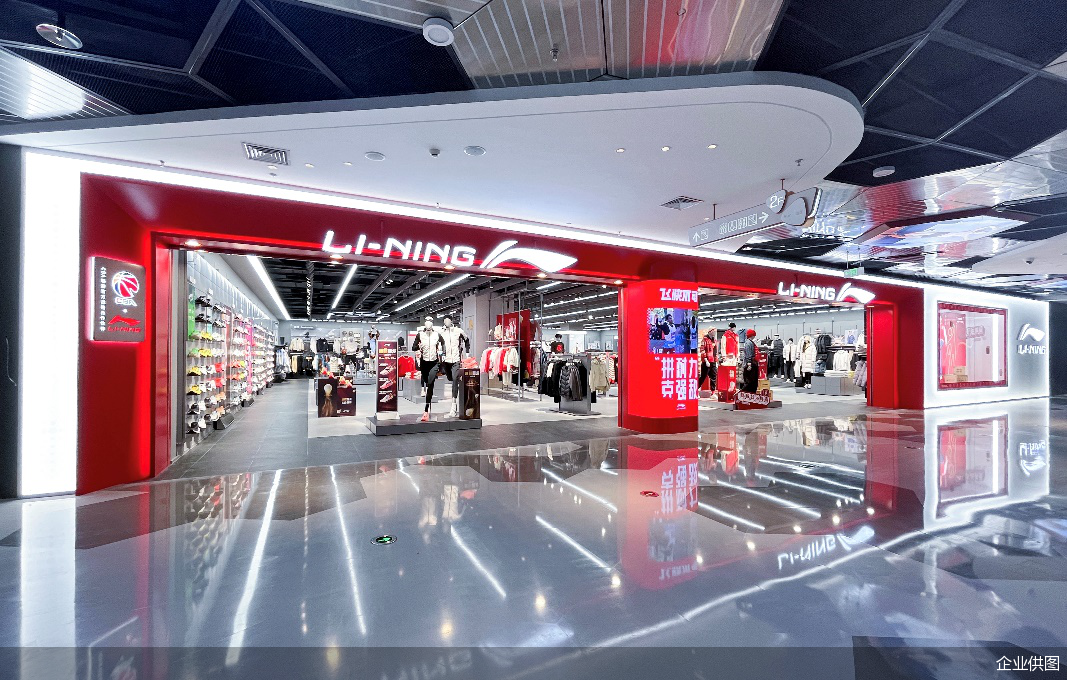
专业性

Search documents
“隐而不彰”:中国古代经济管理法的独特形态
Xin Lang Cai Jing· 2026-01-25 23:27
Core Viewpoint - The article discusses the evolution and characteristics of ancient Chinese economic management laws, emphasizing their reliance on Confucian ethics, the inherent conflict between moral and profit motives, and the practical focus on addressing specific economic issues within a governance framework [1][2]. Group 1: Reliance on Ethical Standards - Ancient economic management laws were legitimized through Confucian classics, linking the governance measures to ethical standards, which created a justification for profit-seeking behavior [1]. - The concept of "家天下" (family under heaven) served as a foundational legitimacy for these laws, allowing rulers to claim ownership of resources and implement economic policies through indirect means such as land distribution and taxation [1]. Group 2: Conflict Between Morality and Profit - The inherent "义利" (moral and profit) conflict in ancient economic management laws highlighted the tension between the stated ethical goals and the actual profit-driven motives of governance [2]. - During times of crisis, the reliance on ethical justifications for economic policies often deteriorated, leading to governance failures and potential regime changes [2]. Group 3: Practical Focus on Specific Economic Issues - Ancient economic management laws were characterized by their focus on resolving specific economic problems within defined categories, regions, and timeframes, covering a wide range of issues such as land, population, and trade [3]. - The laws were often reactive, developed in response to urgent financial needs, which limited their systematic planning and long-term objectives [3][4]. Group 4: Variability and Fragmentation - The content of ancient economic management laws exhibited significant variability, with frequent changes in regulations, particularly in areas like taxation and monopolies, often driven by immediate economic conditions [4]. - The laws were typically fragmented, existing in various forms and lacking comprehensive codification, which made them difficult to access and understand [4][5]. Group 5: Professionalism in Lawmaking and Enforcement - Ancient economic management laws were more technical and less focused on moral education, reflecting a higher degree of professionalism in their formulation and execution [5][6]. - The lawmakers and enforcers often possessed substantial economic knowledge, which contributed to the development and effectiveness of these laws [6]. Group 6: Integration into Governance Systems - The formulation and enforcement of ancient economic management laws were deeply embedded within the governance system, reflecting a high degree of integration with administrative processes [7][8]. - Legislative actions were often directly linked to the ruling authority, with laws being issued through high-level decrees and executed by appointed officials, emphasizing the administrative nature of these economic regulations [8].
李宁的上半年:营收增长3.3%,稳健经营,强化专业性!
Bei Jing Shang Bao· 2025-08-22 11:45
Core Viewpoint - Li Ning reported a stable performance in the first half of 2025, with revenue reaching 14.82 billion yuan, a year-on-year increase of 3.3%, and gross profit rising by 2.5% [1][4] Financial Performance - In the first half of 2025, Li Ning's revenue increased by 3.3% to 14.82 billion yuan, with a gross profit margin of 50% [4] - Net profit attributable to equity holders was 1.74 billion yuan, resulting in a net profit margin of 11.7% [4] - The company generated a net cash flow from operating activities of 2.41 billion yuan, with total cash and cash equivalents amounting to 11.8 billion yuan, an increase of 4.3 billion yuan from the end of 2024 [4] - Inventory turnover days were 61 days, a decrease of 1 day year-on-year, indicating healthy inventory management [4] Market Context - The Chinese sports market is projected to reach approximately 5 trillion yuan by 2025, driven by policy support, increased health awareness, and consumption upgrades [3] - The number of existing sports-related enterprises in China exceeded 414,000 as of July 1, 2025, with a significant increase in registrations over the past five years [3] Product and Brand Strategy - Li Ning's professional products accounted for over 60% of revenue in the first half of 2025, with a 5% increase in footwear sales [8] - The company focuses on six core categories: running, basketball, cross-training, badminton, table tennis, and sports leisure, while also expanding into new sports categories [12] - Li Ning has established itself as a leading domestic sports brand, ranking 9th in the "Global Brand China Online 500" list [8] Partnerships and Marketing - Li Ning has become the official partner of the Chinese Olympic Committee for the 2025-2028 period, providing professional sports equipment for various international events [9][11] - The brand actively promotes Olympic culture and encourages public participation in sports through events like Olympic Day and National Fitness Day [11] Long-term Strategy - Li Ning emphasizes a long-term strategy focused on professional development and technological innovation, with over 3.8 billion yuan invested in R&D over the past decade [13] - The company aims to maintain its competitive edge through continuous investment in product technology, such as the "Super Light" technology used in its running and basketball shoes [13][15]


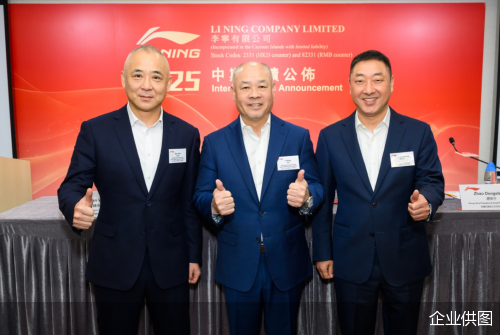
依托“专业性”营收增长3.9%, 2024年的李宁走得更“稳”
Bei Jing Shang Bao· 2025-03-28 10:11
Core Viewpoint - In 2024, Li Ning achieved a revenue of 28.676 billion yuan, a year-on-year increase of 3.9%, and a net profit of 3.013 billion yuan, demonstrating steady growth despite a challenging market environment [1][4]. Financial Performance - Li Ning's revenue for 2024 was 28.676 billion yuan, with a net profit of 3.013 billion yuan, resulting in a profit margin of 10.5% and a return on equity of 11.9% [4]. - The gross profit for 2024 was 14.156 billion yuan, up 6% from the previous year, with an overall gross margin of 49.4%, an increase of 1 percentage point [4]. Product Categories and Market Strategy - Li Ning focused on six core categories: running, basketball, comprehensive training, badminton, table tennis, and sports lifestyle, achieving significant growth in these areas [5]. - The running category saw a retail revenue increase of 25%, with over 10.6 million pairs sold across three major series [5]. - In basketball, Li Ning's products gained recognition, with several models being featured in top sneaker recommendations [8]. Innovation and R&D - Li Ning increased its R&D investment by 9.3%, with R&D expenses growing faster than revenue, reflecting a commitment to innovation [9]. - Over the past decade, Li Ning has invested over 3.5 billion yuan in R&D, establishing a strong foundation for technological advancements in its products [9][10]. Brand Partnerships and Market Presence - Li Ning has formed long-term partnerships with various national sports teams and organizations, including the Chinese Olympic Committee, to support athletes in major competitions [13]. - The company has also signed strategic partnerships with the CBA and sponsored numerous marathons, enhancing its brand visibility and market presence [13].