
波动性

Search documents
分析师:季节性利好近尾声,黄金面临波动考验与方向选择
Ge Long Hui A P P· 2026-02-08 05:03
Core Viewpoint - Gold has struggled to maintain the $5000 mark, which is disappointing, but its performance remains relatively stable compared to silver [1] Group 1: Market Conditions - The volatility in the gold market has created a sense of unease, and it is expected that this volatility may not dissipate quickly [1] - The upcoming week may favor gold if volatility decreases, even if it leads to a slight price decline [1] Group 2: External Influences - Market attention will be focused on the potential catalysts from the situations in Iran and Ukraine, along with the upcoming non-farm payroll report [1] - A decline in the US dollar index could provide some encouragement for bullish positions, potentially acting as an upward catalyst [1] Group 3: Market Resilience - Despite a series of margin hikes, gold has shown resilience, indicating underlying buying support in the market [1] - If gold prices can stabilize in the $4500-$5000 range for an extended period, it would be a positive signal for the market [1] Group 4: Seasonal Trends - The traditional seasonal uptrend for gold is nearing its end, which could pose challenges for future price movements [1]
在贪婪与恐惧中轮回:金银暴跌背后,如何避免成为市场叙事切换时的代价?
对冲研投· 2026-02-06 08:20
Core Viewpoint - The recent volatility in gold and silver markets serves as a lesson on the risks associated with asset price movements driven by narratives and emotions rather than fundamentals [2][29]. Group 1: Market Dynamics - The recent sharp decline in gold and silver prices was triggered by the nomination of a new Federal Reserve chairman, but it represents a delayed stress test of market conditions [3][4]. - Gold prices surged by 25% in January 2025, driven by a narrative of "de-dollarization" and geopolitical tensions, indicating a detachment from traditional valuation metrics [5][6]. - The correlation between the largest gold ETF holdings and gold prices reached 0.98, suggesting that rising prices became a self-fulfilling prophecy fueled by investor sentiment [5]. Group 2: Asset Characteristics - Gold is primarily viewed as a "currency" and "store of wealth," with over 90% of its demand coming from investment and reserve needs, while silver is seen as an "industrial raw material" and a "miniature version of gold" [8][9]. - The total market value of gold now matches that of U.S. Treasury securities, indicating a potential shift in the global monetary system [11]. - Silver's price is influenced by both financial sentiment and industrial demand, with nearly half of its demand coming from industrial uses [12][20]. Group 3: Market Reactions Post-Volatility - Following the recent market turmoil, gold prices rebounded to around $5,000 per ounce, while silver prices fell sharply from a peak of $121 to approximately $90, highlighting their differing market dynamics [16][18]. - Institutional views on gold remain bullish despite the recent downturn, citing ongoing geopolitical uncertainties and strong central bank purchases as key support factors [19]. - In contrast, silver's recent price surge was largely driven by retail investors and momentum trading, with a significant decline in industrial and jewelry demand observed [20][25]. Group 4: Lessons Learned - The recent market fluctuations highlight the importance of maintaining discipline in investment strategies, emphasizing the need to avoid speculative narratives and focus on asset fundamentals [29][30]. - Investors are encouraged to assess their portfolios critically, considering the potential impact of market downturns on their investments and adjusting positions accordingly [31][32]. - A balanced mindset is crucial, as market volatility can lead to overconfidence; recognizing the inherent risks and historical volatility of precious metals is essential for sound investment decisions [34][38].


读研报 | 白银高位跳水,并非征兆全无
中泰证券资管· 2026-02-03 11:32
Core Viewpoint - The silver market experienced a significant "flash crash" on January 30, with intraday declines reaching 36%, marking the largest single-day drop since 1980. This sudden decline caught many new investors off guard, despite the previous reasonable price increases driven by industrial and financial demand dynamics [1]. Group 1: Market Dynamics - Silver's price movements are influenced by both industrial and financial demand, with a notable supply-demand gap supporting recent price increases. The demand for silver in the renewable energy and technology sectors is expected to double by 2024 compared to 2021, accounting for 29% of global industrial demand [1]. - The Federal Reserve's anticipated interest rate cuts starting in 2025, along with a weakening dollar, are expected to lower the holding costs of silver, enhancing its appeal as a safe-haven asset amid rising geopolitical risks [1]. - Compared to gold, silver is viewed as a more cost-effective hedging tool, attracting significant inflows into futures markets and leading to increased trading volumes and positions in related ETFs [1]. Group 2: Price Volatility - Historical data indicates that silver prices are more volatile than gold, primarily due to its stronger commodity attributes and broader industrial demand. While silver's monetary properties have diminished, its price tends to rise during systemic risks and high inflation, only to revert to commodity-driven dynamics once the crisis subsides [2]. - The financial characteristics of silver contribute to its price elasticity, attracting short-term speculators and momentum traders, which can lead to rapid price fluctuations driven by speculative activities [2]. Group 3: Liquidity and Market Mechanisms - Liquidity plays a crucial role in silver price movements. If large buy orders are placed in the futures market while physical silver is hoarded, a lack of available supply for delivery can force shorts to cover at inflated prices as contracts approach expiration [4]. - As of January 29, the ratio of futures to physical silver contracts was 8.75, significantly higher than historical levels, indicating a potential for "short squeeze" scenarios that could lead to rapid price increases [4].

亚市早盘金价因关税担忧而上涨
Xin Lang Cai Jing· 2026-01-26 23:42
Group 1 - Gold prices increased by 0.7% in early Asian trading, reaching $5,046.58 per ounce amid concerns over tariffs [1] - President Trump announced an increase in tariffs on imports from South Korea, raising them from 15% to 25% on cars, pharmaceuticals, and timber due to the lack of legislative approval for a trade agreement [1] - Senior market analyst Nikos Tzabouras noted that ongoing trade and geopolitical tensions continue to attract safe-haven inflows into gold [1] Group 2 - The same analyst cautioned that gold remains susceptible to profit-taking and volatility, especially with increased speculative positions [1]
“隐而不彰”:中国古代经济管理法的独特形态
Xin Lang Cai Jing· 2026-01-25 23:27
Core Viewpoint - The article discusses the evolution and characteristics of ancient Chinese economic management laws, emphasizing their reliance on Confucian ethics, the inherent conflict between moral and profit motives, and the practical focus on addressing specific economic issues within a governance framework [1][2]. Group 1: Reliance on Ethical Standards - Ancient economic management laws were legitimized through Confucian classics, linking the governance measures to ethical standards, which created a justification for profit-seeking behavior [1]. - The concept of "家天下" (family under heaven) served as a foundational legitimacy for these laws, allowing rulers to claim ownership of resources and implement economic policies through indirect means such as land distribution and taxation [1]. Group 2: Conflict Between Morality and Profit - The inherent "义利" (moral and profit) conflict in ancient economic management laws highlighted the tension between the stated ethical goals and the actual profit-driven motives of governance [2]. - During times of crisis, the reliance on ethical justifications for economic policies often deteriorated, leading to governance failures and potential regime changes [2]. Group 3: Practical Focus on Specific Economic Issues - Ancient economic management laws were characterized by their focus on resolving specific economic problems within defined categories, regions, and timeframes, covering a wide range of issues such as land, population, and trade [3]. - The laws were often reactive, developed in response to urgent financial needs, which limited their systematic planning and long-term objectives [3][4]. Group 4: Variability and Fragmentation - The content of ancient economic management laws exhibited significant variability, with frequent changes in regulations, particularly in areas like taxation and monopolies, often driven by immediate economic conditions [4]. - The laws were typically fragmented, existing in various forms and lacking comprehensive codification, which made them difficult to access and understand [4][5]. Group 5: Professionalism in Lawmaking and Enforcement - Ancient economic management laws were more technical and less focused on moral education, reflecting a higher degree of professionalism in their formulation and execution [5][6]. - The lawmakers and enforcers often possessed substantial economic knowledge, which contributed to the development and effectiveness of these laws [6]. Group 6: Integration into Governance Systems - The formulation and enforcement of ancient economic management laws were deeply embedded within the governance system, reflecting a high degree of integration with administrative processes [7][8]. - Legislative actions were often directly linked to the ruling authority, with laws being issued through high-level decrees and executed by appointed officials, emphasizing the administrative nature of these economic regulations [8].
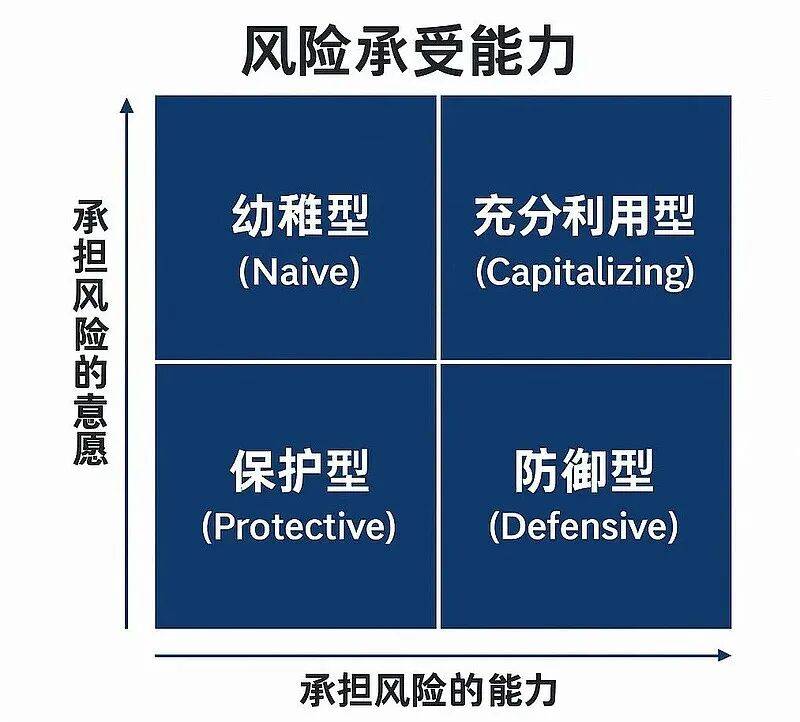
霍华德·马克斯:低承受能力却高风险意愿的人是“幼稚型”
Sou Hu Cai Jing· 2025-11-08 02:05
Core Insights - The memo by Howard Marks emphasizes the importance of rational decision-making in investment, focusing on aligning risk exposure with one's financial situation and goals [1][4][5] Group 1: Risk Attitude - The memo introduces a two-dimensional matrix distinguishing between "risk tolerance" and "risk willingness," categorizing investors into four types: "fully utilized," "defensive," "protective," and "immature" [2][15][16] - The board members of the pension fund prioritize the ability to meet pension obligations over outperforming peers, indicating a rational approach to risk management [3][29][30] - The board acknowledges that risk is not merely price volatility but the probability of permanent loss, reinforcing the need for a long-term perspective in investment [4][26][42] Group 2: Setting Goals - The pension fund board ranks "outperforming peers" as the least important goal, emphasizing the necessity of ensuring pension payments and minimizing costs to the sponsoring entity [29][30][31] - The board's focus is on constructing a portfolio that increases the probability of success across various scenarios, rather than merely achieving relative performance [32][33] Group 3: Performance Evaluation - The board considers achieving actuarial return assumptions as the most critical performance metric, with relative performance against benchmarks being secondary [55][56] - The discussion highlights the challenge of evaluating investment performance over short time frames, advocating for longer evaluation periods that encompass both bull and bear markets [69][70] - The board recognizes the importance of assessing personnel turnover rates as a potential indicator of underlying issues within the investment management process [72][75]
霍华德·马克斯:低承受能力却高风险意愿的人是“幼稚型”
雪球· 2025-11-04 13:00
Core Viewpoint - The memo by Howard Marks emphasizes the importance of understanding risk tolerance and willingness in investment decision-making, highlighting that the ultimate goal is to meet specific investment objectives rather than outperforming peers [4][8]. Group 1: Attitude Towards Risk - The memo introduces a two-dimensional matrix categorizing risk tolerance and willingness, which helps in understanding the financial capacity and psychological readiness to take risks [5][20]. - The four quadrants of the matrix are defined as follows: "Fully Utilized" for high capacity and willingness, "Defensive" for high capacity but low willingness, "Protective" for low capacity and willingness, and "Immature" for low capacity but high willingness [27][29]. - The board's risk willingness is moderate, but their financial capacity is above average, allowing them to avoid excessive volatility while still achieving reasonable returns [29][30]. Group 2: Setting Investment Goals - The board prioritizes investment goals, placing "outperforming peers" at the bottom, indicating a focus on fulfilling pension obligations rather than relative performance [46][48]. - The primary goal for a pension plan is to ensure the payment of pensions while minimizing costs to the sponsor, rather than competing with peers [49][50]. - The memo stresses that success is defined by the ability to meet pension commitments, regardless of the performance of peers [51][52]. Group 3: Volatility and Performance Measurement - The board ranks the Sharpe ratio last among performance metrics, emphasizing the importance of ensuring pension payment capabilities over maintaining stable contributions [61][62]. - The memo argues that investors often overemphasize volatility as a risk measure, suggesting that the focus should be on the risk of permanent loss instead [64][65]. - The discussion highlights that the perception of risk is influenced by external factors, and that volatility may not be a significant concern for long-term investors [71][72]. Group 4: Investment Strategy and Tactics - The board agrees that investment portfolios should be designed to adapt to various environments rather than relying on market timing [78]. - A majority of members are open to using leverage within a range of 15% to 20%, which is deemed reasonable given the fund's financial stability [80][81]. - The board supports allocating a portion of the portfolio to illiquid assets, provided that pension payments and expected cash needs are met [83]. Group 5: Performance Evaluation - The most important performance metric identified is achieving the actuarial return assumption, followed by outperforming the policy benchmark [93][94]. - The memo discusses the challenges of evaluating investment performance, emphasizing the need for relative rather than absolute benchmarks in the short term [100][101]. - It concludes that performance evaluation should cover a complete market cycle to accurately assess investment capabilities [115][116].

当理性成为稀缺品!从霍华德·马克斯最新备忘录,理解杨东陈光明的“封盘”……
聪明投资者· 2025-11-03 07:03
Core Viewpoint - The recent phenomenon of "big players closing funds" in China's investment circle reflects a complex market sentiment, highlighting the need for investors to reassess risk, evaluate opportunities, and maintain rationality in uncertain times [2][4]. Group 1: Market Reactions - On October 29, Ningquan Asset announced a suspension of new subscriptions for its products, followed by Ruiyuan Fund's similar announcement two days later, indicating a trend among prominent fund managers to exercise restraint [2]. - This trend has sparked speculation regarding its implications for market liquidity and valuation levels, as well as the managers' self-awareness regarding their strategies and cognitive boundaries [3]. Group 2: Decision-Making Framework - Howard Marks, co-founder of Oaktree Capital, emphasizes the importance of understanding one's own risk tolerance and willingness, categorizing investors into four types based on their financial capacity and risk appetite [5][6]. - Rational investors align their risk exposure with their circumstances, focusing on achieving their own goals rather than merely outperforming peers [8][9]. Group 3: Investment Objectives - The board members of the pension fund prioritize fulfilling pension payment commitments over short-term performance rankings, demonstrating a long-term focus on stability rather than relative performance [6][44]. - Marks argues that true success in investment is not about outperforming others but ensuring the ability to meet obligations, particularly in the context of pension funds [46][50]. Group 4: Risk Assessment - The discussion highlights that risk should not be equated with price volatility but rather with the probability of permanent loss, urging investors to differentiate between the two [8][60]. - The board's preference for normal market fluctuations over reliance on opaque strategies for excess returns indicates a mature understanding of risk management [38][41]. Group 5: Performance Evaluation - The pension fund board values achieving actuarial return assumptions as the primary performance metric, with relative performance against peers considered secondary [78][80]. - The importance of a comprehensive evaluation period that includes both favorable and unfavorable market conditions is emphasized, as it allows for a clearer assessment of investment capabilities [101][102].

野村:美联储仍对通胀波动高度敏感
Sou Hu Cai Jing· 2025-10-24 06:13
Core Viewpoint - The Federal Reserve has adopted a more dovish stance amid a deteriorating job market, while remaining highly sensitive to inflation fluctuations [1] Group 1: Economic Indicators - The ongoing price pressures from tariffs and immigration policies are complicating the anti-inflation trend [1] - There is a potential risk of increased volatility if inflation unexpectedly rises, given that stock and corporate credit valuations are perceived to be high [1]
算法交易之市场微观结构
Huachuang Securities· 2025-09-19 12:14
Group 1: Market Microstructure and Algorithmic Trading - Algorithmic trading is closely linked to market microstructure, which serves as the core logic for trading strategies and is influenced by the proliferation of algorithmic trading[1] - Key dimensions of market microstructure include liquidity, volatility, investor structure, and regulatory frameworks[2][5] Group 2: Liquidity Metrics - Liquidity is a critical factor affecting trading costs and is assessed through metrics such as TwSpread (relative spread), QuoteSize (market depth), and AccTurnover (transaction amount)[2][12] - TwSpread measures the relative price difference, with lower values indicating better liquidity and lower trading costs[14] - QuoteSize reflects the average number of buy and sell orders in the order book, with larger sizes indicating stronger liquidity[23] Group 3: Volatility Metrics - Volatility is an important parameter in algorithmic trading strategy design, assessed through TickPeriod (the average time between price changes) and ValidVolatility (effective price fluctuation)[3][39] - A smaller TickPeriod indicates higher volatility, while ValidVolatility increases with greater trading activity and price fluctuations[43][51] Group 4: Investor Structure - The structure of investors significantly impacts market microstructure, with metrics like AucVolRatioOpen and AucVolRatioClose indicating the proportion of trading volume during opening and closing auctions[4][62] - Higher auction volume ratios suggest greater participation from institutional investors, which can amplify market impacts during significant events[64] Group 5: Regulatory Impact - Regulatory frameworks play a crucial role in shaping market microstructure and must be accurately implemented in algorithmic trading systems[5][68] - Recent regulations have aimed to reduce transaction costs, such as the reduction of trading fees by 30% to 50% in 2023, which positively affects market activity[69]