业主自治

Search documents
《青海省物业管理条例》作出重要修改
Xin Lang Cai Jing· 2026-01-13 19:51
Core Points - The Qinghai Provincial People's Congress Standing Committee has approved significant amendments to the Property Management Regulations, specifically removing restrictive qualifications for candidates of the owners' committee [1][2] - The previous Article 32, which imposed conditions such as timely payment of property service fees and a certain level of education for candidates, has been deleted to align with civil law principles [1][2] - The amendment aims to ensure that the eligibility to participate in the owners' committee is based solely on ownership status, thereby clarifying property rights and enhancing community governance [2] Summary by Sections - **Legislative Changes** - The amendment to the Property Management Regulations was passed on January 12, 2023, during the 19th meeting of the 14th Qinghai Provincial People's Congress Standing Committee [1] - The decision to delete Article 32 is a response to previous recommendations from the National People's Congress Standing Committee's Legislative Affairs Commission [2] - **Impact on Owners' Rights** - The removal of the restrictive qualifications is seen as a return to and protection of owners' legal property rights, allowing for equal participation in community management [2] - The amendment is expected to enhance the representation and autonomy of owners in community governance, promoting healthier grassroots community management [2]
赣榆:量质齐升闯新路 千亿强区起宏图
Xin Hua Ri Bao· 2025-12-18 07:43
Economic Development - Ganyu District has been implementing the "industrial-based, industry-strong" strategy since the 14th Five-Year Plan, achieving a significant increase in GDP and transitioning the service sector from a secondary to a primary focus [1] - The district's GDP has crossed two hundred billion thresholds, with a total fixed asset investment of 1369.34 billion yuan and effective industrial investment of 668 billion yuan [1] - Ganyu has been recognized as one of the "Top 100 Districts in National Investment Potential," ranking 35th [1] Industry and Innovation - New Hai Petrochemical Co., Ltd. has entered the Jiangsu Top 100 Enterprises and Jiangsu Manufacturing Top 100 Enterprises lists, showcasing Ganyu's strength in the petrochemical industry [2] - Ganyu is addressing common challenges in upgrading the petrochemical industry by expanding into LNG and LPG storage and transportation, as well as high-performance chemical materials [3] - The district has established a comprehensive industry-academia-research cooperation system, enhancing technological innovation and collaboration with universities [4] Infrastructure and Project Development - Ganyu is actively constructing innovation platforms and accelerating the introduction of fine chemical projects, creating a complete industrial gradient from basic raw materials to end applications [5] - The district has implemented a "commitment to start construction" model, significantly reducing the time required for industrial project approvals [9][10] - A total of 33 industrial projects have received "commitment to start construction" approvals this year, saving an average of over 45 days for each project [9] Service and Efficiency Improvements - Ganyu has launched a "cloud issuance" reform to simplify the process of obtaining necessary documents, significantly reducing the burden on businesses and residents [7][8] - The district has processed over 20,300 documents through the cloud issuance platform, enhancing the efficiency of public services [8] - The "commitment to start construction" model has streamlined the approval process, reducing required materials by 77% and approval time by over 50% [10]
最高法发布典型案例,回应物业领域群众关注的问题
Ren Min Ri Bao· 2025-12-11 00:18
Core Viewpoint - The Supreme People's Court has released five typical cases regarding property service contract disputes, addressing common issues between property owners and service providers, aiming to guide lower courts and resolve civil disputes effectively [1][2]. Group 1: Property Fee Collection - Property service providers cannot restrict access to essential services like elevators and entry systems as a means to collect overdue property fees, as this violates legal rights of property owners [2][3]. - The court ruled that property service providers must use reasonable and lawful methods for fee collection, and if owners fail to pay after notification, providers can seek legal remedies without disrupting owners' daily lives [2][3]. Group 2: Termination of Property Service Contracts - Property service providers are not entitled to charge fees after the termination of their service contract if they fail to vacate the property and complete the handover to the new service provider [3][4]. - The court emphasized that original service providers must comply with handover obligations and cannot demand payment for services not rendered post-termination [3][4]. Group 3: Authority of Owners' Assembly - Property service providers lack the legal standing to challenge decisions made by the owners' assembly regarding the appointment of new service providers, as these decisions are binding only on property owners [4][5]. - The ruling reinforces the authority of owners' assemblies in managing property services and ensures that service providers cannot disrupt the decision-making process of property owners [5].
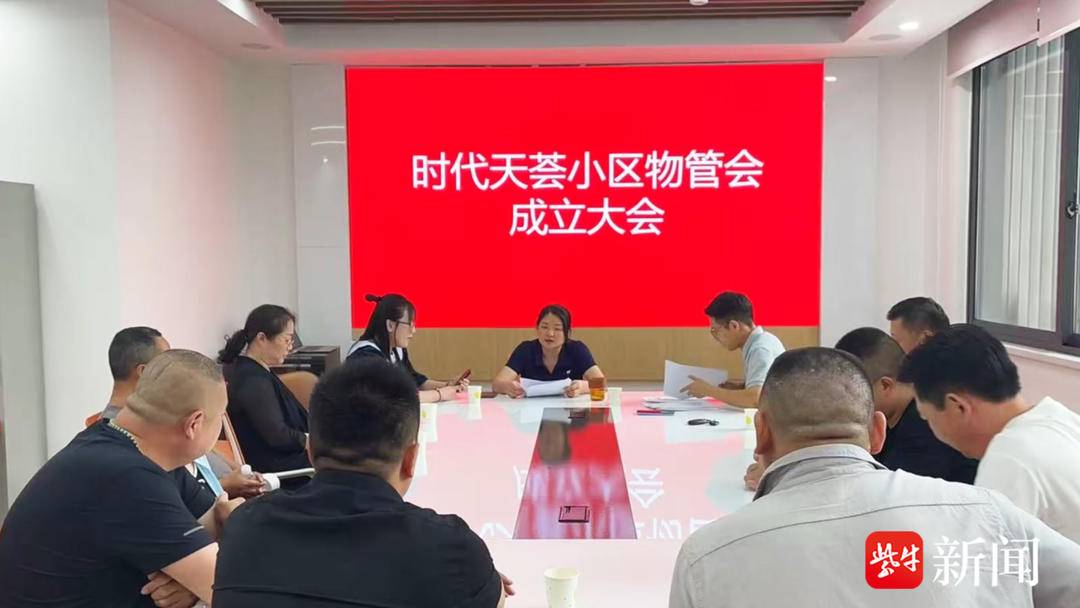
连云港赣榆:居民变“管家” 物业新改法
Yang Zi Wan Bao Wang· 2025-11-11 15:07
Core Viewpoint - The article highlights the efforts of the Ganyu District in Lianyungang City to improve property management through community involvement and innovative governance models, emphasizing the importance of resident autonomy in urban renewal [1][5]. Group 1: Community Involvement - The Ganyu District has established a collaborative governance system involving homeowners' committees, property service agencies, and industry organizations, achieving a homeowners' committee formation rate of 54.3% with 75 committees established [5]. - The district has implemented a "one community, one strategy" model to enhance property management, ensuring transparency in service fees and financial operations through both online platforms and public announcements [9]. Group 2: Resident Autonomy - The establishment of homeowners' committees has empowered residents, allowing them to actively participate in decision-making regarding property management, which has led to the collection and processing of 70 suggestions for community improvement [9]. - The district aims for full coverage of homeowners' committees across all 15 towns, significantly enhancing grassroots governance effectiveness [11]. Group 3: Financial Transparency and Improvements - Property companies have been required to publicly disclose service fee expenditures, with one community investing 1.6 million yuan in renovations and upgrades, resulting in improved community aesthetics and increased resident satisfaction [9].


部分业主自发换电梯,其余业主事后要分摊费用吗?法院这样判→
新浪财经· 2025-09-03 10:12
Core Viewpoint - The article discusses a legal case in Guangzhou regarding the replacement of an old elevator in a residential building, highlighting the necessity, legality, and rationality of homeowners collectively deciding to replace the elevator despite some dissenting opinions among the residents [2][5][6]. Group 1: Case Background - The residential building, known as "Yue Certain Pavilion," was built in 1999 and has 25 floors with 192 units sharing two elevators. The elevators were found to have significant wear and tear, necessitating replacement [3]. - Homeowners Chen and Liu organized a collective funding effort to replace the elevator, with 144 out of 192 homeowners voting in favor and paying their share before the contract was signed [3][4]. Group 2: Legal Proceedings - After some homeowners refused to pay their share, Chen and Liu took the matter to court, seeking payment from the dissenting homeowners. The first instance court ruled in favor of Chen and Liu, stating the necessity of replacing the old elevator [4][5]. - The second instance court upheld the initial ruling, emphasizing the importance of community cooperation and the need for safety in residential buildings [5]. Group 3: Legal Considerations - The court evaluated the legality of the homeowners' actions, noting that the absence of a homeowners' association or formal meeting did not invalidate the collective decision-making process, as a significant majority supported the initiative [6]. - The court recognized the rationality of the homeowners' decision to replace the elevator, framing it as a selfless act that promotes community welfare and safety [7]. Group 4: Implications - The case sets a precedent for how homeowners can exercise their collective rights in the absence of formal governance structures, reinforcing the importance of community engagement and cooperation in residential management [6][7]. - The ruling reflects a broader legal recognition of the rights of homeowners to make decisions that enhance safety and quality of life in their communities, promoting a sense of shared responsibility [7].