个贷不良批量转让

Search documents
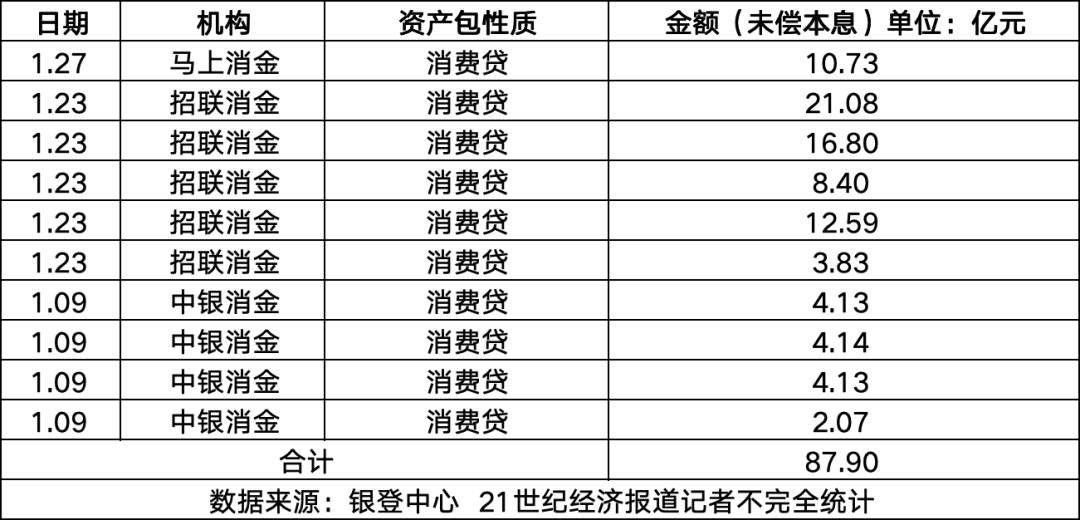
消金机构集中转让近90亿不良资产
2 1 Shi Ji Jing Ji Bao Dao· 2026-01-28 10:26
Core Insights - The banking sector is experiencing a surge in the transfer of non-performing loans (NPLs) as the pilot program for bulk transfer of personal NPLs has been extended for another year, leading to significant activity in the market [1][10]. Group 1: Market Activity - Since January 2026, various financial institutions, including consumer finance companies and banks, have announced a total of 35 non-performing loan transfers, involving a principal amount exceeding 13.2 billion yuan [1]. - Consumer finance companies account for nearly 70% of the total transfer volume, with approximately 9 billion yuan in NPLs being offered [1]. - Notably, major consumer finance companies like Zhaolian and Zhongyin have been active in listing NPL packages, with Zhaolian alone offering five packages totaling about 6.27 billion yuan [4]. Group 2: Asset Characteristics - The NPLs being transferred often exhibit long overdue periods, with many loans overdue for over 1,500 days, indicating significant collection challenges [4][7]. - For instance, Zhaolian's first package includes 21.08 billion yuan in loans, affecting 82,420 borrowers, with an average borrower age of 38.53 years [5]. - Zhongyin's NPL packages also reflect typical characteristics of consumer finance NPLs, with overdue periods around two years and all classified as loss categories [5]. Group 3: Market Dynamics - The ongoing decline in interest rates for consumer loans is influencing the market, with many banks maintaining annualized rates around 3%, while some consumer finance institutions have reduced rates below 20% [2][3]. - The trend of transferring NPLs may be driven by the need to release liquidity and reduce the rising costs associated with debt collection, which have significantly increased in recent years [9]. - The pilot program for the bulk transfer of personal NPLs has been extended until December 31, 2026, allowing for further development and potential expansion of participating institutions [10][11]. Group 4: Market Structure and Trends - The market for bulk transfer of personal NPLs has evolved significantly since its inception in 2021, with transaction volumes increasing from 18.65 billion yuan in the first year to 74.27 billion yuan in the first quarter of 2025 [13]. - The number of institutions participating in the NPL transfer market has grown, with over 1,000 entities now holding accounts for NPL transfer business [12]. - The trading mechanisms are also being optimized, with recent changes aimed at enhancing market efficiency and reducing information asymmetry among investors [14].

个贷不良转让热度飙涨 为何“隐藏”起始价还禁转载
Bei Jing Shang Bao· 2025-11-18 15:54
Core Insights - The personal non-performing loan (NPL) transfer market is experiencing unprecedented activity, with recent adjustments in transfer announcement rules drawing significant industry attention [1][7] - Key changes include the removal of publicly disclosed starting price information and the addition of a "no unauthorized reproduction" watermark on announcements [1][7] - Analysts view these changes as a rebalancing of market transparency and risk control, aimed at preventing low-price transfers from causing market anxiety and reducing information distortion from unofficial channels [1][8] Market Activity - The frequency of personal loan NPL transfers has increased, with 80 announcements made in November alone, compared to 81 for the entire month of October [2] - Major banks such as Shanghai Pudong Development Bank, Ping An Bank, and China Merchants Bank have been actively listing NPLs, particularly in personal consumption and operational loans [2] - Specific examples include Ping An Bank's transfer of a personal loan package with an outstanding principal and interest of 57.49 million yuan, involving 254 borrowers, with an average overdue period exceeding three years [2] Credit Card NPLs - Credit card overdraft assets also represent a significant portion of the transfers, with Shanghai Pudong Development Bank announcing over 5 billion yuan in NPLs in a single day [3] - Other banks, such as China Construction Bank, have also launched related asset packages, indicating a growing trend in credit card NPL transfers [3] Regulatory and Institutional Drivers - The surge in NPL transfers is driven by stricter regulatory assessments of banks' capital adequacy and non-performing loan ratios, prompting banks to offload "historical burdens" [4] - The expansion of the pilot program for NPL transfers has increased market liquidity and allowed more institutions to participate, leading to a significant rise in transaction volumes [5][6] Market Evolution - Since the initiation of the personal loan NPL transfer pilot in early 2021, the market has evolved from cautious exploration to a phase of rapid expansion, with transaction volumes increasing from 4.73 billion yuan in 2021 to 17.57 billion yuan in 2022 [5] - In the first quarter of 2023, the scale of personal NPL transfers reached 37.04 billion yuan, a year-on-year increase of 760% [5] Changes in Announcement Practices - Recent adjustments in transfer announcement practices include the non-disclosure of starting prices, which were previously a core public information element [7] - This change aims to protect the rights of transaction parties and prevent external misinterpretation of asset quality, as well as to mitigate the risk of information being misused by debt collection organizations [8] Future Market Dynamics - As the NPL transfer market becomes more specialized, the focus is shifting from price competition to value competition, with a greater reliance on due diligence for pricing models [9] - Smaller institutions may face challenges in negotiating power due to limited due diligence capabilities, while larger asset management companies (AMCs) are expected to gain competitive advantages through advanced valuation systems [9]
热度飙涨的个贷不良转让,为何“隐藏”起始价还禁转载?
Bei Jing Shang Bao· 2025-11-18 14:17
Core Viewpoint - The market for the bulk transfer of personal non-performing loans is experiencing unprecedented activity, with recent adjustments in transfer announcement rules drawing significant industry attention [1][7]. Group 1: Market Activity - The frequency of personal non-performing loan transfers has increased, with 80 announcements made in November alone, compared to 81 for the entire month of October [3]. - Major banks such as Shanghai Pudong Development Bank, Ping An Bank, and China Merchants Bank have been actively listing non-performing loans, indicating a sustained acceleration in asset clearing [3]. - Personal consumption loans and operational loans are the primary types of assets being transferred, with significant amounts involved, such as a package from Ping An Bank totaling 57.49 million yuan [3]. Group 2: Regulatory Changes - Recent announcements have seen the removal of publicly disclosed starting price information for debt claims, which was previously a core element of transparency [1][7]. - The addition of a watermark stating "no unauthorized reproduction" in announcements reflects a shift towards protecting sensitive information and maintaining market integrity [1][7]. - These changes aim to balance market transparency with risk prevention, reducing the potential for misinterpretation of asset quality and protecting the rights of transaction parties [8]. Group 3: Market Dynamics - The surge in non-performing loan transfers is driven by stricter regulatory assessments of banks' capital adequacy and non-performing loan ratios, prompting banks to offload historical burdens [4][6]. - The expansion of the trial scope for non-performing loan transfers has led to a dramatic increase in transaction volumes, with the total for 2022 reaching 17.57 billion yuan, up from 4.73 billion yuan in 2021 [5]. - The market is evolving towards a more professional landscape, with a shift from price competition to value competition, necessitating improved due diligence and data processing capabilities among participants [9]. Group 4: Future Outlook - The introduction of the "YinDeng Tong" app by the China Banking Asset Management Association aims to streamline the display of non-performing asset transfer information, enhancing market accessibility and transparency [6]. - As the market matures, smaller institutions may face challenges in negotiating power due to limited due diligence capabilities, potentially leading to increased market concentration [9]. - The transition to a data-driven pricing mechanism is expected to enhance recovery efficiency and create a healthier ecosystem for financial institutions, disposal agencies, and debtors [9].