消费贷

Search documents
消费贷风险拐点何时出现?邮储管理层:风险防控压力依然较大,但势头良好
第一财经· 2026-03-30 09:28
Core Viewpoint - The article highlights the increasing asset quality risks in the retail banking sector, particularly focusing on the rising non-performing loan (NPL) ratios among major state-owned banks in China, with specific emphasis on Postal Savings Bank of China (PSBC) [3][4]. Group 1: Asset Quality Concerns - As of the end of 2025, PSBC reported a non-performing loan balance of 91.524 billion yuan, an increase of 11.205 billion yuan from the previous year, resulting in a non-performing loan ratio of 0.95%, up by 0.05 percentage points [4]. - The bank's attention-class loan balance reached 151.648 billion yuan, increasing by 67.32 billion yuan, with an attention-class loan ratio of 1.57%, up by 0.62 percentage points [4]. - The overdue loan ratio was reported at 1.3%, which is an increase of 0.11 percentage points compared to the previous year [4]. Group 2: Risk Management Strategies - PSBC has been actively enhancing its risk management by deepening regional and industry research, optimizing customer admission standards, and strengthening controls in key areas to mitigate risks [5]. - The bank has implemented measures to combat financial crime and illegal intermediaries, which have shown positive results in maintaining asset quality [5]. - The bank's retail business director indicated that the risk control pressure in the consumer credit sector remains significant due to ongoing challenges in consumer spending and income levels [5]. Group 3: Consumer Credit Trends - The bank's consumer loan balance reached 4.84 trillion yuan by the end of 2025, reflecting a growth of 1.53% year-on-year, with consumer loans (excluding housing loans) and personal microloans increasing by 4.7% and 5.32%, respectively [6]. - The bank's non-performing loan ratio for consumer loans was reported at 1.54%, an increase of 0.2 percentage points from the previous year [6]. - The implementation of fiscal subsidy policies has positively impacted consumer credit demand, with a significant increase in non-housing consumer loan issuance, which grew by over 20% in September 2025 [6].



银行“火拼”消费贷、经营贷
第一财经· 2026-03-29 14:43
Core Viewpoint - The article highlights the rising trend of non-performing loan (NPL) ratios in personal loans across major banks, attributing this to macroeconomic changes and the ongoing adjustment in the real estate sector, while emphasizing the importance of risk management in consumer and business loans [3][10]. Group 1: Personal Loan Quality Trends - As of March 27, 2026, major banks like ICBC, CCB, and others have reported an increase in personal loan NPL ratios, with many attributing this to external macroeconomic factors [3][10]. - The personal loan NPL ratio for state-owned banks has approached 1.6%, with ICBC and CCB both reporting NPL ratios of 1.58%, marking an increase from the previous year [10][11]. - The shift in consumer demand due to the real estate market's downturn has led to a contraction in housing loans, while consumer and business loans have become focal points for banks [6][10]. Group 2: Loan Composition and Performance - By the end of 2025, CCB and ICBC's personal loan balances exceeded 9 trillion yuan, with CCB leading in housing, consumer, and credit card loans, while ICBC led in business loans by over 600 billion yuan [6][8]. - The consumer loan and business loan segments have seen significant growth, with CCB reporting nearly 30% growth in both areas, contrasting with the decline in housing loans [6][10]. - Credit card business has faced challenges, with all eight banks reporting a decline in credit card balances, particularly ICBC and Postal Savings Bank, which saw declines exceeding 10% [7][10]. Group 3: Risk Management and Future Outlook - CCB's management has emphasized the importance of optimizing credit risk management mechanisms in response to rising risks in the retail sector, indicating a focus on risk control moving forward [11][12]. - ICBC's leadership has acknowledged the short-term rise in personal loan NPL ratios but remains optimistic about long-term stability, citing strong economic fundamentals and the potential for improved asset quality through policy support [11][12]. - The article notes that while consumer and business loans are growing rapidly, the associated risks are also increasing, necessitating careful monitoring and management [10][13].




银行业格局-龙头化-差异化-边缘化
2026-03-24 01:27
Summary of Key Points from the Conference Call Industry Overview - The banking industry is experiencing a trend towards concentration, with major state-owned banks increasing their asset share to 43% by the end of 2025, contributing 58% of the total asset growth in the industry for that year [1][2] - Shareholding banks are undergoing a transformation due to risk management and are reducing high-risk personal business, leading to a decrease in their asset share to 16% by the end of 2025, down 2 percentage points from five years ago [1][2] - The deposit landscape has shifted, with a notable return of personal deposits to major banks, which regained a market share of 54% by February 2026, attributed to the loss of high pricing advantages by smaller banks [1][3] Market Share Dynamics - As of the end of 2024, the loan market shares are distributed as follows: state-owned banks at 46%, shareholding banks at 17%, sample city commercial banks at 12%, and other financial institutions at 25% [4] - In the short-term loan sector, state-owned banks have seen their market share rise to approximately 42% by February 2026, driven by supply chain finance and consumer loans, which have grown at an average rate exceeding 30% [4] Regional Competition - State-owned banks have a balanced asset distribution across major economic provinces, with significant market share increases in regions like Northeast China, where their market share rose to 41%, and in the Pearl River Delta, where it increased to around 42% [5] - City commercial banks are benefiting from regional economic resilience, particularly in provinces like Jiangsu, Zhejiang, Shandong, and Sichuan, where their market shares have increased significantly [6] Specific Bank Performance - Leading city commercial banks such as Ningbo Bank, Jiangsu Bank, and Chengdu Bank have shown substantial market share growth in their respective regions, with Ningbo Bank reaching a market share of about 12% in its home region [6][7] - In Shandong, Qilu Bank and Qingdao Bank have maintained a market share of around 2.3%, indicating potential for further growth as they expand their branch networks [7] Additional Insights - The ongoing consolidation of rural financial institutions has led to a reduction in the number of village banks, rural credit cooperatives, and rural commercial banks, with their combined asset share declining to approximately 13% by the end of 2025 [1][2] - The competitive landscape is characterized by a clear distinction between the strategies of state-owned banks and shareholding banks, with the former focusing on large-scale projects and the latter retreating from high-risk segments [2][4]
2026年银行业春季策略:业绩期,重视绩优股
GUOTAI HAITONG SECURITIES· 2026-03-21 13:44
Investment Rating - The report indicates a positive investment outlook for the banking sector, with a recommendation for increased allocation due to favorable trading conditions and performance expectations for 2025 [10][11]. Core Insights - The banking sector has experienced a cumulative decline of 3.1% since the beginning of 2026, underperforming the CSI 300 and Wind All A indices by 1.8 percentage points and 4.1 percentage points, respectively. However, there has been a recovery with a 3.5% increase in March 2026, ranking second among 30 sectors [9][10]. - The report anticipates that the overall performance of listed banks in 2025 will show steady improvement, supported by narrowing interest margins and stable asset quality. The expected growth in net profit and revenue is attributed to improved credit growth in key regions and stable deposit growth [11][12]. Summary by Sections Trading Environment - The trading environment for the banking sector in Q2 2025 is expected to be favorable, with revenue growth and net profit growth projected to improve. The report highlights that 23 banks have shown positive absolute returns since the beginning of the year, with Qingdao, Chongqing, and Hangzhou leading in growth rates [10][11]. Credit Growth and Quality - Credit growth is expected to slow down in 2026, with a projected growth rate of 6.1% for RMB loans. The report notes a decrease in household credit, indicating a trend towards deleveraging, while corporate credit has seen a slight increase due to new policy tools [16][17]. Interest Margin Trends - The net interest margin is in a downward trend but is expected to stabilize in 2026. The report indicates that the decline in interest margins will slow down, with some smaller banks potentially seeing a bottoming out of their margins [20][23]. Asset Quality - The report emphasizes that the asset quality of listed banks remains stable, with non-performing loan ratios and coverage ratios being closely monitored. The overall asset quality is expected to remain steady, supporting the banks' profitability [36][37]. Wealth Management and Fee Income - The wealth management business is recovering, with fee income from wealth management and agency services expected to grow. The report notes that the fee income for listed banks increased by 3.1% in the first half of 2025, driven by favorable market conditions [30][32]. Regional Performance - The report highlights that state-owned banks and city commercial banks in economically strong provinces are expected to continue leading in loan growth rates. Regions like Jiangsu, Zhejiang, and Sichuan are projected to outperform national averages [19][17].






菲律宾数字银行 Maya 据称筹备赴美 IPO,募资或达 10 亿美元
Xin Lang Cai Jing· 2026-02-17 03:57
Core Viewpoint - Philippine digital bank Maya is evaluating a potential IPO in the U.S. with a fundraising target of up to $1 billion [1] Group 1: Company Overview - Maya holds a digital banking license from the Bangko Sentral ng Pilipinas (BSP) and offers savings, consumer loans, payment, and merchant services [1] - The company provides in-app cryptocurrency trading features under a regulated Virtual Asset Service Provider (VASP) framework [1] Group 2: Business Performance - The revenue and transaction volume from Maya's cryptocurrency business have not been disclosed [1] - Users have reported issues with certain token trading buttons becoming "grayed out/unavailable" during periods of market volatility [1]
市场权威专家:观察货币政策效果要看累积效应
Di Yi Cai Jing Zi Xun· 2026-02-13 09:52
Group 1 - The People's Bank of China has introduced a series of monetary policies to support the real economy, focusing on optimizing economic structure and enhancing support for key domestic demand areas such as private enterprises, technological innovation, green initiatives, and consumption [1] - Since the second half of 2018, the central bank has lowered the reserve requirement ratio 18 times, providing sustained medium- and long-term liquidity to the banking system and financial markets [1] - The cumulative reduction in policy interest rates since the peak of the current interest rate cycle is 1.15 percentage points, leading to a decrease in corporate loan rates by 2.5 percentage points and personal mortgage rates by 2.7 percentage points [1] Group 2 - Current RMB loan balance is approximately 270 trillion yuan, and the reduction in loan rates is estimated to save borrowers over 6 trillion yuan in interest payments annually [1] - While developed economies are in a rate-cutting cycle, China's monetary policy remains relatively loose, focusing on reducing overall financing costs for society [1] - China's personal mortgage rates are nearing the average levels seen during the "zero interest rate" periods in the US, UK, and Japan, with consumer loan rates even lower than those during the same periods in the US [2]
11家上市银行2025年业绩报告:变革中的机遇与2026年展望
Sou Hu Cai Jing· 2026-02-12 10:30
Core Viewpoint - The banking industry is undergoing an unprecedented transformation cycle in 2025, driven by macroeconomic stability, interest rate declines, regulatory upgrades, digital iteration, and a consensus on "anti-involution," pushing listed banks to accelerate their shift from "scale expansion" to "value prioritization" [2][10]. Performance Overview - As of February 10, 2026, 11 out of 42 listed banks in A-shares have reported their 2025 performance, all achieving year-on-year growth in net profit attributable to shareholders, reflecting "stable volume, quality improvement, and structural enhancement" [2][13]. - Among these banks, 10 achieved both revenue and net profit growth, with only CITIC Bank experiencing a slight revenue decline of 0.55%, breaking the market's pessimistic expectations regarding industry profitability [14]. Institutional Performance - City commercial banks showed remarkable performance, with Qingdao Bank's net profit increasing by 21.66%, leading the group; Qilu Bank and Hangzhou Bank also exceeded 10% growth, at 14.58% and 12.05% respectively [3][14]. - In the joint-stock bank category, Shanghai Pudong Development Bank achieved a net profit growth rate of 10.52%, the only institution in this category to reach double-digit growth; other banks like China Merchants Bank, CITIC Bank, and Industrial Bank had relatively modest growth rates of 1.21%, 2.98%, and 0.34% respectively [3][14]. Asset Quality and Risk Management - The 11 banks have increased their risk management efforts, with core asset quality indicators showing improvement; 6 banks reported a decrease in non-performing loan (NPL) ratios compared to the previous year [3][15]. - Qingdao Bank saw the most significant decline in NPL ratio, down 17 basis points to 0.97%; Qilu Bank and Shanghai Pudong Development Bank also saw declines of 14 and 10 basis points, respectively [4][15]. - Despite 8 banks experiencing a decline in provision coverage ratios, the overall level remains high, indicating solid risk resistance capabilities; Qingdao Bank and Qilu Bank saw increases in their coverage ratios [4][15]. Industry Transformation - The banking industry is accelerating its transformation, moving beyond scale expansion to seek balance among efficiency, safety, and value, driven by various policies and practices [6][17]. - Regulatory bodies have encouraged financial institutions to support key sectors of the real economy, with structural monetary policy tools effectively implemented [6][17]. - The introduction of consumer loan interest subsidies aims to stimulate domestic demand, with banks lowering consumer loan rates significantly [7][18]. Future Trends - The banking industry is expected to maintain a stable asset quality in 2026, with NPL ratios remaining steady and risk resistance capabilities strong [10][21]. - The differentiation among institutions will become more pronounced, with large state-owned banks and quality joint-stock banks maintaining low NPL ratios, while some smaller banks may face pressure [11][21]. - Investment logic will focus on "high dividend, defensive" and "high quality, growth" dual lines, with high-dividend banks likely to attract continued investment [12][22].
别在直播间找“救星”
Bei Jing Shang Bao· 2026-02-08 15:57
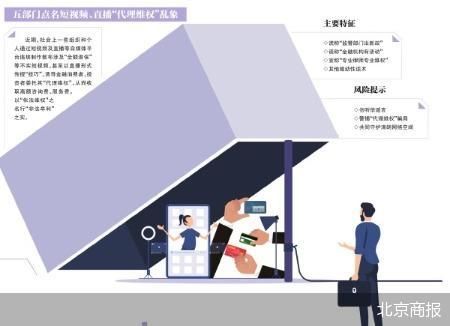
Core Viewpoint - The article highlights the rise of illegal "proxy rights protection" schemes that exploit financial consumers through misleading advertisements and false promises, prompting regulatory bodies to issue warnings against such practices [1][3][10]. Group 1: Regulatory Response - On February 6, multiple regulatory bodies including the Financial Regulatory Bureau and the People's Bank of China issued a risk warning against illegal "proxy rights protection" schemes, emphasizing their disruptive impact on the financial market and consumer rights [1][3]. - Financial institutions are actively publishing warnings about illegal "proxy rights protection" to guide consumers towards legitimate channels for rights protection [10][11]. Group 2: Characteristics of Illegal Practices - The core issues of illegal "proxy rights protection" are concentrated on social media platforms, where false information and disguised professional identities are used to lure consumers into paying high consultation fees [3][6]. - Common tactics include fabricating regulatory updates and misleading claims about debt recovery and credit repair, which confuse consumers and lead them to believe in non-existent policies [3][4]. Group 3: Consumer Vulnerability - The emergence of illegal "proxy rights protection" is rooted in the information asymmetry and anxiety of financial consumers, who often seek quick solutions to disputes with financial institutions [6][12]. - Many consumers are misled by promises of "full refund" or "debt clearance," which creates opportunities for fraudsters to exploit their desperation [6][12]. Group 4: Online Evolution of Fraud - The shift from offline to online platforms has allowed illegal "proxy rights protection" schemes to scale up and diversify, utilizing short videos and live streams for broader reach and lower costs [6][10]. - These platforms enable real-time interaction and targeted persuasion, significantly enhancing the effectiveness of fraudulent marketing [6][10]. Group 5: Consumer Education and Protection - Financial consumers are urged to recognize legitimate rights protection channels and remain vigilant against illegal "proxy rights protection" traps to maintain a clear financial environment [1][10]. - Regulatory bodies stress the importance of verifying information through official channels and discourage reliance on social media "experts" or intermediaries [9][12].
南京银行转让604笔个人不良贷款,要求受让方不暴力催收
Xin Lang Cai Jing· 2026-02-06 09:20
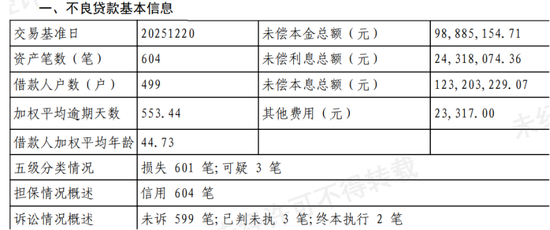
Core Viewpoint - Nanjing Bank has announced the transfer of non-performing assets, specifically personal non-performing loans related to credit card overdrafts, with a total outstanding principal of approximately 98.89 million yuan and total outstanding interest of about 24.32 million yuan, indicating a significant focus on managing and disposing of non-performing loans [1][2][13]. Group 1: Non-Performing Loan Transfer Details - The asset package consists of 604 loans from 499 borrowers, with a weighted average overdue period of 553.44 days and an average borrower age of 44.73 years [1][2][17]. - The total outstanding principal is 98.89 million yuan, total outstanding interest is 24.32 million yuan, and the total outstanding principal and interest amount to approximately 123.20 million yuan [2][15]. - The classification of the loans shows 601 as losses and 3 as suspicious [14][15]. Group 2: Conditions for Potential Buyers - Interested buyers must conduct individual investigations of the non-performing loans and agree to bear the risks associated with the disposal of these assets [3][16]. - Buyers are required to commit to using only legal means for the collection of these loans and are prohibited from transferring the loans to third parties or using violent collection methods [3][16]. Group 3: Retail Business Performance - Nanjing Bank has emphasized retail banking as a key area, launching a "three-year doubling plan for retail value customers" to enhance channel development and product creation [3][16]. - As of mid-2025, the bank's personal loan balance reached 3319.49 billion yuan, with a year-on-year increase of 117.55 billion yuan, reflecting a growth rate of 3.67% [4][17]. - Consumer loans accounted for over 62% of the total personal loans, while credit card overdrafts represented only 4.43% [4][17]. Group 4: Loan Growth and Quality - By the end of Q3 2025, the personal loan balance increased to 3383.47 billion yuan, marking a growth of 5.67% compared to the end of the previous year [20]. - The non-performing loan ratio for personal loans rose to 1.33%, up from 1.29% at the end of the previous year, indicating a slight increase in loan quality concerns [10][22]. - Despite the increase in non-performing loans, the retail segment achieved a revenue of 117.02 billion yuan in the first three quarters of 2025, with a year-on-year growth rate of 22.10% [12][22].
牛市中掉队的邮储银行,或迎来逆袭
虎嗅APP· 2026-02-05 10:17
Core Viewpoint - The article discusses the underperformance of Postal Savings Bank compared to other major banks in a generally bullish market for bank stocks in 2025, highlighting the challenges it faces in terms of valuation and business structure [2][3][4]. Group 1: Performance Comparison - In 2025, Agricultural Bank of China saw a stock price increase of 52.66%, while Postal Savings Bank only increased by 0.67%, slightly outperforming Bank of Communications at 0.37% [2][3]. - As of January 2026, Postal Savings Bank's price-to-book (PB) ratio was 0.6, significantly lower than Agricultural Bank's 0.86 [4]. Group 2: Financial Metrics - For the first three quarters of 2025, Postal Savings Bank reported a revenue growth of 1.82% and a net profit growth of 0.98%, placing it in the middle tier among state-owned banks [5]. - The bank led the six major banks in asset expansion speed during the same period, indicating competitive project acquisition capabilities [9]. Group 3: Risk and Asset Quality - Despite a relatively low non-performing loan (NPL) ratio, Postal Savings Bank has seen a rising trend in NPLs, with the ratio increasing from 0.9% at the beginning of the year to 0.94% by Q3 2025 [14][13]. - The bank's reliance on retail loans, which constitute over 50% of its credit portfolio, has exposed it to risks as retail loan demand declines [12][11]. Group 4: Strategic Changes and Leadership - The recent appointment of Lu Wei as the new president is expected to bring a shift in strategy, focusing on corporate banking to complement the bank's retail strengths [28][19]. - The article suggests that the transition to a more balanced business model will take time and may not yield immediate results [34][33]. Group 5: Wealth Management and Corporate Banking - Postal Savings Bank's wealth management capabilities are limited, with a significant portion of its assets under management (AUM) still in low-risk products, which restricts income potential [21][23]. - The bank's corporate loan growth has been strong, but it still lags behind major competitors in absolute scale and business capability [27][26]. Group 6: Future Outlook - The article posits that while the new leadership may bring hope for improvement, the bank's structural challenges will require gradual adjustments rather than quick fixes [34][30]. - The expectation is for a gradual enhancement in performance, focusing on corporate banking and wealth management, while addressing the risks associated with retail loans [36][34].