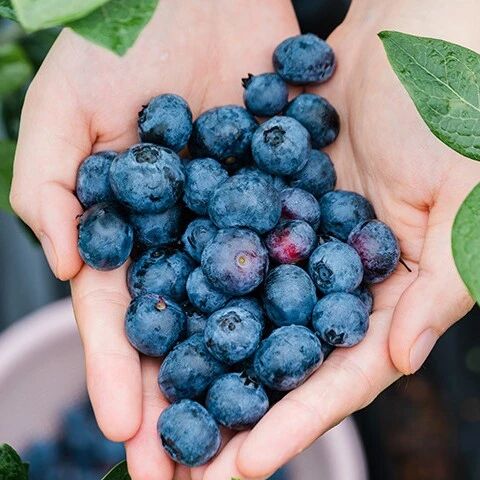
中产水果祛魅

Search documents
真正把蓝莓价格打下来的,是它
虎嗅APP· 2026-03-28 14:05
Core Viewpoint - The article discusses the decline in the price and status of blueberries in China, particularly in Yunnan, where increased production has led to a significant drop in prices, transforming blueberries from a "middle-class fruit" into a more accessible commodity [4][8][25]. Group 1: Price Decline and Market Dynamics - Blueberry prices have plummeted, with half a kilogram in Shenzhen dropping from nearly 30 yuan to 19.9 yuan, and in Yunnan, prices are as low as 60 yuan for two kilograms [4][8]. - As of 2024, China has become the world's largest blueberry producer, with a planting area of 1.4382 million acres and an annual output of 780,000 tons, marking a 197% increase in production since 2020 [8][29]. - The oversupply of blueberries has diminished their perceived scarcity, leading to a market where they are sold by the bucket rather than in premium packaging [8][12]. Group 2: Agricultural Practices and Quality Concerns - The majority of blueberries in Yunnan are grown using advanced agricultural techniques, such as facility cultivation and nutrient soil, resulting in yields exceeding 2,000 kg per acre, more than double traditional methods [11][21]. - Despite high production, there are concerns about the quality of blueberries, with reports of farmers using growth regulators that affect taste, leading to a decline in consumer satisfaction [14][21]. - The article highlights a potential crisis in quality similar to that experienced by the "sunshine rose" grapes, where increased production has led to a loss of flavor and consumer trust [18][23]. Group 3: Consumer Behavior and Market Perception - The shift in blueberry pricing reflects a broader trend of devaluing "middle-class fruits," where the symbolic value associated with these fruits diminishes as they become more widely available [25][28]. - Consumers are increasingly aware of the quality differences, with many expressing disappointment in the taste of cheaper blueberries compared to their more expensive counterparts [14][21]. - The article suggests that the market is moving towards a model where consumers prioritize taste and quality over the status associated with premium pricing [23][29]. Group 4: Economic Impact and Employment - The blueberry industry in Yunnan has created over 150,000 jobs, with cooperative farmers earning an average annual income of over 350,000 yuan, indicating a positive economic impact despite the price decline [29][30]. - The shift towards more accessible pricing has allowed a broader segment of the population to enjoy fruits that were once considered luxury items, contributing to local economic growth [29][31].

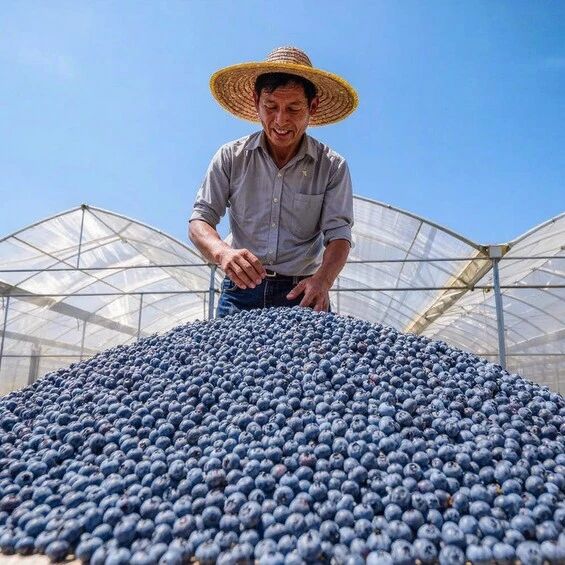
真正把蓝莓价格打下来的,是它
36氪· 2026-03-27 00:16
Core Viewpoint - The article discusses the significant price drop of blueberries in China, attributing it to increased production in Yunnan and the shift from a luxury item to a more accessible fruit, reflecting a broader trend of "demystifying" premium fruits [4][9][35]. Summary by Sections Blueberry Price Trends - Blueberry prices have plummeted from nearly 30 yuan for a half-kilogram to 19.9 yuan, with some farmers selling them by the bucket in Yunnan [5][9]. - China has become the world's largest blueberry producer, with a planting area of 1.4382 million acres and an annual output of 780,000 tons, marking a 197% increase in production since 2020 [9]. Production Techniques - In Yunnan, 95% of blueberries are grown using facility cultivation and nutrient soil, achieving yields of over 2,000 kg per acre, more than double traditional methods [11]. - The influx of capital into blueberry production has led to a competitive market, but not all blueberries meet high-quality standards, resulting in a price disparity [12]. Market Dynamics - High-quality blueberries remain in demand, while lower-quality fruits flood the market, leading to significant price reductions for the latter [12][15]. - The article highlights a potential crisis in blueberry quality, with some farmers using growth regulators that affect taste, leading to a decline in consumer satisfaction [15]. Comparison with Other Fruits - The article draws parallels between blueberries and other previously premium fruits like "Sunshine Rose" grapes, which have also seen drastic price drops due to overproduction and quality issues [17][19]. - Unlike blueberries, avocados have maintained quality despite price drops, suggesting a potential path for blueberries to follow [22]. Consumer Perception - The concept of "super fruits" is critiqued, emphasizing that the perceived health benefits of blueberries may not justify their previous high prices [23][24]. - The article suggests that the shift in blueberry pricing reflects a broader trend of consumers seeking genuine value rather than status symbols associated with premium fruits [26][30]. Economic Impact - The blueberry industry in Yunnan has created over 150,000 jobs, with average annual incomes for cooperative farmers exceeding 350,000 yuan [33]. - The democratization of previously luxury fruits has allowed more people to benefit economically, transforming them into "wealth fruits" for ordinary farmers [33][35].