蓝莓

Search documents
曾经的“中产三件套”,被云南干成土特产
吴晓波频道· 2026-03-29 00:29
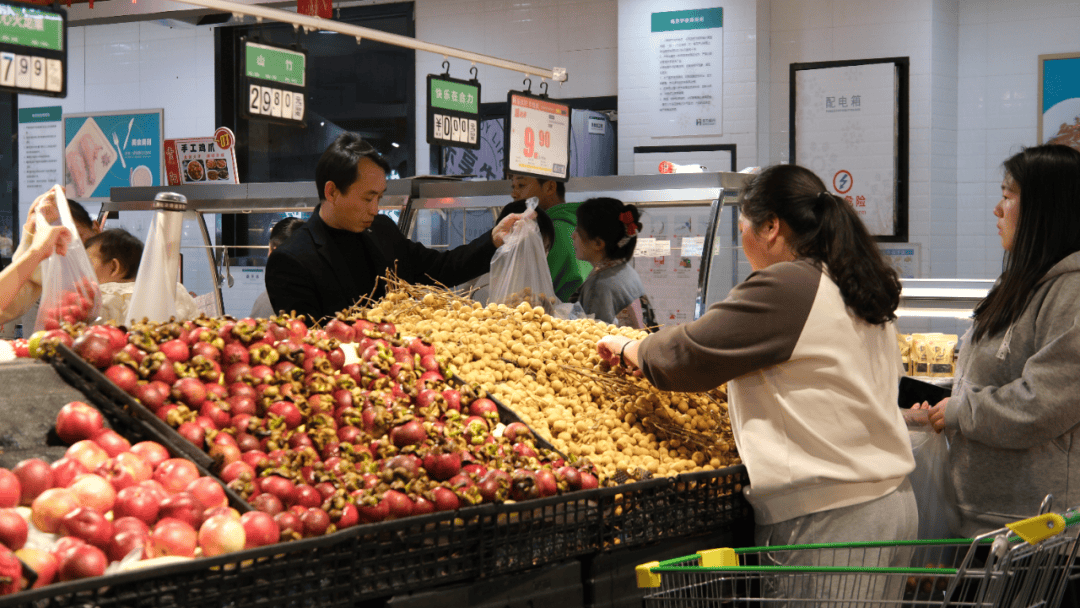
Core Viewpoint - The article emphasizes the transformation of the blueberry market in China, particularly in Yunnan, where the production of blueberries has surged, making them more affordable and accessible to the middle class, thus redefining their status from luxury to common fruit [5][12][19]. Group 1: Blueberry Market Dynamics - Blueberries have become a prominent fruit in supermarkets, with large sizes and affordable prices, challenging previous perceptions of them as a luxury item [2][5]. - The cultivation area for blueberries in China is projected to increase from 96,000 hectares in 2024 to 110,000 hectares in 2025, with an expected production increase of nearly 180,000 tons [12]. - Yunnan province has emerged as a leading region for blueberry production, contributing 22% of the national output, with a 510% increase in production over four years [14][19]. Group 2: Agricultural Innovations - Modern agricultural techniques, such as LED lighting, substrate cultivation, and integrated water and fertilizer systems, have significantly boosted blueberry yields [16][17]. - The introduction of new blueberry varieties, like the "fragrant blueberry," caters to consumer preferences for taste and health, while also extending the harvest season [17][19]. - Over 3,000 domestic and international companies have invested in Yunnan's blueberry industry, indicating strong market interest and growth potential [18]. Group 3: Broader Agricultural Trends - The article also highlights the rising trend of coffee consumption in China, with a projected annual growth rate of 15%, and the increasing popularity of Yunnan coffee as a cost-effective alternative [22][28]. - Yunnan's flower industry is experiencing a similar transformation, with advancements in technology and logistics enabling rapid delivery and lower prices, thus democratizing access to flowers for consumers [30][32]. - The combination of these agricultural developments reflects broader trends in technology, supply chain efficiency, and consumer behavior in China, showcasing a shift towards more accessible luxury goods [32][34].


真正把蓝莓价格打下来的,是它
虎嗅APP· 2026-03-28 14:05
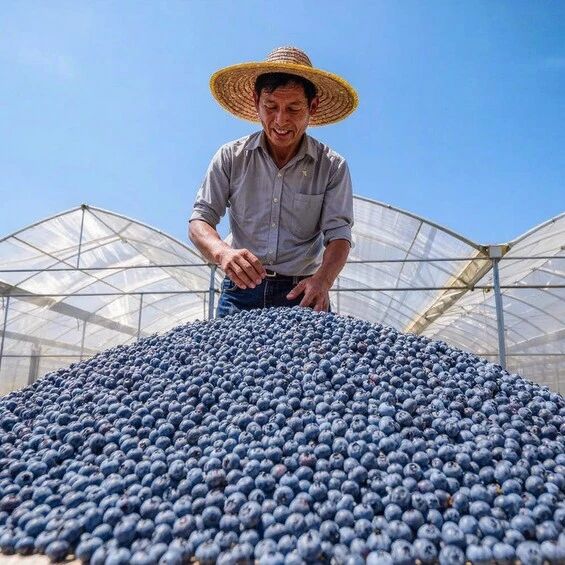
Core Viewpoint - The article discusses the decline in the price and status of blueberries in China, particularly in Yunnan, where increased production has led to a significant drop in prices, transforming blueberries from a "middle-class fruit" into a more accessible commodity [4][8][25]. Group 1: Price Decline and Market Dynamics - Blueberry prices have plummeted, with half a kilogram in Shenzhen dropping from nearly 30 yuan to 19.9 yuan, and in Yunnan, prices are as low as 60 yuan for two kilograms [4][8]. - As of 2024, China has become the world's largest blueberry producer, with a planting area of 1.4382 million acres and an annual output of 780,000 tons, marking a 197% increase in production since 2020 [8][29]. - The oversupply of blueberries has diminished their perceived scarcity, leading to a market where they are sold by the bucket rather than in premium packaging [8][12]. Group 2: Agricultural Practices and Quality Concerns - The majority of blueberries in Yunnan are grown using advanced agricultural techniques, such as facility cultivation and nutrient soil, resulting in yields exceeding 2,000 kg per acre, more than double traditional methods [11][21]. - Despite high production, there are concerns about the quality of blueberries, with reports of farmers using growth regulators that affect taste, leading to a decline in consumer satisfaction [14][21]. - The article highlights a potential crisis in quality similar to that experienced by the "sunshine rose" grapes, where increased production has led to a loss of flavor and consumer trust [18][23]. Group 3: Consumer Behavior and Market Perception - The shift in blueberry pricing reflects a broader trend of devaluing "middle-class fruits," where the symbolic value associated with these fruits diminishes as they become more widely available [25][28]. - Consumers are increasingly aware of the quality differences, with many expressing disappointment in the taste of cheaper blueberries compared to their more expensive counterparts [14][21]. - The article suggests that the market is moving towards a model where consumers prioritize taste and quality over the status associated with premium pricing [23][29]. Group 4: Economic Impact and Employment - The blueberry industry in Yunnan has created over 150,000 jobs, with cooperative farmers earning an average annual income of over 350,000 yuan, indicating a positive economic impact despite the price decline [29][30]. - The shift towards more accessible pricing has allowed a broader segment of the population to enjoy fruits that were once considered luxury items, contributing to local economic growth [29][31].
真正把蓝莓价格打下来的,是它
36氪· 2026-03-27 00:16
Core Viewpoint - The article discusses the significant price drop of blueberries in China, attributing it to increased production in Yunnan and the shift from a luxury item to a more accessible fruit, reflecting a broader trend of "demystifying" premium fruits [4][9][35]. Summary by Sections Blueberry Price Trends - Blueberry prices have plummeted from nearly 30 yuan for a half-kilogram to 19.9 yuan, with some farmers selling them by the bucket in Yunnan [5][9]. - China has become the world's largest blueberry producer, with a planting area of 1.4382 million acres and an annual output of 780,000 tons, marking a 197% increase in production since 2020 [9]. Production Techniques - In Yunnan, 95% of blueberries are grown using facility cultivation and nutrient soil, achieving yields of over 2,000 kg per acre, more than double traditional methods [11]. - The influx of capital into blueberry production has led to a competitive market, but not all blueberries meet high-quality standards, resulting in a price disparity [12]. Market Dynamics - High-quality blueberries remain in demand, while lower-quality fruits flood the market, leading to significant price reductions for the latter [12][15]. - The article highlights a potential crisis in blueberry quality, with some farmers using growth regulators that affect taste, leading to a decline in consumer satisfaction [15]. Comparison with Other Fruits - The article draws parallels between blueberries and other previously premium fruits like "Sunshine Rose" grapes, which have also seen drastic price drops due to overproduction and quality issues [17][19]. - Unlike blueberries, avocados have maintained quality despite price drops, suggesting a potential path for blueberries to follow [22]. Consumer Perception - The concept of "super fruits" is critiqued, emphasizing that the perceived health benefits of blueberries may not justify their previous high prices [23][24]. - The article suggests that the shift in blueberry pricing reflects a broader trend of consumers seeking genuine value rather than status symbols associated with premium fruits [26][30]. Economic Impact - The blueberry industry in Yunnan has created over 150,000 jobs, with average annual incomes for cooperative farmers exceeding 350,000 yuan [33]. - The democratization of previously luxury fruits has allowed more people to benefit economically, transforming them into "wealth fruits" for ordinary farmers [33][35].
长城证券:国产蓝莓已成为水果消费升级代表 持续看好行业需求增长和竞争格局优化
智通财经网· 2026-03-26 07:33
Core Insights - The blueberry industry in China has significant growth potential, with per capita consumption currently at less than 0.5 kg compared to 1.3 kg in the United States, indicating a large market opportunity ahead [1][2] - The demand for domestic blueberries is strong, particularly around the Chinese New Year, driven by increasing health awareness and living standards among consumers [1] Industry Overview - China is the largest blueberry producer globally, but the consumption rate is low, suggesting ample room for growth [1] - The blueberry market is characterized by seasonal price fluctuations, with peak prices typically occurring from November to April, particularly in February [2] Barriers to Entry - High barriers to entry exist in the blueberry industry due to the specific climatic, altitude, and soil requirements for quality cultivation [3] - Quality seedlings are scarce, with leading varieties often controlled by major international berry producers, making it difficult for new entrants to access high-end markets [3] Investment Requirements - Initial investment for blueberry cultivation is significantly higher than for conventional crops, with costs ranging from 70,000 to 100,000 RMB per acre, including greenhouse construction and irrigation systems [4] - The operational management of blueberry cultivation is complex, requiring meticulous attention to biological cycles, resource allocation, and labor management [4] Market Outlook - The blueberry market is expected to grow, with a favorable competitive landscape for companies that have established high-quality blueberry farms and efficient supply chain management [5] - Companies that integrate harvesting, processing, cold chain logistics, and brand marketing are likely to perform better in the market [5]

鲜猪肉竟是数个月前屠宰?山姆紧急回应!品控频遭质疑,网友称“不如菜市场”
新浪财经· 2026-03-21 08:47
Core Viewpoint - The recent controversy surrounding Sam's Club regarding the sale of "fresh pork" allegedly slaughtered four months ago has raised significant consumer concerns about food safety and quality [2][5][7] Group 1: Food Safety Issues - Sam's Club has faced multiple food safety controversies, including misleading labeling of salmon for raw consumption and the sale of freeze-dried strawberries with excessive cadmium levels [4][9] - Consumers have reported issues with perishable items, such as blueberries and kiwis, spoiling within their shelf life, raising questions about the quality control measures in place [9][10] - A significant number of complaints, totaling 14,719, have been lodged against Sam's Club, primarily concerning product quality, delivery issues, and poor customer service [10] Group 2: Business Expansion and Quality Control - Despite the ongoing food safety issues, Sam's Club is rapidly expanding in the Chinese market, planning to open 13 new stores in 2026, which reflects a strong growth trajectory [12][13] - The rapid expansion has led to challenges in maintaining quality control, as the management of supply chains and product standards becomes increasingly complex [13][15] - The decline in the sales proportion of Sam's private label products, which has dropped from 38% to below 30%, has contributed to the quality control issues, as reliance on external suppliers increases [14][15] Group 3: Consumer Trust and Brand Perception - The core competitive advantage of membership-based supermarkets like Sam's Club lies in consumer trust, which is jeopardized when product standards are perceived to be lowered [15] - As Sam's Club attempts to balance growth and profitability by reducing product standards and streamlining quality control processes, consumer willingness to pay for membership may be affected [15]

降价超30%!蓝莓价格“跳水”
新华网财经· 2026-03-20 05:54
Core Viewpoint - The article discusses the significant drop in blueberry prices during the peak season, highlighting a shift from traditional packaging to bulk sales, driven by increased supply and changing consumer behavior [3][5][9]. Group 1: Price Trends - Blueberry prices have decreased by over 30% since March, with half-kilogram packages dropping from nearly 30 yuan to 19.9 yuan, leading to a 20% increase in sales volume [5][7]. - In Yunnan, blueberries that were previously sold in small boxes are now being sold by the barrel due to lower prices [7][11]. Group 2: Supply and Demand Dynamics - Yunnan, a major blueberry production area, accounts for about 30% of the national total, with a 50% increase in yield reported by local growers this year [11][17]. - The current supply exceeds demand, with a national blueberry demand of over 1 million tons and a supply gap of approximately 190,000 tons [17]. Group 3: Opportunities for Processing Industry - The decline in blueberry prices is creating opportunities for deep processing enterprises, with increased demand for high-quality blueberries [15][20]. - A new fruit wine factory in Yunnan plans to significantly expand production, benefiting from lower raw material costs, which are expected to drop from 20 yuan/kg to 3-4 yuan/kg [19][20].

玉米现货价年内新高-农业哪些公司受益
2026-03-10 10:17
Summary of Key Points from Conference Call Records Industry Overview - The conference call discusses the corn industry, particularly focusing on the impact of extreme weather conditions and market dynamics on corn prices and related agricultural companies [1][2]. Core Insights and Arguments 1. **Corn Price Surge**: Corn prices have reached a new high in 2026, driven by supply and demand factors. The price has surpassed 2,400 RMB/ton, with expectations for further increases [2][3]. 2. **Supply Constraints**: - 2025 saw significant reductions in corn production in North China due to extreme weather, including high temperatures and excessive rainfall during harvest, leading to historical challenges [2]. - Import levels have been intentionally controlled, remaining at lower levels compared to historical highs of 20-30 million tons, limiting supply [2]. - Rising costs of agricultural inputs, including fertilizers and pesticides, are expected to further increase production costs for corn [2][3]. 3. **Demand Dynamics**: - The primary demand for corn comes from animal feed and deep processing, with human consumption being minimal [2]. - The demand for feed is projected to grow, particularly due to high levels of pig production, which is expected to increase corn consumption in 2026 compared to 2025 [2][3]. - The industrial use of corn, particularly for ethanol production, is closely tied to rising crude oil prices, which are expected to boost demand for corn-based ethanol [2][3]. Beneficiary Companies Planting Sector 1. **Sukang Agricultural Development**: Benefits from the price increase of both wheat and corn, with a strong correlation between profits and grain prices [4]. 2. **Beidahuang**: Gains from improved planting efficiency and rising land rental prices due to better downstream planting profitability [4]. Seed Sector 1. **Kangnong Seed Industry**: Expected to see significant sales growth in 2026 due to the successful introduction of the "Kangnong 8,009" variety in North China, with a strong correlation between planting profitability and seed pricing [5][6]. 2. **Longping High-Tech**: Maintains a leading position in the corn seed market, with improved performance expected in 2026 due to recovery in its Brazilian operations [6]. Processing Sector 1. **COFCO Technology**: As a leader in fuel ethanol production, the company is well-positioned to benefit from rising crude oil prices, which will likely lead to higher ethanol prices and improved profitability [7]. Additional Insights - The agricultural sector is also seeing potential price increases in other products such as mushrooms, wheat, and rubber, alongside the corn market [7]. - The pig farming sector is expected to face continued pressure due to rising feed costs, which may lead to further capacity reductions [7]. - Consumer-oriented agricultural companies like **Nobility** and **Zhongchong** are highlighted for their growth potential and relatively low valuations, with expectations for performance improvement in the coming years [8]. Recommended Investment Priorities - The recommended investment focus includes: - **Nobility** and **Kangnong Seed Industry** as top picks. - Beneficiaries from the corn industry chain, including Sukang Agricultural Development, Beidahuang, Kangnong Seed Industry, Longping High-Tech, and COFCO Technology [9].
“直播书记”是怎样炼成的
Xin Lang Cai Jing· 2026-02-27 22:33
Core Insights - The article highlights the transformation of Xixiaozhuang Village in Shandong, where local leader Ge Haoshun has successfully implemented a live-streaming sales model to boost the village's economy through the sale of edible mushrooms, particularly the morel mushroom [1][10]. Group 1: Village Development and Leadership - Ge Haoshun returned to his hometown to lead development efforts after witnessing the poor conditions of Xixiaozhuang Village, which was the largest yet the poorest in the area [3][4]. - Under Ge's leadership, the village improved its infrastructure, including the construction of asphalt roads and drainage systems, generating significant income for the village [4][5]. - The introduction of morel mushroom cultivation became a key economic driver, with sales exceeding 1 million yuan from a 100-acre trial plot [5][10]. Group 2: Live-Streaming Sales Model - Ge Haoshun initiated a live-streaming sales approach to market the village's agricultural products, leveraging the existing infrastructure and community support [6][10]. - The first live-streaming attempts faced challenges, including Ge's initial nervousness and low viewer engagement, but he gradually improved his presentation skills [7][8]. - By integrating storytelling into the live-streaming format, Ge successfully attracted a larger audience and increased sales, with 25,000 pounds of morel mushrooms sold in 2025, generating an additional 1 million yuan compared to traditional sales methods [10]. Group 3: Community Engagement and Future Prospects - The live-streaming initiative not only benefited Xixiaozhuang Village but also helped neighboring villages by promoting their agricultural products [10][11]. - Young entrepreneurs in the village are now inspired to explore new business ideas, indicating a shift towards a more dynamic and innovative community [11][12]. - Ge Haoshun's journey from a hesitant leader to a successful figure in the live-streaming space exemplifies the potential for rural revitalization through modern technology and community collaboration [12].
县域即时消费潜力进一步释放
Zhong Guo Jing Ji Wang· 2026-02-27 07:47
Group 1 - The core viewpoint of the articles highlights the significant growth in instant retail consumption during the Spring Festival, particularly in county-level markets, driven by the holiday season and the Milan Winter Olympics [1][2][3] - Instant retail orders in county areas increased by approximately 30% year-on-year from February 16 to February 23, with electronic products, alcoholic beverages, and high-end fruits being the top three categories [1] - Smartwatch sales surged by 600%, while mobile phones and tablets saw a 200% increase; high-end fruits like durian and blueberries experienced up to a 300% rise in sales [1] Group 2 - The article notes a convergence in instant service experiences between the eastern and western regions of China, although distinct consumption preferences remain, with southern consumers favoring beer and dairy products, while northern consumers prefer spicy snacks and ice cream [2] - The overlap of the Spring Festival with key events of the Milan Winter Olympics spurred a nationwide interest in winter sports, leading to a 20% increase in revenue for merchants selling ice and snow sports equipment on the Meituan platform, with some products seeing sales increase by up to 300% [2] - The overall trend indicates a vibrant consumer market during the Spring Festival, reflecting strong economic recovery and growth potential, as noted by experts [3]
【新春走基层】绥阳:春节消费市场“热辣滚烫” 悦己经济成新宠
Sou Hu Cai Jing· 2026-02-26 16:54
Group 1 - The core viewpoint of the article highlights the vibrant consumer atmosphere in Suining County during the Spring Festival, driven by family gatherings, shopping, and festive activities [1][4]. - The "self-indulgence economy" trend is emerging, with consumers increasingly willing to spend on high-quality products such as premium fruits and gourmet gift boxes, reflecting a shift in consumption patterns [3][6]. - The overall sales in supermarkets have seen a year-on-year increase of approximately 10%, with fresh produce and high-priced imported fruits being particularly popular among consumers [6]. Group 2 - The restaurant sector is thriving during the Spring Festival, with many dining establishments experiencing full capacity as families gather to enjoy meals together [8][11]. - Government initiatives, including the distribution of consumer vouchers through the "Cloud Flash Payment" platform, have significantly boosted overall consumption during the holiday period [15]. - Statistics show that participating supermarkets and restaurants in promotional activities achieved substantial transaction volumes, with a total of 32,380 transactions amounting to 6.5173 million yuan in one campaign [18][20].