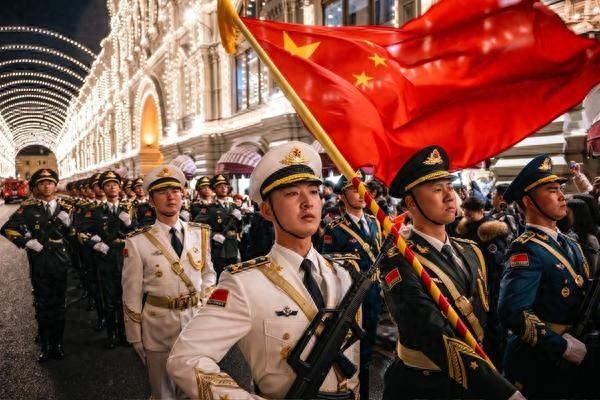
中俄战略互信

Search documents
特朗普打错算盘了!1天内外交部两次通告美国,俄石油中方照买不误!话音刚落,中俄联合演习开始
Sou Hu Cai Jing· 2025-08-04 13:35
Core Viewpoint - The U.S. Treasury Secretary's threat to impose a 500% tariff on China for purchasing Russian oil highlights the ongoing tensions in U.S.-China relations, particularly in the context of energy cooperation and sanctions against Russia [1][3]. Group 1: U.S.-China Relations - The U.S. is attempting to leverage tariffs to pressure China into ceasing its oil purchases from Russia, which the U.S. views as undermining its sanctions against Russia [1][3]. - Following a recent round of trade talks in Stockholm, the U.S. quickly shifted from a temporary truce to aggressive tariff threats, indicating a lack of trust and stability in U.S.-China negotiations [1][3]. Group 2: China's Response - China has firmly stated its intention to protect its sovereignty and development interests, asserting that its energy cooperation with Russia is a matter of national choice [3][5]. - The Chinese government emphasizes the importance of dialogue based on equality and mutual respect, indicating that the root of the current issues lies more with the U.S. [3][5]. Group 3: Energy Cooperation - China relies on Russia as a key partner in its energy diversification strategy, with significant imports of oil and gas, including 107 million tons of crude oil in 2023, making Russia China's second-largest oil supplier [5]. - The ongoing energy cooperation is reinforced by projects like the "Power of Siberia" gas pipeline, which is expected to supply 38 billion cubic meters of gas annually when fully operational [5]. Group 4: Military Cooperation - China and Russia are set to conduct joint military exercises, signaling a strong strategic partnership that complements their economic ties [6][8]. - High-level interactions, including President Putin's upcoming visit to China, further solidify the relationship, demonstrating mutual support and collaboration [6][8]. Group 5: Economic Implications - The potential for high tariffs could adversely affect U.S. businesses and consumers, highlighting the negative consequences of a renewed tariff war [8]. - The politicization of energy procurement by the U.S. contradicts market principles and could destabilize global energy security, leading to widespread opposition [8].

中俄元首相约“胜利日”释放多重信号
Zhong Guo Qing Nian Bao· 2025-05-08 23:10
Core Points - The article highlights the significance of the upcoming visit of Chinese President Xi Jinping to Russia, coinciding with the 80th anniversary of the victory in the Great Patriotic War, emphasizing the strengthening of Sino-Russian strategic trust and cooperation [3][5][10]. Group 1: Diplomatic Relations - The high-level interactions between China and Russia have been consistent, with multiple communications between the leaders this year, indicating a robust diplomatic relationship [4][11]. - Xi Jinping's visit is expected to elevate the strategic dialogue between the two nations, focusing on mutual interests and international issues [5][6]. Group 2: Economic Cooperation - China has maintained its position as Russia's largest trading partner for 15 consecutive years, with significant imports of oil and gas from Russia and exports of machinery and vehicles from China [5][6]. - The cooperation spans various sectors, including energy, agriculture, aerospace, and emerging fields like technology and green development, which are expected to see further advancements during the upcoming meetings [5][6]. Group 3: Historical Context - The article emphasizes the historical sacrifices made by both nations during World War II, advocating for a correct understanding of history to counteract Western narratives that downplay Sino-Russian contributions [7][8]. - The leaders' participation in the anniversary events serves to reinforce their commitment to preserving the outcomes of World War II and promoting international justice [8][10]. Group 4: Multilateralism and Global Stability - Both countries aim to promote a multipolar world and oppose unilateralism, with a focus on strengthening the United Nations' role in global governance [10][11]. - The article suggests that the stability of Sino-Russian relations contributes positively to global stability, especially in the context of current geopolitical tensions [5][10].