
中加关系回暖

Search documents
取消对华电动车100%关税,卡尼在京表态:加中关系“更可预测”
Xin Lang Cai Jing· 2026-01-17 15:40
Core Insights - Canadian Prime Minister Carney's visit to China marks the first by a Canadian PM since December 2017, aiming to revitalize Canada-China relations that had deteriorated since the Meng Wanzhou incident in December 2018 [1][4] - The visit resulted in the signing of eight cooperation documents, including the "China-Canada Economic and Trade Cooperation Roadmap," and a joint statement emphasizing the importance of economic collaboration [1][4] Trade Relations - A significant highlight of the visit was Carney's announcement to eliminate the 100% tariff on Chinese electric vehicles, contingent on a set quota of 49,000 vehicles per year, which will enjoy a 6.1% most-favored-nation tariff rate [3][4] - Canada plans to adjust its unilateral measures on Chinese steel and aluminum products, indicating a shift towards more cooperative trade practices [3][4] Economic Context - The trade volume between China and Canada is projected to reach nearly 120 billion Canadian dollars in 2024, with China being Canada's second-largest trading partner after the U.S. [5] - The outcomes of this visit are seen as crucial for Canada to address domestic economic challenges exacerbated by U.S. tariffs, while also allowing China to strengthen its international partnerships amid rising global uncertainties [5] Future Outlook - The resilience of Canada-China relations will depend on both domestic pressures within Canada and external pressures from the U.S., particularly in light of the upcoming review of the USMCA [7] - The ongoing dialogue and cooperation established during this visit are expected to create a more predictable and effective relationship between Canada and China, which is essential for both nations' strategic interests [6][7]

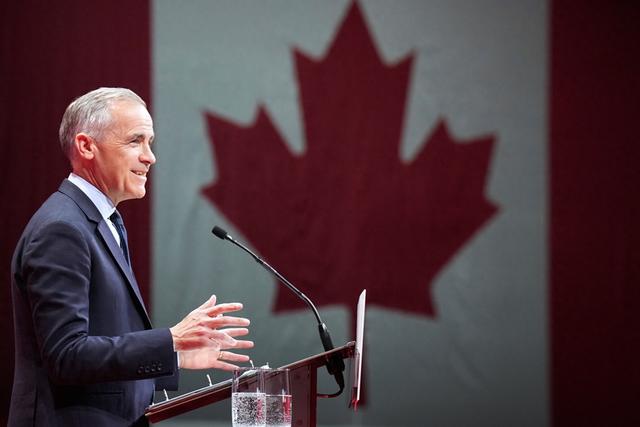
加拿大总理卡尼:加中关系正进入“新的时代”
Huan Qiu Shi Bao· 2026-01-15 22:42
Group 1 - The core viewpoint of the article highlights the significant thawing of relations between Canada and China, marking a new era of cooperation following a period of tension [1][2][3] - Canadian Prime Minister Carney emphasized the historical ties and the importance of a strategic partnership with China, aiming to resolve trade disputes and enhance collaboration in various sectors [2][3] - The meeting between the two leaders resulted in the signing of multiple cooperation agreements across sectors such as trade, customs, energy, and public safety, indicating a commitment to strengthening bilateral relations [2][3] Group 2 - The visit is noted as the first by a Canadian Prime Minister to China since 2017, reflecting a significant shift in diplomatic engagement after years of strained relations [3] - Experts suggest that the renewed dialogue and cooperation are driven by Canada's need to diversify its export markets and reduce reliance on the U.S., while China seeks resource security and supply chain stability [2][3] - The focus on trade during Carney's visit indicates a potential opening for new economic cooperation between the two nations, following nearly a decade of friction [3][4]
民意期待为加拿大总理访华“预热”
Xin Lang Cai Jing· 2026-01-09 23:51
Group 1 - Canadian Prime Minister Mark Carney's visit to China from January 13 to 17 is expected to discuss trade, energy, and security issues, marking the first visit by a Canadian Prime Minister to China since 2017 [1] - There is a growing public sentiment in Canada favoring improved relations with China, with positive views rising from 16% in early 2025 to 27% [1][2] - Over 60% of Canadians support the complete removal of tariffs on Chinese electric vehicles in exchange for China lifting its retaliatory measures [1][2] Group 2 - The deterioration of Canada-China relations in recent years has significantly impacted Canadian farmers, who have been affected by tariffs imposed by both countries [2] - The Canadian government has shown signs of strategic autonomy, seeking to diversify trade and reduce dependence on the U.S., with China remaining Canada's second-largest trading partner [3] - Recent diplomatic engagements, including constructive conversations between leaders, indicate a shift towards a more pragmatic and cooperative relationship between Canada and China [4]
环球时报社评:民意期待为加拿大总理访华“预热”
Xin Lang Cai Jing· 2026-01-09 22:52
Group 1 - Canadian Prime Minister Mark Carney is set to visit China from January 13 to 17, marking the first visit by a Canadian Prime Minister to China since 2017, with discussions focused on trade, energy, and security issues [1] - There is a growing public sentiment in Canada favoring improved relations with China, as indicated by a poll showing that the percentage of Canadians holding a positive view of China has increased from 16% in early 2022 to 27% [1][2] - Over 60% of Canadians support the complete removal of tariffs on Chinese electric vehicles in exchange for China lifting its retaliatory measures, reflecting a significant shift in public opinion towards expanding trade relations with China [1][2] Group 2 - The deterioration of Canada-China relations in recent years has adversely affected Canadian farmers, who have been particularly impacted by tariffs imposed by both countries [2] - The Canadian government has been urged by provincial leaders to reconsider tariffs on China, with a focus on resolving issues related to canola seed exports [2] - The strategic awareness in Ottawa has been heightened due to the high costs of following the U.S. in imposing tariffs on China, leading to a determination to diversify trade and reduce reliance on the U.S. [3] Group 3 - Recent diplomatic engagements between Canada and China, including constructive conversations and meetings between leaders, signal a potential shift towards a more pragmatic and cooperative relationship [4] - The Canadian government has been sending signals of willingness to engage with China, with a timeline of increasing diplomatic interactions aimed at recalibrating the bilateral relationship [4] - The expectation is that Prime Minister Carney's visit will serve as a new starting point for rebuilding a practical cooperation framework between the two countries [4]