
中华优秀传统文化传承与创新

Search documents
新年画映照新风尚(深观察)
Ren Min Ri Bao Hai Wai Ban· 2026-02-26 22:56
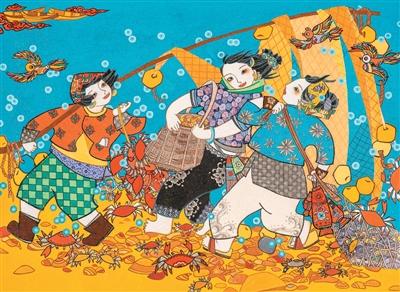
Core Viewpoint - The "New Life · New Style · New Year Painting" art exhibition showcases 302 traditional and contemporary New Year paintings, reflecting the vibrant changes in modern Chinese society and culture during the Spring Festival [2][4][9]. Group 1: Event Overview - The exhibition is organized by multiple cultural and artistic institutions and aims to present a rich artistic experience filled with cultural significance during the Spring Festival [2]. - A total of 7,000 artworks were submitted, marking a historical high, from which 302 were selected for display based on their artistic and thematic qualities [5][9]. - The event features both online and offline activities, enhancing accessibility and engagement for a wider audience [4][6]. Group 2: Artistic Themes and Styles - The exhibition is divided into four thematic sections: "Welcoming Spring with Horses," "Happy Songs of Happiness," "Abundant Harvest," and "Beautiful Future," showcasing a variety of styles and subjects [7]. - Many artworks incorporate traditional elements while also reflecting contemporary life, such as the themes of prosperity and happiness, as seen in pieces like "Fish Full Warehouse" and "Rushing to the Sea on the Golden Sands" [7][8]. - The integration of modern themes, such as technology and rural development, is evident in works like "Urban-Rural Intelligent Creation" and "Digital Ancient Village," highlighting the fusion of tradition and modernity [8]. Group 3: Audience Engagement and Experience - The exhibition has upgraded its presentation methods by incorporating digital and interactive elements, allowing visitors to engage more deeply with the artworks [6]. - Features such as digital guides and interactive zones enhance the viewer's experience, making the art more accessible and engaging [6]. - The event aims to bring traditional cultural resources to grassroots communities, promoting cultural innovation and revitalization [9].

好评中国丨文化盛宴多姿多彩,映照新春美好时光
Xin Lang Cai Jing· 2026-02-16 03:39
Core Viewpoint - The article highlights the vibrant cultural activities taking place across China as the Spring Festival approaches, emphasizing the immersive experiences that allow people to engage with traditional customs and celebrate the New Year in a lively manner [1] Group 1: Cultural Activities - Various cultural events such as New Year markets, folk exhibitions, intangible cultural heritage experiences, and lantern festivals are being held, creating a rich cultural feast for families [1] - The shift from merely observing to immersive participation in traditional activities reflects a modern approach to celebrating the New Year, allowing individuals to experience and appreciate cultural heritage firsthand [1] Group 2: Traditional and Modern Fusion - The article notes the blending of ancient customs with modern creativity, showcasing how traditional practices are being revitalized and expressed in contemporary ways [1] - The integration of technology and fashion into traditional customs has made cultural experiences more accessible and appealing to younger generations, fostering a renewed interest in Chinese heritage [1] Group 3: National Sentiment and Community - The cultural activities not only celebrate family reunions but also convey a sense of national pride and unity, reflecting the prosperity and stability of the country [1] - The article emphasizes that the joy and warmth of the New Year celebrations are deeply connected to the broader themes of community and national well-being, illustrating the powerful emotional ties that bind individuals to their families and country [1]
“中华民俗文化新读丛书”发布
Xin Lang Cai Jing· 2026-02-08 17:26
Core Insights - The "New Read Series of Chinese Folk Culture" was launched in Beijing, focusing on the theme "Cultural Roots, Folk Soul," and attended by representatives from various national cultural institutions and universities, highlighting the importance of inheriting and innovating traditional Chinese culture [1][2] Group 1: Publication Overview - The series consists of eleven volumes, co-edited by renowned scholars Bai Gengsheng, Liu Yeyuan, and Wan Jianzhong, covering various aspects of folk customs such as festivals, rituals, beliefs, medicine, commerce, clothing, housing, ecology, litigation, and production [1] - The compilation aims to transition from merely recording folk customs to understanding and activating their value, integrating solid field research and contemporary academic perspectives [1] Group 2: Academic and Cultural Significance - Experts discussed the series' innovative approach, which breaks traditional folk literature writing paradigms by reinterpreting the contemporary value of folk culture through new perspectives, thinking, and methods [2] - The series is expected to enhance national cultural identity, build a spiritual home, and serve national education, showcasing broad application prospects [2] Group 3: Future Development Plans - The project will adopt a dual strategy of "high-quality publishing + precise marketing," with plans to develop digital reading resources and organize activities to promote folk culture in schools and communities [2] - Future initiatives will include live broadcasts, short videos, and collaborations with book influencers to make folk culture more accessible to the general public [2]
古韵今风“话”钟馗,乾坤正气满江淮
Xin Lang Cai Jing· 2026-01-29 16:41
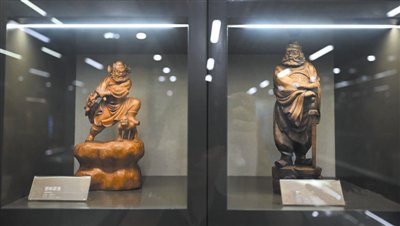
Core Viewpoint - The article highlights the rich cultural heritage of the Zhong Kui culture in Lingbi, which has evolved from folklore into a comprehensive system encompassing intangible cultural heritage, physical attractions, and cultural products, making it a shining gem of Anhui's regional culture [3][10]. Cultural Heritage and Artistic Legacy - The connection between Lingbi and Zhong Kui culture dates back to the Tang Dynasty, where the image of Zhong Kui, known for driving away evil spirits, became widely recognized. Local artists blended traditional techniques with local styles to create a unique "Lingbi Zhong Kui painting" style that has persisted for a millennium [5][7]. - The essence of Lingbi Zhong Kui paintings lies in the concept of "using ferocity to drive away evil," emphasizing the character's fierce appearance while also conveying compassion for humanity. This balance of "external ferocity and internal beauty" is crucial in portraying Zhong Kui's image [6][9]. Modern Expressions and Innovations - Contemporary practitioners of Zhong Kui culture, such as Li Wen, have integrated traditional elements into modern art forms like paper-cutting, creating diverse representations of Zhong Kui that resonate with younger generations. This includes teaching these techniques in schools to foster interest among students [8][10]. - Zhao Zhi, another local artist, maintains traditional features of Lingbi Zhong Kui paintings while innovating with scene-based designs, enhancing the storytelling aspect of the artwork [8]. Cultural Significance and Future Prospects - Zhong Kui culture has transcended mere artistic expression to become a spiritual symbol representing justice, fairness, and the aspirations of the Chinese people. The saying "having a Zhong Kui painting at home brings safety" reflects this cultural significance [10][11]. - The donation of Zhong Kui art collections to public institutions, such as the Anhui Provincial Archives, aims to share this cultural wealth with society, further promoting the understanding of Zhong Kui culture [10][11]. - With the global release of the game "Black Myth: Zhong Kui," Lingbi's Zhong Kui culture is poised to reach international audiences, serving as a vital platform for sharing Chinese cultural narratives [10][11].
风华正茂|荣宝斋第三届青年艺术提名展 • 非遗文创展
Yang Shi Wang· 2026-01-09 10:07
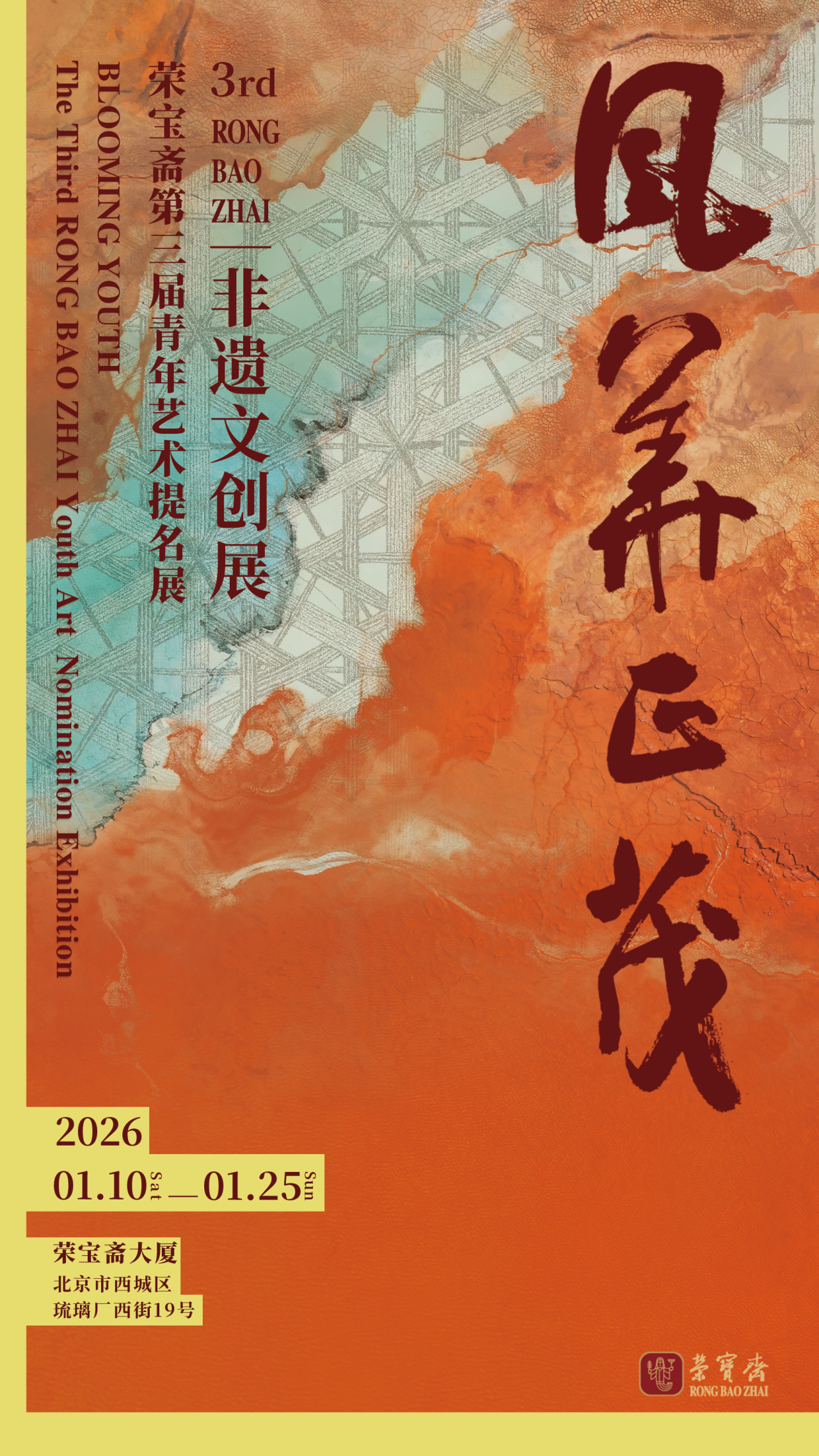
Group 1 - The third Youth Art Nomination Exhibition will take place from January 10 to January 25, 2026, at the Rongbaozhai Building, following the success of the previous two exhibitions in 2024 and 2025 [5][6] - Rongbaozhai is a promoter of traditional Chinese culture, holding two national intangible cultural heritage skills: "woodblock printing" and "mounting and restoration techniques" [6] - The exhibition aims to showcase the inheritance and innovation of traditional culture, inviting individuals who share a common vision in the field of intangible cultural heritage and cultural innovation [6][7] Group 2 - The exhibition is supported by various academic institutions and organizations, including the China Artists Association and the Central Academy of Fine Arts, among others [4] - The event is organized by Rongbaozhai Co., Ltd., with media support from the Central Radio and Television Station [3][4] - The exhibition will feature works from various artists and companies, highlighting the integration of traditional craftsmanship and modern design [10][12][14][16][19][21][22][24][26][28]
信息化推动传统美育资源共建共享
Xin Hua Ri Bao· 2025-12-05 20:27
Core Viewpoint - The integration of modern educational information technology and the sharing of quality aesthetic education resources is essential for the transformation of higher education in China and the development of aesthetic education [1] Group 1: Educational Policy and Framework - The Ministry of Education has introduced several top-level design documents to promote educational modernization and resource optimization, including the "Education Informatization 2.0 Action Plan" in 2018, which aims to integrate educational resources and explore new mechanisms for resource sharing [1] - By 2025, the goal is to establish a basic framework for sharing quality educational resources, enhancing educational equity and quality through information technology [1] - The 2023 notification emphasizes the development of quality digital aesthetic education resources through smart education platforms, promoting the integration of digital technology with traditional Chinese culture [1] Group 2: Cultural Heritage and Aesthetic Education - Xiangshan Gang, a traditional architectural style from Suzhou, is recognized as a living heritage and a treasure of aesthetic education, known for its exquisite craftsmanship and deep cultural significance [2] - The techniques of Xiangshan Gang serve as a comprehensive educational resource, fostering spatial aesthetics and structural thinking, while embodying the spirit of craftsmanship and cultural confidence [2] Group 3: Innovative Educational Practices - Suzhou University is building a new ecosystem for aesthetic education by integrating traditional techniques with digital technology, focusing on resource collaboration, technological support, and the fusion of art and science [3] - The "Daguo Zhiji" team at Suzhou University has established a collaborative network to break down barriers between educational institutions and society, creating a shared platform for aesthetic education resources [4] - The team has developed a digital platform that includes a digital library of techniques, a virtual training space, and a showcase area for student works, enhancing the learning experience and efficiency [5] Group 4: Practical Applications and Outcomes - The team has successfully implemented a virtual assembly experiment that allows students to visualize traditional construction techniques, receiving positive feedback for its effectiveness in teaching [6] - The integration of AI and big data into teaching practices has improved educational outcomes, with over 3,000 students benefiting from the platform by 2025 [6] - The university's aesthetic education practices have led to significant achievements, including high rankings in architectural and design disciplines and numerous awards in national and international competitions [8] Group 5: Future Directions and Cultural Integration - The exploration of Xiangshan Gang's techniques aims to preserve traditional craftsmanship while adapting to modern aesthetics, using digital tools to enhance cultural transmission [9] - Future initiatives may further integrate garden aesthetics and architectural wisdom into cultural exhibitions, showcasing the creative transformation of traditional Chinese culture [9]
山东勇担新时代的文化使命
Ren Min Ri Bao· 2025-11-26 22:21
Core Viewpoint - Shandong province is actively embracing its cultural mission in the new era, focusing on the development and promotion of Chinese traditional culture to enhance its influence globally [1][2][4][6]. Group 1: Cultural Initiatives - The "Shandong Cultural Heritage" project was launched in 2022, which includes the compilation of the largest local literature project, "Qilu Library," showcasing its first database at the China International Copyright Expo [2]. - The "Rural Confucianism Lecture Hall" project initiated in 2013 has established over 20,000 lecture halls across Shandong, promoting traditional wisdom and enhancing social governance [4]. Group 2: Youth Engagement - An increasing number of young people in Shandong are becoming inheritors and promoters of excellent traditional Chinese culture, indicating a positive trend in cultural transmission [3]. Group 3: Economic Integration - Traditional culture is being integrated with industrial transformation, exemplified by the success of the Hanfu industry in Cao County, which has become a billion-yuan industry cluster through digital transformation [5]. Group 4: International Exchange - The 11th Nishan World Civilization Forum held in July gathered over 560 guests from more than 70 countries, focusing on harmonious coexistence of different civilizations, reflecting Shandong's commitment to cultural exchange [5]. Group 5: Policy Support - The 20th Central Committee of the Communist Party of China emphasizes the need to stimulate cultural innovation and development, with Shandong pledging to contribute to the cultural foundation for national rejuvenation [6].
在源与流之间感受纹样魅力(新语·文化强国名家谈)
Ren Min Ri Bao· 2025-11-17 23:06
Core Insights - Dunhuang serves as a foundational source for artistic life and research, with patterns being a significant component of Dunhuang art, reflecting cultural spirit and structural rules [1] - The evolution of patterns in Dunhuang art illustrates the development of social culture, religious customs, and local characteristics over time, showcasing the continuity and creativity of Chinese art [1] Group 1: Importance of Patterns - Patterns are integral to Dunhuang art, found in various structures and forms, and are not merely decorative but essential to the overall artistic expression [1] - The historical lineage of patterns from different dynasties, such as the three-petal leaf and vine patterns from the Northern Wei to the floral motifs of the Tang dynasty, highlights the artistic heritage and innovation [1] Group 2: Design Philosophy - The concept of "source and flow" emphasizes the importance of traditional culture as a foundation for contemporary artistic design, ensuring vitality and creativity in art [2] - The design of the Great Hall of the People incorporates Dunhuang-inspired patterns, demonstrating the successful integration of traditional motifs with modern functionality [2] Group 3: Structural and Aesthetic Principles - The scientific structure and compositional rules of Dunhuang patterns, such as the radial arrangement of motifs, remain applicable in modern design and architecture [3] - Patterns are described as a language with its own grammar and emotional expression, necessitating a deep understanding of their historical and cultural context for contemporary application [3] Group 4: Cultural Relevance - The study and innovation of patterns are crucial for the transmission and promotion of traditional Chinese culture, making them relevant in everyday life and various design fields [4] - The aspiration for future artists and designers is to maintain the connection to traditional sources while innovating within contemporary contexts, ensuring the ongoing vitality of cultural expressions [4]
第二届中华文化与青年领导力论坛在京举行
Xin Hua Wang· 2025-10-11 11:31
Core Insights - The second China Culture and Youth Leadership Forum was held in Beijing, focusing on the integration of traditional Chinese culture, revolutionary culture, and contemporary youth leadership development [1][2] - The forum aims to help youth strengthen their ideals, cultivate a sense of national identity, and take on historical responsibilities [1] Group 1: Cultural Significance - The forum highlighted the importance of traditional Chinese values such as "benevolence," "public good," "self-improvement," and "harmony in diversity" as essential wisdom for contemporary youth [1] - The event received support from various academic institutions, student organizations, and associations across the country [1] Group 2: Youth Empowerment - Huang Qiguo, Vice President of the China Collectors Association, emphasized the transmission and innovative value of traditional culture, encouraging youth to draw strength from their cultural heritage [2] - Xu Jinghong, a professor at Tsinghua University, urged young students to establish lofty ideals and integrate personal growth with national development and rejuvenation [2] Group 3: Initiatives and Discussions - The "Qingfa Academy," a cultural platform initiated by the Beijing Qingfa International Talent Exchange Center, was launched to educate the public on traditional Chinese studies [2] - A roundtable discussion was held, where participants explored various challenges faced by youth in learning, life, and work, sharing insights and suggestions [2]
辽宁出版集团《新时代万有文库》亮相2025上海书展 引领经典阅读新热潮
Xin Hua Wang· 2025-08-21 01:41
Core Viewpoint - The "New Era Universal Library" is a significant cultural initiative aimed at promoting the contemporary transmission and innovative dissemination of excellent traditional Chinese culture, emphasizing the integration of tradition and modernity [1][2]. Group 1: Publication Details - The library is edited by Liu Yuejin, a member of the Chinese Academy of Social Sciences, focusing on "excavating traditional essence and empowering contemporary value" [1]. - It employs a publishing model of "one classic, multiple versions" and "one version, three formats," catering to diverse reader needs [1]. Group 2: Cultural Significance - The initiative is a major publishing project by Liaoning Publishing Group, reflecting a commitment to traditional culture while embracing innovation [2]. - The launch event highlighted the library's unique value in cultural dissemination, addressing the contemporary question of how classics can illuminate reality [2].