中国功夫

Search documents
中国小伙寸拳,老外直接吓傻,法国网友:中国功夫唯快不破
Xin Lang Cai Jing· 2026-02-14 08:26
Core Viewpoint - The article highlights a demonstration of Chinese martial arts, specifically the "寸拳" (inch punch), which astonished foreign observers, particularly in France, leading to comments on the effectiveness and speed of Chinese kung fu [1] Group 1 - The demonstration of the inch punch by a Chinese individual left foreign spectators in shock [1] - French netizens commented on the effectiveness of Chinese kung fu, stating that it is "fast and unbreakable" [1]


从美国青年到武当“老内”,听90后美国人杰克讲讲功夫梦
Xin Lang Cai Jing· 2026-01-03 04:51
Core Viewpoint - The article highlights the journey of Jack Pinnick, an American who has become the 16th generation successor of the Wudang Sanfeng sect, emphasizing his dedication to Chinese martial arts and cultural exchange [1][2]. Group 1: Personal Journey - Jack Pinnick, a 90s American, moved to China at the age of 20 with a strong belief in the philosophy of Chinese martial arts [1]. - He underwent five years of rigorous training, practicing daily from 5:30 AM to 9 PM, facing physical challenges but ultimately persevering [1]. - Pinnick is recognized as a local figure in Wudang, affectionately referred to as "老内" by the locals, indicating his acceptance and integration into the community [1]. Group 2: Cultural Contribution - Pinnick has transitioned from a martial artist to a cultural ambassador, creating English teaching materials to help foreigners understand the philosophy behind Chinese martial arts [2]. - He aims to convey not just martial skills but also the underlying philosophical thoughts and lifestyle associated with Kung Fu [2]. - In 2025, he received a "five-star card" (permanent residency) and was honored as an "Honorary Citizen of Shiyan," reflecting his deep commitment to the culture [2].
通讯丨法国演员被中国功夫治愈的“戏剧人生”
Xin Hua Wang· 2025-07-27 21:27
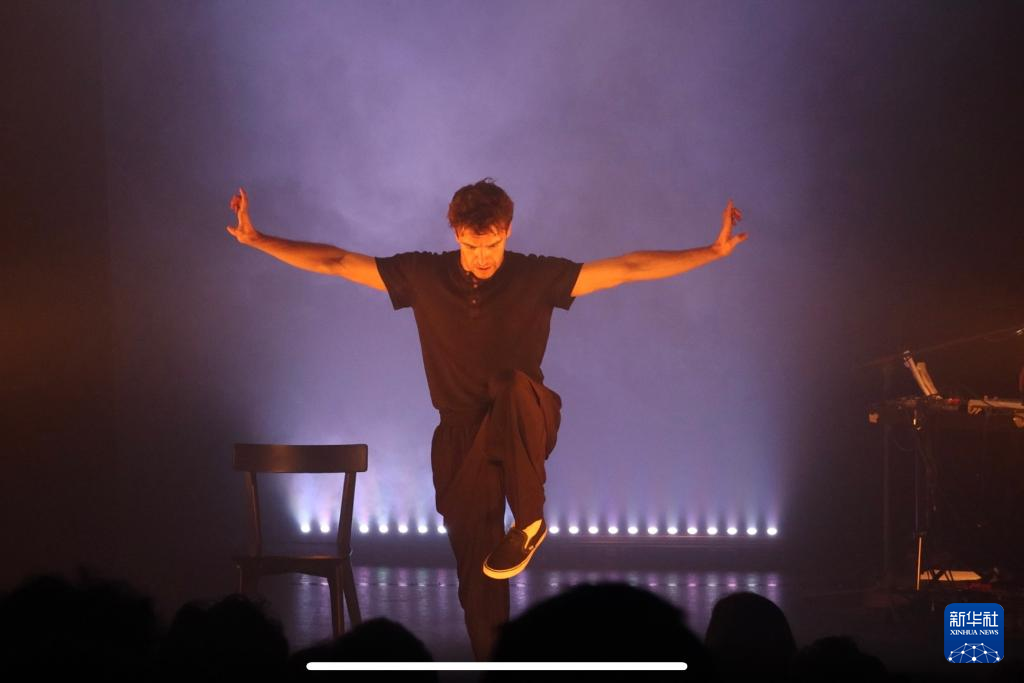
Core Viewpoint - The play "In the Name of Father, Son, and Jackie Chan" has gained popularity at the Avignon OFF Theatre Festival, showcasing the influence of Chinese kung fu on personal growth and healing [2][4]. Group 1: Play Overview - The play is performed by French actor Matthias Fortina and humorously narrates his experiences with kung fu actor Jackie Chan, highlighting the impact on his character and life [2][4]. - Fortina's childhood was marked by emotional neglect from his career-focused parents, leading him to find hope through Jackie Chan's films, particularly "Drunken Master" [2][4]. Group 2: Themes and Messages - The narrative emphasizes the importance of transforming suffering into creativity, as expressed by Fortina [3]. - The play aims to encourage reconciliation with familial trauma and promote open communication of feelings, reflecting a universal theme in parent-child relationships [4]. Group 3: Cultural Impact - The success of the play illustrates kung fu as a universal language that resonates across cultures, bridging Eastern and Western influences [4][5]. - Fortina credits martial arts stars like Bruce Lee and Jackie Chan for introducing Chinese culture to many in France, inspiring them to practice martial arts [5]. Group 4: Future Aspirations - Fortina's ambition is to take the play worldwide, especially to China, hoping it serves as a "spiritual remedy" for others, similar to his own healing journey through kung fu films [6].
弘武海外 传道守心(侨界关注)
Ren Min Ri Bao Hai Wai Ban· 2025-05-15 22:54
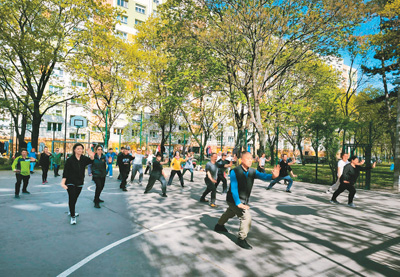
Group 1: Core Insights - The article highlights the journey of Lv Guangyi, who has dedicated his life to teaching traditional Chinese martial arts, particularly Tai Chi, Bagua, and Xingyi, in Hungary since 2008 [1][5][8] - Lv Guangyi emphasizes the importance of understanding the philosophical and physical aspects of Chinese martial arts, stating that it is a lifelong practice that cannot be fully mastered [5][6][8] Group 2: Background and Training - Lv Guangyi began his martial arts journey at the age of 17, inspired by witnessing a group practicing in a park, which ignited his passion for Chinese martial arts [2][3] - He trained rigorously under strict mentors, learning various techniques and philosophies that shaped his approach to martial arts [3][4] Group 3: Teaching Methodology - In 2013, Lv Guangyi launched a personal website to promote martial arts, sharing instructional videos that attracted a diverse group of international students [5][6] - His teaching methods are tailored to different age groups, focusing on physical fitness for younger students and health benefits for older adults through Tai Chi [5][7] Group 4: Health Benefits - Lv Guangyi integrates martial arts training with health recovery, helping patients improve their physical conditions through Tai Chi, which he describes as a gentle yet effective form of exercise [7][8] - He uses relatable analogies to explain the importance of movement for health, likening the body to flowing water that must remain active to avoid stagnation [7] Group 5: Cultural Promotion - Since 2016, Lv Guangyi has collaborated with Hungarian media to further promote Chinese martial arts, aiming to increase awareness and appreciation of this cultural heritage [8] - His efforts have led to a growing interest in martial arts among locals, showcasing the potential for cultural exchange through traditional practices [8]