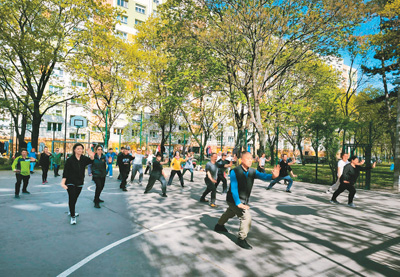
形意拳

Search documents
山西太谷:精品线路+创新业态+特色活动 推动文旅产业高质量发展
Zhong Guo Xin Wen Wang· 2025-11-23 08:24
Core Viewpoint - Shanxi Province's Tai Gu District is focusing on high-quality development of the cultural tourism industry by creating boutique routes, innovating tourism formats, and hosting unique events to attract visitors and boost consumption [1][2]. Group 1: Boutique Routes and Tourism Innovation - During the 14th Five-Year Plan, Tai Gu District has launched eight boutique tourism routes, including rural picking tours, Jin merchant culture tours, and specialty food tours, with a particular emphasis on night economy through night market tours [1]. - The district is also planning winter tourism routes that combine hot springs and ice activities to cater to diverse visitor experiences [1]. Group 2: Investment and Project Development - The district is exploring a new model of "ecological development + rural revitalization + tourism experience," with a total investment of 138 million yuan in the Wutong Valley cultural tourism project, which includes thrilling activities like high-altitude drifting and jungle off-roading [1]. - The integration of three major wineries and a hot spring wellness town offers a "hot spring + red wine" leisure experience, attracting 36,000 visitors during the National Day holiday [1]. Group 3: Cultural Heritage and Thematic Events - The ancient city’s intangible cultural heritage commercial street features national and provincial-level intangible cultural heritage projects, enhancing visitor engagement through immersive experiences [2]. - Tai Gu District hosts a variety of themed festivals throughout the year, such as the Lantern Festival and Harvest Festival, which have successfully attracted 660,000 visitors and generated over 4 million yuan in consumption during the first cultural tourism carnival [2]. Group 4: Future Development Goals - For the 15th Five-Year Plan, Tai Gu District aims to enhance its cultural tourism image and plans to develop nine new projects, targeting an annual visitor count of over 3 million and tourism revenue of 4 billion yuan by the end of the plan [2].
(寻味中华|非遗)形意拳中藏河岳 刚柔相济铸武魂
Zhong Guo Xin Wen Wang· 2025-10-15 02:03
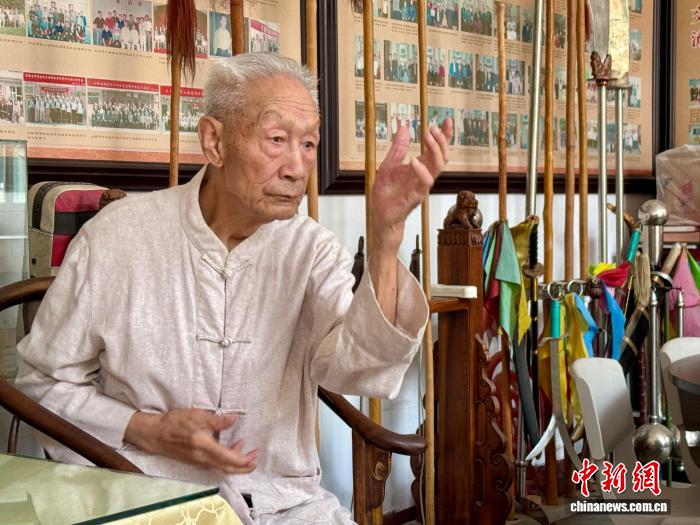
Core Viewpoint - The article highlights the significance of Xingyi Quan, a traditional Chinese martial art originating from Shanxi, emphasizing its cultural heritage and modern relevance in promoting health and tourism [1][5]. Group 1: Cultural Heritage - Xingyi Quan is one of China's four major martial arts, known for its practical techniques and deep philosophical roots, including the theory of Yin-Yang and the Five Elements [3][5]. - The martial art was recognized as a national intangible cultural heritage in 2011, with Song Guanghua being a prominent representative inheritor [1][3]. Group 2: Training and Techniques - The foundational training method in Xingyi Quan is the "San Ti Shi" stance, which helps practitioners develop internal strength and stability [3][5]. - The martial art emphasizes a balance of hardness and softness, allowing practitioners of various physical conditions to engage in training [5][7]. Group 3: Global Influence and Popularity - Xingyi Quan has expanded internationally, with associations established in countries like Russia, the USA, and Malaysia, attracting a diverse group of practitioners [5][6]. - Recent competitions have seen Chinese Xingyi Quan athletes excel, indicating a resurgence of interest and participation in traditional martial arts among younger generations [5][7]. Group 4: Economic Impact - The practice of Xingyi Quan has become a catalyst for cultural tourism in Shanxi, with local initiatives promoting martial arts competitions as part of tourism packages [7]. - Schools in Shanxi have incorporated Xingyi Quan into their physical education programs, further embedding the martial art into modern life [7].

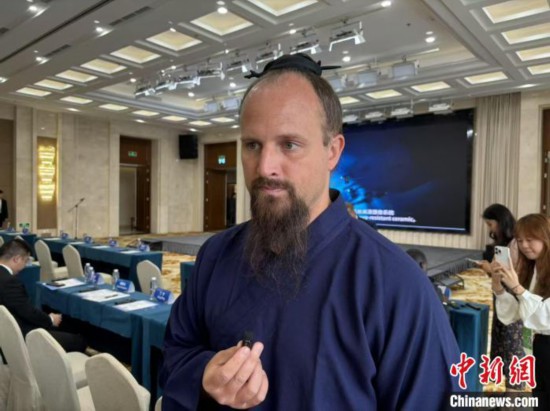
武当山“洋教头”杰克:武术的魅力在于和谐与包容
Zhong Guo Xin Wen Wang· 2025-07-16 01:53
Core Viewpoint - The charm of martial arts lies not in confrontation and victory, but in harmony and inclusiveness, serving as a simple way to connect a diverse world [1]. Group 1: Individual's Journey and Contributions - Jack Pinnick, the 16th generation heir of the Wudang martial arts Sanfeng sect, has spent 15 years in China, using martial arts as a key to unlock Chinese culture [3]. - He moved to Wudang Mountain at the age of 20 to pursue his "martial arts dream," learning various forms such as the Eight Immortals Staff, Xingyi, and Tai Chi [3]. - After graduation, he chose to become a teaching assistant in Wudang Mountain, having taught hundreds of students from different countries over the past decade [3][4]. Group 2: Global Influence and Teaching Philosophy - Wudang Mountain has over 30 overseas martial arts branches and more than 20,000 foreign disciples, with Jack recently becoming a cultural ambassador for Wudang in Hong Kong [4]. - Jack emphasizes his unique advantage in teaching, understanding the difficulties foreign students face in learning martial arts, and helping them grasp the concepts thoroughly [4]. - He aims to bridge friendships between the U.S. and China, planning to establish international martial arts classes, cultural exchange centers, and martial arts schools in the U.S. to promote Chinese martial arts as a means of global communication [5].
“这里的文化,完全改变了我的人生”(我在中国·行耕记)
Ren Min Ri Bao Hai Wai Ban· 2025-06-20 21:21
Core Insights - Jake Pinnick, an American who has lived in Wudang Mountain for over a decade, has received a "Five-Star Card," granting him permanent residency in China, highlighting his deep connection to Chinese culture and martial arts [2][3][6] - His journey from a novice in martial arts to becoming the 16th generation successor of the Wudang Sanfeng School illustrates the transformative power of cultural immersion [3][4][6] - Jake's commitment to promoting Wudang culture is evident through his teaching, online presence, and plans to establish a martial arts school in the U.S. [8][9] Cultural Integration - Jake's initial fascination with Chinese martial arts was sparked by films featuring Bruce Lee and Jackie Chan, leading him to Wudang Mountain in 2010 [3] - His rigorous training included mastering various martial arts forms and engaging deeply with Chinese philosophy, particularly the teachings of the Dao De Jing [4][8] - The cultural exchange is further enriched by his marriage to a Chinese woman, which has fostered a family environment that embraces both cultures [6][7] Educational Impact - Jake assists in teaching at the martial arts school, effectively bridging language barriers and integrating traditional Chinese philosophy with martial arts training for foreign students [8] - His online educational content has garnered over 1 million followers, showcasing his dedication to spreading knowledge of Wudang culture and martial arts [8][9] - The publication of his English-language教材 on the Dizi instrument marks a significant step in making Chinese cultural practices accessible to a global audience [8][9] Global Reach - The popularity of Wudang culture is reflected in the annual influx of approximately 400,000 international visitors to Wudang Mountain, with over 20,000 foreign martial arts students across more than 50 countries [9] - Jake's vision includes expanding the reach of Wudang culture by establishing a martial arts school in the U.S., aiming to cultivate a greater appreciation for this cultural heritage [9]
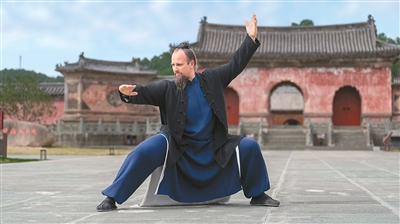
弘武海外 传道守心(侨界关注)
Ren Min Ri Bao Hai Wai Ban· 2025-05-15 22:54
Group 1: Core Insights - The article highlights the journey of Lv Guangyi, who has dedicated his life to teaching traditional Chinese martial arts, particularly Tai Chi, Bagua, and Xingyi, in Hungary since 2008 [1][5][8] - Lv Guangyi emphasizes the importance of understanding the philosophical and physical aspects of Chinese martial arts, stating that it is a lifelong practice that cannot be fully mastered [5][6][8] Group 2: Background and Training - Lv Guangyi began his martial arts journey at the age of 17, inspired by witnessing a group practicing in a park, which ignited his passion for Chinese martial arts [2][3] - He trained rigorously under strict mentors, learning various techniques and philosophies that shaped his approach to martial arts [3][4] Group 3: Teaching Methodology - In 2013, Lv Guangyi launched a personal website to promote martial arts, sharing instructional videos that attracted a diverse group of international students [5][6] - His teaching methods are tailored to different age groups, focusing on physical fitness for younger students and health benefits for older adults through Tai Chi [5][7] Group 4: Health Benefits - Lv Guangyi integrates martial arts training with health recovery, helping patients improve their physical conditions through Tai Chi, which he describes as a gentle yet effective form of exercise [7][8] - He uses relatable analogies to explain the importance of movement for health, likening the body to flowing water that must remain active to avoid stagnation [7] Group 5: Cultural Promotion - Since 2016, Lv Guangyi has collaborated with Hungarian media to further promote Chinese martial arts, aiming to increase awareness and appreciation of this cultural heritage [8] - His efforts have led to a growing interest in martial arts among locals, showcasing the potential for cultural exchange through traditional practices [8]